
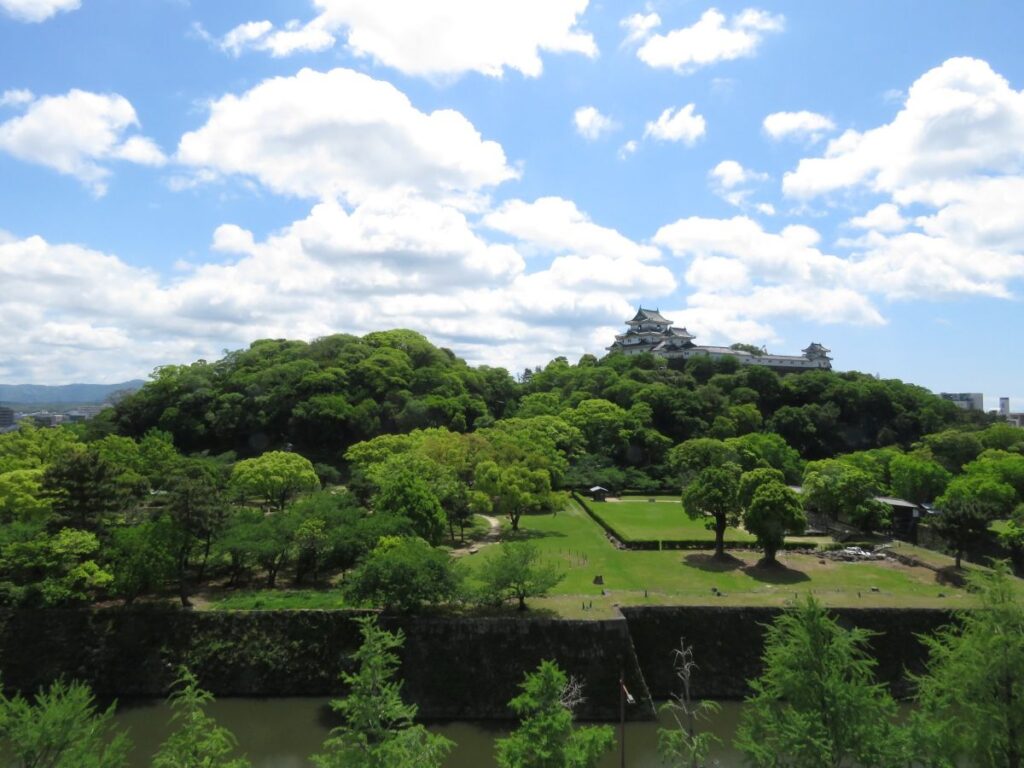
From samurai power and political unification to castle towns, gardens, and the birth of modern Japan
When we think of Japanese castles, it is easy to picture white walls, wooden towers, stone foundations, and samurai.
But a castle was never simply a fortress.
For centuries, castles were centers of political power. Around them grew towns, markets, temples, gardens, crafts, and distinctive regional cultures. The history of a castle is therefore also the history of the people who lived around it.
Some castles survived wars and modernization. Others were destroyed and later reconstructed. One became the center of modern Japan itself.
Here are eight historic places that offer different ways to understand Japan’s history—from the age of samurai warfare to the Tokugawa shogunate and the transformation of Japan into a modern nation.
1. Himeji Castle: The Ideal Japanese Castle

If you visit only one traditional Japanese castle, Himeji Castle is perhaps the clearest place to begin.
Known as the “White Heron Castle” because of its brilliant white appearance, Himeji is one of Japan’s finest surviving examples of traditional castle architecture.
Its complex system of walls, gates, defensive passages, towers, and courtyards reveals how carefully a Japanese castle was designed for both defense and political display.
But Himeji is important for another reason: it survived.
While many Japanese castles were destroyed during warfare, political upheaval, natural disasters, or modernization, Himeji escaped the worst of these changes. Its surviving structures allow visitors to experience a castle that remains remarkably close to its historical form.
Walking through Himeji is therefore almost like reading a three-dimensional history book.
The castle shows the sophistication of Japanese defensive architecture, but it also demonstrates something deeper about the relationship between power and architecture.
A castle had to be difficult to attack—but it also had to make power visible.
From its hilltop position, Himeji dominated the surrounding landscape. Its brilliant exterior announced the authority of its lord long before an approaching visitor reached the central keep.
What Himeji helps us understand
Japanese castle architecture and the political symbolism of the samurai elite.
2. Osaka Castle: The Age of Unification

Few castles are more closely connected with the dramatic story of Japan’s political unification than Osaka Castle.
The original castle was built by Toyotomi Hideyoshi, one of the three great figures who brought an end to the long period of civil war known as the Sengoku period.
Hideyoshi’s Osaka Castle was more than a military stronghold. It was a statement of political ambition.
The enormous stone walls, extensive moats, and magnificent buildings reflected the wealth and authority of the Toyotomi regime.
Yet Osaka Castle also reminds us that political power in Japan could be extraordinarily fragile.
After Hideyoshi’s death, conflict between the Toyotomi and Tokugawa sides culminated in the Siege of Osaka in the early seventeenth century. The Toyotomi family was defeated, clearing the way for Tokugawa dominance.
The castle was later rebuilt by the Tokugawa shogunate, meaning that even the physical structure of Osaka Castle reflects the changing balance of power.
Today, the castle stands in the middle of one of Japan’s largest cities.
That contrast is part of its appeal: the site where samurai armies once fought is now surrounded by the modern urban landscape of Osaka.
What Osaka helps us understand
The end of Japan’s age of civil war and the political rise of the Tokugawa shogunate.
3. Nagoya Castle: The Power of the Tokugawa

If Osaka Castle tells the story of political unification, Nagoya Castle helps explain how the Tokugawa regime consolidated its power.
Tokugawa Ieyasu ordered the construction of Nagoya Castle in the early seventeenth century. It became the seat of the Owari branch of the Tokugawa family, one of the three great branches of the clan.
Its strategic location was important.
Nagoya stood along the major route connecting eastern and western Japan, making it an important point within the political geography of the Tokugawa state.
The castle also became the heart of a castle town.
This is an important feature of Japanese history. A castle did not exist in isolation. Samurai residences, merchants, craftsmen, religious institutions, and ordinary households developed around it.
The result was an urban landscape shaped by the needs of a feudal domain.
Nagoya therefore offers a useful way to think about the Edo period—not simply as a time of samurai and shoguns, but as an era when cities, commerce, craftsmanship, and regional identities developed under a relatively stable political system.
What Nagoya helps us understand
The Tokugawa political system and the development of castle towns during the Edo period.
4. Wakayama Castle: How a Castle Shaped a Region
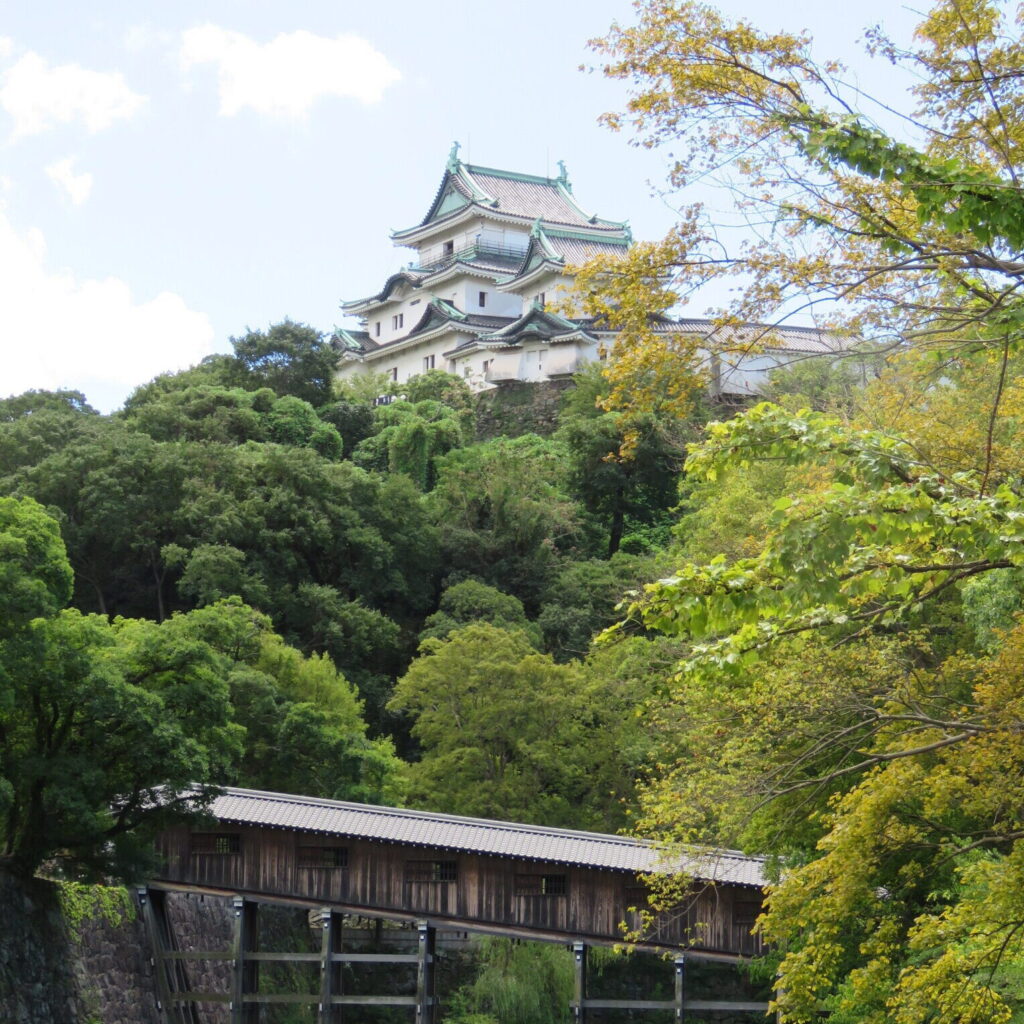
For a different perspective on Japanese castles, head south to Wakayama Castle.
Wakayama Castle was the center of the Kishu Domain, one of the most important domains of the Tokugawa period. The Kishu Tokugawa family was one of the three major branches of the Tokugawa clan, and two members of this branch eventually became shoguns.
But the real story of Wakayama Castle extends far beyond its stone walls.
The castle became the political center of a much larger region, influencing the development of the surrounding city and the culture of Kishu.
Around the castle grew a castle town where samurai, merchants, craftsmen, and other residents lived and worked. The domain’s connections extended toward the coast, agricultural areas, pilgrimage routes, and important cultural centers such as Wakaura.
This makes Wakayama especially interesting for travelers who want to understand how a castle functioned as the center of regional life.
Rather than seeing the castle as an isolated monument, you can follow the historical landscape outward—from the castle and its gardens into the streets of the old castle town, toward Wakaura, and into the wider Kishu region.
The castle also provides a window into the special position of the Kishu Tokugawa family.
Tokugawa Yoshimune, who became the eighth shogun of the Tokugawa shogunate, was born into the Kishu branch. The connection between this regional castle and the highest political office in Edo-period Japan is one of the fascinating stories hidden within Wakayama’s history.
Today, the castle is not simply a place to photograph a reconstructed keep.
It is a starting point for understanding the Kishu Tokugawa domain, Wakayama’s castle town, and the regional culture that developed around them.
What Wakayama helps us understand
How Tokugawa power shaped a regional capital—and how a castle could influence the culture and landscape far beyond its walls.
Related post:
Walking Through the Kishu Tokugawa Domain: Samurai, Gardens, and Castle Town Life
5. Matsumoto Castle: Samurai Power Against a Mountain Landscape

With its dramatic black exterior and the Japanese Alps rising behind it, Matsumoto Castle is one of the most visually distinctive castles in Japan.
Its appearance is very different from the brilliant white Himeji Castle.
This contrast is useful because Japanese castles were not built according to one single aesthetic formula. Their appearance reflected their period, location, purpose, and the political circumstances of their construction.
Matsumoto Castle developed from a fortress during the turbulent Sengoku period and was later expanded as Japan entered the more stable Tokugawa era.
Its architecture preserves features associated with both warfare and the changing role of castles as symbols of political authority.
The surrounding city also offers an important part of the experience.
Matsumoto developed as a castle town, with historic streets, former samurai areas, merchant districts, and traditional architecture surrounding the castle.
The result is a place where the castle and the city can be understood together.
And then there is the landscape.
The mountains surrounding Matsumoto remind us that Japanese history was always shaped by geography. Castles were built according to strategic routes, rivers, plains, mountains, and access to important regions.
What Matsumoto helps us understand
The transition from the age of warfare to the more stable world of the Edo period—and the relationship between castles and landscape.
6. Matsue Castle: A Castle and the Culture of Its Town

In western Japan, Matsue Castle offers one of the most rewarding combinations of castle, water, and historic townscape.
The castle overlooks the surrounding city, while its moat remains an integral part of the landscape.
One of the pleasures of visiting Matsue is seeing how the castle is connected to the town around it.
Historic streets, former samurai residences, waterways, gardens, and traditional cultural practices create a broader historical environment rather than a single isolated monument.
Matsue is also associated with Lafcadio Hearn, the writer better known in Japan as Koizumi Yakumo, whose writings introduced aspects of Japanese culture and folklore to readers overseas.
This gives Matsue another layer of meaning.
A castle town was not simply a place where samurai lived. Over generations, these towns became centers of literature, craftsmanship, food, religion, commerce, and local traditions.
Matsue is particularly appealing to travelers who enjoy slowing down and exploring the atmosphere surrounding a historical monument.
What Matsue helps us understand
The everyday cultural world that developed around an Edo-period castle town.
7. Hirosaki Castle: Japan’s Northern Frontier

Far in the north, Hirosaki Castle tells a different story.
Located in present-day Aomori Prefecture, Hirosaki was the political center of the Tsugaru Domain.
Its northern location is significant.
The Tokugawa period was not simply about what happened in Edo, Kyoto, or Osaka. Regional domains played an important role in managing territories across the Japanese archipelago, and northern domains faced their own geographic and political circumstances.
Hirosaki developed as a castle town and became a center of political and economic life in the Tsugaru region.
Today, the castle is particularly famous for its spectacular cherry blossoms.
But visiting Hirosaki in spring can offer more than a beautiful photograph.
The cherry trees, moats, castle grounds, and surrounding townscape demonstrate how historical landscapes can acquire new cultural meanings over time.
A castle that was once a center of samurai government has become part of a seasonal landscape enjoyed by residents and visitors alike.
That transformation itself is worth considering.
What Hirosaki helps us understand
The diversity of regional Japan during the Edo period—and how historical castle landscapes continue to evolve.
8. The Imperial Palace: From Edo Castle to Modern Japan

At the center of modern Tokyo stands a site that was once the heart of Tokugawa power: the former Edo Castle.
Today, the site is associated with the Imperial Palace, but its history reaches back to the castle that served as the seat of the Tokugawa shoguns.
Edo Castle was at the center of the political system that governed Japan for more than two and a half centuries.
The castle and the enormous city surrounding it became the center of a sophisticated political, economic, and social system.
Then, in the nineteenth century, Japan changed dramatically.
The Meiji Restoration brought the Tokugawa shogunate to an end and transformed the political structure of the country. Edo became Tokyo, and the imperial court moved there.
The site therefore represents one of the most remarkable transitions in Japanese history:
a place that once represented shogunal authority became the center of imperial Japan and eventually the heart of the modern Japanese state.
Much of the original castle architecture has disappeared, but the stone walls, moats, gates, gardens, and enormous scale of the former castle grounds still reveal something of the power once concentrated here.
Unlike Himeji or Matsumoto, the significance of this place is not primarily its surviving castle buildings.
It is the history beneath the modern city.
What the Imperial Palace helps us understand
The rise of the Tokugawa shogunate, the Meiji Restoration, and the transformation of Japan from a feudal society into a modern nation.
Eight Castles, Eight Ways of Seeing Japan
These eight places reveal that there is no single story of the Japanese castle.
| Castle | What it reveals |
|---|---|
| Himeji Castle | The architecture and symbolism of the traditional Japanese castle |
| Osaka Castle | The end of the age of civil war and political unification |
| Nagoya Castle | Tokugawa power and the development of castle towns |
| Wakayama Castle | How a castle shaped an entire regional domain and its culture |
| Matsumoto Castle | The transition from warfare to political stability |
| Matsue Castle | The everyday cultural world of a historic castle town |
| Hirosaki Castle | Regional diversity and the northern domains of Japan |
| Imperial Palace / Edo Castle | The transformation from shogunal rule to modern Japan |
If your interest is architecture, Himeji and Matsumoto are natural choices.
If you want to understand the rise of the Tokugawa, look toward Osaka, Nagoya, Wakayama, and Edo.
If you prefer historic townscapes and local culture, Matsue and Wakayama offer particularly rewarding experiences.
And if you want to see how historical landscapes continue to live within modern Japan, Hirosaki and Tokyo offer fascinating contrasts.
Beyond the Castle Walls
Perhaps the most interesting way to visit a Japanese castle is not to stop at the castle.
Look at what surrounds it.
Where did the samurai live?
Where were the merchants and craftsmen?
Which gardens belonged to the domain?
How did the castle connect to rivers, ports, pilgrimage routes, agricultural areas, and neighboring towns?
And what remains of that historical landscape today?
These questions transform a castle visit from a sightseeing stop into a way of understanding Japan.
This is particularly true in places such as Wakayama.
At Wakayama Castle, the story does not end when you leave the castle grounds. The castle connects naturally with the former Kishu Tokugawa domain, the historic city center, gardens, Wakaura, and the wider Kishu landscape.
The same principle can be applied throughout Japan.
A Japanese castle is rarely just a building. It is the center of a historical landscape.
And once you start looking beyond the walls, you begin to see a much larger story—one about power, people, cities, culture, and the changing face of Japan.
Related Posts
- 3 Days in Wakayama City: A Slow Journey Through Castle, Coast & Local Life
- Why Wakaura Has Inspired Poets for More Than 1,000 Years
- Gardens Between Castle and Sea in Wakayama City
No responses yet