
Japan is often described as a country of temples and shrines. But that description misses something important.
Many of Japan’s most sacred places are not simply buildings where people go to pray. They are mountains, forests, islands, waterfalls and entire landscapes where nature, mythology, religion and history have become intertwined over centuries.
In some places, a mountain itself is sacred. In others, a waterfall became a manifestation of the divine, or an island came to be regarded as a sacred realm separated from the ordinary world.
This is one of the most fascinating ways to experience Japan: rather than simply visiting a famous temple or shrine, ask why this particular landscape became sacred in the first place.
Here are eight places across Japan where nature, faith and history meet.
1. Koyasan, Wakayama — A Sacred Mountain That Became a Buddhist World
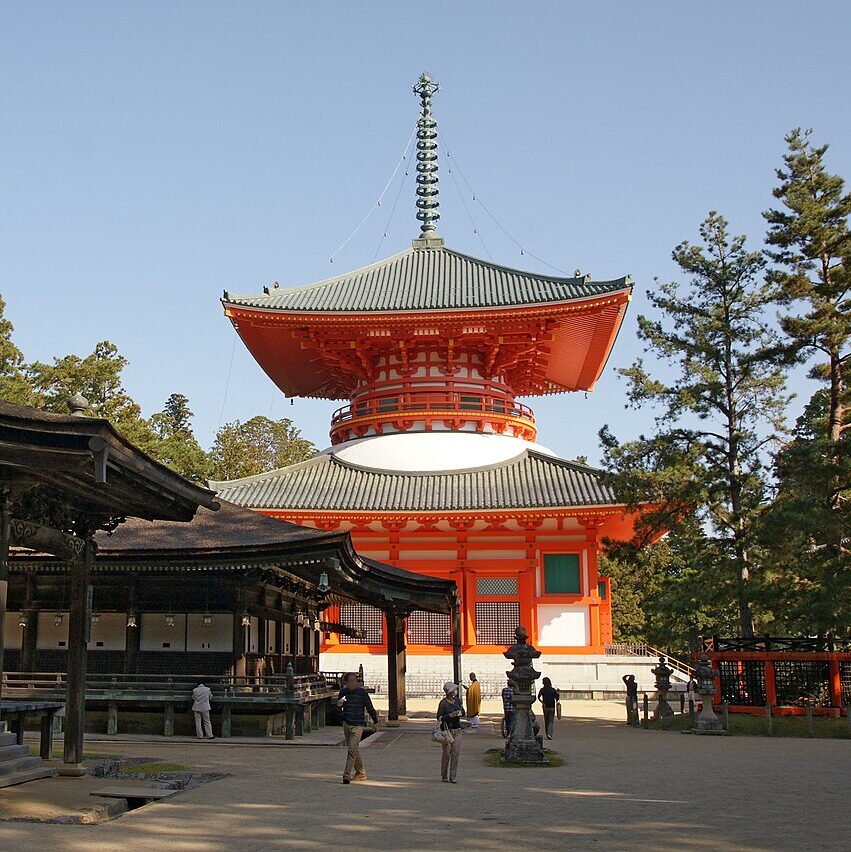
High in the mountains of Wakayama, Koyasan feels surprisingly different from the Japan of bustling cities and famous tourist attractions.
Founded in the early 9th century by Kukai, also known as Kobo Daishi, Koyasan became the center of Shingon Esoteric Buddhism. Over the centuries, a religious settlement developed around the mountain, and today the area is home to numerous temples.
But Koyasan is more than a collection of temples.
The forest itself is an important part of the experience.
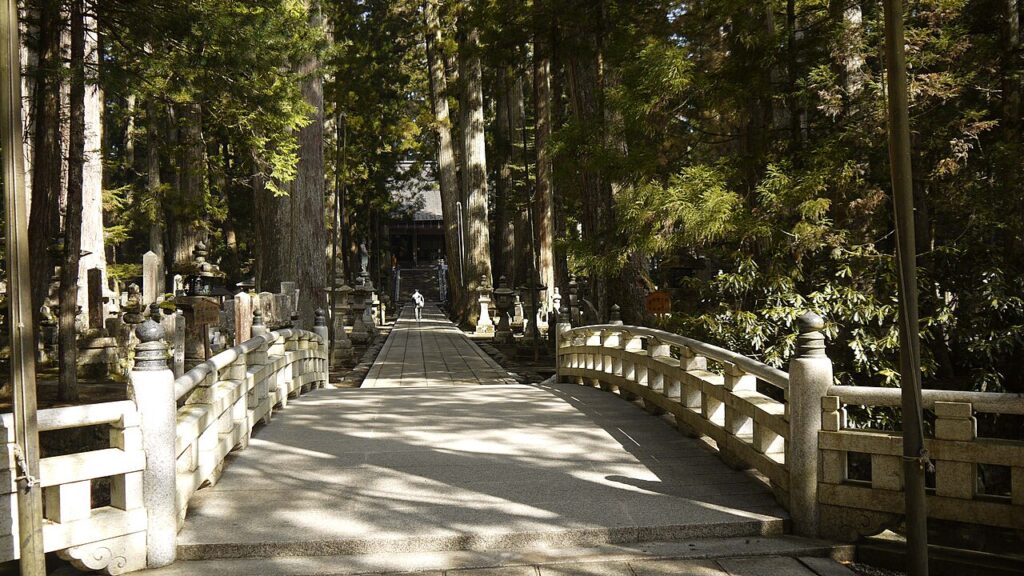
Walking beneath towering cedar trees toward Okunoin, the mountain gradually feels less like a conventional tourist destination and more like a sacred landscape. Stone monuments and graves extend deep into the forest, while lanterns and ancient trees create a powerful sense of continuity between past and present.
One of the most meaningful ways to experience Koyasan is to stay overnight at a temple lodging, or shukubo. Guests may experience Buddhist vegetarian cuisine, morning prayers, meditation or sutra copying.
The interesting question here is not simply, “What temple should I visit?”
It is:
How does an entire mountain become a religious world?
Koyasan is part of the UNESCO World Heritage property known as the Sacred Sites and Pilgrimage Routes in the Kii Mountain Range, together with Kumano Sanzan and Yoshino & Omine. These sacred sites and their pilgrimage routes demonstrate more than 1,200 years of religious traditions in the Kii Mountains.
Related post:
Is Koyasan Easy to Visit? Transport, Access & Common Mistakes
2. Kumano Sanzan, Wakayama — Where Forests, Waterfalls and Gods Meet
If Koyasan represents a sacred mountain shaped by Buddhism, Kumano offers a very different experience.
The Kumano region of the Kii Peninsula has long been associated with the worship of nature. Mountains, rivers, waterfalls and enormous trees were not simply scenery. They could be understood as places where the sacred was present.
The heart of the region is the Kumano Sanzan, the three great shrines:
- Kumano Hongu Taisha
- Kumano Hayatama Taisha
- Kumano Nachi Taisha
The three shrines are connected by the ancient pilgrimage routes collectively known as the Kumano Kodo.
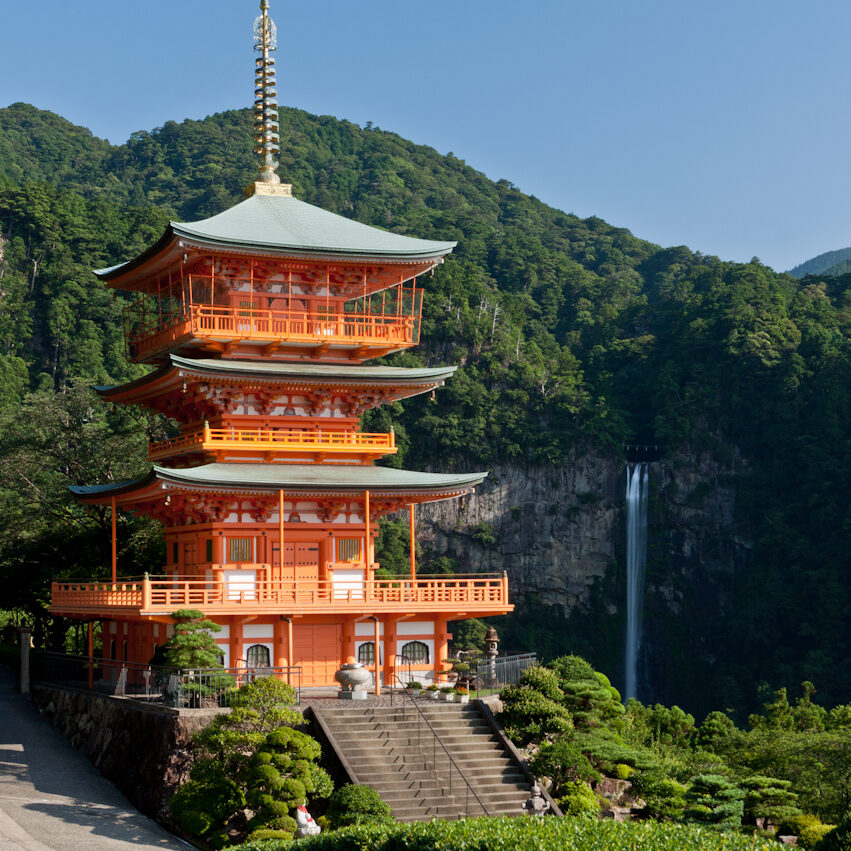
At Nachi, the relationship between nature and religion becomes particularly dramatic. Nachi Falls plunges through the forest beside Kumano Nachi Taisha and Seiganto-ji Temple, creating one of Japan’s most memorable sacred landscapes.
But perhaps the most interesting aspect of Kumano is that the sacred landscape was never completely separated from everyday life.
People walked through forests, crossed mountain passes, visited villages and worshipped at shrines. Pilgrimage was not simply a visit to a religious building; the journey through the landscape itself became part of the spiritual experience.
Kumano is therefore a place where the distinction between “nature” and “religion” becomes difficult to draw.
And that may be one of the keys to understanding traditional Japanese spirituality.
Related post:
Kumano Kodo Guide: Walking Through Japan’s Living Traditions
3. Yoshino & Omine, Nara — Sacred Mountains and the World of Shugendo
Further north in the Kii Mountains lies another extraordinary sacred landscape: Yoshino and Omine.
Yoshino is famous today for its spectacular cherry blossoms, but its significance goes much deeper.
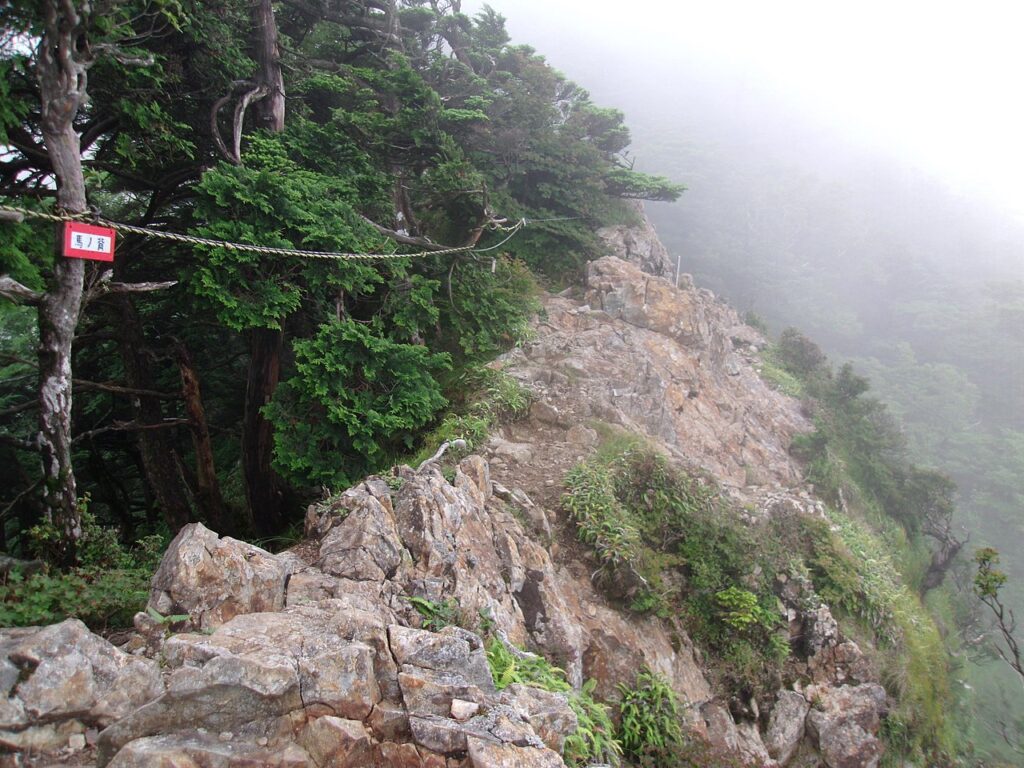
The mountains became an important center of Shugendo, a Japanese mountain ascetic tradition associated with practitioners known as yamabushi. Rather than separating religious practice from the natural world, Shugendo uses mountains themselves as places of physical and spiritual discipline.
The landscape is therefore not merely the backdrop to religious practice.
The mountain is the practice.
The forests, cliffs, paths and peaks become part of a journey of endurance and transformation.
Kimpusen-ji Temple in Yoshino is one of the important centers associated with Shugendo. From here, the cultural landscape extends into the mountains of Omine.
Together with Koyasan and Kumano Sanzan, Yoshino & Omine form the three major sacred areas recognized within the UNESCO World Heritage property of the Kii Mountain Range.
For travelers interested in hiking, Yoshino and Omine offer a particularly interesting perspective: in Japan, walking through a mountain can itself be a religious act.
4. Ise Jingu, Mie — A Sacred Forest at the Heart of Shinto

Ise Jingu is one of the most important Shinto sacred sites in Japan.
The shrine complex is associated particularly with Amaterasu Omikami, the sun goddess and one of the central deities of Japanese mythology.
Yet one of the first things visitors notice is not a spectacular monumental building.
It is the forest.
The approach to the shrine passes through an environment of ancient trees, gravel paths and carefully maintained natural surroundings. The architecture is deliberately restrained compared with some of Japan’s more visually dramatic temples and shrines.
This creates a very different kind of sacred atmosphere.
At Ise, the question is not simply how impressive a religious building can be.
Instead, the experience encourages visitors to notice the relationship between the shrine and the natural environment surrounding it.
The tradition of Shinto developed from forms of indigenous Japanese nature worship, and Ise offers an opportunity to consider how sacredness can be expressed through ritual, landscape and continuity rather than monumental architecture.
For anyone interested in Japanese religion, Ise is an important counterpoint to the Buddhist world of Koyasan.
5. Izumo Taisha, Shimane — Where Japanese Mythology Still Shapes the Landscape

On the Japan Sea coast of Shimane stands Izumo Taisha, one of Japan’s most important Shinto shrines.
Its significance is deeply connected with Japanese mythology and the deity Okuninushi.
Izumo is particularly fascinating because its sacred identity cannot be separated from the myths associated with the region.
Japanese mythology is not simply a collection of stories from a distant past. At Izumo, mythology still influences the way people understand the place.
This makes Izumo an excellent destination for travelers interested in the relationship between myth, landscape and national identity.
The surrounding region also has its own distinctive atmosphere. The Japan Sea coast, ancient traditions and stories of the gods create a very different experience from the more familiar image of Japan centered around Tokyo, Kyoto and Osaka.
If Ise invites visitors to think about the continuity of Shinto tradition, Izumo invites a different question:
What happens when mythology becomes attached to a real landscape?
6. Mount Fuji — When a Mountain Becomes Sacred

Few Japanese landscapes are as recognizable as Mount Fuji.
Today, it is an icon of Japan, appearing in paintings, photographs, advertisements and souvenirs around the world.
But long before it became a symbol of the country, Fuji was a sacred mountain.
Its enormous scale and volcanic character made it a natural object of reverence. Religious traditions associated with Fuji developed over the centuries, and climbing the mountain could become a form of pilgrimage.
This is an important distinction.
For many travelers today, climbing Mount Fuji is an outdoor adventure.
Historically, however, the mountain could also be understood as a place of spiritual significance.
This dual identity continues today. Fuji is simultaneously a natural wonder, cultural symbol and sacred landscape.
It also provides an interesting comparison with Koyasan, Kumano and Dewa Sanzan.
In all of these places, the mountain is more than scenery.
The physical landscape itself carries meaning.
7. Dewa Sanzan, Yamagata — A Journey Through Death and Rebirth

In northern Japan, the three sacred mountains of Dewa Sanzan offer perhaps one of the most unusual spiritual landscapes in the country.
The three mountains are:
- Mount Haguro
- Mount Gassan
- Mount Yudono
Together they form one of Japan’s great mountain-worship traditions.
The journey through Dewa Sanzan is traditionally associated with spiritual transformation and rebirth.
This gives the mountains a fascinating symbolic structure. The pilgrimage can be understood as a journey away from ordinary life, through a symbolic experience of death and transformation, and toward renewal.
Mount Haguro is often the most accessible starting point for visitors, with a famous approach through a cedar forest leading toward its sacred summit.
Dewa Sanzan demonstrates that Japanese pilgrimage is not necessarily about reaching a single destination.
Sometimes the transformation that occurs while moving through the landscape is the destination.
For travelers who have already experienced the Kumano Kodo, Dewa Sanzan provides an intriguing comparison: both are mountain pilgrimage traditions, but each has developed its own landscape, rituals and spiritual symbolism.
8. Itsukushima, Hiroshima — A Sacred Island Rising from the Sea

Off the coast of Hiroshima lies Itsukushima, commonly known as Miyajima.
The island is famous for the great torii gate of Itsukushima Shrine, which appears to float in the sea at high tide.
It is one of Japan’s most recognizable images.
But the image becomes even more interesting when you understand the idea behind it.
The island itself was traditionally regarded as sacred, and the shrine was built in a way that emphasizes the separation between the ordinary world and the sacred realm.
Water becomes part of the architecture.
The changing tide transforms the landscape throughout the day, meaning that the relationship between shrine, sea and mountain is constantly changing.
Behind the shrine rises Mount Misen, adding another layer to the sacred landscape.
This is a useful reminder that Japanese sacred places are often not isolated buildings.
They can be entire environments in which mountains, forests, water and architecture interact.
What Makes a Place Sacred in Japan?
Looking at these eight destinations together reveals something interesting.
They are very different from one another.
Koyasan is a Buddhist mountain.
Kumano is a landscape of pilgrimage, nature worship and sacred shrines.
Yoshino & Omine are associated with mountain asceticism.
Ise is one of the great centers of Shinto.
Izumo connects mythology with place.
Mount Fuji combines natural power, religious tradition and national symbolism.
Dewa Sanzan turns mountain pilgrimage into a journey of transformation.
Itsukushima creates a sacred relationship between island, sea and mountain.
Yet they share one important characteristic.
None of them is sacred simply because someone built a beautiful building there.
The landscape came first.
The mountain, forest, waterfall, island or coastline provided the physical setting. Over generations, people created stories, rituals, pilgrimages and religious traditions around those landscapes.
This is particularly clear in the Kii Mountains.
UNESCO describes Koyasan, Kumano Sanzan and Yoshino & Omine as a cultural landscape reflecting the fusion of indigenous Shinto traditions of nature worship with Buddhism, connected by ancient pilgrimage routes. The World Heritage property includes not only religious buildings but also forests and pilgrimage paths.
That is why walking through these places can feel different from simply visiting a temple or shrine.
You are not only looking at history.
You are moving through the landscape that created the history.
Seeing Japan Through Its Sacred Landscapes
For first-time visitors, Japan’s most famous temples and shrines can easily become a checklist.
But traveling through its sacred landscapes offers another way of understanding the country.
Instead of asking:
“What is the most famous shrine?”
try asking:
“Why did people consider this particular mountain, forest or island sacred?”
That question can lead you far beyond the usual tourist routes.
It can take you into the forests of Wakayama, along the pilgrimage paths of Kumano, into the mountains of Nara and Yamagata, to the forests of Ise, the mythological landscape of Izumo, the slopes of Mount Fuji and the tidal waters surrounding Itsukushima.
And perhaps that is the most rewarding way to explore sacred Japan.
Do not simply visit the shrine. Walk into the landscape behind it.
Related Posts
- Best Hiking Destinations in Japan: 8 Places Beyond the Usual Trails
- Beyond Tokyo and Kyoto: 6 Places to Experience a Different Japan
No responses yet