

From Ancient Pilgrimage Routes to Wild Mountain Landscapes
When people think about hiking in Japan, the same destinations often come to mind:
Mount Fuji.
Mount Takao.
The Japanese Alps.
They are spectacular, but they are only part of the story.
Japan is a country of mountains, forests, islands, pilgrimage routes, volcanic landscapes, and historic roads. Some of its most rewarding hikes are found far from the country’s busiest tourist routes.
And in many places, hiking is about much more than reaching a summit.
You can walk an ancient pilgrimage road through sacred forests, follow an old highway between post towns, wander beneath enormous cedar trees, or hike through landscapes where wildlife and people still coexist.
Here are eight of the best hiking destinations in Japan for travelers looking beyond the usual trails.
1. Kumano Kodo, Wakayama
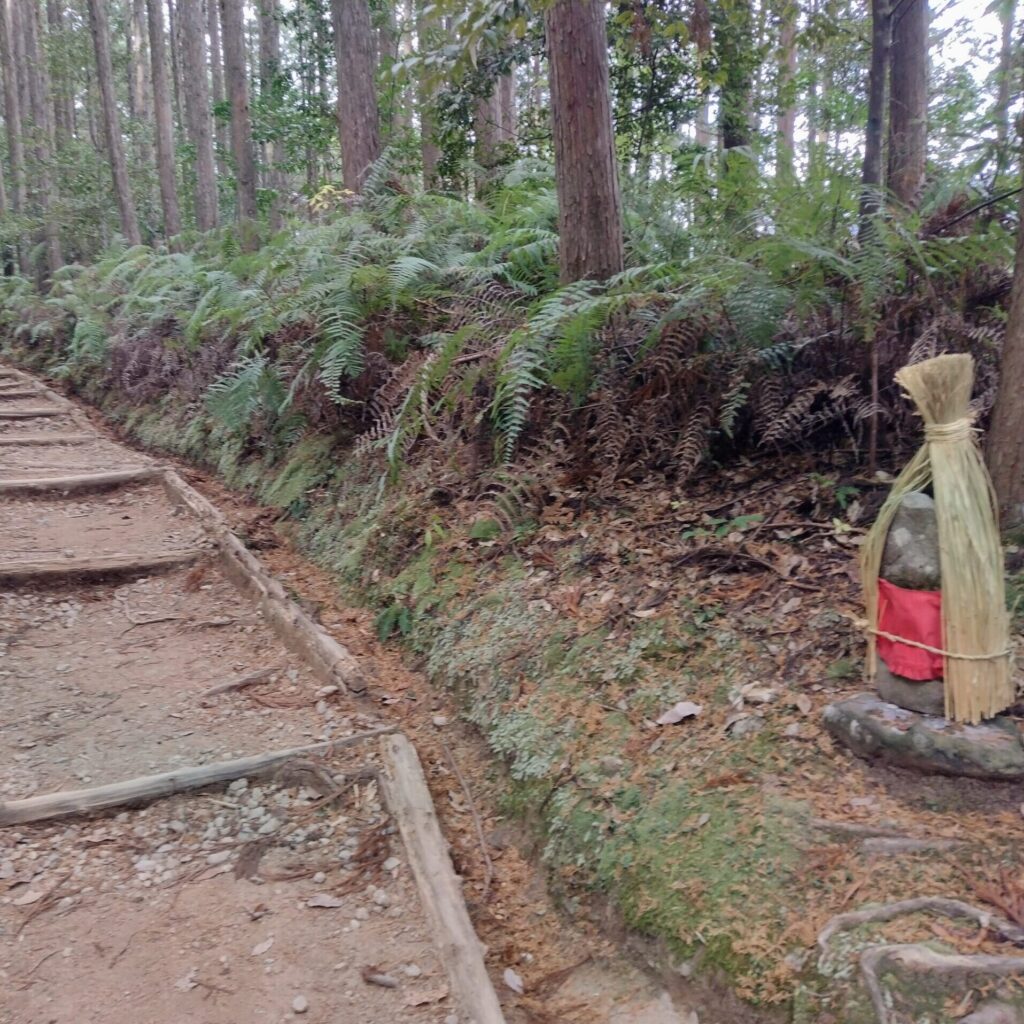
Walk Through Japan’s Sacred Landscape
If you want a hike that combines nature, history, spirituality, and local life, the Kumano Kodo is difficult to beat.
Located in the Kii Peninsula of Japan, the Kumano Kodo is not a single trail but a network of ancient pilgrimage routes leading toward the sacred Kumano region.
Pilgrims have traveled through these mountains for more than a thousand years, eventually reaching the three great shrines known as the Kumano Sanzan.
The routes pass through dense forests, mountain villages, stone-paved sections, small shrines, waterfalls, and traditional settlements. The landscape itself is part of the experience.
UNESCO describes the sacred sites and pilgrimage routes of the Kii Mountain Range as a living cultural landscape reflecting more than 1,200 years of interaction between sacred mountains, Shinto traditions, and Buddhism.
Why hike here?
The biggest attraction is that the destination is not simply the endpoint.
The walking is the experience.
You can follow sections of the Nakahechi Route through Wakayama, walk historic passes, stay in small local accommodations, and experience the transition from ordinary countryside to the sacred landscape of Kumano.
And you do not have to spend a week on the trail.
Shorter sections are possible, including day hikes, while a longer journey can be built around several days of walking. JNTO notes that the traditional Kumano Kodo experience can take around five days, but shorter hikes are also possible.
For travelers interested in Japan beyond temples and cities, this is one of the most meaningful walks in the country.
Best for:
Pilgrimage, spirituality, history, forest hiking, slow travel, cultural immersion
Consider:
Nakahechi for a classic Kumano experience, or explore individual sections if you have limited time.
Related post:
Which Kumano Kodo Route Is Right for You?
2. Nakasendo Trail, Nagano & Gifu

Walk Japan’s Historic Highway
Long before Japan’s modern railways connected Tokyo, Nagoya, and Kyoto, travelers crossed the mountains on historic highways.
The Nakasendo was one of the major routes connecting Edo, present-day Tokyo, with Kyoto.
Today, sections of the old road can still be walked through the Kiso Valley.
The most famous stretches connect preserved post towns such as Magome and Tsumago, where traditional wooden buildings, narrow streets, and old inns give the journey a remarkable sense of continuity.
But the appeal is not simply historical.
You walk through forests, rural settlements, rice fields, and mountain valleys, moving between communities much as travelers did centuries ago.
Unlike a summit hike, the destination here is often the journey between towns.
Why hike here?
The Nakasendo is ideal for travelers who want a relatively accessible combination of:
- Hiking
- Japanese history
- Traditional architecture
- Rural landscapes
- Local inns
- Food and hospitality
It is also a good introduction to multi-day walking in Japan because individual sections can be combined with public transportation.
Best for:
Historic trails, traditional villages, first-time multi-day hikers, culture and scenery
3. Yakushima, Kagoshima

Hike Beneath Ancient Cedar Forests
Far south of Japan’s main cities lies Yakushima, an island famous for its extraordinary forests.
The island receives abundant rainfall, creating a landscape of moss-covered rocks, streams, waterfalls, and enormous ancient cedar trees.
For many visitors, the forest is the destination.
The famous Jomon Sugi is one of Yakushima’s most iconic trees, but you do not necessarily need to undertake the longest trek to experience the island’s atmosphere.
The Shiratani Unsuikyo Ravine offers forest walks through a landscape that feels almost otherworldly.
JNTO describes Yakushima as a destination where relatively accessible paths pass through ancient cedar forests, while more demanding routes lead into the island’s mountainous interior.
Why hike here?
Yakushima offers a very different experience from hiking on the Japanese mainland.
The combination of:
rain + moss + ancient trees + subtropical island climate
creates a landscape unlike almost anywhere else in Japan.
It is particularly appealing to photographers and travelers who want to experience the atmosphere of an ancient forest rather than simply climb a mountain.
Best for:
Ancient forests, photography, nature, island travel, atmospheric hiking
4. Daisetsuzan National Park, Hokkaido

Hike Across Japan’s Wildest Mountain Landscape
For a completely different Japan, head north.
Daisetsuzan National Park in central Hokkaido is Japan’s largest national park and contains a rugged landscape of volcanic mountains, alpine terrain, forests, and hot springs.
Mount Asahi, the highest mountain in Hokkaido, is one of the park’s major objectives.
This is a place where hiking feels much more remote than walking near Japan’s major cities.
The landscape is broad and open, and the scale of the mountains is quite different from the forested pilgrimage routes of Wakayama.
Why hike here?
Daisetsuzan is especially attractive for hikers who want:
- Alpine scenery
- Volcanic landscapes
- Long-distance mountain walking
- Autumn colors
- A sense of wilderness
The hiking season is concentrated in the warmer months, while winter transforms the region into a destination for snow sports.
Best for:
Serious hikers, alpine scenery, wilderness, volcanic landscapes
5. Shiretoko Peninsula, Hokkaido

Hike Where Wildlife Still Shapes the Landscape
At the northeastern edge of Hokkaido, the Shiretoko Peninsula offers one of Japan’s strongest wilderness experiences.
The peninsula is home to mountains, forests, waterfalls, lakes, and a remarkable concentration of wildlife.
One of the easier ways to experience the area is the Shiretoko Five Lakes walking area, while more demanding routes lead toward mountains such as Mount Rausu.
But Shiretoko is not a place where hiking should be treated casually.
Brown bears live in the region, and visitors need to follow local safety guidance. JNTO specifically recommends guided hiking for some routes because of the presence of bears.
Why hike here?
Shiretoko offers something rare in Japan:
the feeling that you are entering an ecosystem rather than simply visiting a scenic attraction.
The experience changes dramatically with the seasons. Waterfalls and green landscapes dominate summer, while drift ice transforms the coast during winter.
Best for:
Wildlife, wilderness, northern Japan, nature photography
Important:
Check current trail and wildlife conditions before hiking, and follow local bear-safety rules.
6. Kamikochi, Nagano

Walk Through Japan’s Mountain Heartland
Kamikochi is one of the best places in Japan to experience the dramatic scenery of the Northern Japan Alps without immediately committing to a technical mountain climb.
The valley is surrounded by spectacular peaks, while the Azusa River runs through the center of the landscape.
Popular walks include routes around Taisho Pond, the river, and the surrounding forests.
For experienced hikers, Kamikochi is also a gateway to more demanding alpine routes.
Why hike here?
Kamikochi is a good choice if you want the visual drama of the Japanese Alps while keeping the walking itself flexible.
You can enjoy a relatively gentle valley walk—or use the area as the starting point for serious mountain adventures.
JNTO notes that Kamikochi is generally open from April to mid-November, with autumn being particularly impressive.
Best for:
Mountain scenery, photography, autumn hiking, flexible hiking itineraries
7. Shikoku Henro, Shikoku

Follow a 1,000-Kilometer Pilgrimage
If the Kumano Kodo is Japan’s great pilgrimage experience in the Kii Peninsula, the Shikoku Henro offers another extraordinary way to understand Japan through walking.
The pilgrimage connects 88 temples across the four prefectures of Shikoku.
Completing the entire pilgrimage on foot takes considerable time—JNTO notes that the classic journey can take more than 45 days. But, just as with the Kumano Kodo, travelers can walk selected sections rather than completing the entire route.
The pilgrimage is traditionally associated with Kukai, also known as Kobo Daishi, and the temples, roads, villages, mountains, and coastal landscapes together form the experience.
Why hike here?
The Shikoku pilgrimage is particularly interesting for travelers who want to understand how religion, walking, hospitality, and everyday Japanese life can coexist.
You are not simply walking through a national park.
You are moving through inhabited landscapes.
Small towns, temples, local shops, pilgrims, and rural communities become part of the journey.
Best for:
Long-distance walking, pilgrimage, Japanese Buddhism, slow travel, cultural immersion
8. Mount Daisen, Tottori

A Sacred Mountain in Western Japan
Mount Daisen is the highest mountain in the Chugoku region and one of western Japan’s most interesting hiking destinations.
Its appeal comes from the combination of mountain scenery and religious history.
The mountain has long been regarded as sacred, and the area around Daisenji Temple preserves an important Buddhist tradition.
Hiking routes lead into the mountain landscape, while the summit and ridges provide broad views across the surrounding countryside.
JNTO describes Daisen as both a major mountain destination and a spiritual landscape associated with Buddhist and Shinto sites.
Why hike here?
Mount Daisen is a great alternative for travelers who want to combine:
mountains + spirituality + rural Japan
without following the more familiar routes around Tokyo, Kyoto, or the Japanese Alps.
Autumn is particularly attractive when the surrounding forests change color.
Best for:
Mountain hiking, spirituality, autumn foliage, rural Japan
Which Hiking Destination in Japan Is Right for You?
Japan’s hiking destinations are surprisingly different.
| Destination | Best Experience | Difficulty / Style |
|---|---|---|
| Kumano Kodo | Pilgrimage, spirituality, culture | Moderate to challenging |
| Nakasendo | Historic roads & villages | Moderate |
| Yakushima | Ancient forests | Easy to challenging |
| Daisetsuzan | Wilderness & alpine scenery | Moderate to challenging |
| Shiretoko | Wildlife & wilderness | Easy to challenging |
| Kamikochi | Mountain scenery | Easy to challenging |
| Shikoku Henro | Long-distance pilgrimage | Flexible, from easy to very demanding |
| Mount Daisen | Sacred mountain & nature | Moderate |
The important thing is that these destinations are not interchangeable.
If you want dramatic mountains, choose Kamikochi or Daisetsuzan.
If you want ancient forests, choose Yakushima.
If wildlife is your priority, Shiretoko is difficult to match.
If you want to combine history and walking, consider the Nakasendo.
And if you want to understand something deeper about Japan through walking, the two great pilgrimage traditions of Kumano Kodo and Shikoku Henro deserve special attention.
Why Hiking Is One of the Best Ways to See a Different Japan
One of the great advantages of hiking in Japan is that the trail often connects things that are difficult to experience from a sightseeing bus.
A mountain path may lead to a small shrine.
A forest road may emerge into a farming village.
An old pilgrimage route may pass through a hot spring town.
A historic highway may connect two preserved communities.
This is why hiking in Japan can be about much more than exercise.
Walking changes the scale at which you experience a place.
You notice the sound of water.
The shape of a roof.
A small roadside Jizo statue.
A farmer working in a field.
The changing vegetation as you gain altitude.
The way a village sits between a mountain and a river.
These details are often what make a journey memorable.
Beyond the Famous Trails: Consider Wakayama
For travelers who have already visited Tokyo, Kyoto, and Osaka, Wakayama offers an especially interesting combination of hiking and cultural travel.
The Kumano Kodo provides the internationally recognized pilgrimage experience, but it is only the beginning.
Beyond the major pilgrimage routes, Wakayama has coastal trails, forest walks, historic roads, mountain villages, and landscapes where hiking can be combined with food, hot springs, temples, traditional crafts, and local life.
This makes the region particularly suitable for travelers who do not want their trip to be simply:
hotel → attraction → photo → train → next attraction.
Instead, you can build a journey around walking and then allow the landscape to lead you toward the next experience.
A morning hike might become an afternoon in a historic town.
A pilgrimage walk might lead to a local onsen.
A coastal trail might finish with seafood.
And several days of hiking can become part of a much longer journey through the Kii Peninsula.
That is one of the reasons the Kumano Kodo is so different from a conventional hiking destination: the trail is deeply connected to the cultural landscape around it. JNTO describes the route as a network of sacred trekking routes connecting the Kumano Sanzan with other natural and spiritual sites across the Kii Peninsula.
Final Thoughts
Japan’s best hikes are not necessarily its highest mountains.
Some of the most memorable walks are found on old roads, pilgrimage routes, forest paths, island trails, and sacred mountains.
For travelers looking beyond the usual Japan itinerary, these destinations offer another way to experience the country—more slowly, more physically, and often more deeply.
And among them, the Kumano Kodo stands out for the way walking, spirituality, history, nature, and living communities remain connected.
If you are planning a hiking trip to Japan, don’t ask only:
“Which mountain should I climb?”
A better question might be:
“What kind of Japan do I want to walk through?”
Explore Hiking in Wakayama
If the Kumano Kodo interests you but you would like to experience more than the standard pilgrimage itinerary, consider combining hiking with the wider cultural landscapes of Wakayama.
From coastal walks and historic roads to local food, traditional towns, temples, hot springs, and everyday life, the region offers many ways to create a more personal journey through the Kii Peninsula.
Private and custom hiking journeys can be arranged around your interests, walking level, available time, and the places you would like to explore.
Learn more about Curated Kii Peninsula Journey
No responses yet