

In Japan—a nation surrounded by the sea—you can enjoy a wide variety of fish throughout the year. Wakayama, located south of Osaka, boasts an abundant catch thanks to its coastline along the Kii Channel and the Pacific Ocean. However, if you are visiting Wakayama from abroad and would like to try some of the local seafood, you might find it difficult to know what to choose.
Here, the sea is closely connected to everyday life. Fishing boats leave small harbors before sunrise, local fishermen bring their catches directly to port markets, and traditional processing methods have been passed down through generations. Each coastal town has its own relationship with the ocean, shaped by local fishing grounds, seasons, and food traditions.
From sweet shrimp landed at a small fishing port in Wakayama City to fresh tuna at the busy harbor of Nachikatsuura, the seafood of Wakayama tells the story of the region itself.
If you want to explore Japanese food culture beyond famous restaurants and well-known tourist destinations, these seven seafood experiences offer an excellent introduction to the coastal life of the Kii Peninsula.
1. Ashiaka Shrimp in Saikazaki: A Taste of a Traditional Fishing Village
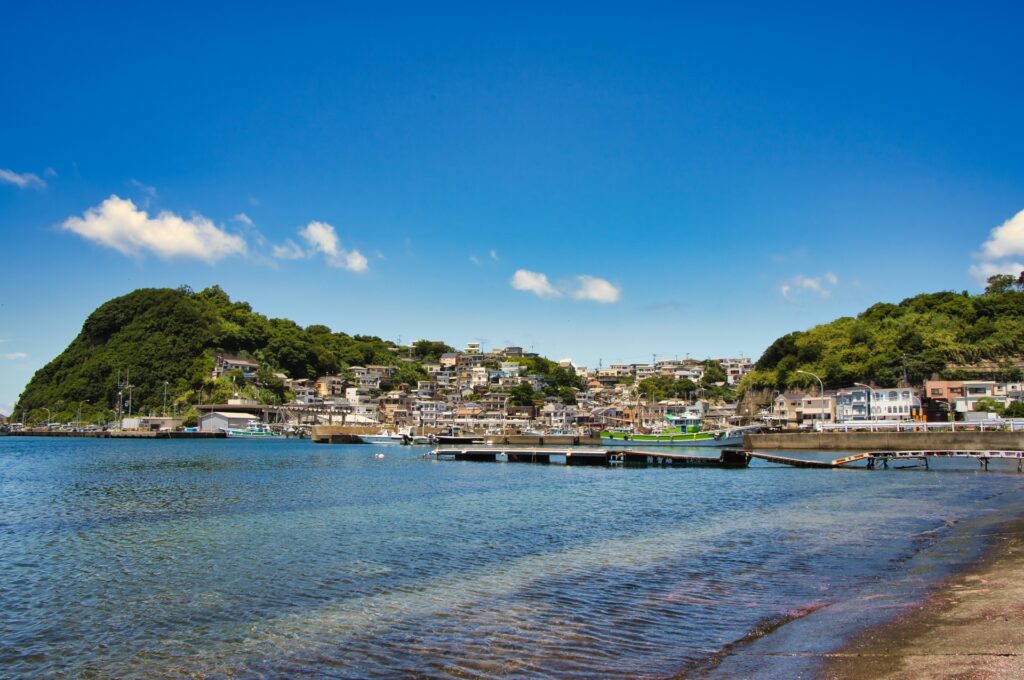
Located on the western edge of Wakayama City, Saikazaki is a fishing village with a distinctive landscape. Houses are built close together along steep slopes, creating a maze of narrow lanes overlooking the harbor. The village has a long relationship with the sea, and fishing remains an important part of local life.
One of its specialties is ashiaka ebi, or red-legged shrimp. Its formal Japanese name is kuma-ebi, and it is known for its reddish and white markings, tender texture, and rich sweetness. Caught in the waters of the Kii Channel, it is particularly popular during the winter season, especially from November to February.
Ashiaka shrimp can be enjoyed in several ways. Sashimi highlights its natural sweetness, while salt-grilling brings out its rich flavor. Tempura is another popular preparation, allowing the shrimp’s delicate texture to contrast with a crisp coating.
But what makes Saikazaki especially interesting is not just the shrimp itself. At Saikazaki Fishing Port, fishermen sometimes sell their catches directly from their boats. Visitors can see the fishing boats returning to the harbor and purchase seafood brought in that day, depending on the weather and fishing conditions.
This is a very different experience from visiting a large seafood market. You are seeing a small fishing community at work, where the availability of seafood depends on the daily rhythm of the ocean.
For travelers interested in local life, Saikazaki is worth exploring beyond its seafood. Walking through the village’s narrow streets and looking out across the harbor gives a glimpse of a traditional Japanese coastal settlement.
Saikazaki Port Map: https://share.google/EGO3TkIxqvQzLI21H
2. Arida Tachiuo: Discovering the Local Favorite Known as “Taccho”
In Arida City, cutlassfish, known in Japanese as tachiuo, is one of the most familiar local seafood specialties.
The fish has a long, slender, silver body resembling a sword. Although it is considered a high-quality fish, local people affectionately call it Taccho. It has been part of everyday meals in the area for generations.
The waters around Minoshima Fishing Port are particularly suitable for cutlassfish fishing. The Kii Channel, where waters from Osaka Bay meet the influence of the Kuroshio Current, provides a productive fishing environment. Arida is one of Wakayama’s most important landing areas for this species.
The main season is generally from June to October. During this period, cutlassfish has a delicate flavor and firm texture.
Fresh cutlassfish can be enjoyed as sashimi, grilled with salt, simmered, or prepared as tempura. One particularly interesting local specialty is honeku tempura. Rather than simply frying slices of fish, the cutlassfish is minced, including its bones, and made into a fish-paste fritter.
It is a good example of how local food culture develops around the characteristics of a particular fish and the ways people have traditionally prepared it.
To learn more about the local fishing industry, visit the area around Minoshima Fishing Port. The fishermen’s cooperative operates Hama no Utase, a seafood market and dining facility where visitors can enjoy seafood dishes and purchase local products.
Arida is also known for its mandarin oranges, and the surrounding landscape combines fishing ports with citrus groves on the hillsides. Exploring both the sea and the agricultural areas offers a broader understanding of how people in this region live with the natural environment.
Hama no Utase Map: https://share.google/iZ6qQRHa4TYrtlMj0
3. Yuasa Shirasu: The Delicate Flavor of Whitebait and a Town of Soy Sauce
Yuasa is widely known as the birthplace of Japanese-style soy sauce, but its connection with the sea is equally important.
The town faces the Kii Channel, and the surrounding waters have supported a long-established whitebait fishing industry. Whitebait, called shirasu in Japanese, consists of very young fish, mainly Japanese anchovy, sardine, and round herring.
Yuasa is particularly known for boiled whitebait. After being landed, the fish are transported to nearby processing facilities and quickly boiled in large kettles with salt. They are then spread out to dry in the sunshine, producing a product known as chirimen.
This process helps preserve the delicate fish while concentrating its flavor.
One of the most popular ways to enjoy shirasu is shirasu-don: a bowl of rice topped with whitebait. In Yuasa, it is often served with shoyu soy sauce or Kinzanji miso, connecting two of the town’s most important food traditions.
The contrast between the gentle sweetness of the fish and the rich, fermented flavors of local seasonings makes this simple dish particularly satisfying.
Spring, especially from late March through May, is an important season for whitebait fishing. Boiled shirasu is available throughout the year, but the spring catch is especially associated with the local food culture.
What makes Yuasa interesting for visitors is the opportunity to connect food with history. After enjoying shirasu-don, you can explore the historic district, where traditional shoyu breweries and old merchant houses preserve the atmosphere of a former trading town.
Rather than treating seafood and shoyu soy sauce as separate attractions, Yuasa allows visitors to understand how the sea, fermentation, trade, and everyday cooking have developed together.
Yuasa-cho Map: https://share.google/HuTyWhPfg7ti74mZH
4. Fresh Tuna in Nachikatsuura: Experience the Energy of a Working Fish Market
At the southern end of Wakayama Prefecture, Nachikatsuura is one of Japan’s best-known towns for fresh tuna.
Katsuura Fishing Port is particularly famous for its landings of fresh, unfrozen tuna. Much of the tuna is caught using longline fishing methods in the waters off the Kii Peninsula. Unlike tuna that is frozen soon after being caught, fresh tuna is brought to market without freezing, allowing visitors to enjoy its distinctive texture and flavor.
The fishing port is especially lively in the early morning, when tuna are brought ashore and sold through auctions.
For visitors, watching the market in operation can be as memorable as eating the fish itself. Large tuna are lined up for inspection, buyers examine their quality, and auction activity takes place before much of the town has started its day.
At Katsuura Port Nigiwai Market, you can enjoy fresh tuna in different forms, including sashimi, sushi, and maguro-don, a rice bowl topped with tuna. The market also offers other local seafood and regional dishes.
For a more immersive experience, guided market tours and tuna-cutting activities are available on selected days and by reservation. These experiences provide an opportunity to learn how tuna is evaluated, handled, and prepared.
Nachikatsuura is also an important destination for visitors exploring the Kumano region. The town is close to the World Heritage Kumano Kodo pilgrimage routes, Nachi Falls, and Kumano Nachi Taisha Grand Shrine.
Combining a morning visit to the tuna market with an afternoon exploring the spiritual heritage of Kumano creates a particularly rewarding day. It brings together two aspects of the region that may initially seem unrelated: the religious history of the mountains and the working life of the fishing communities along the coast.
Nigiwai Market Map: 〒649-5335 https://share.google/ew3tQxWEczqD1dRU0
5. Bonito from the Kinan Coast: The Freshness of Traditional Kenken Fishing
Bonito, or katsuo, is one of the fish closely associated with the Pacific coast of Wakayama.
The Kinan region, in the southern part of the prefecture, faces the open ocean and is influenced by the warm Kuroshio Current. Bonito migrate through these waters, and their seasonal movements have long been part of local fishing culture.
One traditional fishing method is kenken-zuri, a form of trolling in which artificial lures are pulled behind a moving fishing boat. The fish are caught one by one rather than in large nets.
In the Susami area, bonito caught using this method is known as Susami Kenken Katsuo. After being caught, the fish are handled carefully, bled, and kept at an appropriate temperature before being brought to market. This helps preserve the freshness and texture of the meat.
The result is bonito with a pleasantly firm, springy texture and a rich flavor.
Bonito is often enjoyed as sashimi or tataki. In the latter preparation, the surface is briefly seared while the center remains raw. However, fresh bonito caught using the kenken method is also appreciated simply as sashimi, allowing its natural flavor and texture to stand out.
There are two important seasonal movements to know. Nobori-gatsuo, or spring bonito, moves northward from around February to May. Modori-gatsuo, or returning bonito, moves southward in autumn, generally from September to November.
For travelers interested in fishing culture, Susami offers more than a restaurant meal. Depending on the season and availability, visitors may be able to join fishing-related programs or learn about the traditional techniques used by local fishermen.
The wider Kinan coastline, including the area around Kushimoto, is also worth exploring. Here, fishing communities, dramatic coastal scenery, and the influence of the Pacific Ocean are closely connected.
Susami-cho Map: https://share.google/e71hYk8Sz4wgigxxI
Kushimoto-cho Map: https://share.google/JiiFRESKg8C6p8tPC
Related Post: After Walking the Kumano Kodo: Four Hidden Corners of Southern Wakayama
6. Sea Bream in Kada: Traditional Fishing and the Flavors of the Kii Channel
Kada, located in the northwestern part of Wakayama City, is another coastal town with a strong fishing identity.
The town faces the Kitan Strait, with the Tomogashima Islands offshore. Its coastline has supported fishing communities for generations, and Kada is particularly associated with traditional sea bream fishing.
Sea bream, or tai, is one of Japan’s most culturally significant fish. It is often served at celebrations and special occasions because its name is associated with medetai, a Japanese expression meaning auspicious or joyful.
In Kada, traditional pole-and-line fishing for sea bream is one of the area’s distinctive fishing practices. This method is closely connected with the local fishing heritage and the knowledge of fishermen who understand the movements of fish in the surrounding waters.
Sea bream can be enjoyed in many ways, including sashimi, grilled preparations, and rice dishes. Its delicate flavor makes it a versatile ingredient in Japanese cuisine.
But a visit to Kada is about more than eating fish. The harbor, fishing boats, and views toward Tomogashima offer a chance to experience a coastal community that has retained a strong connection with the sea.
Kada is also a good place to combine food with a walk along the coast. Visitors can explore the harbor area, enjoy views of the islands, and discover the landscape that has inspired Japanese poets for centuries.
For travelers staying in Wakayama City, Kada offers an accessible opportunity to experience a traditional fishing town without making a long journey to the southern part of the prefecture.
Kada Map: https://share.google/4qKov1iqyCzc3tSFi
Related post: Fishing Towns in Japan: Discover Local Life in Saikazaki and Kada, Wakayama
7. Ise Lobster in Southern Wakayama: A Winter Specialty from the Rocky Coast
For many visitors, Ise lobster is one of the most luxurious seafood experiences in Japan. In Wakayama, it is also closely connected with the fishing culture of the southern coastline.
Most of the prefecture’s Ise lobster catch comes from the Kinan region, where rocky coastal waters provide suitable habitats. Lobsters are traditionally caught using gillnets, and the main season runs from September through April.
The meat is prized for its firm texture and natural sweetness.
Ise lobster is often served as sashimi, grilled, or in hot pots. However, one local favorite is lobster miso soup. The shell and head add depth to the broth, creating a rich flavor that is especially comforting during the colder months.
Because Ise lobster is a seasonal product, the best time to enjoy it is during the fishing season. Availability and prices vary depending on the catch, so it is worth checking with local restaurants before visiting.
The southern coast of Wakayama is an excellent place to enjoy this specialty while exploring the region’s fishing villages and coastal scenery.
For travelers who want to experience more than a single meal, a visit to the southern coastline can be combined with local seafood restaurants, fishing ports, hot springs, and the natural landscapes of the Kii Peninsula.
How to Experience Wakayama’s Seafood Culture
Wakayama’s seafood is not limited to a handful of famous dishes. Each coastal area has its own fishing grounds, seasonal catches, and ways of preparing fish. Visiting different ports reveals how closely food is connected with the geography and everyday life of the region.
Here are a few ways to make your seafood journey more meaningful.
Visit a Fishing Port, Not Just a Restaurant
A seafood restaurant tells you what people eat. A fishing port can tell you where it comes from and how it reaches the table.
At Saikazaki, you may be able to see fishermen selling their catch directly from their boats. At Nachikatsuura, an early-morning market visit offers a glimpse into the tuna trade. In Arida, the area around Minoshima Fishing Port provides an opportunity to learn about the cutlassfish industry.
These experiences can help you understand the relationship between fishermen, local markets, and the restaurants that serve the catch.
Keep in mind that fishing schedules and direct sales depend on weather, sea conditions, and the number of boats going out. It is always best to check in advance.
Follow the Seasons
Seafood in Japan is strongly connected with the seasons. The same coastal town can offer a different culinary experience depending on when you visit.
Some examples include:
- Spring: Shirasu in Yuasa and Wakaura, and bonito along the Kinan coast.
- Summer: Cutlassfish in Arida.
- Autumn: Returning bonito and the beginning of the Ise lobster season.
- Winter: Ashiaka shrimp in the Wakayama City area, Ise lobster in southern Wakayama, and fresh tuna in Nachikatsuura.
These are general seasonal guides rather than guarantees. Actual availability depends on fishing conditions and local supply.
Combine Seafood with Local Culture
One of the most rewarding ways to explore Wakayama is to connect food with the history and culture of each town.
In Yuasa, a seafood lunch can be followed by a walk through the historic soy sauce district. In Saikazaki, a visit to the fishing port can be combined with exploring the village’s hillside streets. In Nachikatsuura, fresh tuna offers a natural introduction to the wider Kumano region and its pilgrimage heritage.
Rather than rushing from one famous restaurant to another, take time to understand the places behind the food.
Discover Wakayama Through Its Food and Local Life
Wakayama’s coastline offers a remarkable variety of seafood, but the real attraction is the diversity of communities that have developed around the sea.
The small fishing village of Saikazaki, the cutlassfish port of Arida, the historic food culture of Yuasa, and the tuna market of Nachikatsuura each offer a different perspective on life along the Kii Peninsula.
For visitors interested in authentic Japanese food culture, these places provide an opportunity to go beyond familiar dishes and discover the people, traditions, and landscapes behind them.
A seafood journey in Wakayama does not have to be a checklist of restaurants. It can be a slower journey through fishing ports, historic towns, coastal scenery, and local kitchens.
If you would like to explore these places with a local guide, Curated Kii Peninsula Journey can help you discover Wakayama through its food, culture, and everyday life. The journey can be shaped around your interests, whether that means visiting a traditional fishing village, learning about local food production, exploring a historic town, or discovering the seasonal flavors of the coast.
Sometimes, the best way to understand a place is simply to begin with what people eat.
Related Posts
- Customized Food Tour in Wakayama City: A Local’s Guide to Eating Your Way Through the Day
- Things to Do in Koyasan: Temples, Buddhist Experiences, Local Food & Hiking
- 5-Day Unique Food Journey in Wakayama: Ramen, Seafood and Shoyu Sauce
- A Local Food Crawl Around Wakayama Castle
Related posts:
Hidden Gems Near Kansai Airport: Escape the Crowds in Japan
Kumano Kodo from Osaka: Discover Fujishiro Oji on the Historic Pilgrimage Route
Is Wakayama Worth Visiting? Hidden Culture Beyond Osaka and Kyoto
Why Some of Japan's Most Meaningful Experiences Aren't Offered in English
Hidden Sacred Landscapes Near Osaka

No responses yet