
When people think of beautiful places in Japan, they often picture the streets of Kyoto, the skyline of Tokyo, or the snow-covered mountains of Hokkaido. Yet on the Kii Peninsula, in Wakayama Prefecture, an entirely different collection of landscapes awaits.
Here, ancient cedar forests surround sacred Buddhist temples, fishing villages cling to hillsides above the sea, and historic merchant towns preserve the stories behind some of Japan’s most familiar flavors. Along the coast, white limestone cliffs rise above brilliant blue water, while rice terraces follow the curves of a mountain valley.
For photographers, Wakayama offers remarkable variety. But what makes these places especially interesting is that their beauty is rarely just a matter of scenery. Many of the landscapes have been shaped by centuries of religious practice, traditional industries, agriculture, and everyday life.
The following seven photography spots offer a way to discover Wakayama through both its visual appeal and the stories behind its landscapes.
1. Okunoin, Koyasan: A Sacred Forest of Ancient Cedar Trees
Best for: Atmospheric forest photography, moss-covered stone monuments, and the spiritual landscapes of Japan.
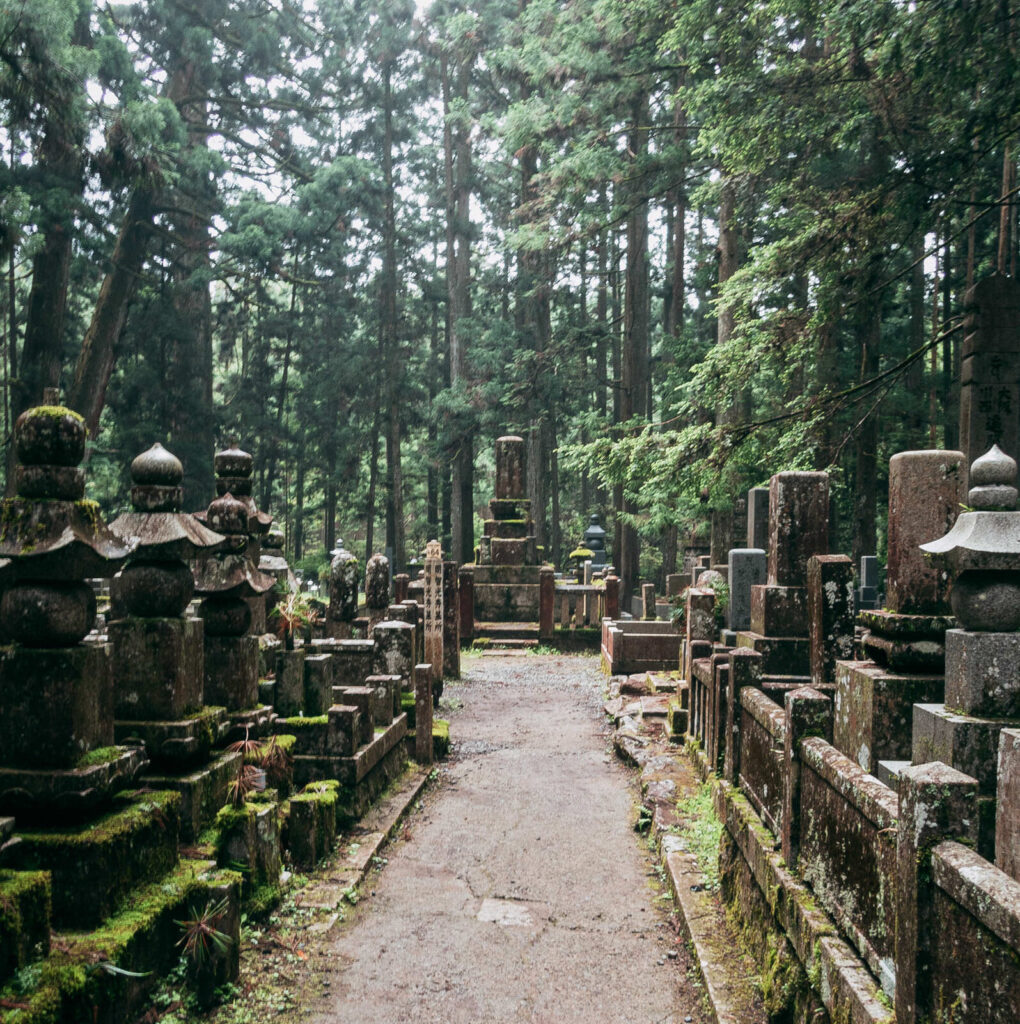
Deep within the mountains of Koyasan lies Okunoin, one of the most atmospheric places in Wakayama. A long approach passes beneath towering cedar trees, with moss-covered stone monuments and lanterns appearing between their trunks.
The forest creates a distinctive atmosphere in every season. On a misty morning, the trees and stone monuments seem to emerge gradually from the shadows. In softer daylight, the textures of moss, bark, and weathered stone become the main subjects. Even without dramatic weather, the depth of the forest gives photographs a quiet, contemplative quality.
Okunoin is also one of the most important spiritual places associated with Koyasan, the Buddhist center established by Kobo Daishi, also known as Kukai. The approach contains numerous memorials and monuments, reflecting the long history of religious devotion connected to the site.
This leads to an interesting question: Why can a forest itself feel sacred in Japan?
Japanese religious traditions have often understood mountains, forests, rocks, and other natural features as places of spiritual significance. At Koyasan, this relationship between nature and religious practice is especially tangible. The forest is not simply a backdrop for architecture; it is part of the experience of the sacred landscape.
For visitors interested in Japanese religion, history, or landscape photography, Okunoin offers much more than a collection of beautiful views.
Photography tip: Look for the interplay of vertical cedar trunks, textured stone, and filtered light. Overcast conditions can be particularly effective for capturing the subtle details of the forest.
Remember that Okunoin is an active sacred site. Be respectful of worshippers, follow local photography restrictions, and maintain a quiet atmosphere.
Related post: What Makes Okunoin Different from Ordinary Cemeteries?
2. Saikazaki: A Fishing Village Cascading Toward the Sea
Best for: Coastal village photography, colorful houses, narrow lanes, and everyday life beside the water.
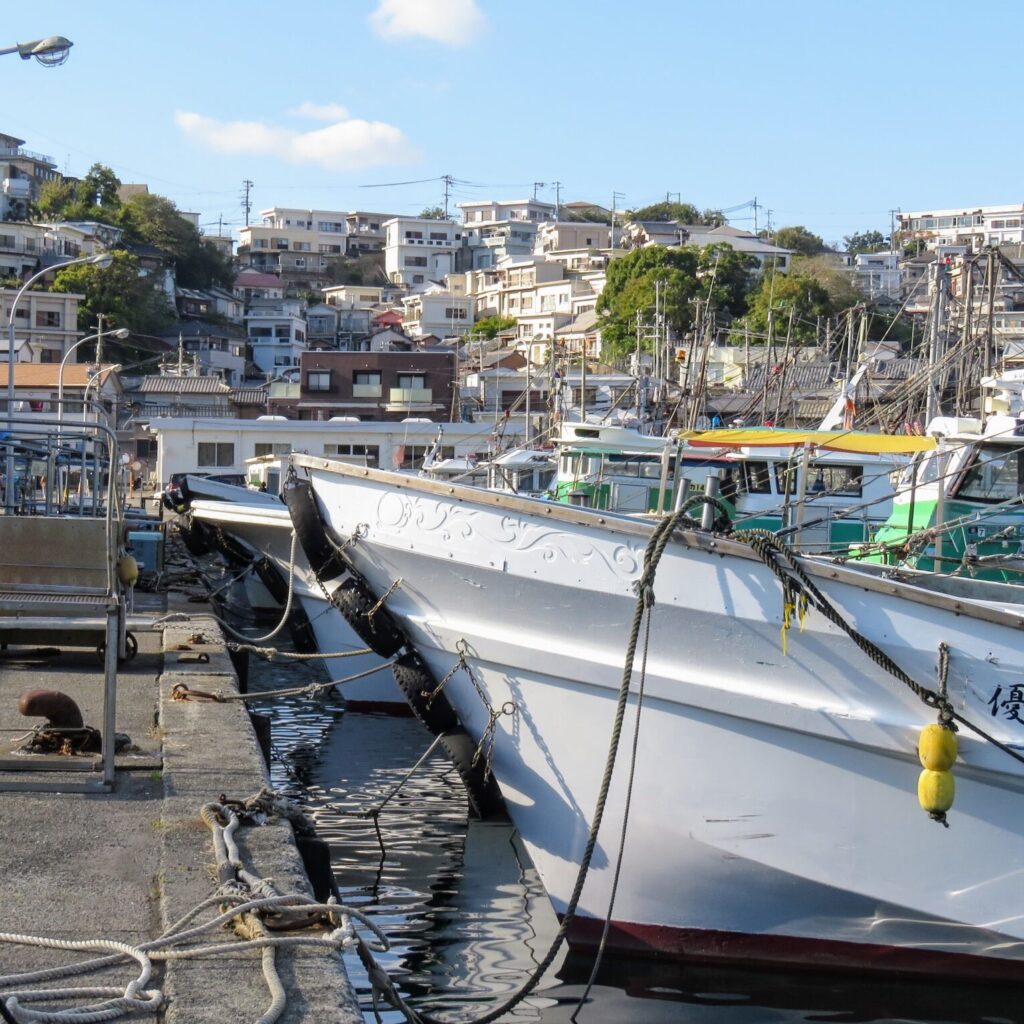
On the coast near Wakayama City, Saikazaki is a fishing village whose houses cluster along steep slopes overlooking a small harbor.
Seen from a suitable viewpoint, the buildings appear to descend toward the sea, creating a dense pattern of rooftops, walls, and narrow streets. The surrounding water and hills provide a constantly changing background, while boats in the harbor reveal the village’s continuing relationship with fishing.
Saikazaki is sometimes compared to the Amalfi Coast in Italy because of its hillside setting and houses overlooking the sea. The comparison offers a useful visual reference, but the village has its own character, shaped by the geography and working traditions of Japan’s coast.
The landscape raises another question: Why are the houses packed so closely together on such steep terrain?
Part of the answer lies in the relationship between the village and the sea. The slopes, harbor, and limited flat land have influenced where people could build their homes and how the settlement developed. The result is a distinctive landscape in which residential life and fishing activities remain closely connected.
For photographers, Saikazaki is especially interesting because it is not a purpose-built attraction. It is a living community. The appeal lies in observing how people have adapted to their surroundings rather than in finding a single monument or viewpoint.
The village also forms part of the wider Wakanoura area, a coastal landscape known for its cultural and historical significance.
Photography tip: Experiment with different elevations and angles. A view that includes the hillside houses, harbor, and sea can communicate the village’s relationship with the landscape more effectively than a close-up of the buildings alone.
Because Saikazaki is a residential neighborhood, remember that people’s homes and daily routines are not tourist attractions. Avoid entering private property, blocking narrow lanes, or photographing residents without permission.
Related post: Saikazaki Fishing Village: Discover Wakayama’s Hidden Coastal Gem
3. Yuasa: Photographing the Historic Town Where Shoyu Culture Took Root
Best for: Traditional wooden architecture, merchant streets, historic shopfronts, and Japanese food culture.
Yuasa is a small coastal town with a significant place in the history of Japanese food.
Its historic streets preserve wooden buildings, traditional shopfronts, lattice doors, and other architectural details that evoke an earlier period of Japanese commerce. Walking through the town with a camera offers opportunities to photograph not only individual buildings but also the texture and rhythm of a historic settlement.
Yuasa is particularly associated with shoyu, the Japanese condiment commonly known in English as soy sauce. The town is recognized for its historical role in the development of soy sauce production, which grew from earlier fermented food traditions.
For travelers interested in Japanese cuisine, Yuasa offers a different perspective from visiting a restaurant or tasting a finished dish.
What does it mean to photograph the history of a flavor?
A food culture is shaped by more than ingredients. It also reflects local knowledge, production methods, trade, water, climate, and the communities that preserve these practices over generations.
In Yuasa, the historic townscape provides a setting for understanding how a product now used throughout Japan became part of a local identity. Traditional buildings and production sites connect the visible landscape with a history that can otherwise remain hidden behind the familiar bottle of soy sauce on a dining table.
This makes Yuasa especially appealing to photographers who are interested in cultural details rather than only famous landmarks. A weathered wooden facade or a quiet street can become a starting point for exploring the relationship between architecture, food, and local industry.
Photography tip: Look beyond wide street views. Traditional doors, wooden textures, signs, shopfronts, and the contrast between old buildings and contemporary life can all tell part of the town’s story.
If you have time, consider learning more about local fermentation traditions. Understanding how shoyu is made can make the streets of Yuasa more meaningful, even after you put your camera away.
Related post: Yuasa Travel Guide: Discover the Birthplace of Shoyu Soy Sauce
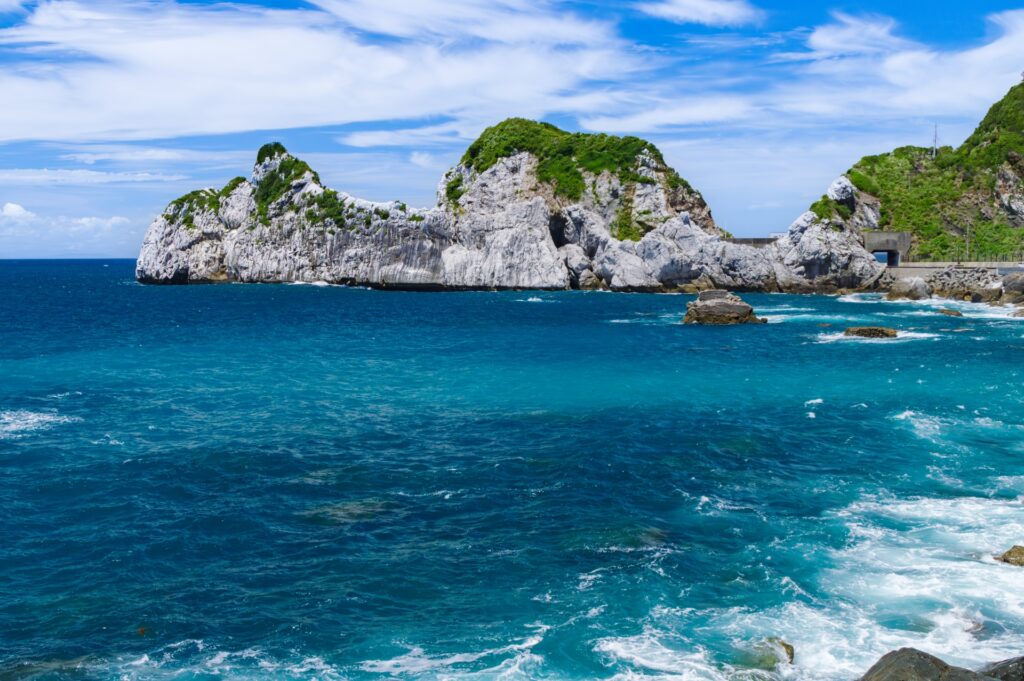
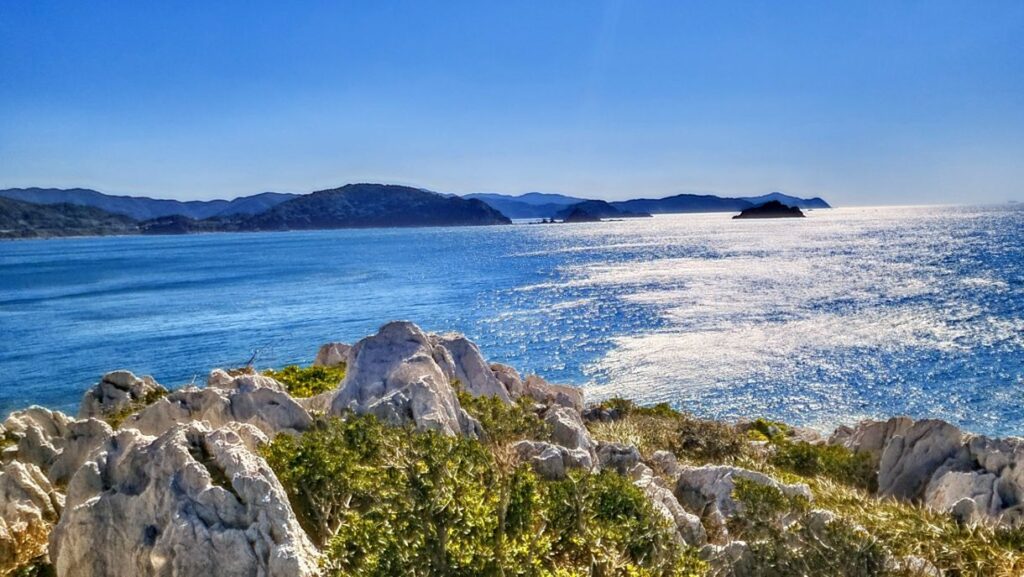
4. Shirasaki Coast: White Limestone Against the Blue Sea
Best for: Dramatic coastal scenery, unusual rock formations, and strong contrasts of color.
Along Wakayama’s coastline, Shirasaki Coast offers a landscape that feels strikingly different from the forested mountains and historic towns found elsewhere in the prefecture.
Pale limestone formations rise above the sea, creating a dramatic contrast with the blue water and the surrounding coastal vegetation. Depending on the light and weather, the rocks can appear almost white, while the sea shifts between deep blue and turquoise.
For photographers accustomed to Japan’s green mountains, bamboo forests, and traditional wooden architecture, this landscape can be an unexpected discovery.
The most interesting question here is a geological one: Why does this stretch of coastline look so different from much of Japan?
The answer lies in the rocks themselves. The limestone formations reflect a geological history different from that of the surrounding landscape. Their color and structure give the coast its distinctive appearance, creating a setting that can seem almost otherworldly when the sea is especially vivid.
Shirasaki is a reminder that Wakayama’s character cannot be reduced to temples and pilgrimage routes. The prefecture also contains remarkable geological and coastal landscapes, each with its own visual language.
Photography tip: Use the contrast between the pale rock and the darker blue sea to create strong compositions. Wide-angle photographs can convey the scale of the coast, while closer views can reveal the textures and shapes of the limestone.
Conditions change with the weather, and the most dramatic colors are not guaranteed on every visit. Check local access information before traveling, and stay within designated areas. Coastal rocks can be slippery, and waves or sudden changes in weather can make exposed locations dangerous.
Related post: Coastal Life & Fishing Village Experience (Wakayama)
5. Aragijima: A Living Landscape Shaped by Rice Farming
Best for: Terraced rice fields, rural scenery, seasonal colors, and the relationship between agriculture and landscape.
In the mountainous interior of Wakayama, Aragijima offers one of the prefecture’s most distinctive rural landscapes.
The rice terraces follow a broad, fan-like pattern around a bend in the river valley. Rather than forming regular geometric rows, the fields curve with the terrain, producing a composition that changes dramatically throughout the agricultural year.
In spring, the flooded paddies can reflect the sky. In summer, the terraces become vivid green. As autumn approaches, the rice turns golden, and the landscape takes on warmer tones. In winter, the fields become quieter and more subdued, revealing their underlying shapes.
Aragijima is recognized as an Important Cultural Landscape in Japan. Its appeal comes not only from its unusual appearance but also from the relationship between the fields, the valley, and the people who maintain them.
This is a landscape created through work.
Rice terraces require knowledge of water management, land use, and seasonal rhythms. Their appearance reflects generations of adaptation to local geography. The beauty of Aragijima therefore comes from the interaction between nature and human activity, rather than from untouched wilderness alone.
For travelers interested in rural Japan, this is an important distinction. Some of the country’s most memorable landscapes are maintained through everyday practices that continue long after the photograph has been taken.
Photography tip: The best composition often includes the shape of the terraces as well as the surrounding hills. A viewpoint overlooking the fields helps reveal the overall fan-like pattern.
Seasonal timing makes a significant difference. If you want reflective water, green rice, or golden fields, check the agricultural calendar and local conditions before your visit.
Please photograph the terraces from designated viewpoints. The fields are working farmland, so entering them or disturbing agricultural activities can damage both crops and the landscape you came to appreciate.
Related post: A Satoyama Slow Journey Through Central Wakayama: Sea, Citrus, History & Ume
6. Tenjinzaki: The Mirror-Like Seascape at Low Tide
Best for: Reflections, tidal pools, coastal textures, and photography shaped by the rhythm of the sea.
Near Tanabe, Tenjinzaki is a coastal landscape that offers a different kind of photographic experience.
At certain low tides, shallow water spreads across the rocky shore, reflecting the sky and surrounding landscape. When the wind is calm and the tidal conditions are right, the boundary between land, sea, and sky can become difficult to distinguish in photographs.
The effect is often described as a natural mirror. But it is not a permanent feature of the coast. The appearance depends on the tide, the weather, the wind, and the condition of the water.
This makes Tenjinzaki a place where planning matters.
Unlike a temple or historic building, which can be photographed throughout the day, the most distinctive views at Tenjinzaki depend on a narrow combination of environmental conditions. Checking the tide in advance can make the difference between an ordinary coastal visit and a memorable photographic opportunity.
Yet the site is important for reasons beyond its appearance.
Tenjinzaki is closely associated with local efforts to protect the natural environment and is known for its role in the development of Japan’s National Trust movement. Its landscape brings together woodland, rocky shore, and marine environments in a relatively compact area.
The place invites a broader question: How can a community protect a landscape when its value extends beyond any single building or attraction?
At Tenjinzaki, the answer is connected to the recognition that natural environments are part of a shared local heritage. Their value includes biodiversity, recreation, education, and the experience of encountering nature close to a town.
For photographers, understanding this context can change how the coast is approached. Instead of treating the shoreline as a temporary backdrop, visitors can see it as an environment that requires care.
Photography tip: Check the local tide information before your visit, and aim for low tide when calm conditions are forecast. Even then, the mirror effect is not guaranteed. Cloud patterns and the direction of the light can change the mood of the photographs considerably.
Wear suitable footwear, pay attention to slippery rocks, and avoid disturbing wildlife or damaging the coastal environment.
Related post: Before Walking the Kumano Kodo: A Day in Kii-Tanabe
7. Nachi Falls: The Power of Water and Sacred Nature
Best for: Waterfall photography, forest scenery, religious architecture, and the spiritual landscapes of Kumano.
Nachi Falls is one of the most recognizable natural landmarks in Wakayama. Water plunges down a steep forested slope, creating a dramatic vertical line against the surrounding green landscape.
Nearby religious buildings, including the vermilion pagoda associated with the Nachi area, provide another visual dimension. The contrast between the waterfall, the forest, and the architecture makes this one of the most rewarding places in the prefecture for landscape photography.
But the significance of Nachi Falls extends beyond its appearance.
The waterfall belongs to the wider sacred landscape of Kumano, a region deeply connected with pilgrimage and religious practice. The Kumano area has long attracted people seeking spiritual experiences, and its mountains, forests, rivers, and waterfalls have played an important role in how the region is understood.
Here, water is not simply a natural feature to be admired. It is part of a landscape that has carried religious meaning for generations.
This creates an interesting connection with Okunoin at Koyasan. Both places reveal relationships between Japanese spirituality and the natural environment, but they do so in different ways. At Okunoin, the atmosphere emerges through an ancient forest and its memorials. At Nachi Falls, the power of flowing water dominates the scene.
Together, they suggest that understanding Japan’s religious heritage often requires looking beyond buildings to the landscapes in which religious traditions developed.
Photography tip: Try different compositions rather than relying only on the classic waterfall view. Including surrounding trees can communicate the scale of the landscape, while a carefully framed view of the waterfall and nearby architecture can reveal the relationship between nature and religious practice.
Weather and visibility can change quickly in the mountains. Allow enough time to explore the area without rushing, and respect any restrictions around sacred sites.
Related post: Beyond Nara: Places to Experience Japan’s Religious Heritage
When Is the Best Time to Photograph Wakayama?
Wakayama’s landscapes change throughout the year, and the best time to visit depends on the kind of photographs you want to create.
| Photography Spot | What to Look For | Planning Considerations |
|---|---|---|
| Okunoin, Koyasan | Ancient cedars, moss, atmospheric forest light | Overcast weather and mist can create a particularly quiet mood |
| Saikazaki | Hillside houses, harbor views, coastal scenery | Consider the direction of the light and the viewpoint |
| Yuasa | Historic streets, wooden buildings, traditional shopfronts | Allow time to walk slowly and notice architectural details |
| Shirasaki Coast | White limestone and blue sea | Weather and visibility affect the contrast between rock and water |
| Aragijima | Rice terraces and seasonal colors | The appearance changes with the agricultural calendar |
| Tenjinzaki | Reflections in shallow coastal water | Check tide tables and weather; calm conditions are important |
| Nachi Falls | Waterfall, forest, and religious architecture | Rain, mist, and visibility can change the atmosphere |
Spring: Reflections and Fresh Greenery
Spring can be a rewarding season for rural landscapes. Depending on the timing of agricultural work, the water-filled paddies at Aragijima may reflect the sky before the rice plants grow taller.
The forests around Koyasan also offer fresh greenery, while the coast provides opportunities to photograph the transition between land and sea without the strong summer colors.
Summer: Strong Coastal Colors
Summer can bring vivid contrasts to Shirasaki Coast, where pale limestone stands out against blue water. The season also offers lush green scenery around Aragijima.
However, coastal conditions can be hot, and mountain weather may change quickly. Plan outdoor photography with suitable clothing, water, and enough flexibility to adapt to conditions.
Autumn: Golden Rice and Forest Textures
Autumn can be especially attractive for photographing the rice terraces at Aragijima, depending on the harvest schedule. Koyasan’s forest landscapes may also offer seasonal changes in color.
Because harvest timing and foliage vary from year to year, check local conditions rather than relying on fixed dates.
Low Tide: The Key to Tenjinzaki
Tenjinzaki is less about choosing a particular month and more about choosing the right conditions. The reflective effect depends on the tide, wind, and weather.
Before setting out, check local tide information and allow enough time to reach the coast safely. If the water is choppy or the tide is unsuitable, the landscape can still be worth photographing, but it may look very different from the famous mirror-like images.
Can You Visit All Seven Photography Spots on One Trip?
Although all seven locations are in Wakayama Prefecture, they are spread across a large area. Koyasan lies in the mountains, while Saikazaki and Yuasa are coastal destinations. Shirasaki is farther down the coast, Aragijima is inland, and Tenjinzaki and Nachi Falls are associated with different parts of the wider Kumano region.
Trying to visit all seven in a single day would make for a rushed trip, leaving little time to photograph the places properly or understand their local stories.
A better approach is to group the destinations into regional journeys.
Route 1: Coastal Villages and Historic Towns
Saikazaki – Yuasa – Shirasaki Coast
This route combines three different perspectives on Wakayama’s relationship with the sea.
At Saikazaki, the focus is a living fishing village. In Yuasa, the coastal setting connects with historic commerce and the development of Japanese food culture. At Shirasaki, the emphasis shifts to geology and the visual drama of the coastline.
The destinations share a broad coastal setting, but their stories are quite different. This makes the route especially suitable for travelers who want to explore more than scenic viewpoints.
The exact itinerary will depend on transport, daylight, and how much time you want to spend at each location.
Route 2: Sacred Mountains and Rural Landscapes
Koyasan and Okunoin – Aragijima
This route brings together two landscapes shaped by different relationships between people and the land.
At Koyasan, the forest is part of a sacred religious environment. At Aragijima, the curves of the rice terraces reveal the work and knowledge involved in maintaining rural farmland.
The contrast is particularly interesting for travelers who want to understand how Japanese culture has developed through both religious traditions and everyday agricultural life.
Because the destinations are not next to each other, allow sufficient time for transportation rather than treating the route as a quick series of stops.
Route 3: The Landscapes of Kumano
Tenjinzaki – Nachi Falls
This route brings together coastal ecology and the sacred landscapes of Kumano.
Tenjinzaki offers an opportunity to photograph the changing relationship between the sea, shoreline, and sky. Nachi Falls presents a more dramatic mountain environment, where flowing water and religious traditions are closely connected.
These destinations are not immediately adjacent, so the route requires careful planning. Travelers interested in exploring Kumano more deeply may wish to allow additional time rather than attempting to fit everything into a single rushed excursion.
A Note on Transportation
Wakayama’s scenic destinations are not all connected by direct or frequent public transport. Some locations are easier to reach with a carefully planned combination of trains, buses, and local transportation, while others may require more flexibility.
Before finalizing an itinerary, check current timetables, seasonal access, and the time needed to move between destinations. If photography is the main purpose of the trip, allowing extra time at each location is usually more rewarding than trying to collect as many stops as possible.
Discover More Than a Photograph
A photograph can preserve a moment, but the story behind a landscape can make that moment more meaningful.
The hillside houses of Saikazaki reveal how a fishing community has adapted to the terrain. The historic streets of Yuasa connect everyday food culture with centuries of local knowledge. The rice terraces of Aragijima show how agricultural work can shape a landscape of remarkable beauty. At Koyasan and Nachi Falls, forests and water reveal the close relationship between nature and religious traditions in Japan.
These places are also a reminder that Wakayama is more than a collection of famous landmarks. Its character emerges through the connections between the mountains and the sea, between historic industries and everyday life, and between landscapes and the people who continue to care for them.
For travelers who enjoy photography, taking time to understand these connections can be as rewarding as finding the perfect viewpoint.
If you would like to explore Wakayama beyond the usual sightseeing routes, my Curated Kii Peninsula Journey can help you discover the places, cultural stories, and local experiences that best match your interests and pace. Rather than trying to see everything in one day, the journey can focus on a particular region or theme, leaving room to walk, observe, ask questions, and experience the rhythm of local life.
The most memorable photograph may be the one that reminds you not only of what you saw, but also of what you came to understand.
If you are a professional photographer, Creative Residency in Wakayama can coodinate your artistic work in Wakayama.
Read More About Beautiful Sight in Wakayama
- A Beautiful Slow Stay in Wakayama City
- Riding Through Wakayama: Six Train Journeys Beyond the Tourist Trail
- From Fishing Port to Historic Streets: A Coastal Hiking Journey from Arida to Yuasa
Related posts:

The Lost Culture of Japanese Kissaten Cafes
Kumano Kodo Guide: Walking Through Japan’s Living Traditions
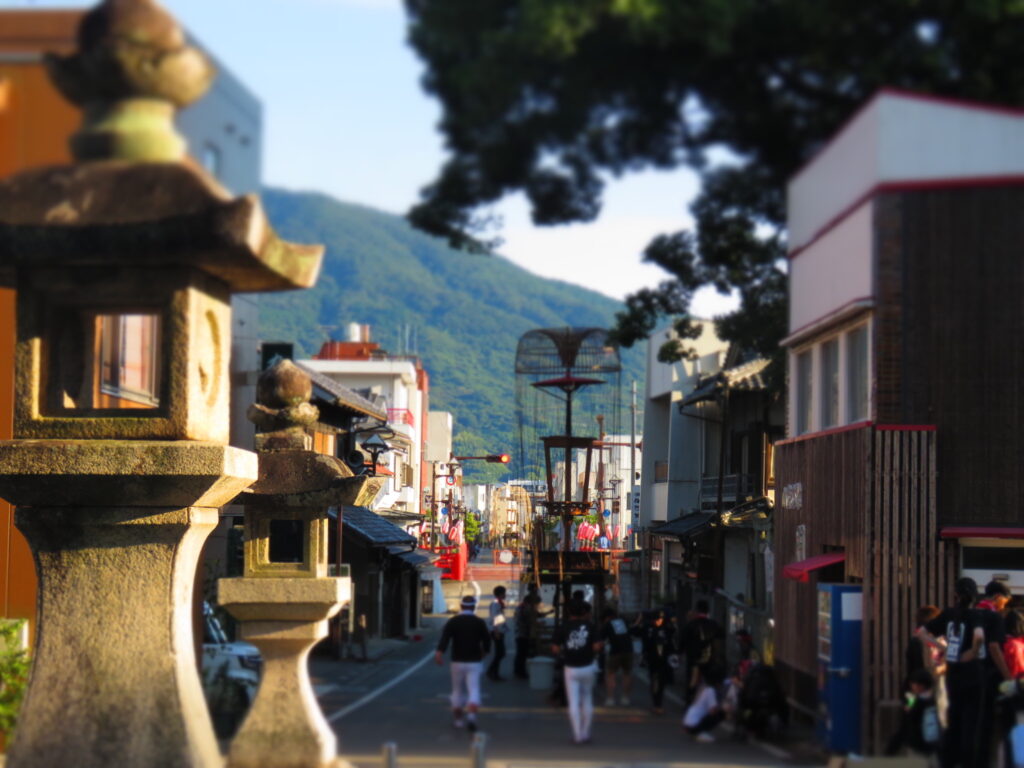
Is Wakayama Worth Visiting? Hidden Culture Beyond Osaka and Kyoto
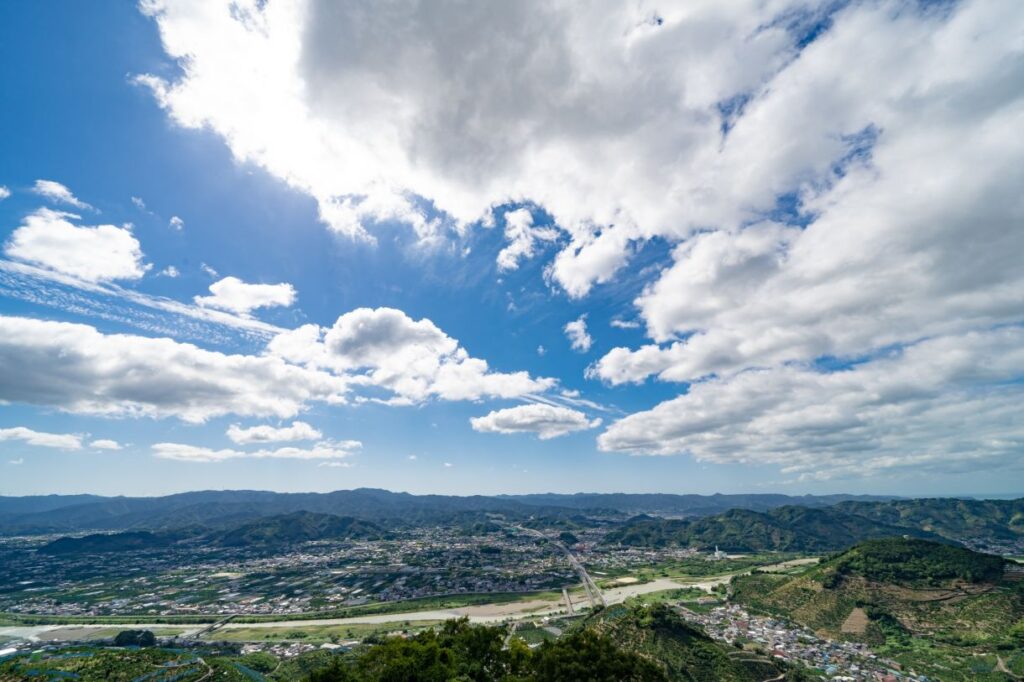
A Day Between Sea, Citrus, and Craft: Exploring Arida's Living Culture
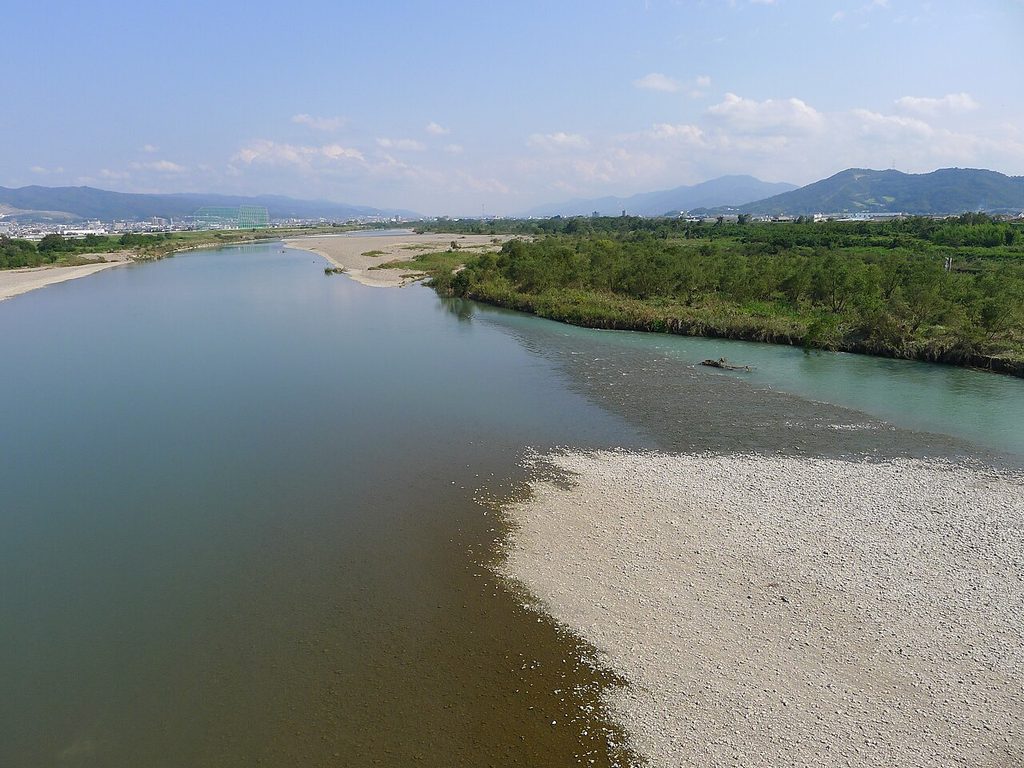
Best Satoyama Destinations in Japan: 7 Places for Hiking, Cycling & Slow Stays
No responses yet