
Understanding the Living Faith of Koyasan’s Sacred Resting Place
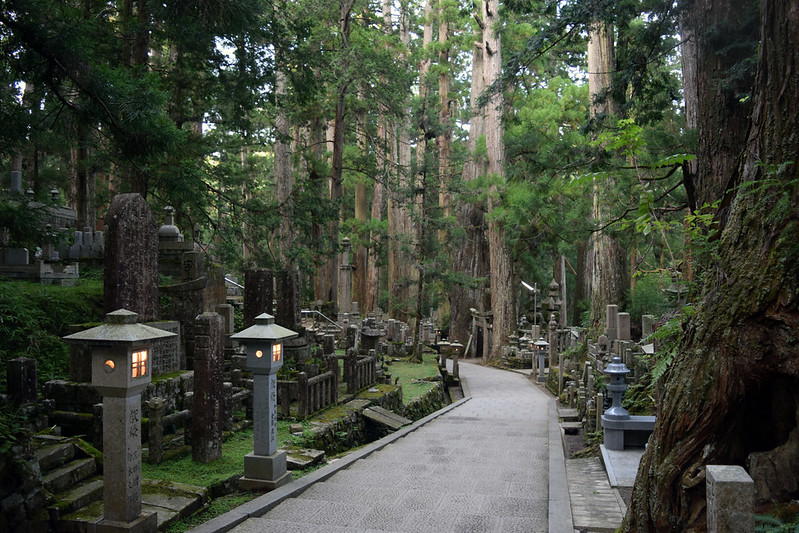
For many visitors, the vast cemetery of Okunoin on Koyasan is one of the most unforgettable places in Japan.
Ancient cedar trees tower above twenty hundreds thousand of gravestones. Lanterns glow softly along the forest path, and the atmosphere feels peaceful rather than mournful.
At first glance, it may seem like an extraordinary cemetery.
But Okunoin is not simply a place where people are buried.
It is a place where many believe Kukai (Kobo Daishi) is still present today.
Kukai Is Believed to Be in Eternal Meditation
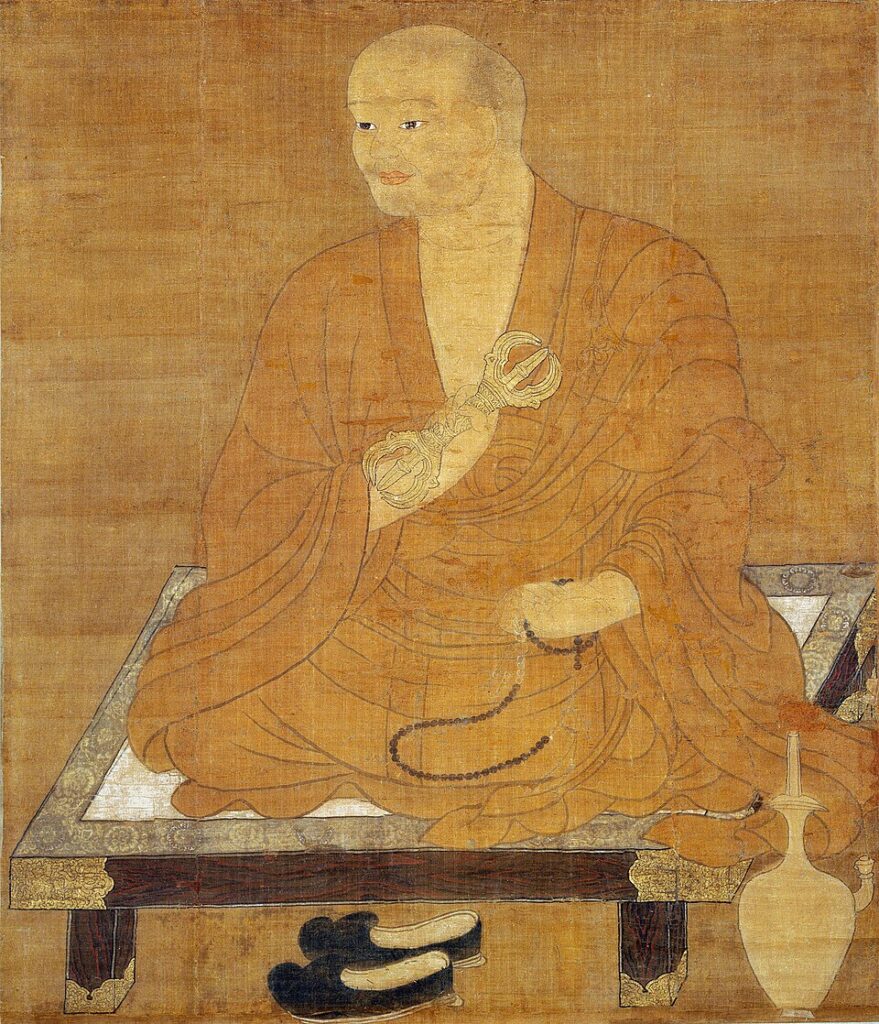
According to the tradition of Shingon Buddhism, Kukai (774–835), the founder of the school, did not die in the ordinary sense.
Instead, he entered nyujo—a state of eternal meditation.
Rather than passing away, he is believed to remain in deep meditation within the Gobyo, his mausoleum at the heart of Okunoin, praying for the salvation of all beings while awaiting the coming of the future Buddha, Maitreya.
For believers, Kukai is not simply a historical figure remembered from the past.
He is a living spiritual presence.
This belief makes Okunoin fundamentally different from most cemeteries around the world.
Why So Many People Wish to Rest Near Kukai
Because Kukai is believed to continue his meditation, many followers have wished to have their ashes buried as close to him as possible.
Even today, families from across Japan continue to place cremated remains in Okunoin, hoping that their loved ones may rest near Kobo Daishi and receive his compassion.
This tradition has continued for centuries, making Okunoin one of Japan’s most significant places of pilgrimage as well as one of its largest cemeteries.
For many visitors, it can be surprising that this is not simply a historical custom—it remains a living practice.
Every Day, Meals Are Still Offered to Kukai
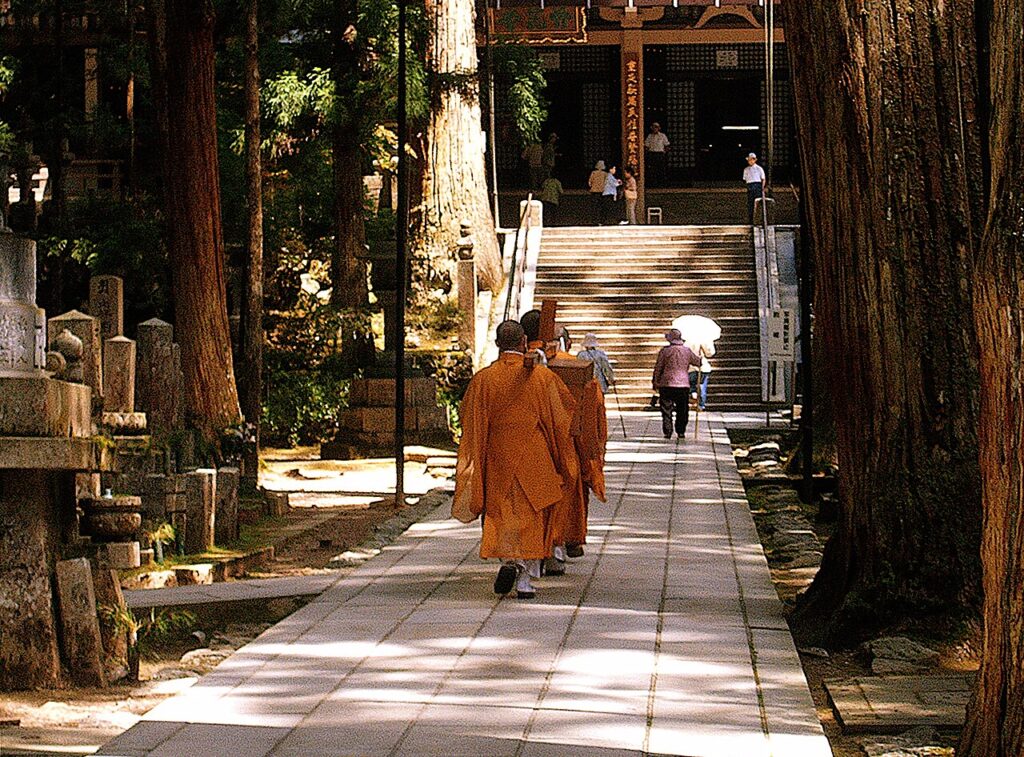
Perhaps the clearest expression of this living faith is the ritual known as Shojinku (Shojingu).
Twice every day—early in the morning and again before noon—monks carry carefully prepared meals to Kukai’s mausoleum.
These offerings include traditional vegetarian Buddhist cuisine, presented as if serving someone who is still alive.
The ritual has continued without interruption for more than a thousand years.
To outsiders, it may appear symbolic.
For believers, however, these meals are genuine offerings to Kukai, who is believed to remain in eternal meditation.
This daily ceremony reminds visitors that Okunoin is not merely a historic site or museum—it is an active place of devotion.
A Cemetery That Transcends Former Enemies
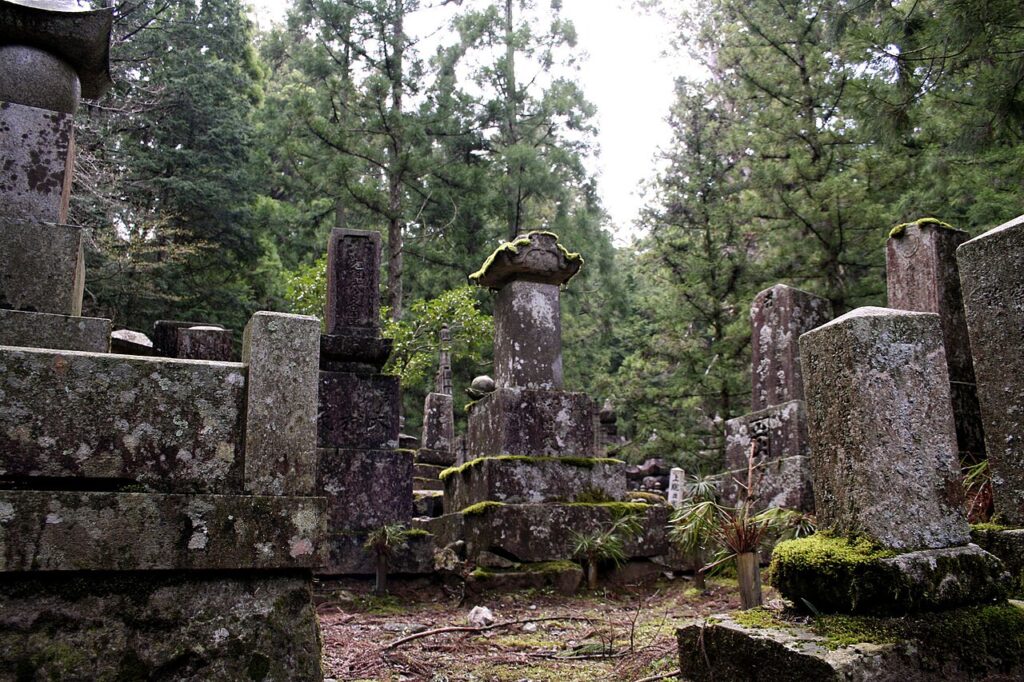
Walking through Okunoin, visitors notice memorials dedicated to famous samurai, feudal lords, monks, merchants, and ordinary families, unfortunately it is only available in Japanese.
Among them are the graves and memorial monuments of rival warlords who once fought bitter battles during Japan’s turbulent Sengoku period.
Leaders who stood on opposing sides in life now rest within the same sacred landscape.
Rather than celebrating military victory, Okunoin reflects a Buddhist perspective in which conflict eventually gives way to remembrance, repentance, and compassion.
In death, former enemies are honored together, illustrating a view of humanity that reaches beyond political alliances and historical rivalries.
More Than a Cemetery
Many cultures regard cemeteries primarily as places to remember those who have died.
Okunoin serves that purpose as well.
But it is also a place where visitors encounter a unique understanding of life and death.
The forest path is not simply lined with graves.
It leads toward a living spiritual center where faith continues through daily rituals, ongoing pilgrimage, and the enduring belief that Kukai still watches over those who seek his guidance.
Whether you visit for religious reasons, historical curiosity, or quiet reflection, understanding this living tradition reveals why Okunoin feels unlike any ordinary cemetery.
It is not simply a resting place for the dead.
It is a place where faith itself has remained alive for more than one thousand years.
Plan your unique trip in Koyasan through my Curated Kii Peninsula Journey today.
Read More About Koyasan
- Is Koyasan Easy to Visit? Transport, Access & Common Mistakes
- Koyasan + Hidden Wakayama: 2-Day Itinerary Beyond Osaka Crowds
- The Hidden Side of Koyasan: Beyond Okunoin
- Kūkai: The Monk Who Founded Koyasan and Still Watches Over It
No responses yet