
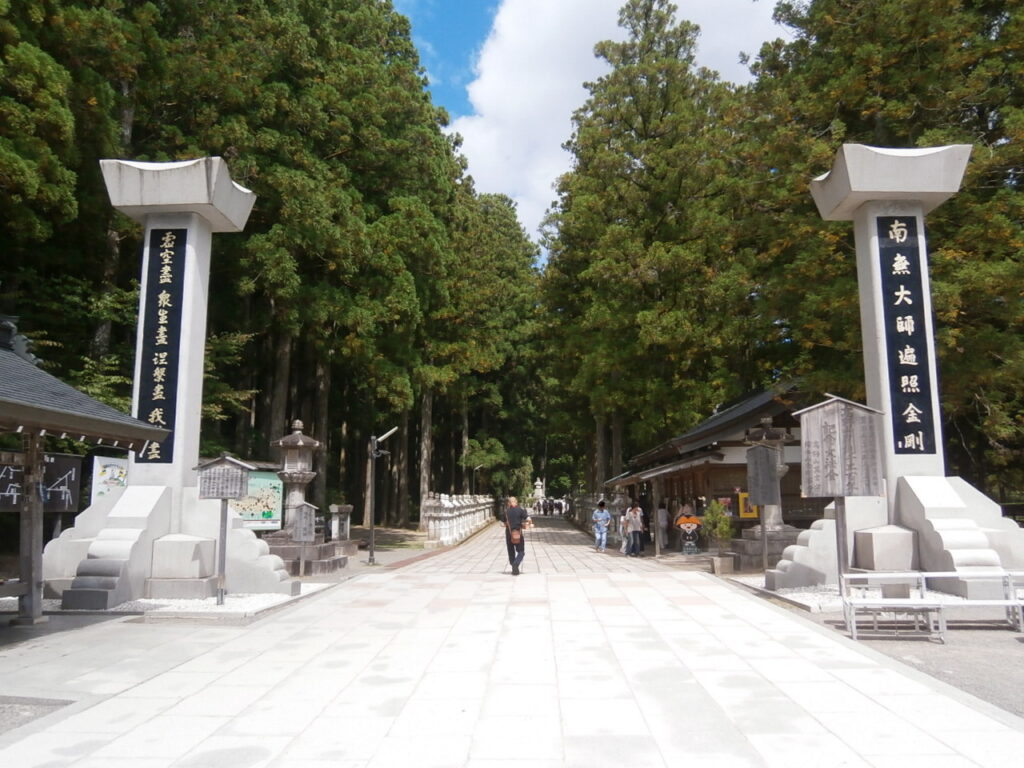
Why Koyasan Is More Than a Cemetery
Many visitors to Koyasan describe Okunoin as peaceful rather than sorrowful.
Although it is one of the most famous cemetery in Japan, walking beneath its towering cedar trees rarely feels like entering a place defined by death. Instead, many people sense continuity—a feeling that life has not ended but simply changed its form.
This impression is no accident.
Okunoin reflects ideas about life and death that have developed over centuries in Japan, combining ancient mountain beliefs with the teachings of Shingon Buddhism.
Mountains as the Home of the Ancestors
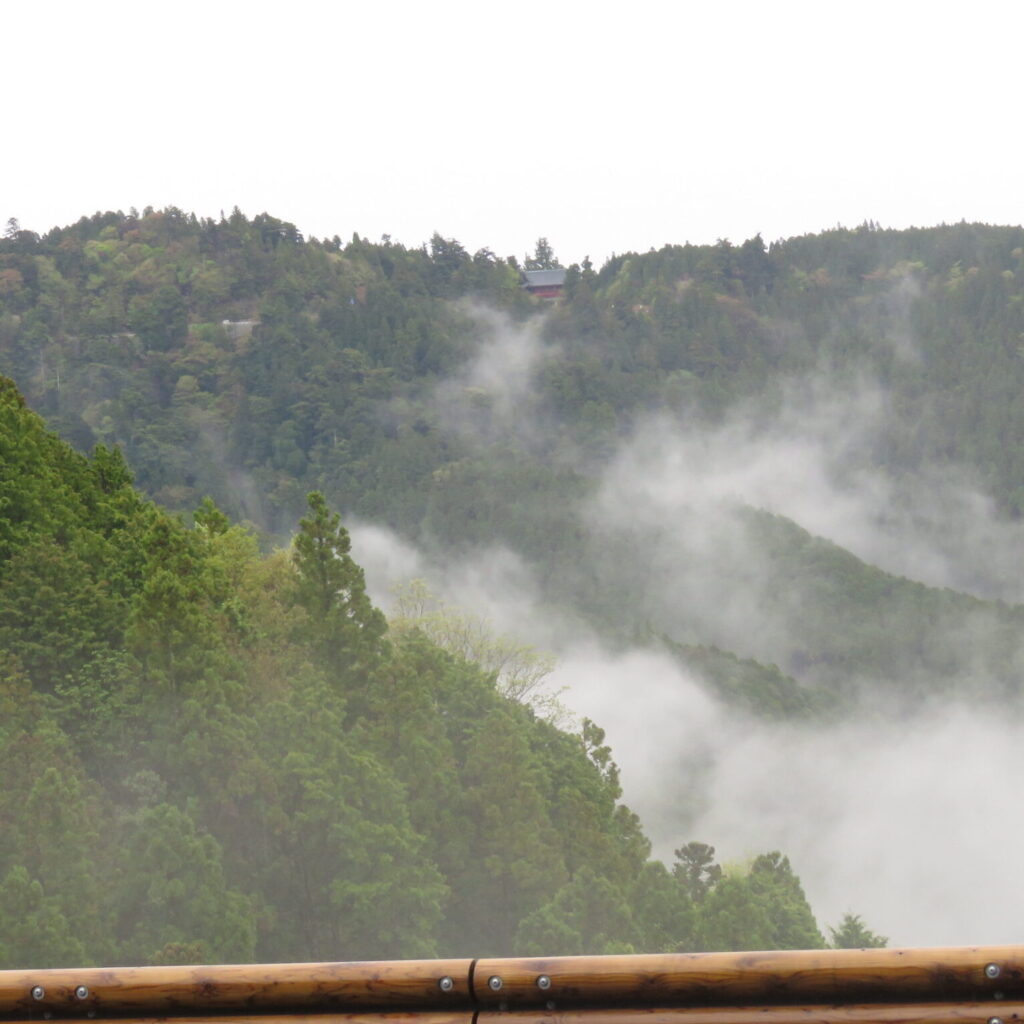
Long before Buddhism arrived in Japan, mountains were regarded as sacred places where the spirits of the dead returned.
According to ancient folk beliefs, the souls of ancestors did not disappear into a distant heaven or underworld. Instead, they were thought to ascend the mountains overlooking the villages where they had lived.
From these sacred peaks, the ancestors continued watching over their descendants, protecting the harvest, the community, and future generations.
Death, therefore, did not mean complete separation.
The boundary between the living and the dead was understood as surprisingly close.
Sacred mountains became places where both worlds could meet.
Koyasan and the Idea of Becoming a Buddha in This Life
When Kukai founded Koyasan in the ninth century, these older mountain beliefs blended naturally with the teachings of Shingon Buddhism.
One of the central ideas of Shingon is Sokushin Jobutsu—”becoming a Buddha in this very body.”
Rather than viewing enlightenment as something attained only after death or in another world, Shingon teaches that awakening is possible within this lifetime through dedicated spiritual practice.
This perspective also changes how death itself is understood.
Death is not simply an ending, but part of an ongoing spiritual journey toward awakening.
The belief that Kukai remains in eternal meditation at Okunoin perfectly embodies this idea.
His presence suggests continuity rather than disappearance.
Crossing the Bridge Between Two Worlds
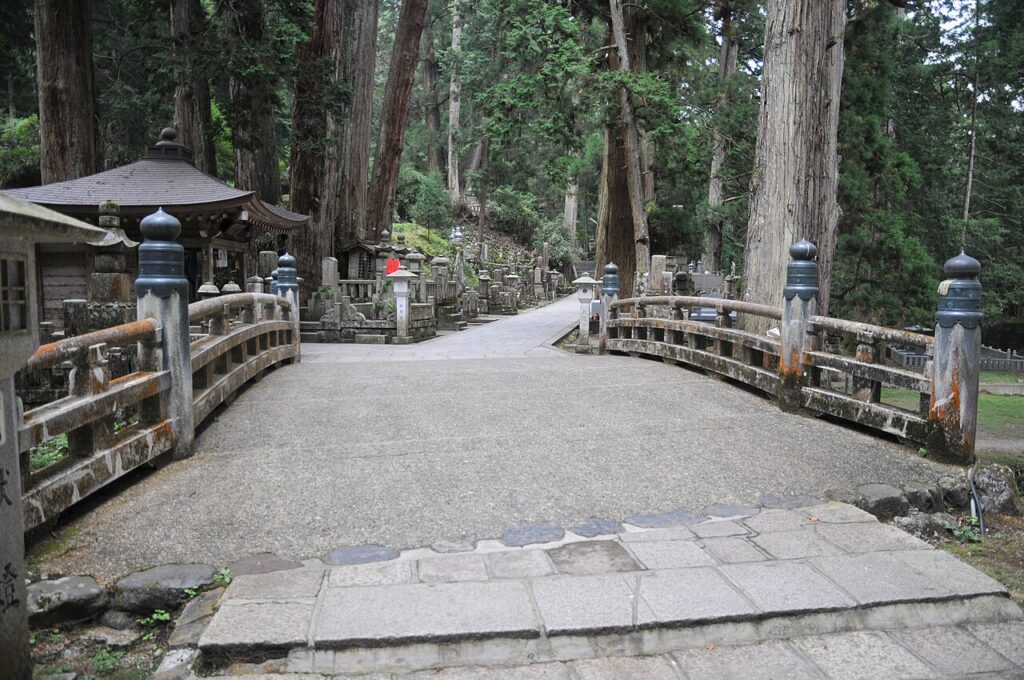
As visitors approach the innermost sanctuary of Okunoin, they cross the bridge known as Nakanohashi.
For centuries, this bridge has been regarded as the symbolic boundary between the world of the living and the world beyond.
It is often compared to the Sanzu River, the river that souls are said to cross after death in Japanese Buddhist tradition.
Many visitors pause here to offer water in memory of deceased family members before continuing toward Kukai’s mausoleum.
Crossing the bridge is therefore more than a physical act.
It represents entering a sacred space where the worlds of the living and the dead are believed to come closer together.
Death as the Entrance to Eternal Life
In many religious traditions, death marks a final separation.
The worldview expressed at Okunoin is different.
Because Kukai is believed to remain in eternal meditation and because enlightenment is understood as a continuing reality, death is not viewed as a complete end.
Instead, it becomes the entrance to eternal life within the compassion of the Buddha.
This understanding explains why so many people continue to wish for their ashes to be placed near Kukai.
They are not simply choosing a prestigious burial place.
They hope to remain close to a master who is believed to continue guiding all beings, even today.
A World Connected Rather Than Divided
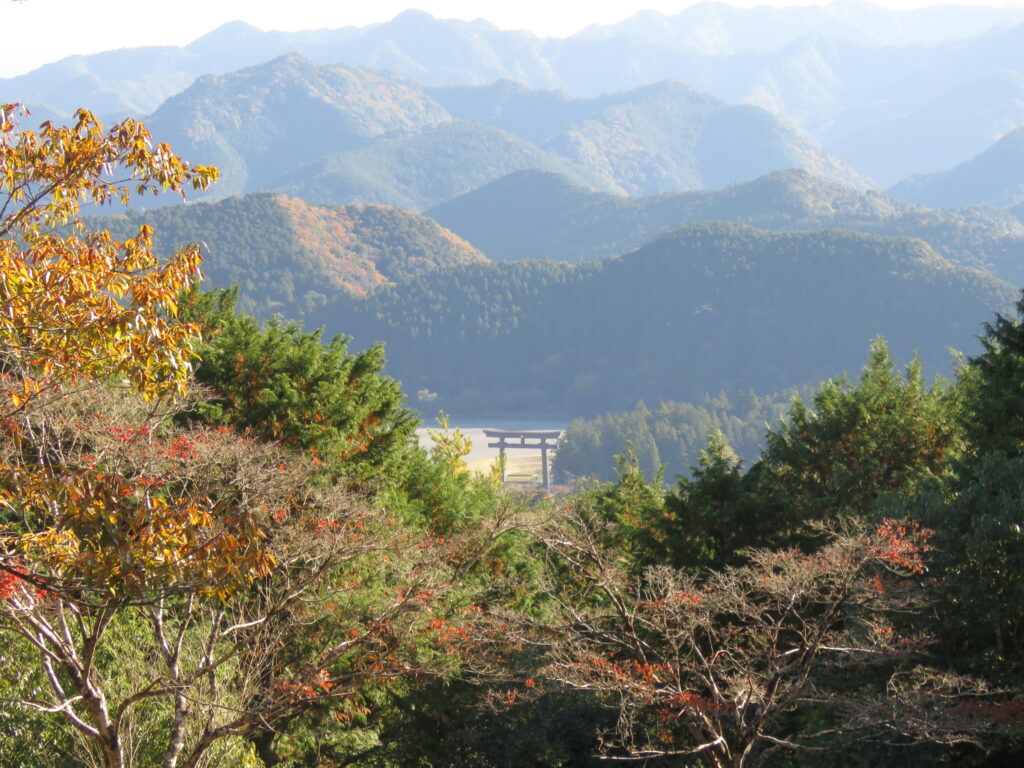
This way of thinking also echoes the spiritual landscape of Kumano.
For centuries, Kumano has been regarded as a place associated with rebirth and renewal.
Pilgrims traveled there not because they expected to leave this world behind forever, but because they sought spiritual transformation while still living.
The boundary between this world and the next was never imagined as an absolute wall.
Instead, the sacred world was believed to exist alongside everyday life, sometimes revealed through forests, mountains, waterfalls, or places of prayer.
Koyasan expresses the same continuity.
The world beyond is not a separate stage reached only after death.
It is already intertwined with the present world, waiting to be encountered through faith, practice, and remembrance.
Related Post:
Why Were Pilgrims Willing to Walk for Weeks?
Seeing Okunoin with New Eyes
Understanding these ideas transforms a visit to Okunoin.
The ancient trees are more than beautiful scenery.
The thousands of gravestones are more than historical monuments.
The bridge is more than a crossing.
Together, they express a uniquely Japanese understanding of life and death—one in which the living and the departed remain connected, sacred mountains serve as meeting places between worlds, and death is not the opposite of life but part of an unbroken journey.
For many visitors, this may be the deepest lesson of Koyasan.
It is not simply a place to remember those who have died.
It is a place that invites us to reconsider what it truly means to live, to die, and to remain connected across generations.
Immerse yourself in Okunoin through my Curated Kii Peninsula Journey.
Read More About Koyasan
- What Makes Okunoin Different from Ordinary Cemeteries?
- Sacred Art of Koyasan: Exploring Buddhist Architecture, Mandalas, and Hidden Treasures
- Koyasan & Kumano: The Sacred Network of the Kii Mountains
- Kūkai: The Monk Who Founded Koyasan and Still Watches Over It
No responses yet