
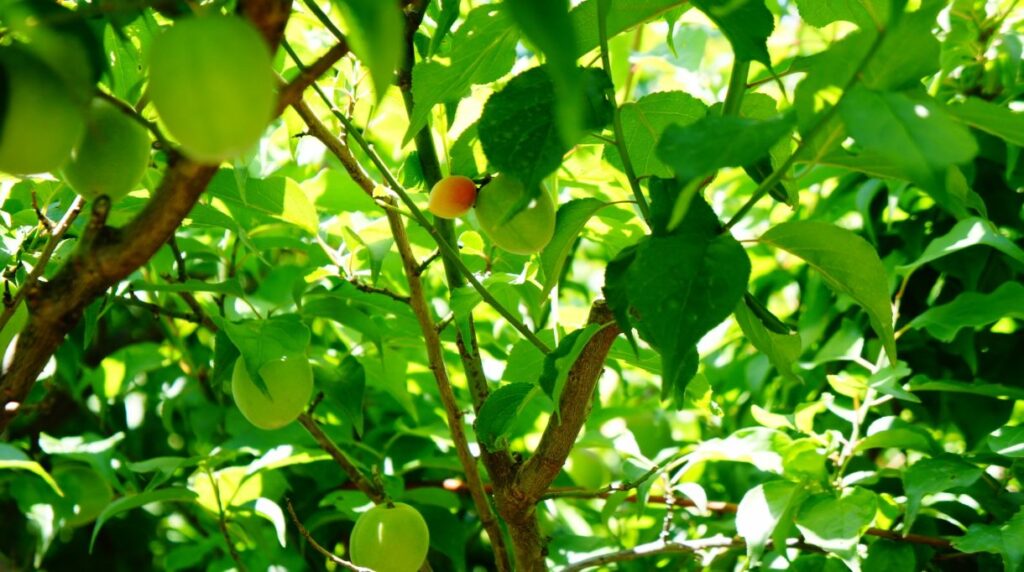
When people think of Japanese food culture, they often imagine sushi, ramen, or sake. Yet in the southern part of Wakayama Prefecture lies another tradition that has shaped local life for centuries: Japan’s plum culture.
The towns of Minabe and Tanabe are home to Japan’s most famous ume (Japanese plum) producing region. More than simply growing fruit, local communities have developed a unique way of living alongside forests, bees, mountains, and the sea. This remarkable relationship between people and nature earned the area recognition as a Globally Important Agricultural Heritage System (GIAHS).
More Than Just Plum Trees
At first glance, the landscape is defined by rolling hills covered with plum orchards. During late winter, countless white blossoms transform the countryside into one of Japan’s earliest signs of spring.
But the story of the region goes far beyond beautiful scenery.
For generations, local farmers have maintained forests of ubame oak, the source of Japan’s famous Binchotan charcoal. These forests support biodiversity and provide habitat for bees that pollinate the plum trees. Rivers then carry nutrients toward the coast, connecting the mountains with the rich fishing grounds of southern Wakayama.
This is not simply agriculture—it is an entire cultural landscape.
The Many Faces of Ume
The Japanese plum appears in daily life in many different forms.
Umeboshi (pickled plums) have long been valued as preserved food and are still enjoyed with rice and traditional meals. Umeshu (plum liqueur) offers a sweeter expression of the fruit and has become popular both in Japan and abroad.
Local restaurants also incorporate ume into sauces, dressings, desserts, and seasonal dishes. Even a simple meal can reveal how deeply the plum is woven into everyday life.
Rather than focusing on a single product, the region celebrates an entire culture built around ume.
Experiencing Plum Culture in Southern Wakayama
Visitors can enjoy this heritage in many ways:
- Walking through plum orchards and enjoying seasonal blossoms.
- Learning about the agricultural heritage system that connects forests, bees, and the sea.
- Visiting museums or processing facilities to understand traditional preservation techniques.
- Tasting different styles of ume products and local cuisine.
- Exploring the coastal scenery and enjoying fresh seafood that reflects the same natural ecosystem.
Because the area remains relatively untouched by mass tourism, experiences often feel personal and authentic.
A Different Side of Japan
Southern Wakayama offers something increasingly rare: a chance to discover how food, nature, and community have evolved together over centuries.
For travelers interested in gastronomy, sustainability, and cultural landscapes, the plum culture of Minabe and Tanabe provides a fascinating window into a quieter side of Japan—one where a simple fruit tells the story of an entire region.
Plan your ume travle through my Curated Kii Peninsula Journey.
Read More about Wakayama Ume Experience
- Ume Blossom & Rural Landscape in Wakayama
- From Pilgrimage to Plum Wine: Discovering Wakayama’s Fermentation Culture in Kainan
- The Ultimate Guide to Umeshu Food Pairing: From Sushi to Cheese
No responses yet