
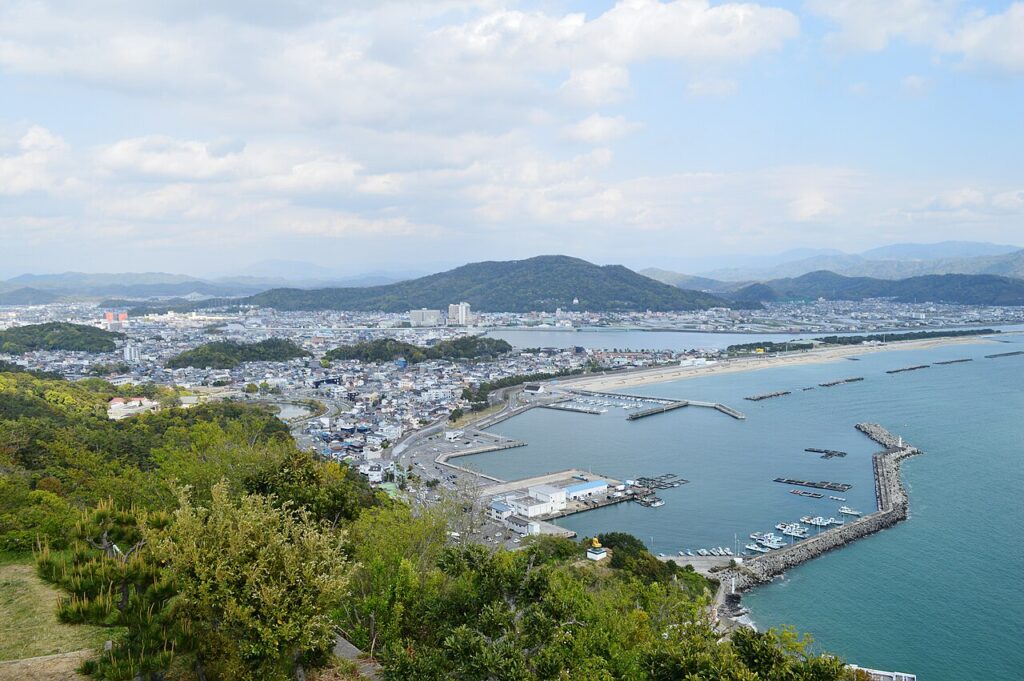
Explore the History of Wakaura on Foot, from Imoseyama to Kishu Toshogu Shrine
Wakaura is one of Wakayama City’s most overlooked destinations for international visitors. Located along a peaceful inlet, this coastal area is dotted with historic bridges, shrines, temples, and traditional streets. Yet Wakaura is much more than a beautiful seaside landscape.
More than 1,300 years ago, the poet Yamabe no Akahito celebrated its scenery in a poem included in the Manyoshu, Japan’s oldest surviving poetry anthology. During the Edo period, the Tokugawa family of the Kishu Domain developed the area, leaving behind shrines, bridges, and architectural landmarks that can still be seen today. Wakaura is also closely connected to the history of the name Wakayama itself.
What makes walking through Wakaura special is the way different periods of Japanese history come together in a single landscape. Ancient poetry, religious traditions, the legacy of the Tokugawa family, and everyday local life can all be discovered within a relatively small area.
This walking route begins at Imoseyama in the south and heads north, visiting historic bridges and shrines before finishing at Wakaura Tenmangu Shrine. Along the way, you can also stop at traditional confectionery shops, local food stores, and independent cafes. It is an opportunity to experience not only the history of Wakaura but also the atmosphere of the town as it is today.
1. Imoseyama: A Historic Island in the Scenic Landscape of Wakaura
Kankaikaku Pavilion and the Legacy of the Kishu Tokugawa Family
Begin your walk at Imoseyama, a small island located at the southern end of Wakaura’s inlet. The island is connected to the mainland by Sandan-kyo Bridge and is home to several historic structures associated with the Tokugawa family.
During the Edo period, Tokugawa Yorinobu, the first lord of the Kishu Domain, played an important role in developing Wakaura as a place of scenic beauty and religious significance. Imoseyama also has a personal connection to his mother, Yōjuin, better known as Oman-no-kata.
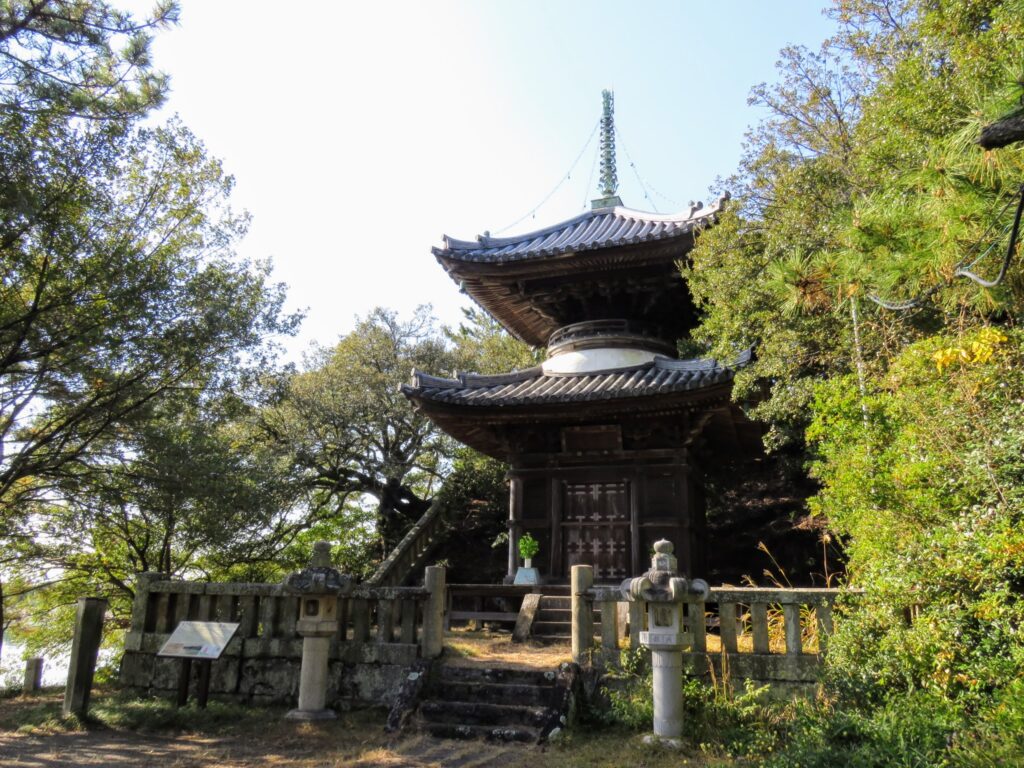
One of the island’s most distinctive landmarks is the Tahoto pagoda at Kaizen-in Temple. Yorinobu had it built in 1655 in memory of his mother, who had arranged for numerous stones inscribed with Buddhist sutras to be buried on the island as a religious offering.
Standing for more than 370 years, the two-story pagoda blends beautifully with the surrounding tidal flats and mountains. It is one of the most memorable historical features of Wakaura.
Enjoy the View from Kankaikaku Pavilion
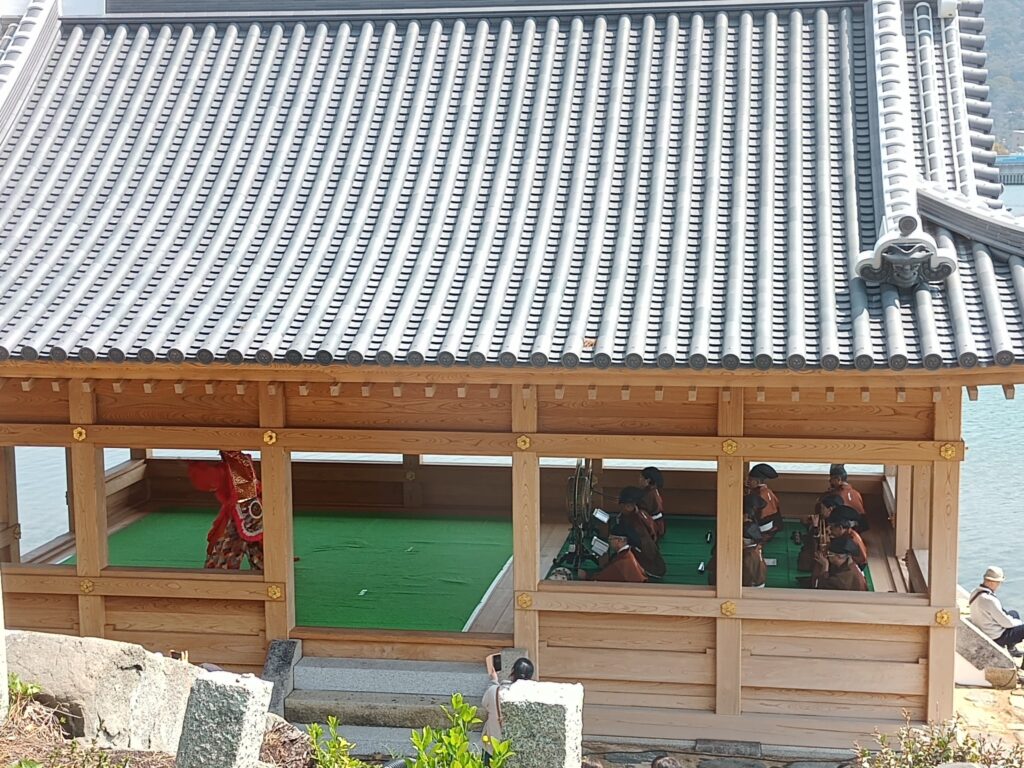
Another landmark worth visiting on Imoseyama is Kankaikaku, a waterside pavilion originally established by Tokugawa Yorinobu.
The name can be understood as a place from which to admire the sea. It was designed as a spot to enjoy the scenery of the inlet, the tidal flats, and the opposite shore, where Kimiidera Temple stands on the slopes of Mount Nagusa.
The original pavilion was part of Yorinobu’s efforts to develop Wakaura as a place for visitors to appreciate its natural beauty. After being reconstructed in timber to reflect its historical appearance, Kankaikaku was officially opened to the public on March 28, 2026.
From here, take a moment to appreciate the landscape. The tidal flats stretch out before you, while the mountains form a backdrop across the water. Kimiidera Temple can be seen on the opposite hillside.
This view helps explain why Wakaura has attracted emperors, poets, cultural figures, and powerful families throughout Japanese history.
Climb the Hill for a Wider View of Wakaura
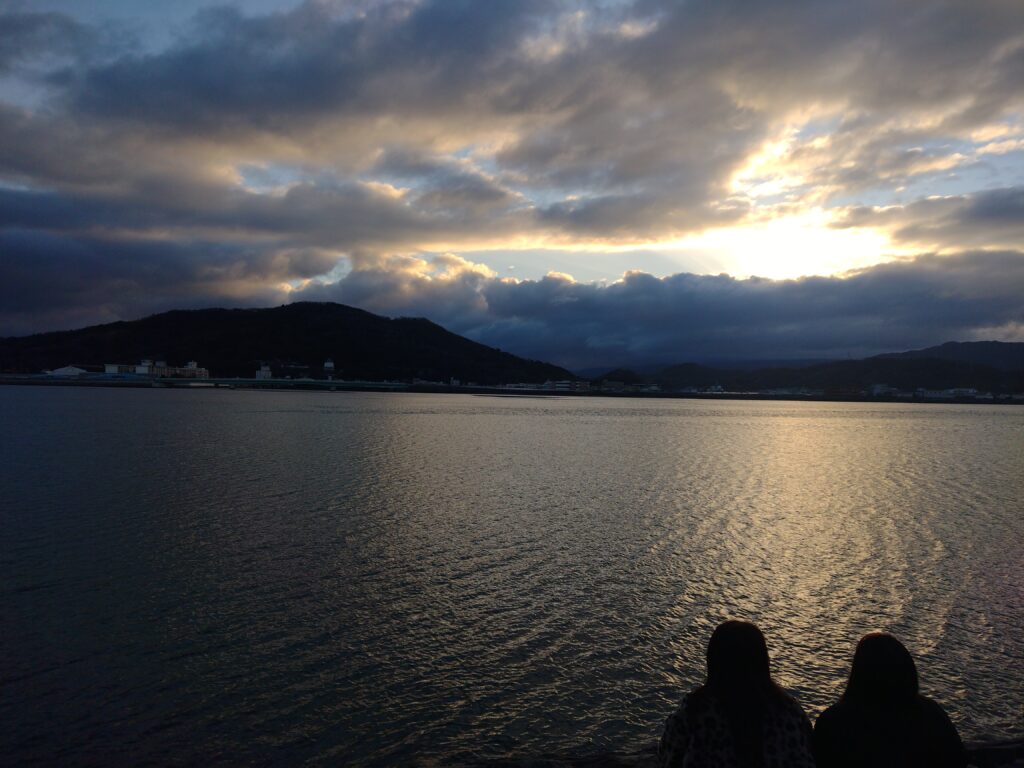
If you have time, walk up to the higher part of Imoseyama. It is only a small hill, and the climb takes just a few minutes.
From the top, you can enjoy a wider view of the inlet, the tidal flats, Kimiidera Temple, and Mount Nagusa. The water, mountains, and historic buildings come together in a single panorama.
It is easy to understand why this landscape inspired so many poets and visitors in earlier centuries.
2. Sandan-kyo Bridge and Furobashi Bridge: Historic Stone Bridges of Wakaura
Sandan-kyo Bridge: The Gateway to Imoseyama
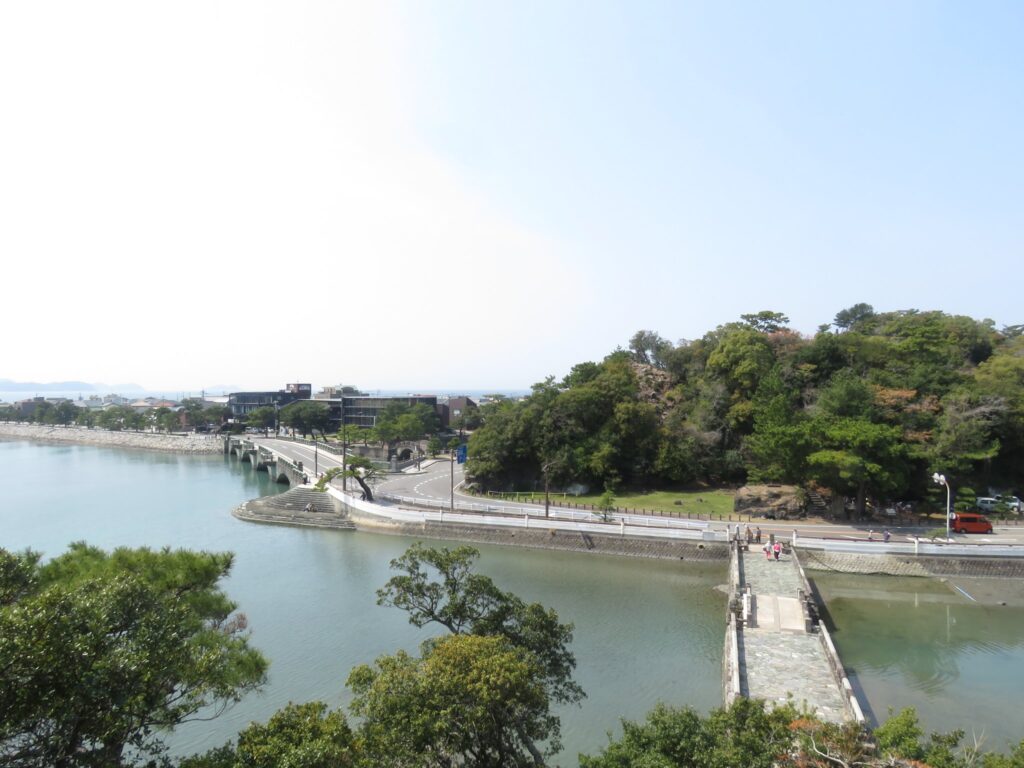
After exploring Imoseyama, cross Sandan-kyo Bridge to return to the mainland.
Built during the Edo period, this stone bridge features a distinctive Chinese-inspired design. Although it is small, it was more than a practical structure connecting the island to the shore. It also served as an entrance to a place where visitors could appreciate the scenery and encounter its religious landmarks.
Take a moment to look at the bridge’s shape and stonework. Its design reflects the care taken to create a harmonious landscape around Imoseyama.
Furobashi Bridge: Walk Across an Edo-period Stone Bridge
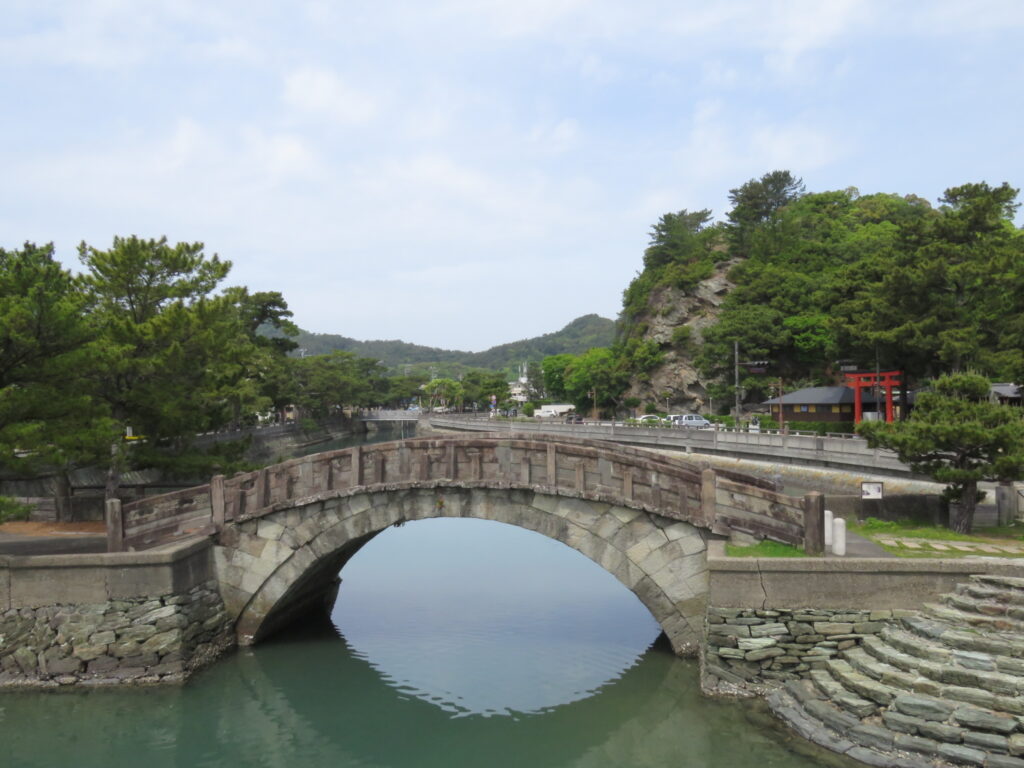
Continue to Furobashi Bridge, another historic stone structure and one of Wakaura’s best-known landmarks.
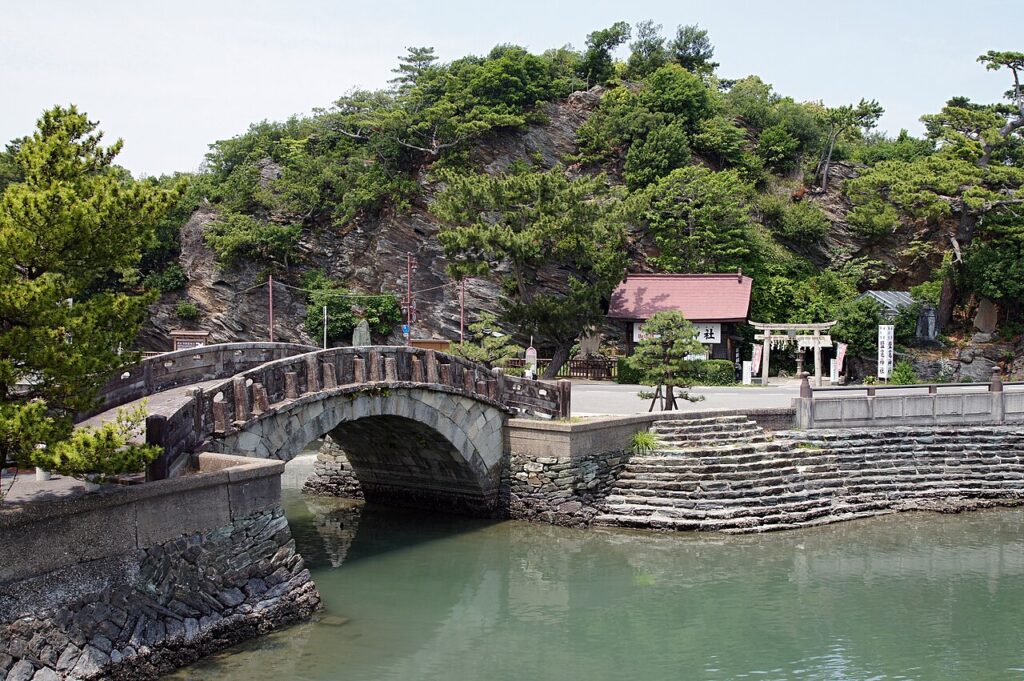
Built in 1851, this stone arch bridge formed part of the route associated with the Kishu Tokugawa family’s annual Waka Festival. Its elegant arch and decorative stone railings make it an attractive example of traditional bridge construction.
Unlike some historic bridges that can only be viewed from the surrounding area, Furobashi can still be crossed on foot today. Walking across it gives you a closer look at its stonework and allows you to experience the bridge as part of the historic landscape rather than simply viewing it from a distance.
The scenery around the bridge changes considerably depending on the tide and time of day. When the tide is low, the exposed tidal flats create a different atmosphere from the view at high tide.
This changing landscape is one of the pleasures of visiting Wakaura. Even the same viewpoint can look quite different from one visit to another.
3. Shiogama Shrine and Tamatsushima Shrine: The Spiritual and Literary Heritage of Wakaura
Shiogama Shrine: A Shrine Set Within a Natural Rock Formation
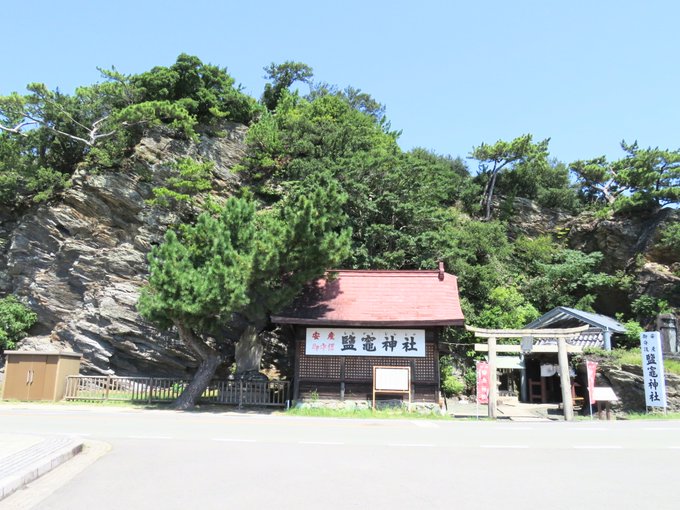
Near Furobashi Bridge, on the opposite side of the road, you will find Shiogama Shrine.
Unlike many large Japanese shrines with spacious grounds and impressive main buildings, this small shrine is located inside a cave-like opening in a rocky hill. Its setting makes it feel closely connected to the natural landscape.
The shrine is associated with beliefs relating to the sea and life, and is particularly known as a place where people pray for safe childbirth. Its unusual location and quiet atmosphere make it an interesting stop along the route.
Tamatsushima Shrine and the Poetry of the Manyoshu
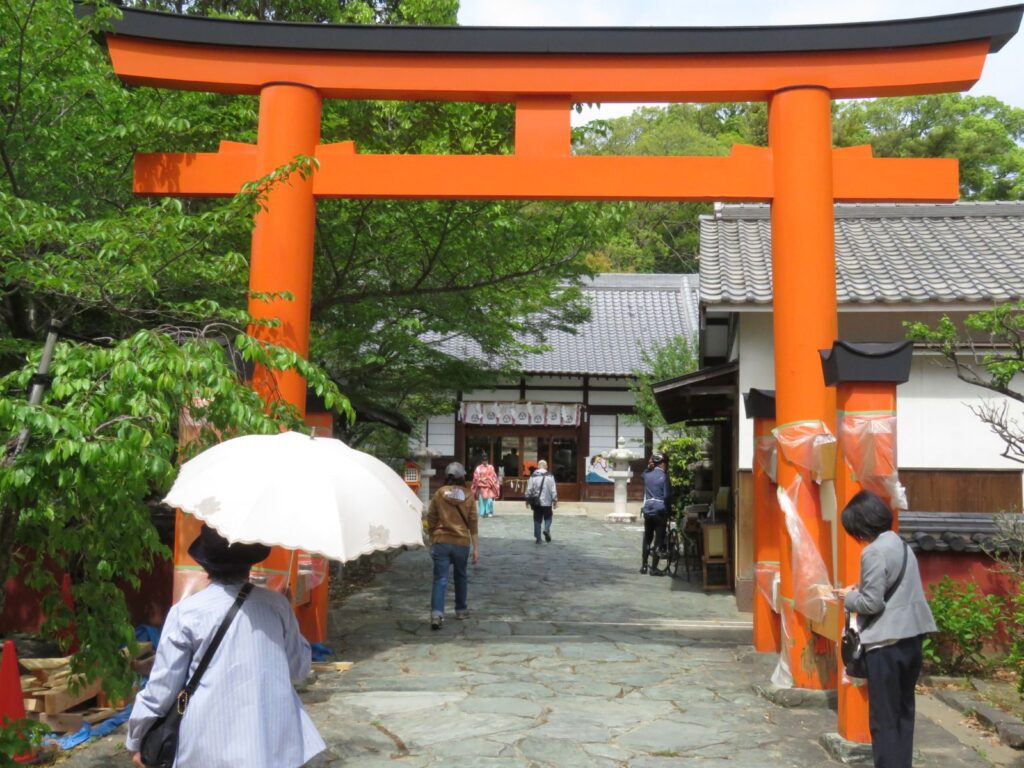
Next, visit Tamatsushima Shrine, one of the most important places for understanding Wakaura’s cultural history.
Wakaura has been celebrated in Japanese poetry since ancient times. In 724, Emperor Shomu visited the area, and the poet Yamabe no Akahito, who accompanied him, composed a poem praising its beautiful scenery. The poem was later included in the Manyoshu, Japan’s oldest surviving collection of poetry.
Tamatsushima Shrine has long been associated with the worship of the gods of Japanese poetry. From the Heian period onward, it became an important destination for people who composed waka, the traditional form of Japanese poetry.
The coastline looked different in ancient times, when the sea extended further inland than it does today. Nevertheless, the peaceful atmosphere of this area still offers a sense of the landscape that inspired poets more than a thousand years ago.
For visitors interested in Japanese literature and culture, Tamatsushima Shrine provides a fascinating connection between the physical landscape and the history of poetry.
4. Local Cafes, Traditional Sweets and Food Shops in Wakaura
Discover the Local Food Culture Around Ashibe-an
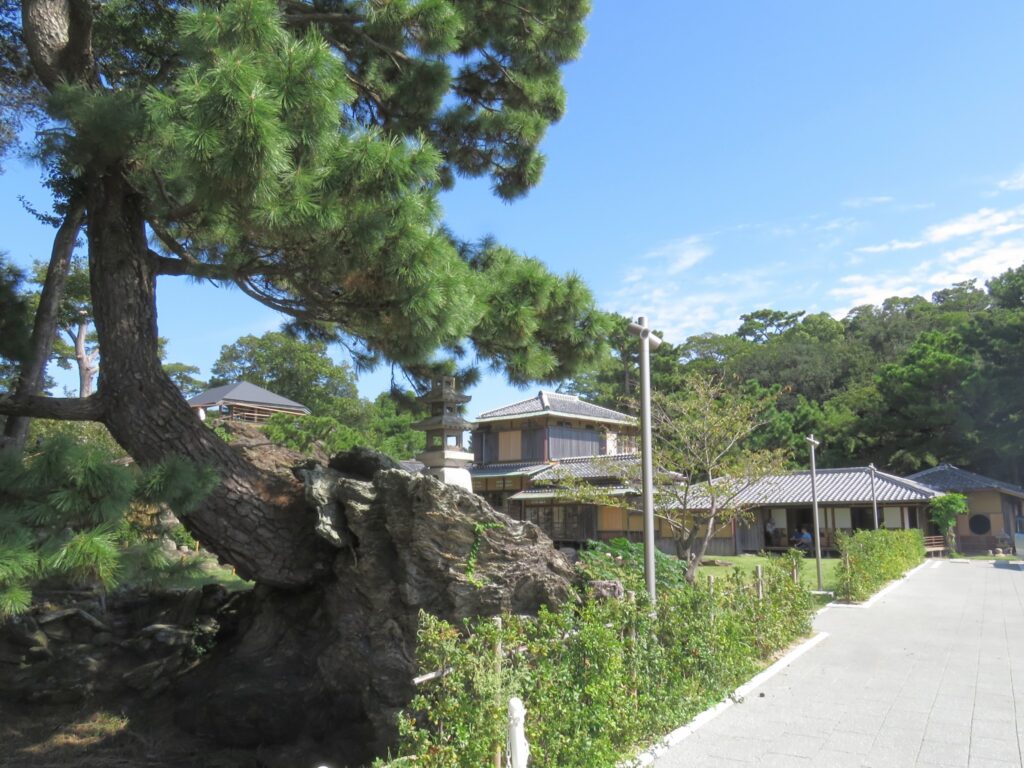
A historical walk is also a good opportunity to take a break and discover some of the area’s local flavors.
Around Ashibe-an, next to Tamatsushima Shrine, you can find traces of Wakaura’s history as a destination for sightseeing and religious visits. The area was once a popular place for people to enjoy excursions along the coast, and walking through it today offers a glimpse of that tradition.
There are several local shops and cafes worth looking out for along the way.
Wakaura Senbei: A Traditional Local Souvenir
Wakaura senbei from Takaya Seika is a traditional sweet associated with the area’s souvenir culture.
Today, tourist destinations across Japan offer a wide variety of souvenirs, but local sweets often tell a story about the history of travel in the region. In the past, visitors to scenic destinations such as Wakaura would also have taken home local confectionery as a reminder of their journey.
Trying a traditional local sweet is a simple way to connect with that history.
Wakahama Kamaboko: A Taste of Local Seafood Culture
Another local stop is Wakahama Kamaboko, a shop specializing in kamaboko, a traditional Japanese fish cake.
Wakayama has a long relationship with the sea, and seafood has always played an important role in the region’s food culture. Although kamaboko is familiar throughout Japan, its flavors and production methods vary from one area to another.
Visiting a small local food shop can reveal details of regional food culture that are easy to miss when traveling only between major tourist attractions.
Independent Cafes and Local Sweets
If you would like to sit down for a coffee, Marelei and Kissa Riel are two cafes to consider.
After visiting shrines and historic bridges, taking a break at a local cafe is a pleasant way to experience the slower rhythm of the town.
You might also want to look for cream puffs from Shuneido, a popular local sweet.
These small discoveries add another dimension to a visit to Wakaura. They connect the area’s historical identity with the everyday lives of the people who live here today.
5. Walk Along the Ichimachi River Toward Kishu Toshogu Shrine
Experience the Everyday Atmosphere of Wakaura
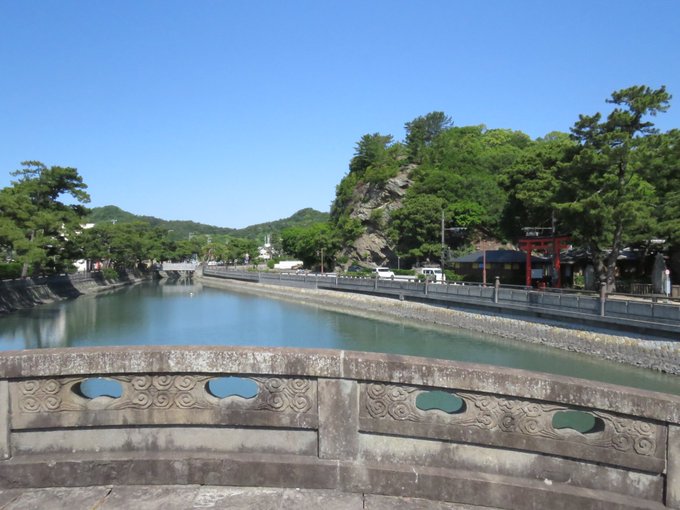
After your break, continue along the Ichimachi River toward Kishu Toshogu Shrine.
Walking beside the river offers a different perspective on Wakaura. Away from the coastal viewpoints and famous religious sites, you can observe residential streets, local buildings, and the quiet rhythm of everyday life.
These ordinary scenes are also part of the area’s character. Wakaura is not simply a collection of historical attractions; it remains a place where people live and work.
Kishu Toshogu Shrine: The Legacy of Tokugawa Ieyasu
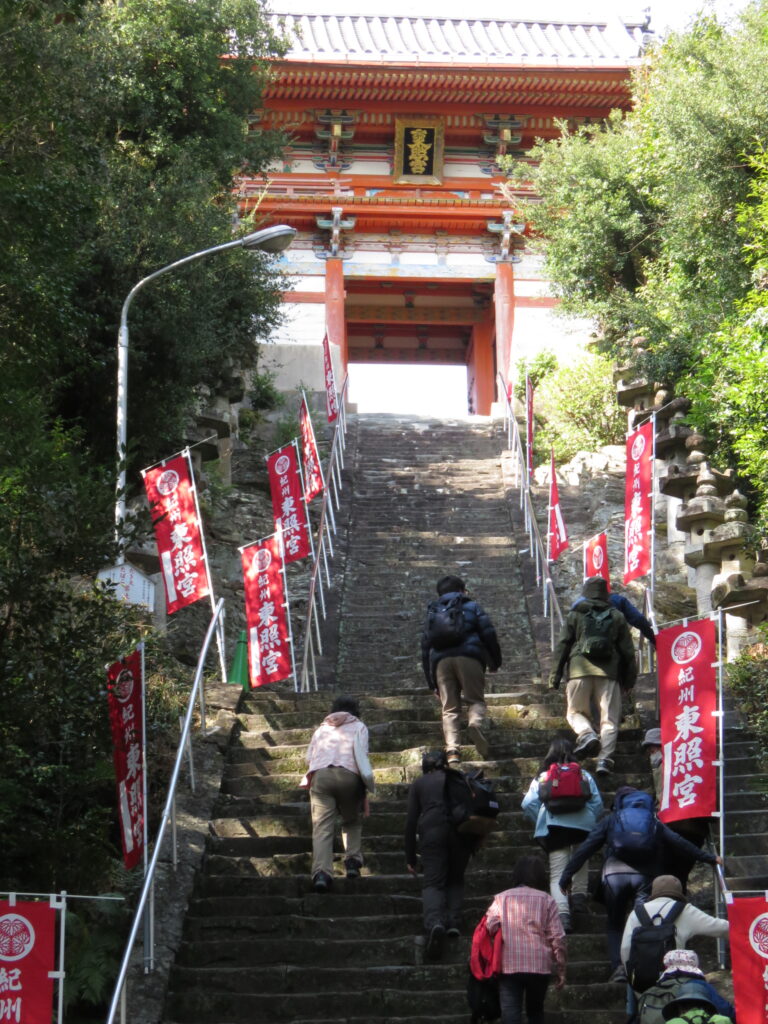
Eventually, you will reach Kishu Toshogu Shrine, one of the most impressive historical sites in the area.
The shrine was founded in 1621 by Tokugawa Yorinobu to honor his father, Tokugawa Ieyasu, the founder of the Tokugawa shogunate.
Yorinobu was one of Ieyasu’s sons and became the first lord of the Kishu Domain at a young age. The construction of the shrine reflected both his respect for his father and the importance of the Tokugawa family in the region.
The approach to the shrine includes 108 stone steps known as Samurai-zaka. Every May, during the Waka Festival, participants carry a large portable shrine down these steps as part of the traditional procession.
At the top, you will find a richly decorated shrine building featuring colorful details and intricate carvings. Its elaborate architectural style is reminiscent of the famous Nikko Toshogu Shrine, and Kishu Toshogu is sometimes referred to as the “Nikko of Kansai.”
Take your time to observe the decorations and craftsmanship. Here, you can appreciate not only the natural beauty of Wakaura but also how the political power and artistic sensibilities of the Edo period were expressed through architecture.
6. Wakaura Tenmangu Shrine: Historic Architecture and Panoramic Views
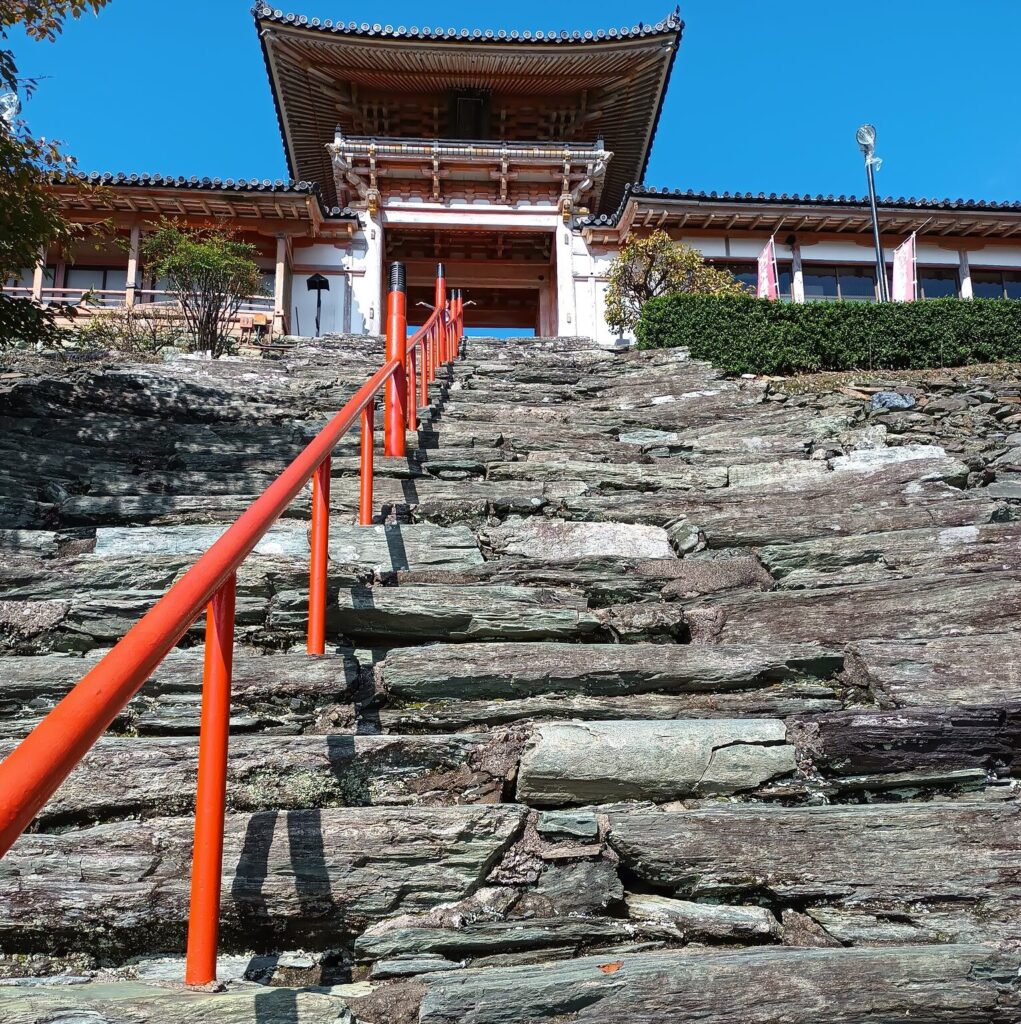
Finish Your Wakaura Walking Tour with a View
The final destination of this walking route is Wakaura Tenmangu Shrine.
The shrine is dedicated to Sugawara no Michizane, a historical scholar and government official who is widely worshipped in Japan as the deity of learning.
Together with Kishu Toshogu, it is one of the area’s most important historic shrines. Its main hall and gate are designated Important Cultural Properties of Japan and date back more than 400 years.
As you climb the stone steps, the shrine’s historic buildings gradually come into view. The architecture features an elaborate Momoyama-period style, with vivid colors and detailed carvings.
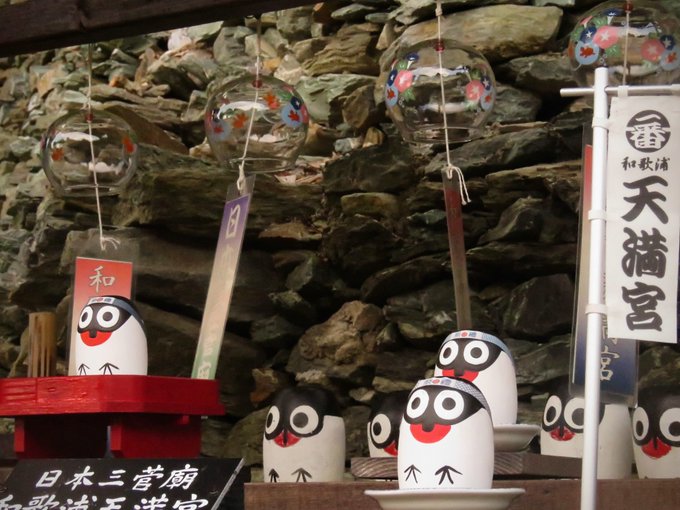
You may also notice small bird motifs known as uso. The Japanese word uso has the same pronunciation as the word for “lie.” In a traditional play on words, these birds are associated with the wish to turn misfortune into something harmless and bring good fortune.
Enjoy the View from the Shrine Grounds
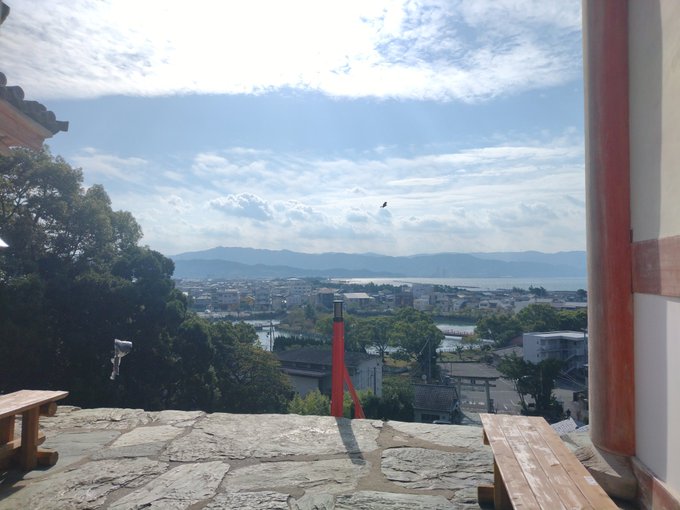
One of the highlights of Wakaura Tenmangu is the view from its elevated grounds.
Looking out over the inlet, tidal flats, and surrounding mountains, you can see parts of the landscape you explored earlier in the day. Imoseyama and the area around Furobashi appear from a different perspective.
After walking through the town and visiting its historic sites, this is a wonderful place to pause and look back at the route.
The combination of traditional architecture and panoramic scenery makes Wakaura Tenmangu a fitting final stop for your walk.
7. Why Wakaura Is Worth Exploring on Foot
A Cultural Landscape Where History and Local Life Meet
This walking route introduces several layers of Wakaura’s history.
You encounter the ancient landscape celebrated in the Manyoshu, the literary and religious heritage of Tamatsushima Shrine, and the bridges and buildings developed by the Kishu Tokugawa family. You also visit Kishu Toshogu, dedicated to Tokugawa Ieyasu, and Wakaura Tenmangu, with its historic architecture and beautiful views.
Although each site has its own story, they are all part of one connected cultural landscape.
The experience becomes even richer when you take time to visit local cafes, confectionery shops, and food stores along the way. These everyday places reveal a side of Wakaura that cannot be understood simply by looking at historical monuments.
Travel does not always have to mean moving quickly from one famous attraction to another. Sometimes, the most rewarding way to discover a destination is to walk slowly, notice the details, and understand how its history continues to shape local life.
Wakaura is a place where this approach to travel works particularly well. Allow around half a day to explore the area at a comfortable pace, with time for photographs, a cafe stop, and a few unexpected discoveries.
If you are visiting Wakayama and would like to explore Wakaura beyond the usual sightseeing route, I can help you discover its hidden stories, local shops, and cultural details as part of a private walking experience.
Contact me to discuss your peaceful walk around Wakaura.
Read More About Wakaura
- From Boat to Table: A Day in Saikazaki, Wakayama’s Living Fishing Village
- A Week of Slow Living by the Sea in Wakayama City
- A New Poem for Wakaura
- Walking Through Meiko Shopping Street in Wakaura
Related posts:
Discover Satoyama Life in Wakayama

Best Things to Do in Wakaura (Wakayama) – Hidden Coastal Gem Near Osaka
A Satoyama Slow Journey Through Central Wakayama: Sea, Citrus, History & Ume
Why Wakayama Is One of Japan's Best Destinations for Slow Travel
Beyond the Beach: A Slow Cultural Stay in Southern Wakayama

No responses yet