
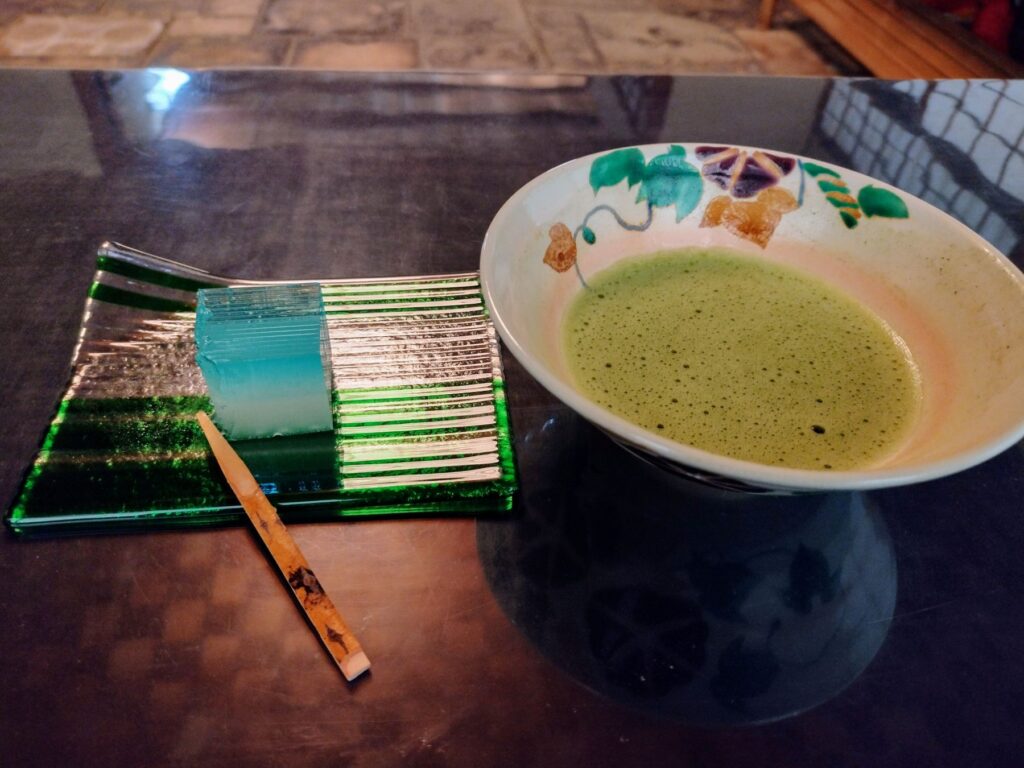
Osaka is one of the easiest places in Japan to experience traditional culture.
You can attend a tea ceremony, wear a kimono, try Japanese calligraphy, learn about samurai culture, or take part in a traditional craft workshop without leaving the city.
But if you have an extra day or two, it is worth looking beyond central Osaka.
The areas surrounding Osaka offer a different kind of cultural experience. In smaller cities, historic towns, and rural communities, traditional arts and crafts are often connected to the place itself—not simply presented as an activity for visitors.
For travelers looking for a more authentic experience, here are seven ways to experience traditional Japanese culture around Osaka, including several distinctive experiences in Wakayama.
1. Wear a Kimono and Experience Tea Ceremony in Wakayama
For many international travelers, wearing a kimono and participating in a tea ceremony is one of the most memorable ways to experience traditional Japanese culture.
You do not necessarily have to travel to Kyoto to do it.
In Wakayama City, visitors can put on a kimono at a long-established kimono shop near Wakayama Castle and take part in a tea ceremony connected with the history of the former Kishu domain.
After the tea ceremony, you can also walk around the castle town wearing your kimono. The experience combines dressing, tea, history, and the atmosphere of an old Japanese castle town rather than treating the kimono as simply a costume for photographs.
The experience can also be extended beyond tea.
Depending on the arrangement, travelers interested in Japanese arts can combine kimono with ikebana (flower arrangement) or shodo (Japanese calligraphy), creating a more immersive introduction to traditional Japanese aesthetics.
Best for: First-time visitors to Japan, couples, photographers, and travelers interested in Japanese aesthetics.
2. Make Traditional Japanese Sweets in Wakayama
Japanese sweets, or wagashi, are closely connected with tea culture and the changing seasons.
Rather than simply tasting wagashi in a shop, making them yourself gives you a chance to understand the thought that goes into their shapes, colors, textures, and seasonal designs.
In Wakayama City, visitors can experience Japanese sweets culture through local confectionery and cultural programs.
Wagashi can be particularly interesting for travelers who are already interested in Japanese food. Unlike many Western desserts, traditional Japanese sweets are often designed to reflect a season, flower, landscape, or cultural occasion.
The experience therefore goes beyond cooking.
It is an introduction to the Japanese idea that food can express the passing of time and the character of a place.
And if you combine wagashi making with a tea ceremony, you can experience both sides of the traditional relationship between Japanese sweets and tea.
Best for: Food lovers, families, couples, and travelers interested in Japanese seasonal culture.
3. Try Iaido — The Japanese Art of the Sword
If your image of samurai culture comes mainly from movies, an Iaido experience offers a very different perspective.
Iaido is a Japanese martial art centered on the controlled drawing and handling of a sword. It emphasizes concentration, posture, precision, and disciplined movement rather than simply fighting.
Osaka itself has places where visitors can try Iaido and other traditional Japanese arts.
But for travelers who want to combine martial arts with a broader exploration of Wakayama’s history, an Iaido experience can become part of a journey through the region’s castle towns, samurai heritage, and traditional culture.
Wakayama is particularly appropriate for this because the city developed as the castle town of the Kishu Tokugawa family.
The important point is that the experience is not simply about “pretending to be a samurai.”
It offers an opportunity to learn about the discipline and physical culture behind one aspect of traditional Japan.
Best for: Travelers interested in samurai history, martial arts, Japanese history, and active cultural experiences.
4. Make Your Own Japanese Washi Paper
For a quieter experience, try making washi, traditional Japanese paper.
Washi has been used in Japan for centuries for writing, calligraphy, sliding doors, lamps, artworks, and many other purposes.
In Wakayama, visitors can experience traditional paper making in rural settings. At a workshop in Aridagawa, for example, participants can make their own sheet of washi using traditional hand-papermaking techniques. The finished paper can be dried and sent to the participant afterward.
This is very different from a typical city sightseeing experience.
You work with water and natural fibers, repeat a simple but surprisingly delicate movement, and gradually create a sheet of paper.
The experience also reveals an important connection between Japanese crafts and the natural environment.
Water, plants, forests, and local knowledge are all part of the story behind traditional washi.
Best for: Travelers interested in crafts, nature, Japanese stationery, and slow cultural experiences.
5. Discover Kishu Lacquerware and Try Maki-e
In Kuroe, in the city of Kainan in Wakayama Prefecture, you can discover one of Japan’s major lacquerware traditions: Kishu lacquerware.
Kuroe has developed as a lacquerware-producing town, and the craft remains an important part of the area’s cultural identity.
For visitors, one of the most interesting ways to understand the craft is through a hands-on experience.
Depending on the workshop, you may be able to try maki-e, a decorative technique using lacquer and powdered materials such as gold or silver.
You can also experience lacquer work on everyday objects such as chopsticks.
This is particularly interesting because Kishu lacquerware has historically included objects made for daily use, not only expensive works of art.
Instead of buying a lacquerware souvenir and wondering how it was made, you can experience part of the process yourself.
A visit to Kuroe can therefore become both a craft experience and a way to understand how a traditional industry shaped a local Japanese town.
Best for: Travelers interested in Japanese design, crafts, food culture, and meaningful souvenirs.
6. Experience Traditional Japanese Taiko Drumming
Japanese taiko drums are immediately recognizable, but watching a performance is very different from actually playing one.
A taiko experience allows visitors to learn basic rhythms and movements and feel the physical energy of traditional Japanese drumming.
For international visitors, it can be an especially enjoyable group activity because you do not need to speak Japanese fluently to participate.
In Wakayama, taiko can also be connected to the wider culture of festivals and community life.
Traditional music in Japan was not always something performed exclusively on a stage for tourists. Drums, chants, and music have long been part of festivals, religious events, and local celebrations.
Trying taiko therefore offers a small glimpse into the communal side of Japanese culture.
Best for: Families, groups of friends, active travelers, and anyone looking for a lively cultural experience.
7. Experience Japanese Arts Through Kimono, Tea, Flowers, and Calligraphy
Traditional Japanese culture is often divided into separate activities for tourists:
- Wear a kimono.
- Drink matcha.
- Try calligraphy.
- Arrange flowers.
- Take photographs.
But these traditions are connected by a common aesthetic.
Tea ceremony, ikebana, calligraphy, and kimono all place importance on seasonality, form, space, movement, and attention to detail.
In Wakayama, these activities can be combined into a more personal cultural experience.
Imagine beginning by putting on a kimono, learning how to prepare and drink matcha, arranging seasonal flowers, and then practicing a few strokes of Japanese calligraphy.
The result is not simply a collection of tourist activities.
It becomes an introduction to several different ways of expressing Japanese ideas of beauty.
Wakayama City is particularly suitable for this because these experiences can be combined with visits to Wakayama Castle and the historic castle-town area. The official tourism program, for example, combines kimono, tea ceremony, and a walk around the castle town.
Best for: Travelers seeking a deeper cultural experience, couples, small private groups, and photographers.
Why Look Beyond Osaka for Cultural Experiences?
Osaka is an excellent base for exploring Japan.
It has an enormous variety of restaurants, entertainment, historic sites, and cultural experiences. Visitors can easily find tea ceremonies, calligraphy classes, kimono experiences, pottery workshops, and other activities within the city.
But there is another reason to explore the surrounding region.
In smaller communities, a traditional craft or cultural practice may be connected directly to the local landscape and history.
A paper-making experience can take you into a rural valley.
A lacquerware workshop can introduce you to a historic craft town.
A tea ceremony can be connected with a castle town.
A martial arts experience can lead to the history of the samurai.
This makes the experience part of the destination rather than something that could happen almost anywhere.
Wakayama: A Different Side of Traditional Japan
Wakayama is particularly interesting for travelers staying in Osaka because it offers a combination that can be difficult to find in the major tourist centers.
You can experience traditional Japanese culture while also exploring:
- castle-town history
- coastal communities
- Buddhist and Shinto heritage
- traditional crafts
- local food
- mountains and rural landscapes
- historic pilgrimage routes
And many of these experiences are relatively close to one another within Wakayama.
For example, a day in Wakayama City could combine kimono, tea ceremony, calligraphy or flower arrangement with Wakayama Castle and the historic town.
Another day could take you toward Kuroe to explore Kishu lacquerware and maki-e.
A trip into the countryside could include washi making, while food-focused travelers could add a wagashi-making experience.
This creates a different style of cultural travel.
Rather than collecting famous attractions, you begin to understand a place through the things people have made, practiced, eaten, and passed down through generations.
How to Add a Cultural Experience to Your Osaka Trip
You do not have to change your entire itinerary to experience traditional culture outside Osaka.
If you are staying in Osaka for several nights, consider setting aside one day for a cultural excursion.
Wakayama is especially suitable for this kind of journey because it can be reached from Osaka while offering a noticeably different atmosphere.
Instead of asking:
“What cultural activity can I do in Osaka?”
you can ask:
“What part of traditional Japanese life can I experience while exploring somewhere beyond Osaka?”
That change in perspective can lead to much more memorable experiences.
Immerse yourself in the experiences in Wakayama with the help from my Curated Kii Peninsula Journey.
Final Thoughts
For many travelers, an authentic cultural experience is not about finding the most famous attraction.
It is about doing something with your own hands, meeting people who continue a tradition, and understanding why that tradition exists in that particular place.
Near Osaka, there are many opportunities to do exactly that.
And if you are willing to travel beyond the city, Wakayama offers an especially broad range of experiences—from wagashi making and Iaido to washi paper making, taiko drumming, Kishu lacquerware, maki-e, kimono, tea ceremony, ikebana, and calligraphy.
These experiences can turn a day trip from Osaka into something more than sightseeing.
They can become a way of experiencing a small part of how Japanese culture is lived, practiced, and passed on.
Related Posts
- Why Some of Japan’s Most Meaningful Experiences Aren’t Offered in English
- Beyond Kyoto: Where to Experience Kimono in Japan
- Beyond the Castle: 10 Cultural Experiences Around Wakayama Castle
- Fruit Picking Experiences in Wakayama
- Best Satoyama Experiences in Wakayama: Walk, Farm, Taste, and Connect
No responses yet