
When people plan a trip to southern Wakayama, most itineraries revolve around the sacred sites of the Kumano region. Travelers walk the Kumano Kodo pilgrimage routes, visit the Kumano Sanzan shrines, and admire the famous Nachi Falls before continuing on to their next destination.
But by ending your journey there, you miss one of the Kii Peninsula’s most remarkable places.
Located at the southern tip of Japan’s main island, Kushimoto offers a completely different perspective on Wakayama. While Kumano tells the story of mountains, spirituality, and pilgrimage, Kushimoto reveals a landscape shaped by the Pacific Ocean, dramatic coastal geology, marine life, and centuries of maritime history.
If you have an extra day—or even better, two—continuing south to Kushimoto can become one of the highlights of your trip.
Experience Japan’s Southernmost Point
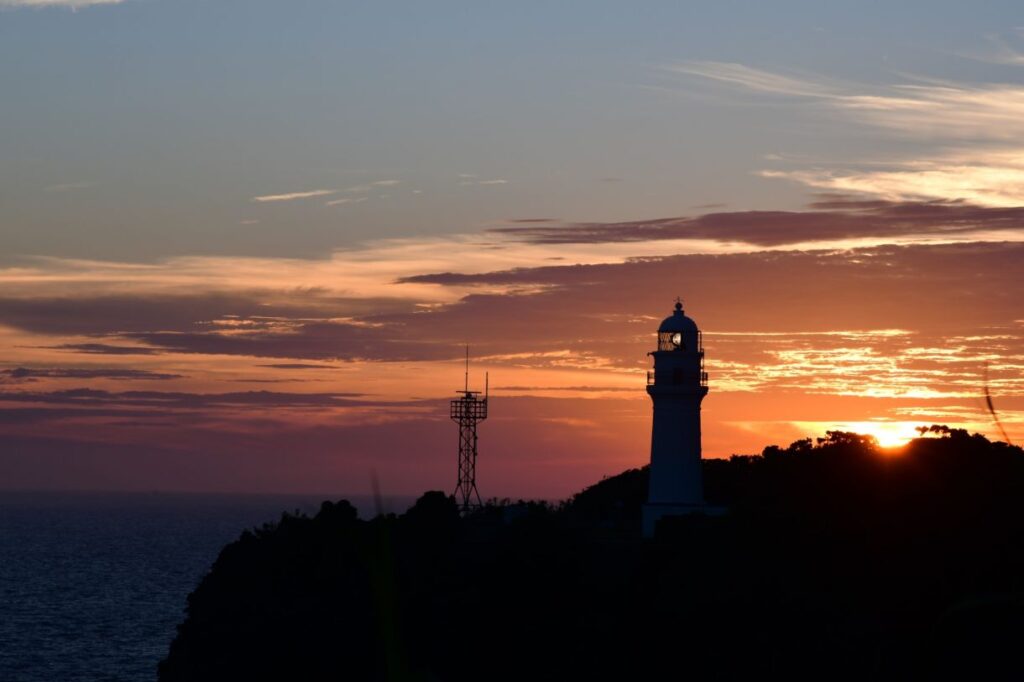
Kushimoto is home to Cape Shionomisaki, the southernmost point of Honshu, Japan’s largest island.
Standing on the cape, you’ll find yourself surrounded by the vast Pacific Ocean. Unlike many coastal viewpoints where mountains quickly meet the sea, the uninterrupted horizon here creates an extraordinary sense of openness.
The white lighthouse overlooking the cliffs has guided ships for more than a century, while the surrounding park invites visitors to slow down, walk along the coastline, and simply enjoy the sound of the waves.
It is a place where many travelers realize just how diverse Wakayama’s landscapes truly are.
Extraordinary Coastal Landscapes
Perhaps Kushimoto’s most iconic landmark is Hashigui-iwa.
Stretching across the shoreline, these dramatic rows of sea stacks appear almost like giant pillars extending into the ocean. According to local legend, they were built overnight by monks and supernatural beings, while geologists explain them as volcanic rock formations shaped by millions of years of erosion.
Whether you visit at sunrise, sunset, or under changing weather, Hashigui-iwa never looks quite the same twice.
For photographers, it is one of the most rewarding coastal landscapes in Japan.
Discover Japan’s Rich Marine World
While much of Kumano’s appeal lies in forests and mountain trails, Kushimoto introduces visitors to a completely different ecosystem.
The warm Kuroshio Current brings an incredible diversity of marine life to this coastline, making Kushimoto one of Japan’s best-known destinations for diving and snorkeling.
Even visitors who don’t dive can enjoy the underwater world at Kushimoto Marine Park, where an underwater observatory allows you to look directly into the ocean without getting wet. Coral communities, colorful fish, and clear waters offer a side of Japan that surprises many first-time visitors.
It is a reminder that the natural heritage of the Kii Peninsula extends far beyond its mountains.
An Unexpected Story Linking Japan and Türkiye
One of Kushimoto’s most moving stories has nothing to do with nature.
In 1890, the Ottoman frigate Ertuğrul sank off the coast near Kushimoto during a violent typhoon. Local residents risked their own lives to rescue survivors and care for them despite having very limited resources.
This act of compassion became the foundation of the long-standing friendship between Japan and Türkiye.
Today, visitors can learn about this remarkable episode at the Turkish Memorial Museum before walking to the nearby Kashinozaki Lighthouse overlooking the rugged coastline where the tragedy occurred.
It is a powerful reminder that even a small coastal town can play an important role in world history.
Walk a Different Kumano Kodo
Many travelers associate the Kumano Kodo with mountain forests, stone paths, and quiet cedar groves.
However, another historic pilgrimage route—the Ohechi Route—once connected pilgrims along the Pacific coast.
Although much of the original route has disappeared beneath modern roads and towns, walking surviving sections offers a very different pilgrimage experience. Here, the sea is never far away, fishing villages replace mountain settlements, and ocean views accompany the journey.
For travelers who have already experienced the famous Nakahechi Route, Ohechi reveals another fascinating chapter of the Kumano pilgrimage tradition.
Taste the Pacific
Kushimoto’s identity is inseparable from the sea.
The local fishing ports supply restaurants with seasonal seafood including tuna, bonito, spiny lobster during the appropriate season, and a wide variety of fresh local fish.
Rather than large tourist districts, you’ll find family-run restaurants where the day’s catch often determines the menu.
Dining here isn’t simply about eating seafood—it’s about experiencing a community whose daily life has always been shaped by the Pacific Ocean.
Slow Down at the End of the Peninsula
One of Kushimoto’s greatest strengths is that it encourages travelers to slow down.
Instead of checking off famous landmarks, visitors spend time watching waves crash against cliffs, enjoying sunrise over Hashigui-iwa, walking quiet coastal roads, or relaxing in small fishing communities.
The pace feels noticeably different from Japan’s major tourist destinations.
For many travelers, this slower rhythm becomes one of the most memorable parts of their journey.
Continue Your Journey Beyond Kumano
The Kumano region deserves its international reputation.
But the Kii Peninsula doesn’t end at the pilgrimage routes.
Continuing south to Kushimoto reveals another face of Wakayama—one shaped by the sea, remarkable geological landscapes, rich marine ecosystems, and stories of international friendship that few visitors expect to discover.
If your itinerary allows, consider spending one or two nights beyond Kumano.
You may find that the place you almost skipped becomes the destination you remember most.
Looking for a Deeper Journey Through Southern Wakayama?
If you’d like to explore Kushimoto beyond the guidebooks, I offer private, customized journeys that combine the region’s coastal landscapes, local food, history, and lesser-known cultural sites with nearby destinations across the Kii Peninsula.
Whether you’re interested in photography, geology, coastal walks, or simply experiencing everyday life in southern Wakayama, I can help create an itinerary tailored to your interests.
Check Curated Kii Peninsula Journey.
Related Posts
- Why Kushimoto’s Sea Is Unlike Anywhere Else in Japan
- Surf, Slow Travel, and Life by the Sea in Wakayama
- A Day Between Sea, Citrus, and Craft: Exploring Arida’s Living Culture
- A Week of Slow Living by the Sea in Wakayama
No responses yet