
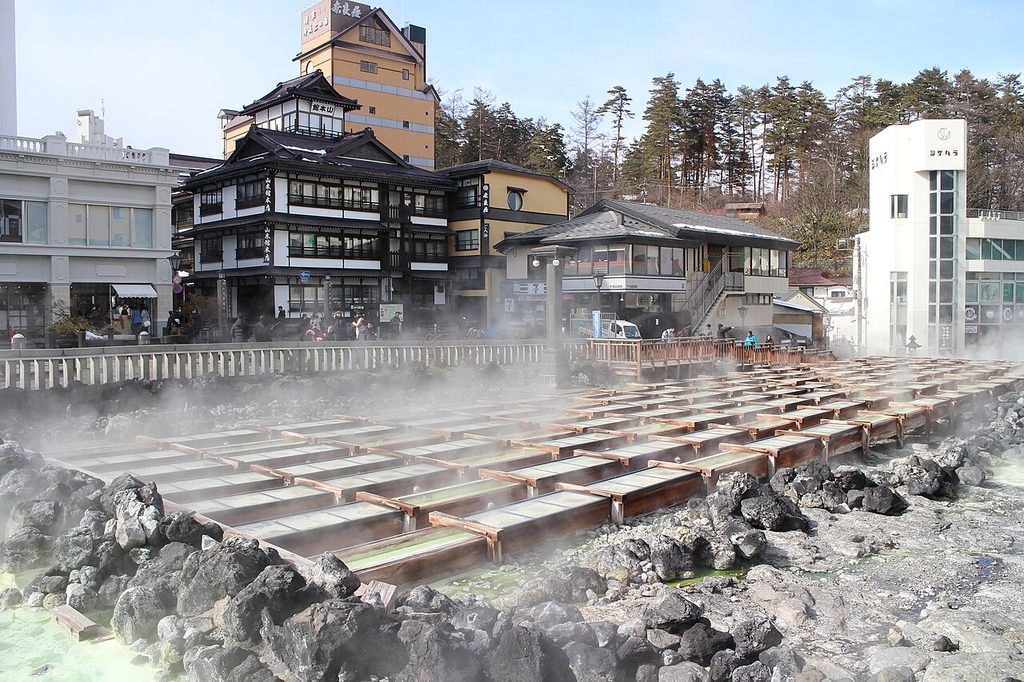
There is something especially appealing about visiting a hot spring in Japan during winter.
Outside, snow may be falling and the mountains may be covered in white. Inside, you soak in warm mineral-rich water, watch steam rise into the cold air, and later walk through a traditional onsen town in a yukata and wooden sandals.
For many visitors, a winter onsen experience is about much more than taking a bath. It can combine Japanese food, traditional inns, mountain landscapes, local culture, and the simple pleasure of slowing down for a day or two.
From the famous snow monkeys of Nagano to the volcanic landscapes of Hokkaido, here are eight hot spring destinations across Japan that are particularly appealing in winter.
1. Jigokudani & Yudanaka-Shibu Onsen, Nagano
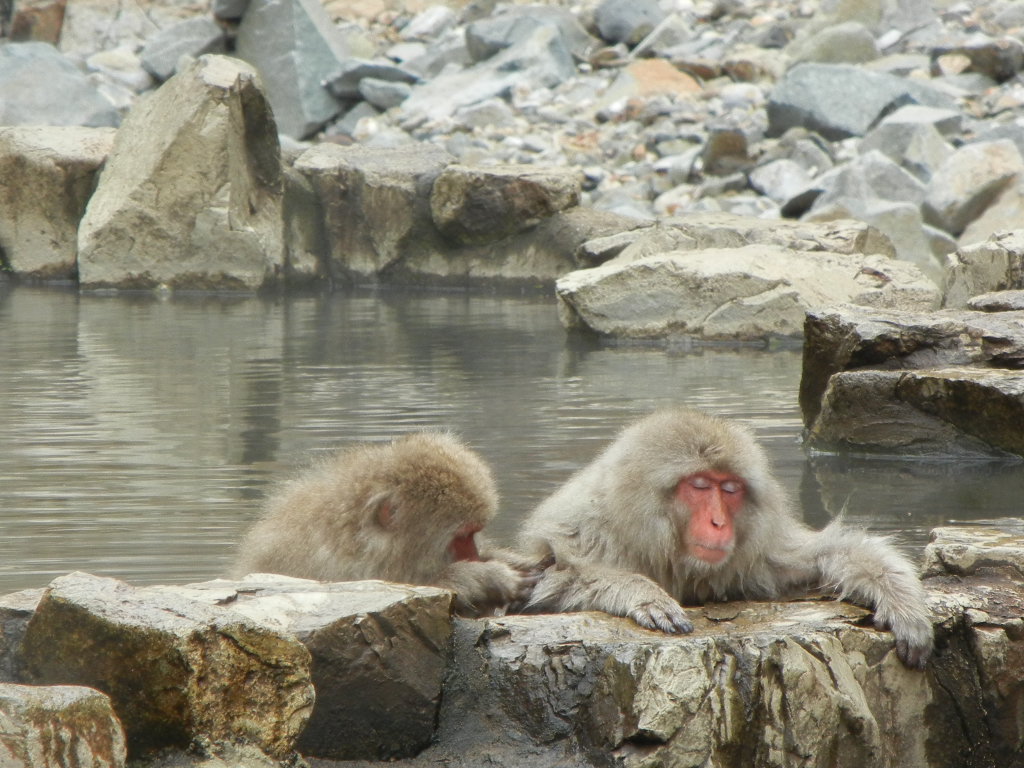
Meet Japan’s Snow Monkeys in Their Winter Home
Few winter experiences in Japan are as recognizable as seeing Japanese macaques bathing in the hot springs of Jigokudani.
Located in the mountains of Nagano Prefecture, Jigokudani Yaen-Koen is home to a population of Japanese macaques that are famous for entering the natural hot springs during the colder months.
The monkeys are the attraction, but the surrounding area deserves time as well.
Nearby Yudanaka and Shibu Onsen are traditional hot spring towns where visitors can stay in Japanese inns, walk through narrow streets, and experience public baths.
In winter, the combination is particularly atmospheric: a snowy mountain walk to Jigokudani followed by an evening in a traditional onsen town.
Why visit in winter?
- See Japanese macaques in a snowy mountain environment
- Combine Jigokudani with a traditional onsen stay
- Experience ryokan accommodation and Japanese cuisine
- Enjoy the contrast between cold mountain air and hot spring water
If you are looking for the classic combination of snow, monkeys and hot springs, this is one of Japan’s most distinctive winter destinations.
2. Kusatsu Onsen, Gunma
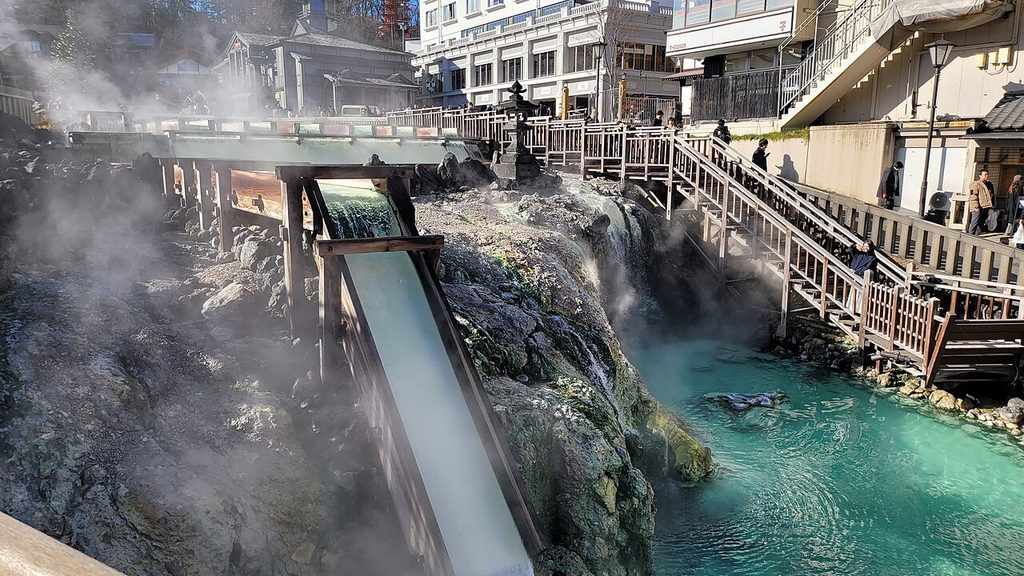
Steam Rising from the Heart of an Onsen Town
Kusatsu is one of Japan’s best-known hot spring destinations, and winter gives the town a particularly dramatic atmosphere.
At the center of Kusatsu is the Yubatake, or “Hot Water Field,” where hot spring water flows through a large wooden structure before continuing into the town.
In cold weather, clouds of steam rise from the water, creating an almost surreal scene.
Kusatsu is also a place where the hot spring is deeply connected to everyday life. Rather than being simply a resort with a few hotels, the town has developed around its hot springs, with bathhouses, shops, restaurants and traditional inns concentrated around the central area.
Winter visitors can also combine an onsen stay with skiing in the surrounding mountains.
Why visit in winter?
- See the atmospheric Yubatake surrounded by steam
- Walk through a traditional onsen town
- Combine hot springs with winter sports
- Stay at a traditional ryokan
Kusatsu is a good choice if you want the experience of being in a classic Japanese onsen town, rather than simply visiting a resort hotel with a hot bath.
3. Kinosaki Onsen, Hyogo
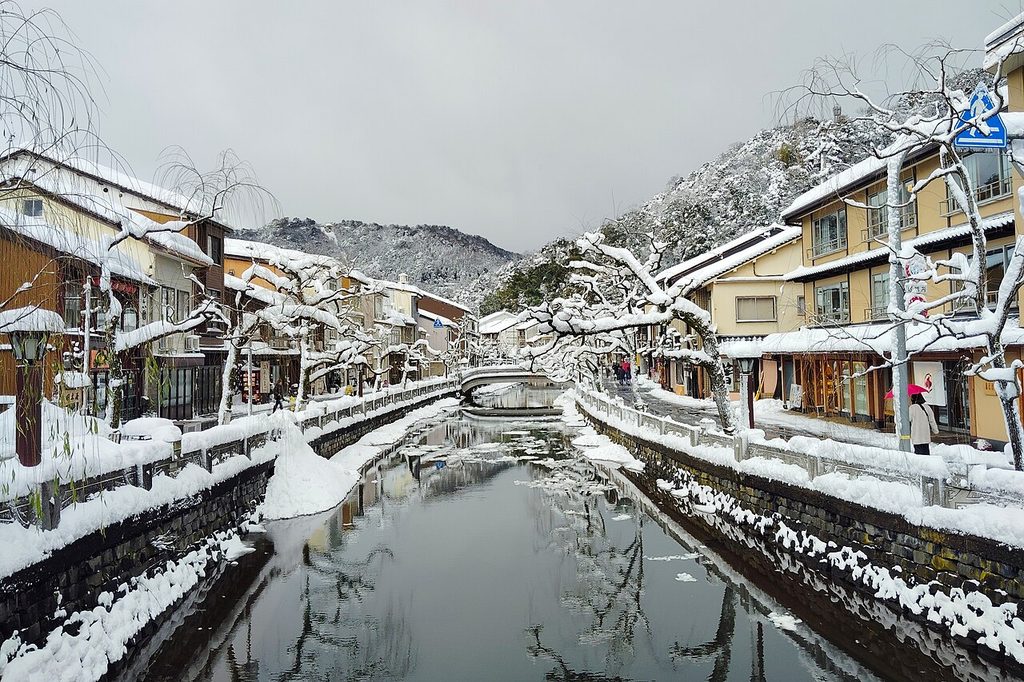
Walk Through a Traditional Onsen Town in Yukata
Kinosaki Onsen offers one of Japan’s most enjoyable traditional onsen-town experiences.
The town is famous for its seven public bathhouses, and visitors staying at participating ryokan can walk between them wearing yukata and wooden geta sandals.
A willow-lined canal runs through the center of town, crossed by small stone bridges and surrounded by traditional buildings.
Winter brings another attraction: snow and seasonal food from the nearby Sea of Japan coast.
Kinosaki is particularly famous for winter crab, making the season an opportunity to combine hot springs with one of the region’s most celebrated foods.
Rather than rushing between sightseeing attractions, a typical Kinosaki experience is about spending time in the town itself.
Walk to a bathhouse. Stop for tea. Return to your ryokan. Have dinner. Go out again after dark.
Why visit in winter?
- Experience traditional public bathhouse culture
- Walk through town in a yukata
- Enjoy snowy scenery around the canal
- Try seasonal winter crab
- Stay in a traditional ryokan
Kinosaki is particularly suitable for travelers who want to experience the rhythm of a Japanese onsen town rather than simply check a hot spring off their itinerary.
4. Noboribetsu Onsen, Hokkaido
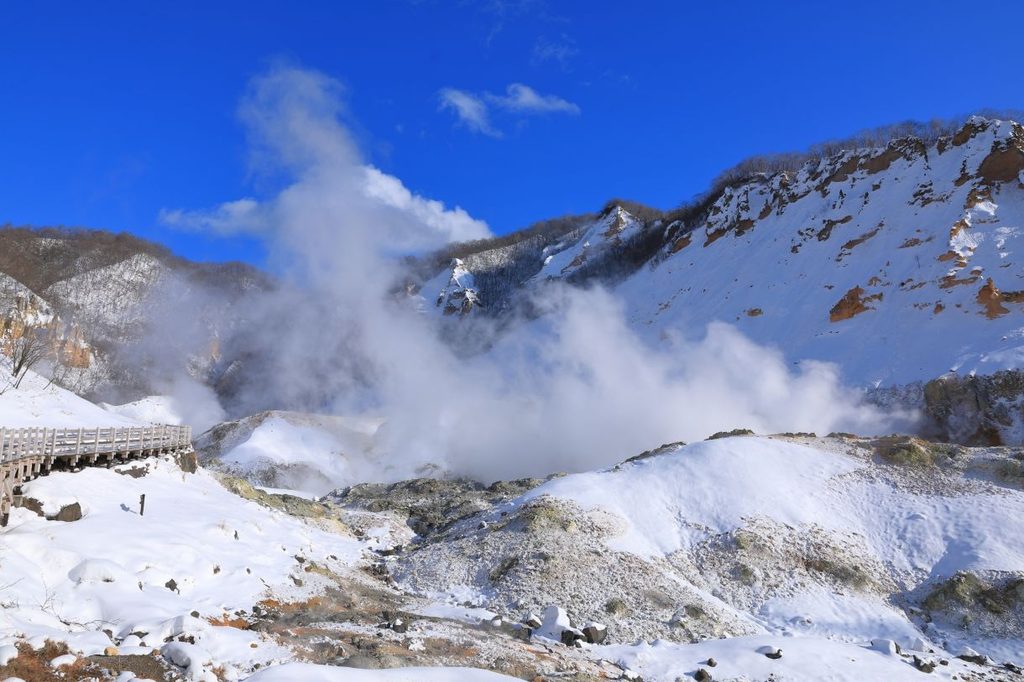
A Volcanic Winter Landscape
Noboribetsu Onsen offers a very different type of hot spring experience.
Located on Japan’s northern island of Hokkaido, Noboribetsu is surrounded by volcanic landscapes. The most dramatic is Jigokudani, or “Hell Valley,” where volcanic activity creates steaming vents, sulfurous pools and streams of hot water.
The landscape becomes especially striking in winter.
Snow covers the surrounding forest while steam rises from the volcanic ground. The contrast between white snow and the geothermal landscape makes the area feel almost otherworldly.
The hot spring town itself offers numerous ryokan and hotels, making it possible to combine a visit to Jigokudani with a traditional onsen stay.
Why visit in winter?
- Experience a volcanic landscape covered in snow
- Walk around Jigokudani
- Enjoy the variety of Noboribetsu’s hot spring waters
- Combine an onsen stay with a Hokkaido winter trip
Noboribetsu is a good destination if you want your winter onsen experience to include geology and dramatic natural scenery, not just a traditional hot spring town.
5. Ryujin Onsen, Wakayama
_-_panoramio-1024x768-1.jpg)
A Secluded Mountain Hot Spring Known as One of Japan’s “Three Beauties”
Wakayama is better known internationally for places such as Shirahama, the Kumano Kodo and Koyasan.
But deep in the mountains of Wakayama is another type of destination: Ryujin Onsen.
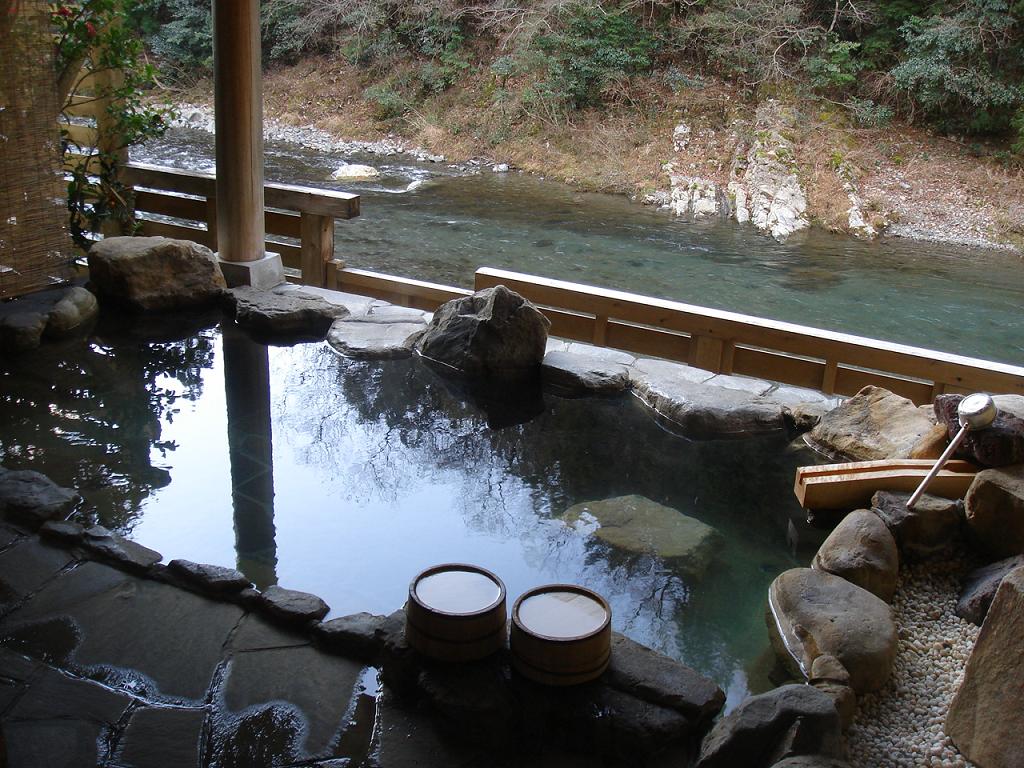
Located along the Hidaka River in a forested mountain valley, Ryujin Onsen has long been known as one of Japan’s Three Beauties’ Hot Springs, together with Gero Onsen and Yunomine Onsen.
The appeal of Ryujin is not dramatic sightseeing.
It is the setting.
The road winds through the mountains, the river runs alongside the hot spring area, and the surrounding forests create a quiet environment far removed from the major tourist routes.
In winter, this atmosphere becomes even more appealing. On a cold day, soaking in an outdoor bath while looking toward the surrounding mountains offers a very different experience from visiting a busy sightseeing destination.
Ryujin also makes an interesting alternative to Shirahama.
Shirahama is Wakayama’s famous seaside resort, while Ryujin reveals a quieter, mountainous side of the prefecture.
Why visit in winter?
- Stay in a secluded mountain onsen
- Experience one of Japan’s “Three Beauties’ Hot Springs”
- Enjoy the Hidaka River and surrounding forests
- Combine hot springs with hiking and rural exploration
- Experience a quieter side of Wakayama
For travelers who have already visited Japan’s major tourist destinations and want something slower and more local, Ryujin Onsen offers a very different kind of Wakayama experience.
6. Kurokawa Onsen, Kumamoto
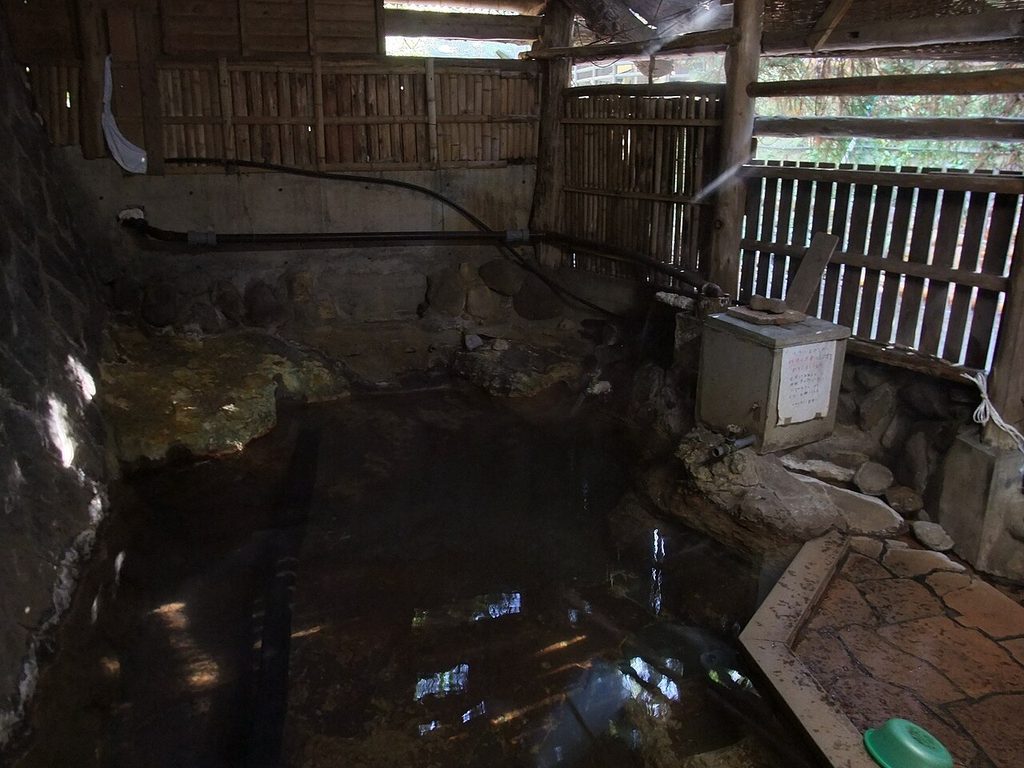
Open-Air Baths in a Mountain Village
Kurokawa Onsen is tucked away in the mountains of Kyushu and is known for its traditional atmosphere and outdoor baths.
Rather than developing as a large modern resort, Kurokawa has maintained the feeling of a small mountain village.
Wooden ryokan, stone paths, streams and forest surround the hot spring area.
One of the pleasures of staying here is simply walking around the village and discovering different baths. The experience encourages visitors to slow down and spend time in the landscape.
Winter can add snow to the surrounding mountains, although conditions vary from year to year.
Even without deep snow, the cold mountain air makes an outdoor hot spring particularly enjoyable.
Why visit in winter?
- Stay in a traditional mountain village
- Enjoy outdoor baths surrounded by nature
- Walk between ryokan and hot spring facilities
- Experience a slower style of travel in rural Kyushu
Kurokawa is a destination for travelers who want the atmosphere of a traditional Japanese mountain retreat.
7. Nozawa Onsen, Nagano
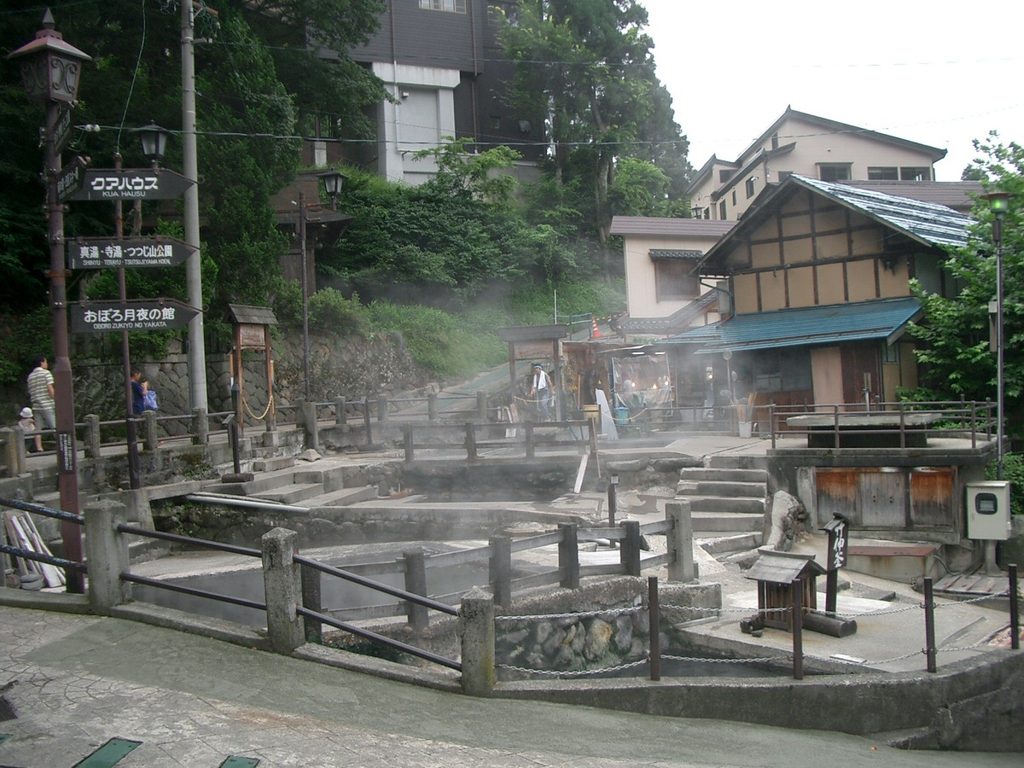
Ski, Snow and a Living Hot Spring Town
Nozawa Onsen is an excellent choice if you want to combine skiing with traditional Japanese hot spring culture.
The town sits at the foot of a major ski area, but Nozawa is more than a ski resort.
Its narrow streets, traditional houses and public bathhouses give it the character of a historic Japanese village.
The town has numerous public hot spring baths, known as soto-yu. These are maintained by local communities and remain part of everyday life.
This creates an interesting contrast with international ski resorts.
You can spend the morning skiing, return to town, visit a local bathhouse, eat Japanese food and spend the evening in a traditional inn.
Why visit in winter?
- Combine skiing and hot springs
- Experience community-run public baths
- Stay in a traditional Japanese village
- Enjoy heavy winter snow in the surrounding mountains
Nozawa Onsen is particularly appealing for travelers who want both a winter sports holiday and an authentic Japanese village experience.
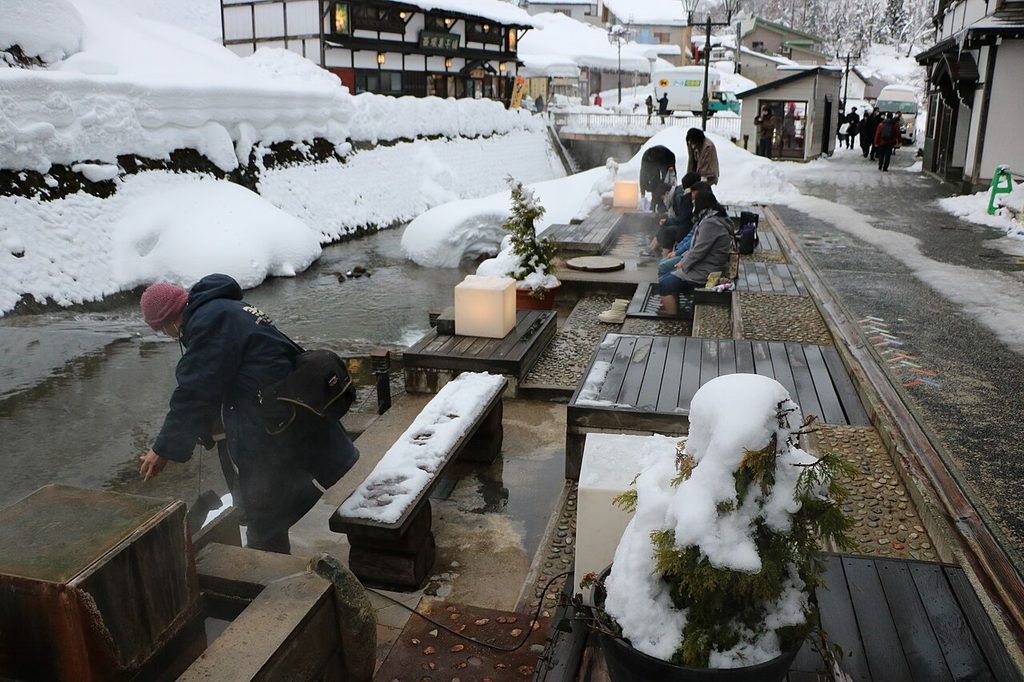
8. Ginzan Onsen, Yamagata
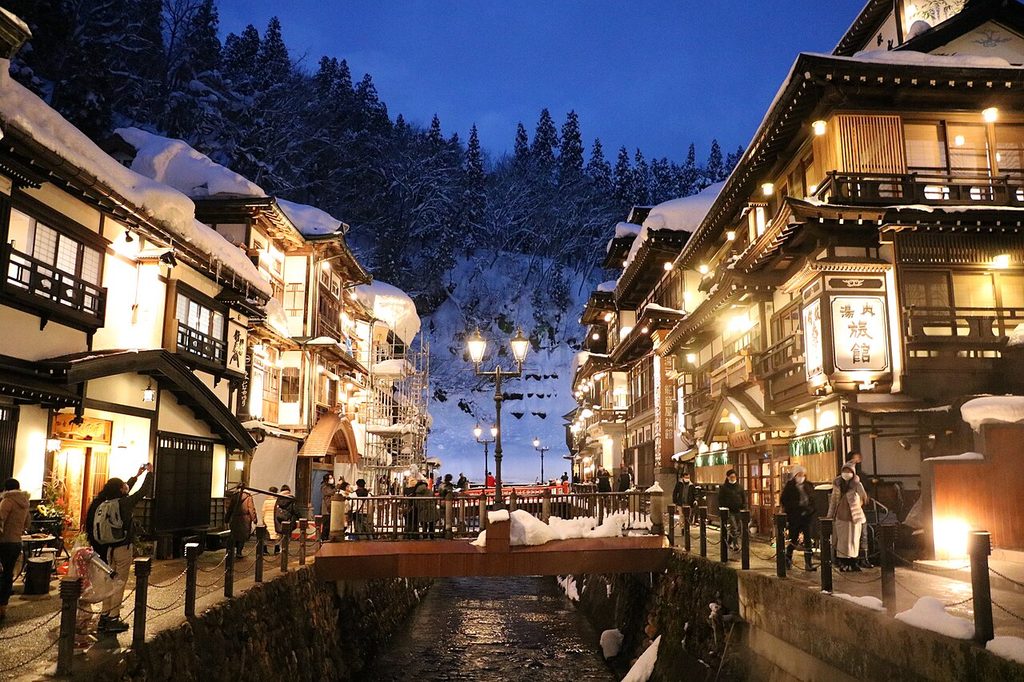
A Snowy Historic Onsen Town
Few Japanese hot spring towns have become as visually associated with winter as Ginzan Onsen.
Located in the mountains of Yamagata Prefecture, the town is lined with historic wooden ryokan along a narrow river.
In winter, snow covers the rooftops and streets, while traditional lamps illuminate the town after dark.
The result is one of Japan’s most atmospheric winter landscapes.
But Ginzan is best experienced as a place to stay rather than simply a photo stop.
Book a ryokan, walk through the town in the evening, enjoy a traditional dinner, and spend time in the bath.
The slower pace is part of the experience.
Why visit in winter?
- See a historic onsen town covered in snow
- Stay in a traditional ryokan
- Walk through the town after dark
- Experience a classic Japanese winter atmosphere
Ginzan Onsen is particularly suited to travelers looking for a quiet, atmospheric winter stay surrounded by traditional Japanese architecture.
Which Winter Onsen Should You Choose?
Japan’s winter hot spring destinations offer very different experiences.
If you want to see snow monkeys, head to Jigokudani and the Yudanaka-Shibu area.
If you want a famous, lively traditional onsen town, Kusatsu is an obvious destination to consider.
For yukata, public bathhouses and winter crab, Kinosaki offers a particularly immersive town experience.
If you are interested in volcanic landscapes, Noboribetsu provides a dramatic combination of geothermal activity and winter scenery.
For a quiet mountain retreat in Wakayama, Ryujin Onsen offers a very different experience from the prefecture’s better-known coastal resorts.
Kurokawa is ideal for a traditional mountain village atmosphere, while Nozawa combines skiing with everyday hot spring culture.
And if your priority is snowy historic scenery, Ginzan Onsen is one of Japan’s most atmospheric choices.
The important thing is that there is no single “best” winter onsen in Japan.
Each destination offers a different combination of landscape, culture, food and pace.
Experience a Different Side of Japan in Winter
A winter onsen trip can also be an opportunity to travel differently.
Instead of moving from one major attraction to another, you can stay in one town, walk its streets, eat local food, visit a neighborhood bathhouse and simply watch the landscape change from afternoon to evening.
This is particularly rewarding in the less internationally famous destinations.
In Wakayama, for example, a stay around Ryujin Onsen can be combined with mountain landscapes, rural communities and other places in the Kii Peninsula.
For travelers interested in experiencing Wakayama beyond its famous destinations, I can help design a Curated Kii Peninsula Journey that combines walks, cultural sites, local food and time to explore at your own pace.
The goal is not to see everything.
It is to find a rhythm that fits the journey.
Learn more about Curated Kii Peninsula Journey.
Related Posts
- Quiet Places Near Kansai Airport: 7 Slow Travel Destinations Beyond Osaka, Kyoto & Nara
- A Relaxing Day at Wakayama Marina City: Seafood, Fruit, Fun & Onsen
- After Walking the Kumano Kodo: Four Hidden Corners of Southern Wakayama
No responses yet