

When people think of sushi in Japan, Tokyo is often the first place that comes to mind.
And for good reason. Tokyo has some of the country’s most respected sushi restaurants, from intimate traditional counters to sophisticated omakase restaurants.
But there is another way to experience sushi in Japan.
Instead of starting in a major city, follow the fish.
Japan is an island nation with thousands of kilometers of coastline, hundreds of fishing ports, and remarkably diverse marine environments. In many coastal regions, sushi is closely connected to the local sea: the fish landed that morning, the season, the fishing methods, and the food traditions that developed around them.
For travelers interested in food culture rather than simply ticking off famous restaurants, eating sushi near the sea can be a very different experience.
Here are seven places around Japan where you can explore sushi and local seafood close to its source.
1. Toyama: Sushi from the Deep Waters of Toyama Bay

Toyama Bay on the Sea of Japan coast is one of Japan’s most celebrated seafood regions.
The bay is unusually deep and receives nutrients from rivers flowing down from the Japanese Alps. This combination creates rich fishing grounds and a remarkable variety of seafood.
Toyama is particularly famous for seasonal ingredients such as white shrimp, firefly squid and winter yellowtail.
The seasons are an important part of eating here. Firefly squid appear in spring, while winter brings particularly rich yellowtail. Some of these specialties have such short seasons that timing your visit can be as important as choosing the restaurant.
Toyama City is convenient for travelers because you do not have to travel deep into the countryside to experience this seafood culture. Sushi restaurants and seafood restaurants around the city work with fish from Toyama Bay.
But for a deeper experience, consider traveling toward the coast and exploring fishing communities such as Himi.
What to look for:
Toyama Bay sushi, white shrimp, firefly squid, winter yellowtail and seasonal local fish.
Best for: Travelers who want to understand how geography and seasonality shape Japanese sushi.
2. Kanazawa: Seafood, Sushi and the Sea of Japan

Kanazawa is already well known internationally for its gardens, samurai districts and traditional culture.
It is also one of Japan’s great seafood destinations.
The city sits relatively close to the rich fishing grounds of the Sea of Japan, and local cuisine makes extensive use of seafood from the surrounding waters. Kanazawa’s sushi culture includes both traditional sushi counters and casual conveyor-belt restaurants.
A good place to begin is Omicho Market, Kanazawa’s historic food market.
Seafood has been arriving here for centuries, and today fish and shellfish from the Sea of Japan continue to supply the market. Nearby restaurants range from inexpensive kaitenzushi to high-end sushi counters.
The experience is particularly interesting in winter, when ingredients such as yellowtail and nodoguro become prominent.
Kanazawa is therefore less about eating sushi beside a fishing boat and more about experiencing how a coastal food culture has developed into an urban culinary tradition.
What to look for:
Nodoguro, winter yellowtail, sweet shrimp, crab and seasonal sushi.
Best for: Travelers who want to combine traditional Japanese culture with a strong local seafood scene.
3. Nachikatsuura, Wakayama: Sushi and Tuna at a Working Fishing Port

On the Pacific coast of the Kii Peninsula, Nachikatsuura offers a very different experience from Tokyo.
This is a coastal town surrounded by the mountains and forests of Wakayama, and it is particularly famous for tuna.
Katsuura Fishing Port is known for its large landings of unfrozen tuna. The fish market operates close to Kii-Katsuura Station, making it possible for travelers to see the connection between the fishing port and the food served in town.
Here, tuna is not simply an expensive ingredient on a sushi menu.
It is part of the identity of the town.
You can visit the market, watch tuna being handled and cut, and then eat tuna as sashimi, sushi or in a rice bowl. The neighboring coast also offers hot springs, boat trips and access to the Kumano region.
That combination makes Nachikatsuura particularly interesting for travelers who want their food experience to connect with a landscape.
What to look for:
Fresh tuna, seasonal local fish and seafood from the Kii Peninsula.
Best for: Travelers combining food with Kumano, coastal scenery and hot springs.
Read more: Best Tuna Cutting Shows in Wakayama: Markets, Times & Tips
4. Wakayama City and the Kii Channel: Sushi Where Currents Meet
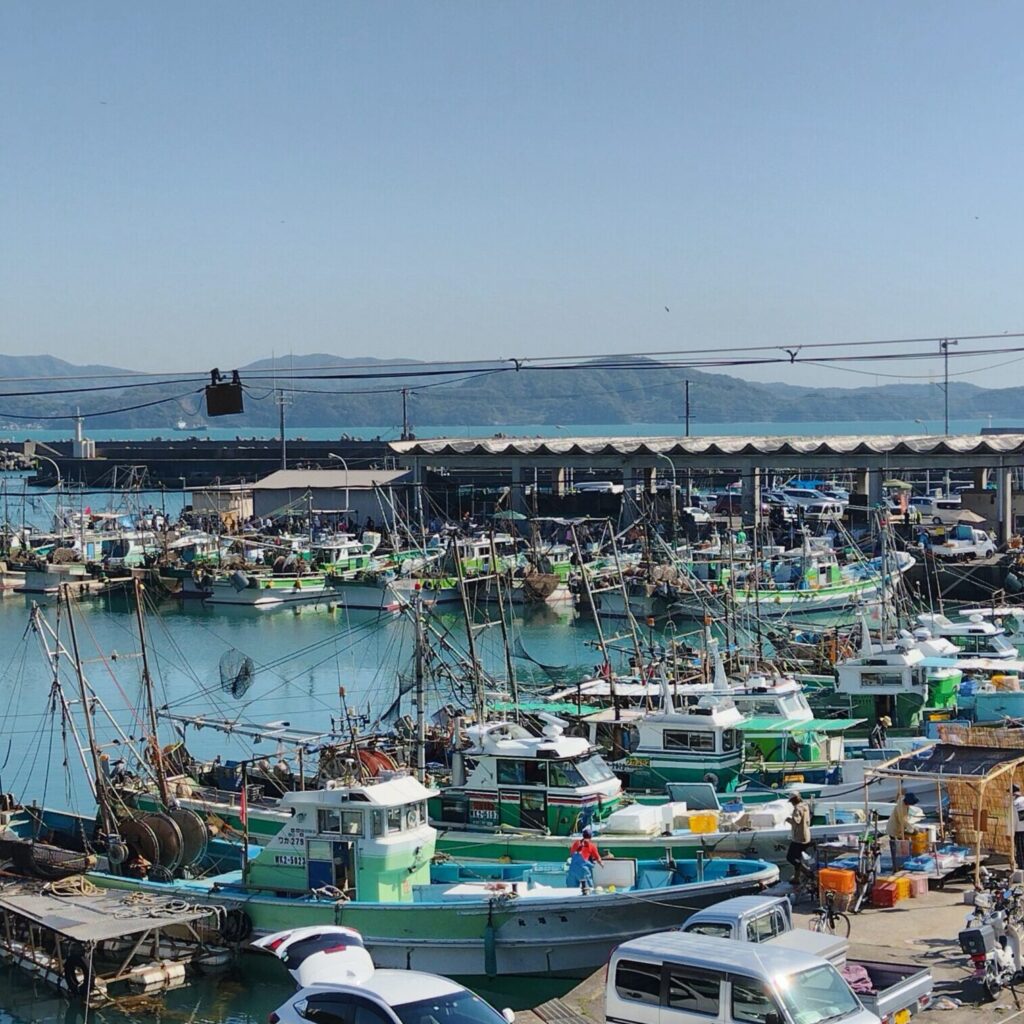
Further north, Wakayama offers another perspective on coastal sushi.
The city faces the Kii Channel, while the wider prefecture stretches along both the Pacific Ocean and the channel. Different fishing grounds produce different kinds of seafood, and local food culture is strongly connected to the sea.
One particularly interesting example is tachiuo, or cutlassfish.
The waters around Arida, just south of Wakayama City, are an important fishing ground for tachiuo. The Kii Channel is influenced by the meeting of water from Osaka Bay and the Kuroshio Current, creating favorable conditions for fishing. A distinctive local preparation is tachiuo-zushi.
Wakayama is also a place where you can see the seafood supply chain more directly.
At the coast around Wakaura and Saikazaki, local fishing and seafood markets remain part of everyday life. Farther south, Katsuura connects the experience to one of Japan’s major tuna ports. Wakayama’s official tourism organization highlights a series of fishing ports and seafood markets along the prefecture’s coastline.
For travelers staying in Wakayama City, this makes it possible to combine a city stay with excursions into coastal communities.
What to look for:
Tachiuo-zushi, local fish from the Kii Channel, fresh sashimi and tuna.
Best for: Travelers who want to explore the relationship between fishing communities, local food and the wider Kii Peninsula.
Read more: From Sushi to Kaiseki: A Refined Evening in Wakayama City
5. Hokkaido: Sushi from Cold Northern Waters

Hokkaido offers a completely different seafood environment.
The cold northern waters support an extraordinary range of seafood, including scallops, sea urchin, salmon roe, crab and sweet shrimp.
Rather than thinking of Hokkaido simply as one sushi destination, consider choosing a coastal city or fishing port and eating according to the season.
In Kushiro, for example, travelers can experience the famous Katte-don: buying individual pieces of seafood at a market and building your own bowl.
It is not traditional sushi in the strict sense, but it demonstrates an important principle of Japanese seafood culture: the market determines what you eat.
For sushi lovers, the same principle applies.
The best experience may not necessarily be the restaurant with the most famous name. It may be the place where the day’s local catch is treated with care.
What to look for:
Sea urchin, scallops, salmon roe, crab, sweet shrimp and seasonal fish.
Best for: Travelers who want to explore the dramatic differences between northern and southern Japanese seafood.
6. Mie: Sushi and Seafood from the Ise-Shima Coast

The Ise-Shima area of Mie Prefecture has a long relationship with the sea.
The coastline is characterized by bays, islands and fishing communities, and seafood has long played an important role in local cuisine.
One distinctive regional dish is tekone-zushi, a type of sushi associated with the Ise-Shima area. Traditionally made with marinated fish and rice, it reflects a different approach to sushi from the refined Edo-style sushi commonly associated with Tokyo.
This is an important point when exploring sushi around Japan:
Sushi is not one single food tradition.
Different regions developed their own ways of preserving, seasoning and serving fish and rice.
In Mie, the coastal landscape and local fishing culture provide the context for understanding these regional variations.
What to look for:
Tekone-zushi, Ise lobster, seasonal fish and other seafood from the Ise-Shima coast.
Best for: Travelers interested in regional sushi traditions rather than only contemporary nigiri.
7. Kochi: Sushi with the Character of the Pacific

Kochi, on the island of Shikoku, faces the Pacific Ocean and has a strong maritime food culture.
The region is famous for katsuo, or bonito, which is often served as katsuo no tataki—lightly seared over a flame and served with seasonings such as garlic and salt or ponzu.
Although tataki is not sushi, the experience illustrates why Kochi belongs on a coastal food journey.
Here, the relationship with the ocean is visible in the way fish is caught, prepared and eaten.
For visitors interested in sushi, local restaurants offer seasonal seafood alongside the region’s distinctive fish preparations.
Kochi is therefore a good destination for travelers who want to explore Japanese seafood beyond the familiar tuna-and-salmon sushi combination.
What to look for:
Bonito, local seasonal fish, katsuo no tataki and regional sushi.
Best for: Travelers who want to experience a strong local food identity on the Pacific coast.
Why Eat Sushi Close to the Sea?

There is a practical reason to travel to coastal Japan for sushi.
The closer you get to the fishing grounds, the more likely you are to encounter ingredients and preparations that reflect the local environment.
But the bigger reason is cultural.
A piece of sushi can tell you surprisingly little if you only know its name.
Knowing where the fish was caught, when it is in season, which fishing port landed it, and how local people traditionally prepare it changes the experience.
Compare a piece of tuna eaten at a famous restaurant in central Tokyo with tuna eaten in a town whose economy has been connected to a fishing port for generations.
Both can be excellent.
But they tell different stories.
This is particularly true in Japan because seafood changes dramatically from one coast to another.
The cold waters of Hokkaido produce a different range of ingredients from the deep waters of Toyama Bay. The Sea of Japan coast has its own seasonal specialties, while the Kii Peninsula’s Pacific waters bring different fish and fishing traditions.
Tokyo Is Not the Only Place for Great Sushi
If sushi is one of the reasons you want to visit Japan, you do not necessarily have to build your trip around Tokyo.
Instead, consider building a journey around the sea itself.
You might combine:
- Tokyo for the sophisticated world of Edo-style sushi
- Toyama for seasonal seafood from Toyama Bay
- Kanazawa for Sea of Japan seafood and traditional cuisine
- Wakayama for fishing ports, tuna and local fish from the Kii Channel
- Mie for regional sushi traditions
- Kochi for Pacific seafood and bonito
- Hokkaido for cold-water seafood
The result is not simply a list of sushi restaurants.
It is a journey through Japan’s coastal food cultures.
And that may be one of the most interesting ways to understand Japanese food: not by following the most famous restaurants, but by following the ingredients back toward the sea.
A Different Kind of Sushi Journey
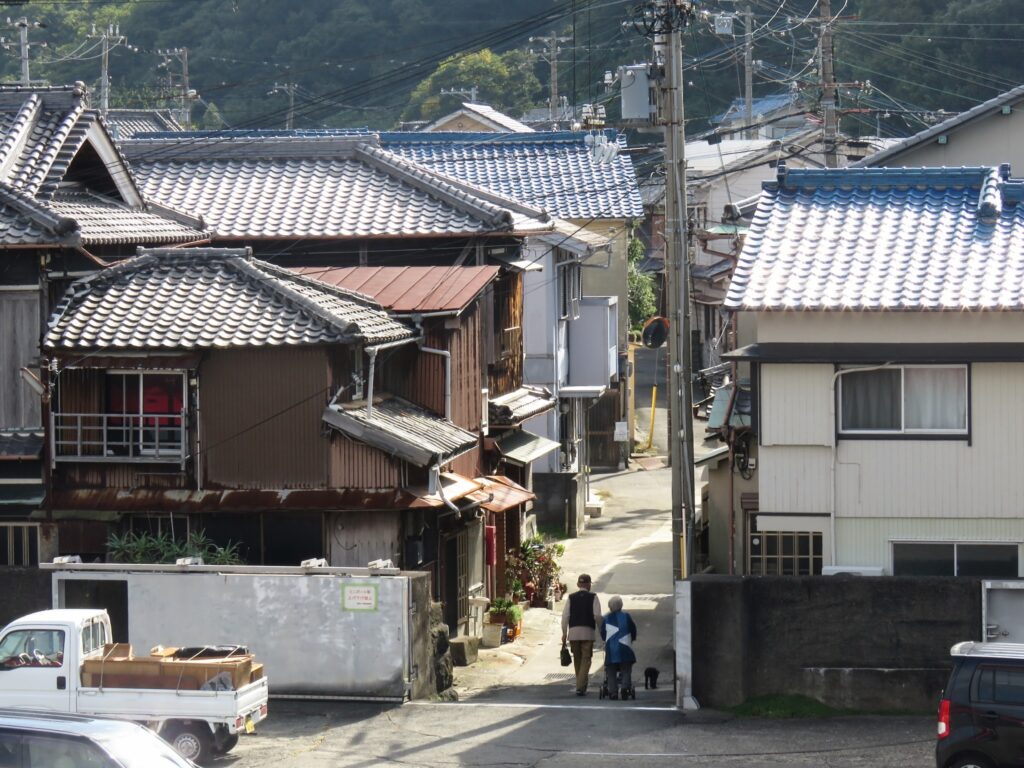
For travelers who already know about Tokyo’s sushi scene, the next step may be to look beyond the major cities.
In coastal Wakayama, for example, a food-focused journey can connect fishing ports, local markets, coastal communities and regional producers with the history and landscape of the Kii Peninsula.
Wakayama’s coastline includes everything from the fishing communities around Saikazaki and Wakaura to the tuna port of Nachikatsuura. The prefecture’s official tourism information currently highlights nine seafood markets and fishing-related destinations along the coast.
This is the kind of experience where what you eat becomes part of the journey itself.
Rather than asking, “Where is the best sushi in Japan?”
A more interesting question might be:
“Where should I go to understand why this sushi tastes the way it does?”
Learn about my Curated Kii Peninsula Journey
Related Posts
- The Flavors of Japan: How Seasons Shape Regional Food
- A Year in Japan: Experiencing the Seasons, Food & Traditions of Local Life
- After Walking the Kumano Kodo: Four Hidden Corners of Southern Wakayama
- A Relaxing Day at Wakayama Marina City: Seafood, Fruit, Fun & Onsen
No responses yet