
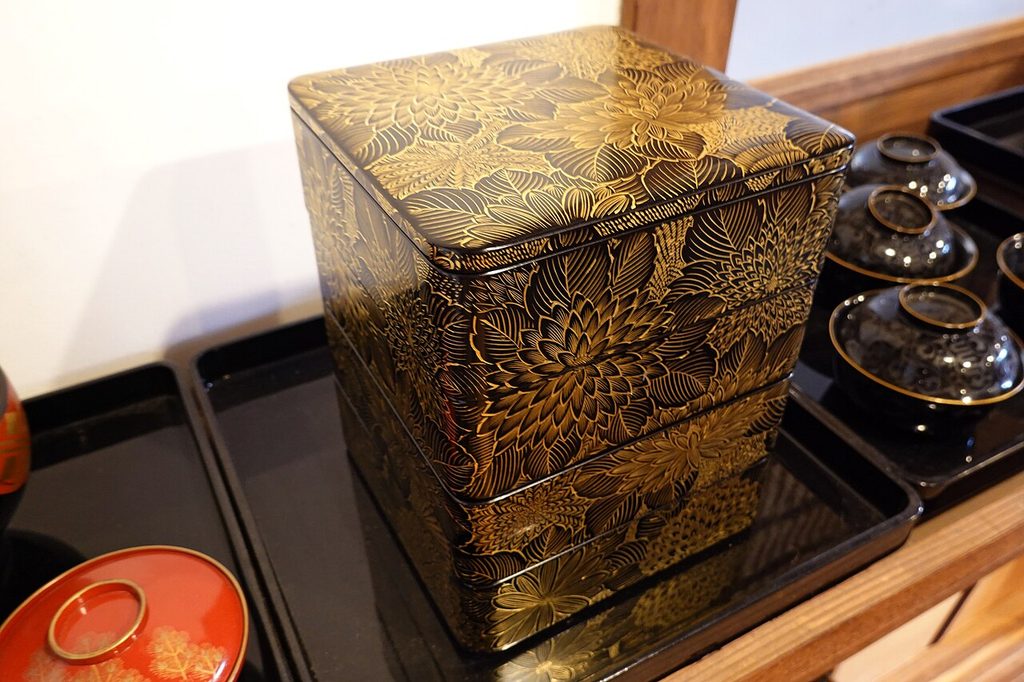
A Guide for Restaurants, Chefs, Designers, and International Buyers
When people think of Japanese lacquerware, they often imagine elegant black-and-red bowls, highly decorated traditional crafts, or museum-quality objects.
But Japanese lacquerware is much broader than that.
Across Japan, different production regions have developed their own techniques, materials, forms, and relationships with everyday life. For restaurants, hotels, designers, and international buyers, understanding these regional differences can be the first step toward finding the right Japanese lacquerware for a business.
Among the country’s major lacquerware-producing regions is Kishu Lacquerware, produced primarily around Kuroe in Wakayama Prefecture.
For businesses looking for Japanese tableware with a strong sense of place, practical functionality, and access to local producers, Kuroe offers an interesting alternative to the better-known craft destinations.
Japanese Lacquerware: A Craft with Regional Character
Japanese lacquerware, or shikki, is not a single style.
The techniques used to prepare the wooden base, apply lacquer, decorate surfaces, and finish each object vary considerably between production areas.
Over centuries, these regional traditions developed in response to local materials, craftsmen, markets, and patterns of daily life.
Today, four production areas are commonly presented together as major Japanese lacquerware centers:
- Kishu Lacquerware — Wakayama
- Aizu Lacquerware — Fukushima
- Yamanaka Lacquerware — Ishikawa
- Echizen Lacquerware — Fukui
Kishu Lacquerware itself describes Kishu as one of these four major production areas, alongside Aizu, Yamanaka, and Echizen.
For international buyers, this regional diversity is important.
Rather than asking simply, “Where can I buy Japanese lacquerware?”, it can be more useful to ask:
Which lacquerware tradition best fits my restaurant, brand, design concept, or customers?
The Four Major Lacquerware Traditions
1. Kishu Lacquerware — Wakayama
Kishu Lacquerware developed around Kuroe in Kainan City, Wakayama Prefecture.
Its history is closely connected with practical objects used in everyday life. The production area developed a specialized division of labor, allowing lacquerware to be produced in a wide variety of forms.
Today, Kishu products include bowls, trays, boxes, chopsticks, tableware, and other items for everyday use.
The tradition is particularly interesting for businesses because it combines traditional craftsmanship with a history of practical production.
Kishu Lacquerware has also continued to explore contemporary design and modern production methods. KISHU+, for example, was created as a new lacquerware brand from Wakayama, explicitly combining traditional craftsmanship with modern technology.
Best suited to:
Restaurants, hospitality businesses, lifestyle brands, gift businesses, and buyers looking for practical Japanese lacquerware.
2. Aizu Lacquerware — Fukushima
Aizu lacquerware developed in the Aizu region of Fukushima Prefecture and has a long history as one of Japan’s important lacquerware-producing areas.
Its tradition encompasses a broad range of techniques, including lacquer decoration, painting, and other forms of surface treatment.
For international buyers, Aizu represents another important regional interpretation of Japanese lacquerware, particularly for those interested in decorative techniques and the historical development of lacquerware in northeastern Japan.
Best suited to:
Traditional craft retailers, collectors, Japanese lifestyle stores, and businesses interested in the decorative side of lacquerware.
3. Yamanaka Lacquerware — Ishikawa
Yamanaka Lacquerware comes from the Yamanaka Onsen area of Kaga, Ishikawa Prefecture.
One of its defining characteristics is its relationship with woodturning.
Yamanaka has a long tradition of woodworkers and is known for producing turned wooden objects. Techniques such as tatekidori, in which the wood is shaped according to the direction of the grain, help create distinctive forms and textures.
The region also has a strong tradition of adapting lacquerware to contemporary life.
For designers and restaurants, Yamanaka can therefore be particularly interesting when the natural beauty of wood and the shape of the vessel are important parts of the design.
Best suited to:
Interior designers, contemporary restaurants, lifestyle brands, and buyers interested in wood, form, and modern Japanese design.
4. Echizen Lacquerware — Fukui
Echizen Lacquerware has a history extending back roughly 1,500 years, according to the Echizen Lacquerware Cooperative Association.
The production area developed a sophisticated division of labor, with specialists involved in different stages such as preparing the base, lacquering, and decoration.
Echizen also has a particularly strong connection with commercial food service. The production area expanded its range from traditional bowls to trays, boxes, dishes, and other products, while developing markets for lacquerware used in restaurants and inns.
This makes Echizen especially relevant for buyers looking for larger-scale or commercial applications of lacquerware.
Best suited to:
Restaurants, hotels, food-service businesses, retailers, and buyers interested in a broad product range.
Why Kishu Lacquerware Deserves a Closer Look
Among these traditions, Kishu Lacquerware has a particularly interesting story for international businesses.
It was not developed solely as an elite art form.
Kuroe became a major center of lacquerware production, with lacquerware closely connected to ordinary life.
The Kishu Lacquerware industry developed through specialization and division of labor, allowing a wide variety of practical products to be made. Historical sources also describe Kishu Lacquerware as a traditional industry centered on Kuroe with more than 600 years of history.
This history matters because it influences how the craft can be understood today.
Kishu Lacquerware is not only something to display. It is something to use.
That distinction can be particularly important for a restaurant or hospitality business.
Discover Kuroe: The Town Behind Kishu Lacquerware
Kuroe is located in Kainan City, south of Wakayama City.
The town developed around the lacquerware industry, and traces of that history remain visible in its streetscape.
Traditional houses, workshops, wholesalers, and small businesses are woven into the historic town.
Rather than visiting a single showroom, you can begin to understand Kishu Lacquerware by walking through the place where the industry developed.
The Kishu Lacquerware Traditional Industry Center, known as Uruwashi-kan, introduces the history and production of Kishu Lacquerware and displays lacquerware products. The facility also offers a maki-e experience by reservation.
For a buyer, however, the greater value may be in going beyond the public-facing displays.
The real question is:
Who makes the products, and what can they make for your business?
Related post:
Exploring Kuroe: Japanese Lacquerware and the Dining Experience
Why Kishu Lacquerware Can Work for Japanese Restaurants
For chefs, tableware is part of the dining experience.
The color, texture, weight, shape, and tactile quality of a vessel all influence how a dish is perceived.
Kishu Lacquerware offers a range of traditional and contemporary forms that can work with Japanese cuisine, from bowls and trays to boxes and other serving pieces.
Black lacquer can create a strong background for colorful ingredients.
Red lacquer can add warmth to a restrained presentation.
And the natural relationship between lacquer, wood, and Japanese cuisine can reinforce a restaurant’s connection with Japanese culinary culture.
For restaurants outside Japan, this can be especially valuable.
Instead of simply purchasing “Japanese-style” tableware, a restaurant can introduce tableware connected to a real production region and a specific craft tradition.
That gives the object a story.
And, importantly, it gives the restaurant a story to tell its guests.
Beyond Restaurants: Opportunities for International Buyers
Kishu Lacquerware is not limited to restaurants.
Depending on the producer and product, the tradition can also be relevant to:
- Japanese restaurants and izakaya
- Fine-dining restaurants
- Hotels and ryokan
- Interior designers
- Japanese lifestyle stores
- Gift companies
- Specialty food retailers
- Tableware importers
- Japanese culture brands
- Designers developing private-label products
The important point is that the right product depends on the business.
A restaurant may need durable serving pieces.
A lifestyle store may be looking for small household objects.
A designer may want a particular shape or finish.
A Japanese restaurant group may be interested in branded tableware.
There is no single “best” Kishu lacquerware product.
The sourcing process begins by understanding the intended use.
Traditional Craft, Contemporary Design
One reason Kishu Lacquerware is worth watching is that the tradition is not frozen in the past.
KISHU+ provides a useful example of this approach.
The brand was developed by young Kishu craftsmen together with a design project, with the aim of combining traditional craftsmanship and modern technology while creating new forms of lacquerware.
This reflects a broader question facing traditional Japanese crafts:
How can a traditional technique remain relevant in modern life?
For international buyers, this can create an interesting opportunity.
The goal does not necessarily have to be importing an exact reproduction of a historical object.
It can also be about finding a contemporary product that carries the identity and techniques of a traditional production region.
Custom Orders: What Should Buyers Ask?
If you are considering Kishu Lacquerware for your business, do not begin with only the question:
“How much does it cost?”
Instead, consider the entire specification.
For example:
Product
What type of object do you need?
- Bowls
- Trays
- Plates
- Boxes
- Serving vessels
- Bento boxes
- Other custom forms
Quantity
How many pieces do you need?
A restaurant opening one location may have very different requirements from an importer ordering for retail distribution.
Design
Do you need:
- A particular size?
- A particular shape?
- A particular color?
- A particular finish?
- A logo or brand element?
- Packaging suitable for retail?
Intended Use
Will the product be used for:
- Restaurant service?
- Hotel service?
- Retail?
- Gifts?
- Display?
- Household use?
Export
If you are purchasing from outside Japan, you should also discuss:
- Shipping
- Packaging
- Documentation
- Lead times
- Product specifications
- Care instructions
- Applicable requirements in your destination market
These details need to be confirmed with the individual producer.
Not every workshop offers the same products, customization, minimum order quantity, or export support.
That is one reason why direct communication with the producer can be valuable.
Why Visit Kuroe Instead of Buying from a Catalog?
For a small purchase, an online catalog may be enough.
For a serious B2B project, however, visiting the production area can provide information that is difficult to obtain from photographs.
You can see:
- The actual scale of the products
- Differences in finishes
- The texture of lacquer
- How products feel in the hand
- Production techniques
- Available product ranges
- The relationship between different craftsmen and producers
Most importantly, you can explain what your business is trying to achieve.
A restaurant owner can show a chef’s concept.
A designer can explain a product brief.
An importer can discuss the market they are targeting.
And a producer can respond with what is actually possible.
That conversation can be much more productive than simply searching for “Japanese lacquerware wholesale.”
Kuroe as a Sourcing Destination
Kuroe is particularly interesting because the sourcing visit can also become part of a wider Wakayama journey.
The region is close to other cultural and food destinations in Wakayama.
For example, a business-oriented itinerary could combine:
Kuroe → Kishu Lacquerware
with
Yuasa → Shoyu Soy Sauce & Fermentation
and potentially other local food and craft experiences.
Yuasa is famous for its historical connection with Japanese soy sauce, making the combination particularly relevant for culinary professionals.
Instead of sourcing a single product, an international buyer can begin to understand a broader regional food-and-craft ecosystem:
ingredients → fermentation → cuisine → tableware → hospitality
This is one of the strengths of visiting Wakayama in person.
Kishu Lacquerware and Japanese Food Culture
Lacquerware makes even more sense when viewed together with Japanese food culture.
In Wakayama, food traditions developed through agriculture, fishing, fermentation, preservation, pilgrimage, and coastal trade.
The region’s food culture is therefore closely connected with the objects used to prepare, serve, and preserve food.
Kuroe’s lacquerware belongs to this same world of everyday use.
For a chef, this offers an interesting perspective:
Japanese tableware is not separate from Japanese cuisine.
It is part of the culture surrounding the meal.
This is why a visit to Kuroe can be more meaningful than simply purchasing a set of bowls.
You are seeing where the objects come from, who makes them, and the regional culture in which they developed.
Who Should Consider Sourcing from Kuroe?
Kishu Lacquerware may be worth exploring if you are:
A Japanese Restaurant Owner
Looking for tableware with an authentic regional story rather than generic Japanese-style products.
A Chef or Culinary Director
Interested in developing a distinctive visual identity for your dishes.
A Lifestyle Retailer
Looking for Japanese products with a strong regional origin and craft story.
An Importer
Searching for Japanese lacquerware beyond the most internationally recognized production areas.
An Interior or Product Designer
Looking for traditional Japanese techniques that can be incorporated into contemporary design.
A Hospitality Business
Interested in incorporating Japanese craft into dining, guest rooms, amenities, or retail.
Start Your Kishu Lacquerware Sourcing Journey
Finding the right Japanese craft producer from overseas can be difficult.
Language, regional networks, product specifications, production capabilities, and business communication can all become barriers.
A local sourcing visit can make the process easier.
I can help international buyers explore Kuroe and connect their business needs with the local lacquerware industry.
Depending on your project, a sourcing visit can include:
- Visiting Kuroe and understanding its lacquerware history
- Exploring available products
- Visiting relevant producers or workshops
- Interpreting between buyers and producers
- Discussing product specifications
- Exploring custom-production possibilities
- Combining lacquerware sourcing with Wakayama’s food culture
- Creating a private itinerary around your business interests
The goal is not simply to show you a traditional craft.
It is to help you understand whether Kishu Lacquerware can actually work for your business.
Start Sourcing Kishu Lacquerware for Your Business
If you are a chef, restaurant owner, designer, retailer, or international buyer interested in Japanese lacquerware, Kuroe is a production area worth discovering.
Rather than starting with a catalog, start with the place.
Meet the people.
See the products.
Understand the craft.
Then decide what makes sense for your business.
Request a Kishu Lacquerware Sourcing Consultation
Tell me about your restaurant, brand, retail concept, or sourcing project.
I can help you explore the possibilities in Kuroe and design a private sourcing visit around your needs.
Kuroe is not simply a place where Japanese lacquerware is sold.
It is a place where you can discover the people, skills, and regional culture behind it.
Related Articles
- Kishu (Kuroe) Lacquerware: A Hidden Tableware Source for Chefs and Restaurants
- Yuasa Travel Guide: Discover the Birthplace of Japanese Soy Sauce
Plan a Private Sourcing Visit
Interested in visiting Kuroe as part of a business trip to Japan?
Private sourcing itineraries can be combined with Wakayama’s food, craft, cultural, and historical destinations.
Request a Sourcing Consultation
No responses yet