
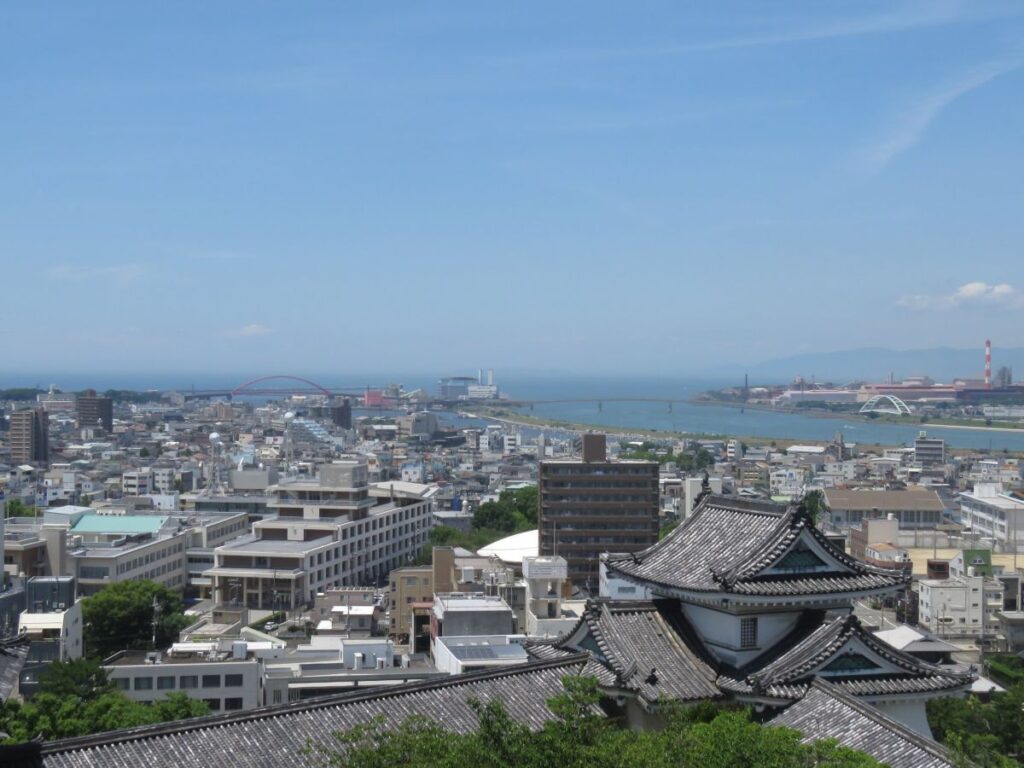
Sea, Gardens, Japanese Culture & Well-being
When people imagine a trip to Japan, they often picture Kyoto’s temples, Tokyo’s energy, or Osaka’s food scene.
But there is another way to experience Japan.
A few days in one place.
A beautiful garden in the morning.
A quiet shrine overlooking the sea.
A kimono experience followed by tea.
A handmade Japanese sweet.
A walk through an old fishing town.
And, at the end of the day, a seasonal dinner and a warm bath.
In Wakayama City, these experiences can be combined without rushing from one famous destination to another.
This is a journey for travelers who want to slow down, enjoy beautiful surroundings, and experience Japanese culture through everyday moments rather than simply checking attractions off a list.
Why Stay Several Days in Wakayama City?
Wakayama is often visited as a stop on the way to Koyasan, Kumano, or elsewhere in the Kii Peninsula.
But the city itself offers a surprisingly rich combination of landscapes and cultural experiences.
Within a relatively compact area, you can move between:
- Historic castle culture
- Japanese gardens
- Coastal scenery
- Ancient shrines
- Fishing communities
- Traditional Japanese arts
- Local sweets and cuisine
- Hot springs
The appeal is not simply that there are many things to see.
It is that the atmosphere changes naturally as the day progresses.
From castle town to garden.
From garden to coastline.
From coastline to fishing village.
From sightseeing to a quiet evening meal.
That rhythm makes Wakayama particularly well suited to a slower style of travel.
Day 1 — Wakaura: Sea, Poetry & Sacred Landscapes
Begin with the Landscape of Wakaura
Start your stay in Wakaura, one of the most beautiful coastal areas around Wakayama City.
The first impression is visual: islands, mountains, pine trees, and the sea.
But Wakaura is more than a scenic coastline.
For centuries, this landscape has been associated with poetry, pilgrimage, spirituality, and refined culture. The area appears in the Manyoshu, Japan’s oldest poetry collection, and places such as Tamatsushima Shrine connect the landscape with the Japanese tradition of appreciating nature through poetry.
Instead of rushing between viewpoints, spend time simply looking.
Watch the changing light over the water.
Walk slowly.
Notice how the mountains and islands frame the sea.
This is an ideal place to begin a trip based on beauty and contemplation.
Shrines by the Sea
Continue to several of Wakaura’s historic shrines, such as:
- Tamatsushima Shrine
- Wakaura Tenmangu Shrine
- Kishu Toshogu Shrine
Each offers a different relationship between architecture, religion, and landscape.
At Kishu Toshogu, for example, the approach itself becomes part of the experience.
Rather than treating each shrine as an isolated attraction, a local guide can explain how Wakaura developed as a cultural landscape where poetry, religion, pilgrimage, and political power overlapped.
This is one of the reasons Wakaura works particularly well for travelers interested in Japanese aesthetics rather than sightseeing alone.
Lunch by the Coast
After exploring the shrines, slow down for lunch.
Choose a restaurant where you can enjoy:
- Seasonal seafood
- Local vegetables
- Japanese set meals
- Fresh fish from the surrounding coast
The goal is not to find the most famous restaurant.
It is to let lunch become part of the landscape.
Afternoon: A Garden, a Café & Time to Wander
Leave part of the afternoon deliberately unplanned.
You might visit a traditional garden, enjoy tea or coffee, or simply walk through the quieter streets around Wakaura.
This is an important part of the itinerary.
A slow stay should have space between experiences.
Wakayama’s coastal areas work especially well for this because the scenery itself provides something to do.
Sunset in Wakaura
As the light begins to soften, return to the coast.
Wakaura is particularly beautiful in the late afternoon when the relationship between the sea, mountains, and historic landscape becomes more atmospheric.
For travelers who enjoy photography, this is also an excellent time for quiet portraits or landscape photographs.
Wakayama’s coastal landscapes are especially attractive to photographers because the light changes throughout the day while the surroundings remain relatively calm.
Day 2 — Castle, Gardens, Kimono & Japanese Aesthetics
Morning at Wakayama Castle
On your second morning, turn from the sea toward the history of the castle town.
Wakayama Castle was the center of the Kishu Tokugawa domain, and its gardens reveal a more refined side of samurai culture.
Begin with the castle grounds and Momijidani Garden.
The contrast is beautiful:
stone walls and castle architecture
→ water and trees
→ carefully arranged garden spaces.
Japanese gardens were not simply decorative.
They created places for contemplation, seasonal appreciation, and tea culture.
A Small Zoo and a Relaxed Castle Walk
One charming feature of Wakayama Castle is its small zoo.
It is not a major attraction in itself, but that is exactly why it works in a slow itinerary.
You do not need every stop to be spectacular.
A small zoo, a garden path, a quiet bench, or a short walk beneath the trees can give the day a sense of ease.
This is particularly suitable for travelers who want a softer alternative to the highly structured sightseeing experience found in larger Japanese cities.
Kimono & Tea: Entering Japanese Culture
After exploring the castle, shift from looking at Japanese culture to participating in it.
A kimono experience followed by tea is an especially natural combination.
Rather than treating kimono as a costume photo opportunity, the experience can introduce:
- How the garment is worn
- The meaning of seasonal patterns
- Japanese manners
- The atmosphere of a traditional room
- The relationship between kimono, tea, and aesthetics
Then sit down for matcha and seasonal Japanese sweets.
At Rensho-an, the tea house within the castle garden, visitors can experience matcha and seasonal sweets in a traditional setting. The quiet details—the tatami, water, light, and garden—are part of the experience itself.
For travelers interested in Japanese aesthetics, this can become one of the defining moments of the trip.
Choose Your Cultural Experience
Depending on your interests, the afternoon can be customized.
Tea Ceremony
For travelers interested in:
- Japanese aesthetics
- hospitality
- gardens
- mindfulness
- traditional culture
Calligraphy
For those who want a more personal souvenir and an introduction to Japanese writing and artistic expression.
Flower Arrangement
For travelers interested in seasonal beauty, flowers, and the relationship between nature and Japanese aesthetics.
The important point is that these should not feel like isolated workshops.
They are ways of entering Japanese culture through doing rather than simply observing—an approach already identified as particularly suitable for Wakaura and its cultural landscape.
Making Japanese Sweets
ater in the afternoon, continue the theme of Japanese aesthetics through wagashi.
Learning how to make a traditional Japanese sweet is surprisingly intimate.
You work with:
- Seasonal colors
- Simple shapes
- Natural motifs
- Texture
- Presentation
And then, of course, you eat what you have made.
Placed after the castle and tea experience, wagashi becomes more than a food activity.
It becomes another expression of the Japanese appreciation of seasonality and beauty.
A Refined Evening in Wakayama
After a day of gardens, culture, and hands-on experiences, the evening should become quieter.
This is where I would deliberately include a curated Japanese dinner.
Depending on your preferences, the evening could be built around:
- Sushi omakase
- Kaiseki cuisine
- Seasonal Japanese cuisine
- Local seafood
- Regional sake or umeshu
The idea is not simply to book an expensive restaurant.
A refined Japanese dinner is itself a cultural experience.
Kaiseki, for example, is about the flow of the meal: seasonal ingredients, the order of dishes, textures, temperatures, tableware, and atmosphere.
A quiet sushi counter offers a different experience, centered around timing, trust, conversation, and seasonality.
The evening can therefore be curated around your interests rather than following a fixed restaurant formula.
Day 3 — Kada: A Quiet Coastal Escape
After two days of gardens, shrines, and cultural experiences, the third day becomes deliberately slower.
Travel to Kada, a small coastal town at the northern edge of Wakayama City.
Here, the atmosphere changes again.
Fishing boats.
Small streets.
The harbor.
The sea.
A slower rhythm.
Kada is not a place that needs to be conquered.
It is a place to wander.
A Shrine Associated with Women
One of the most distinctive places in Kada is Awashima Shrine.
The shrine has a long association with women’s prayers and is particularly known for its collection of dolls and human-shaped objects offered to the shrine.
For visitors interested in Japanese religious culture, it offers a very different experience from the grand national shrines often encountered in Kyoto or Nara.
Rather than simply photographing the shrine, take time to understand the beliefs and practices surrounding it.
This creates a particularly meaningful experience for travelers interested in the relationship between:
- Women and religion
- Everyday spirituality
- Family traditions
- Japanese folk beliefs
Slow Walk Through the Fishing Town
After visiting the shrine, wander through Kada.
There is no need for a rigid sightseeing route.
Walk toward the harbor.
Look at the boats.
Stop for seafood.
Find a small café.
Take photographs.
Watch local life.
This kind of unstructured time is central to the philosophy of the itinerary.
The fishing communities around Wakayama reveal a form of living culture that cannot be experienced through museums alone. As the existing Wakaura strategy describes it, these are places where heritage is not simply preserved but continues through everyday life.
Afternoon: Sea, Hot Spring & Nothing on the Schedule
And now comes the part that many itineraries leave out:
nothing.
Spend the afternoon at a seaside hot spring.
Look out toward the water.
Read a book.
Take a bath.
Have tea.
Or simply do nothing.
For a traveler accustomed to moving constantly through Japan, this can be one of the most memorable parts of the journey.
The appeal of Wakayama is not only the number of experiences available.
It is the ability to move between experiences without losing the feeling of calm.
An Optional Final Sunset
If energy and weather allow, finish the day by the sea.
Kada is particularly atmospheric toward evening, when fishing boats and the islands offshore become silhouettes against the changing sky.
It is a fitting ending to a journey that began with the poetic landscape of Wakaura.
Three Days, Three Different Rhythms
The beauty of this itinerary is that each day has a different character.
Day 1
Sea & Spirituality
Wakaura
Shrines
Poetry
Coastal landscape
Sunset
Day 2
Gardens & Japanese Aesthetics
Wakayama Castle
Garden
Kimono
Tea
Wagashi
Japanese dinner
Day 3
Women, Sea & Well-being
Kada
Awashima Shrine
Fishing town
Seafood
Hot spring
Slow afternoon
Together, they create something more interesting than a conventional three-day sightseeing itinerary.
They create a rhythm.
More Than a Women’s Trip
Although this itinerary is particularly attractive to women traveling alone, with friends, or as a mother-daughter journey, its appeal is broader.
It works especially well for travelers who enjoy:
- Japanese gardens
- Traditional arts
- Beautiful landscapes
- Photography
- Local food
- Wellness
- Quiet luxury
- Slow travel
- Cultural experiences
- Smaller towns and coastal communities
The common denominator is not gender.
It is a desire to experience Japan at a more human pace.
Why Wakayama Rather Than Kyoto?
Kyoto has extraordinary cultural attractions.
But it can also be crowded, highly scheduled, and intensely touristic.
Wakayama offers a different experience.
Here, you can move from a historic castle to a quiet garden, from a coastal shrine to a fishing town, and from a traditional cultural experience to a hot spring—all while retaining a sense of space.
The gardens, coastline, fishing communities, tea culture, and food are not isolated attractions. They form a connected cultural landscape.
That makes Wakayama particularly suitable for travelers looking for slow travel and quiet luxury without the formality of a conventional luxury tour.
A Stay Designed Around You
This three-day itinerary is only a starting point.
Depending on your interests, the balance can change.
You might spend more time on:
Japanese aesthetics
→ kimono, tea, calligraphy, flower arrangement
Food
→ wagashi, seafood, sushi, kaiseki, local sake and umeshu
Photography
→ Wakaura, Kada, fishing villages and gardens
Well-being
→ seaside walks, gardens, cafés and hot springs
History
→ Wakayama Castle, Tokugawa culture and coastal heritage
The purpose of a private guided journey is not to fit every attraction into three days.
It is to choose the experiences that make your three days feel right.
A Beautiful Way to Slow Down in Japan
Perhaps the greatest luxury in modern travel is not another exclusive attraction.
It is time.
Time to look at the sea.
Time to sit in a garden.
Time to learn how to make a Japanese sweet.
Time to wear a kimono.
Time to drink tea.
Time to walk through a fishing town.
Time to take a bath and watch the evening light.
Wakayama City offers all of these moments within a remarkably compact area.
You do not need to rush through them.
You can simply stay.
And let Wakayama unfold slowly.
Immerse your self in slow stay in Wakayama City through my Curated Kii Peninsula Journey.
Read More About Trip in Wakayama City
- Living Culture in Wakayama: A Journey Through Poetry, Faith, Art, and Everyday Life
- The Kishigawa Line: The Local Railway Saved by a Cat
- Discovering Tomogashima Through Nature
- Everyday Wakayama: Discovering a City Through Its Bus Routes
- Curated Art & Gallery Visits in Wakayama
- From Boat to Table: A Day in Saikazaki, Wakayama’s Living Fishing Village
No responses yet