
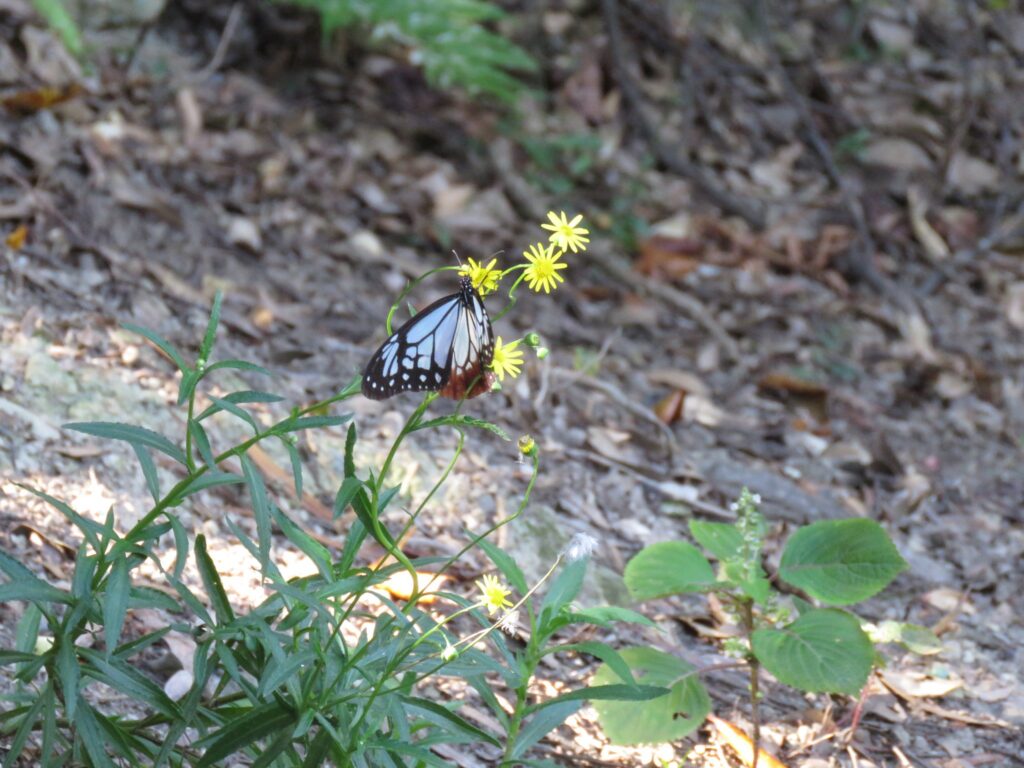
A Guided Walk Across Wetlands, Coastal Plants, and the Island’s Unexpected Wildlife
Most visitors come to Tomogashima for its mysterious military ruins.
The abandoned brick forts and forest-covered tunnels have earned the islands a reputation as one of Japan’s most atmospheric destinations.
But beyond the historic ruins lies another fascinating world—one shaped by geology, ocean winds, wetlands, and even introduced wildlife.
For travelers who enjoy nature, Tomogashima offers an opportunity to explore one of Wakayama’s most diverse island ecosystems.
More Than a Historic Island
Tomogashima is a small island group located at the entrance to Osaka Bay.
Separated from the mainland, the islands have developed a distinctive environment where different habitats exist within a surprisingly compact area.
During a nature walk, you may encounter:
- Coastal vegetation adapted to salt spray
- Evergreen forests
- Freshwater wetlands
- Rocky shorelines
- Birds, insects, and reptiles unique to island environments
Rather than rushing between viewpoints, this tour encourages you to slow down and observe how life has adapted to the island.
The Hidden Wetland of Shinja-ike
One of the island’s most interesting natural features is Shinja-ike (Deep Snake Pond).
Unlike the surrounding coastal landscape, this freshwater wetland supports plants that require constantly moist conditions.
Walking around the pond reveals a completely different ecosystem from the dry forests or exposed shoreline.
Depending on the season, visitors can observe wetland vegetation, aquatic insects, frogs, dragonflies, and many small organisms that depend on this rare habitat.
Because freshwater wetlands are relatively uncommon on small oceanic islands, Shinja-ike provides an important refuge for biodiversity.
For nature lovers, it is one of the island’s most rewarding places to slow down and look closely.
Plants That Thrive Between Sea and Land
Tomogashima’s coastline is constantly shaped by strong winds, salt spray, and intense sunlight.
These challenging conditions allow only specially adapted plants to survive.
Along the coastal paths, you’ll find low-growing shrubs and hardy coastal species that have evolved to tolerate salty environments where ordinary woodland plants cannot grow.
As you move inland, the vegetation changes dramatically.
The island’s forests become cooler and more sheltered, creating a striking contrast within only a short walking distance.
Observing these gradual transitions helps visitors understand how climate, topography, and the sea work together to shape island ecosystems.
An Island Where Native and Introduced Wildlife Meet
Tomogashima also tells another story—how human activities have changed island ecosystems.
Among the animals now living on the island are Taiwan squirrels and Taiwan sika deer, species that were introduced by people rather than occurring naturally.
The squirrels are agile climbers that can often be heard before they are seen, moving quickly through the forest canopy.
The deer have become increasingly common and, like introduced deer elsewhere in Japan, can influence forest regeneration by feeding on young plants and tree seedlings.
These animals are fascinating to observe, but they also remind us that conservation is not always about protecting untouched nature.
Sometimes it is about understanding how ecosystems change after new species arrive.
Tomogashima offers visitors an opportunity to consider both the beauty and the complexity of island conservation.
Seasonal Nature Throughout the Year
Each season reveals a different side of Tomogashima.
Spring
- Fresh woodland growth
- Migratory birds
- Wildflowers beginning to bloom
Summer
- Rich insect life
- Dragonflies around Hebi-ga-Ike
- Lush coastal vegetation
Autumn
- Comfortable temperatures for hiking
- Migrating birds
- Clear coastal views
Winter
- Excellent visibility
- Seabirds around the coast
- Quiet walking conditions with fewer visitors
Because the island changes throughout the year, even repeat visitors often discover something new.
Experience Tomogashima with a Nature Guide
A guided nature walk reveals details that are easy to overlook.
Instead of focusing only on military history, we’ll explore the island as a living ecosystem—reading the landscape through its plants, animals, geology, and seasonal changes.
You’ll learn how wetlands survive on an offshore island, why certain coastal plants grow only in exposed areas, and how introduced species have reshaped the island’s forests.
Tomogashima becomes more than a collection of historic ruins.
It becomes a place where natural history and human history continue to shape one another.
Plan your experience at Tomogashima through my Curated Kii Peninsula Journey.
Related Posts
- Hidden Hiking Spots in Wakayama (Beyond Kumano Kodo)
- Hidden Gems Near Kansai Airport: Escape the Crowds in Japan
- Negoro Nature Discovery Tour
- Nature & Ancient History at Kii Fudoki-no-Oka
No responses yet