
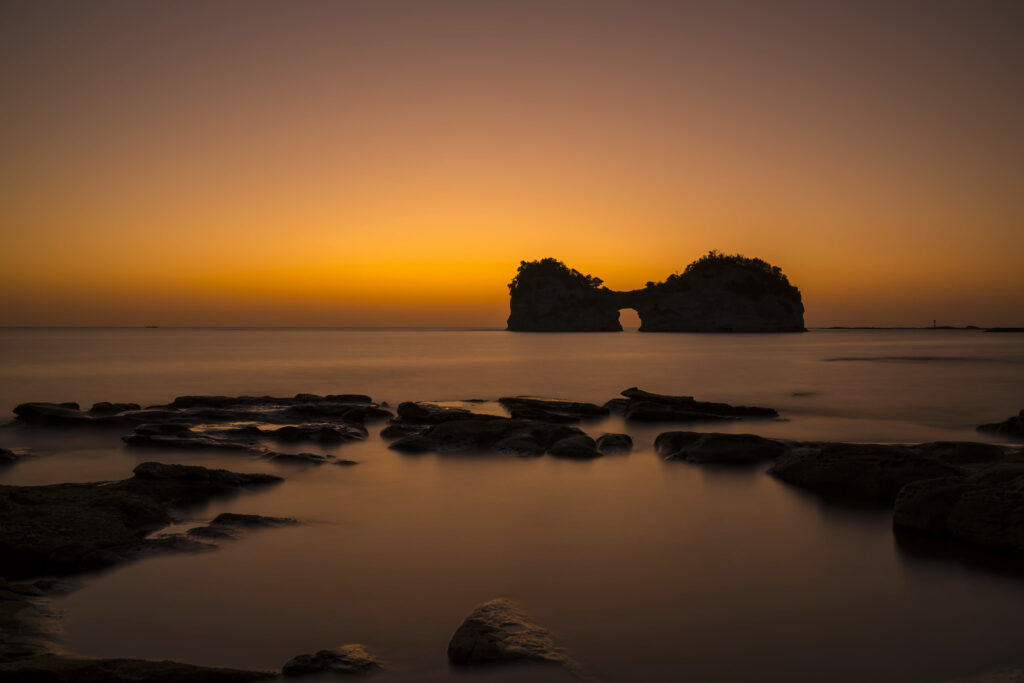
Beyond Japan’s Iconic Images
When photographers plan a trip to Japan, the same destinations come up again and again.
Tokyo, Kyoto, Osaka, Nara Park, Mount Fuji, Snow Monkeys…
And for good reason—they are visually rich and immediately striking.
But there is another kind of place.
One that doesn’t reveal itself instantly.
Wakayama is one of them.
Not Designed for Instant Photography
Most popular photography destinations are optimized for quick results.
- Famous viewpoints
- Easily accessible compositions
- Predictable lighting conditions
Wakayama is the opposite.
Here, you won’t find many “ready-made shots.”
Instead, you find:
- Locations that change with time
- Light that requires patience
- Scenes that only make sense after returning
This is why many photographers overlook it.
And exactly why it works.
A Landscape Built in Layers
Wakaura / Kumano Kodo / Kuroe
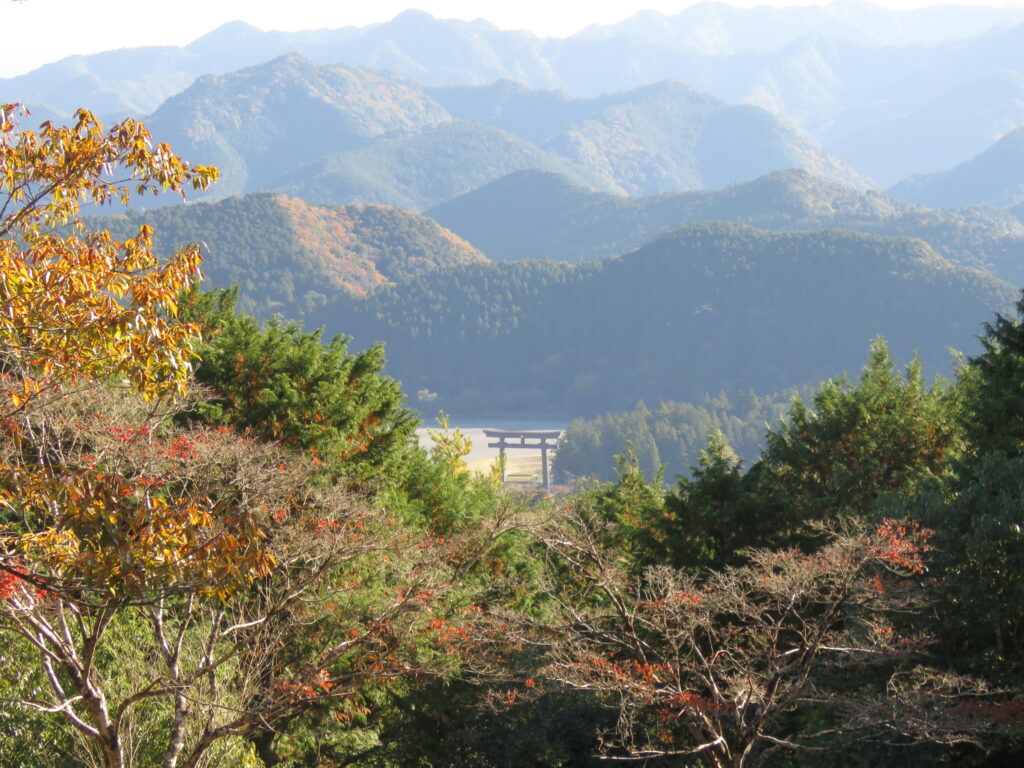
What makes Wakayama different is not a single location.
It is the way multiple layers coexist:
- Coastal landscapes shaped by centuries of poetry
- Pilgrimage routes walked for over a thousand years
- Living craft traditions still embedded in daily life
These layers are not separated.
They exist in the same space—often within a single frame.
Light That Changes Everything
In Wakayama, light is not just a condition—it is a subject.
- Morning softens the coastline
- Midday reveals structure and detail
- Evening transforms everything into silhouette and color
The same location can produce entirely different images within hours.
But only if you stay long enough to see it.
The Presence of Everyday Life
Saikazaki / Kada
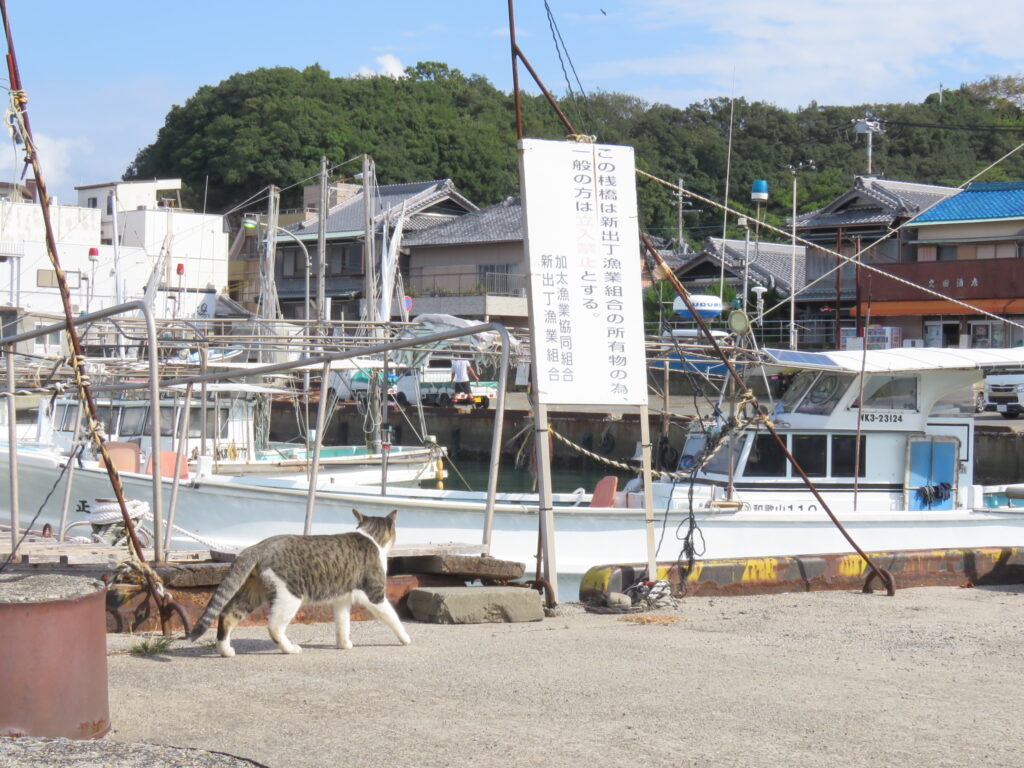
In many destinations, daily life is hidden behind tourism.
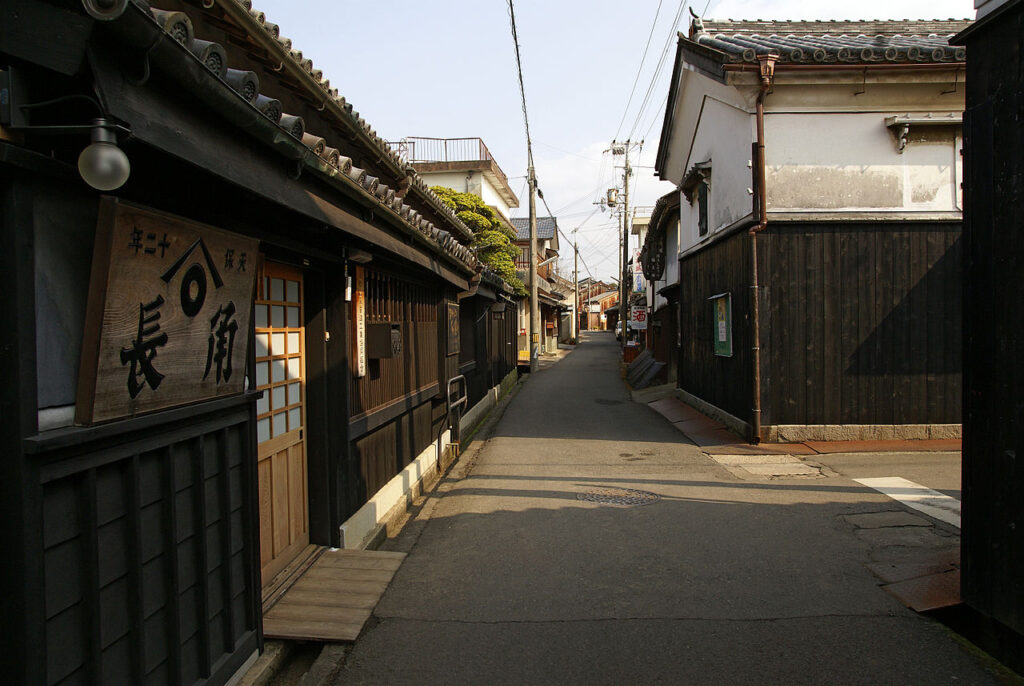
In Wakayama, it remains visible.
- Fishing boats returning in the morning
- Conversations in narrow streets
- Rhythms that are not adjusted for visitors
These are not staged moments.
They are part of a living environment—
one that rewards patience and observation.
Landscapes That Require Time
Oishi Highland / Hashikui Rocks
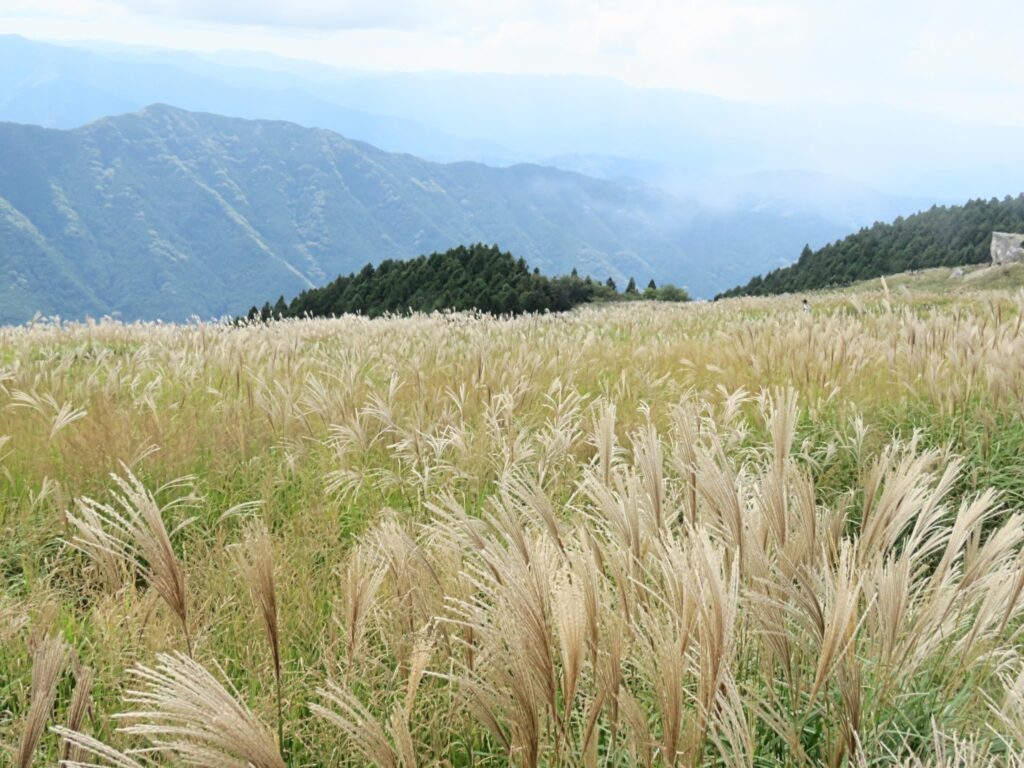
Some places offer a single perfect moment.
Others evolve.
- Grasslands shift with the wind
- Tides reshape the coastline
- Weather transforms the mood
These are not places you “capture.”
They are places you work with.
Why Most People Miss It
Wakayama doesn’t compete on convenience.
- Fewer direct transport options
- Less immediate visual payoff
- No single iconic “must-shoot” location
And yet—
These are exactly the conditions that allow photographers to:
- Work without pressure
- Explore without interruption
- Develop something beyond individual images
A Different Kind of Destination
Wakayama is not for everyone.
If you are looking for:
- Quick results
- Famous viewpoints
- Efficient itineraries
You may find it challenging.
But if you are looking for:
- Depth
- Time
- A relationship with place
It becomes something else entirely.
For Photographers Who Want More Than a Visit
If you are developing a body of work
or looking for a place where you can return, observe, and refine:
👉 Creative Residency in Wakayama
A place to create, not just stay
→ Explore the residency program
→ Explore More Perspectives
Photography in Wakayama is not defined by a single environment.
You can also explore:
- Coastal landscapes shaped by light
- Mountain and sacred landscapes shaped by time
→ Read the photography guides in Wakayama
Final Thought
Some places are immediately photogenic.
Others take time.
Wakayama belongs to the second kind.
And for many photographers,
that makes all the difference.
👉 “Wakayama doesn’t give you images.
It asks you to stay until they appear.”
No responses yet