
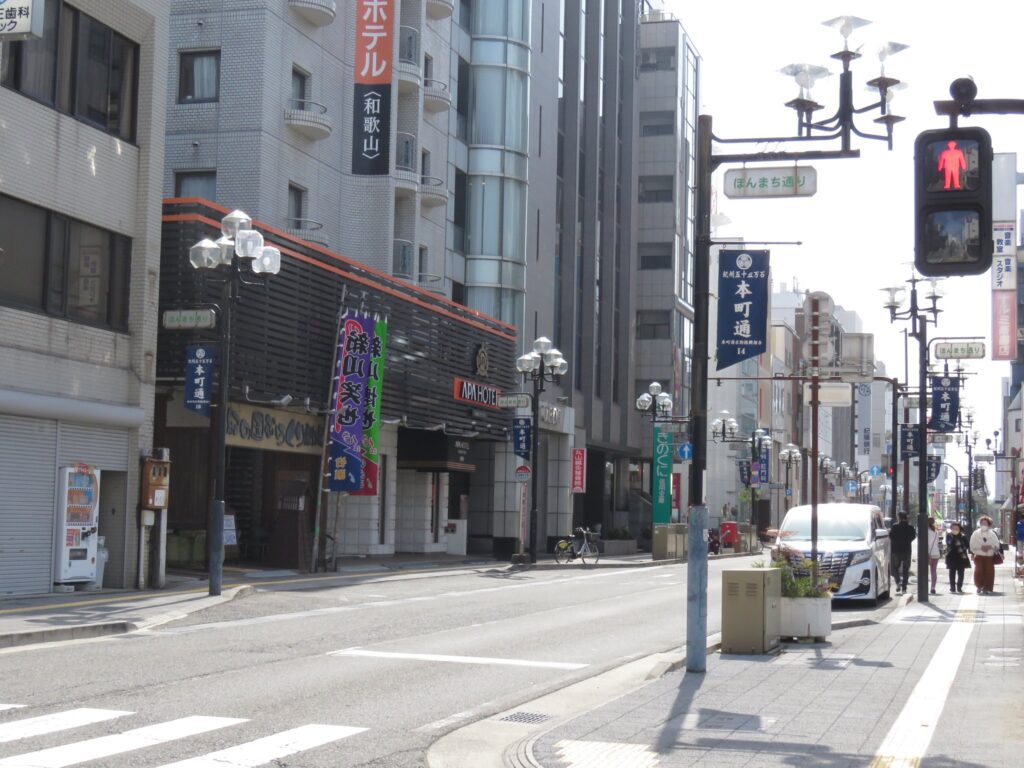
When people imagine Japan, they often picture ancient temples, samurai castles, or neon-lit cityscapes. Yet for generations of Japanese people, daily life revolved around something much simpler: the local shopping street.
In Wakayama City, the area around Burakuricho offers a glimpse into this quieter side of Japan. Here, traces of everyday life remain in traditional shops, old cafés, family-run businesses, and streets that have witnessed decades of change. This is not a journey through famous landmarks. It is a walk through the memories of ordinary Japanese life.
A Shopping Street That Once Shaped the City
For much of the 20th century, Burakuricho was the commercial heart of Wakayama. Families came here to shop for clothing, household goods, gifts, and seasonal necessities. Before suburban shopping malls became common, streets like these were where daily life unfolded.
Today, some storefronts are closed and many businesses have disappeared. Yet this transformation is itself part of the story. Walking through the area allows visitors to see not only what remains, but also how Japanese cities have evolved over the past several decades.
Rather than viewing the quiet streets as signs of decline, they can be understood as layers of living history.
The World of Kimono
One of the first stops may be a traditional kimono shop.
For many international visitors, kimono represents formal Japanese culture. However, until relatively recently, it was simply everyday clothing. Different fabrics reflected the seasons, patterns indicated social occasions, and families often owned multiple kimono for different stages of life.
Inside a traditional kimono store, visitors can learn how clothing once reflected both practicality and aesthetics in Japanese society.
Dolls That Tell Family Stories
Japanese doll shops reveal another aspect of daily life.
Hina dolls displayed in spring and samurai dolls displayed in early summer are not merely decorations. They are connected to family traditions, children’s growth, and seasonal celebrations.
For many Japanese families, these dolls marked important moments in the year and connected generations through shared customs.
Lanterns and the Light Before Electricity
Before modern lighting transformed Japan, paper lanterns illuminated homes, festivals, and streets.
Traditional lantern shops remind visitors of a world where evenings were darker and community gatherings often revolved around seasonal events. Lanterns were not only practical objects but also symbols of local identity, religious celebrations, and craftsmanship.
Even today, they remain an important part of festivals throughout the country.
Tea as an Everyday Ritual
Japanese tea culture extends far beyond formal tea ceremonies.
For generations, families drank sencha, bancha, and hojicha every day. Local tea shops served as places where customers discussed harvests, weather, and neighborhood news while purchasing tea for their households.
A visit to a traditional tea shop offers an opportunity to understand how tea became one of Japan’s most familiar daily habits. At the shop, you can enjoy not only Japanese tea but also Japanese and Western-style sweets made with tea.
The Sweet Taste of the Seasons
Traditional confectionery shops, known as wagashi stores, preserve another important aspect of Japanese life.
Seasonal sweets reflect the changing months, local ingredients, and annual celebrations. They were often purchased as gifts when visiting relatives or attending special occasions.
Each sweet tells a story about the season in which it is enjoyed.
The Kissaten: Japan’s Living Room
No exploration of everyday Japan would be complete without a visit to a kissaten, a traditional Japanese coffee shop.
Unlike modern cafés, kissaten developed as places where people spent time rather than simply bought coffee. Office workers read newspapers, retirees met friends, and students quietly studied over a single cup.
Many retain interiors that have changed little since the Showa era, offering a rare chance to experience an atmosphere that has disappeared from many parts of the country.
A Simple Lunch, A Rich History
Local diners and long-established eateries provide another window into everyday life.
Whether enjoying udon, a set meal, or a traditional sweet from a family-run shop, visitors encounter foods that have sustained local communities for generations.
These meals are often more revealing than elaborate banquet cuisine because they reflect what ordinary people actually ate in their daily lives.
Discovering the Japan Between the Landmarks
Wakayama Castle stands nearby as a reminder of the city’s origins as a castle town. Yet while castles tell the stories of rulers and warriors, streets like Burakuricho tell the stories of merchants, shopkeepers, families, and everyday residents.
This experience is not about finding Japan’s most famous sights.
It is about discovering the Japan that existed between them.
The Japan of shopping streets, tea shops, doll stores, cafés, and family businesses.
The Japan that millions of people knew as simply everyday life.
And in Wakayama, traces of that world can still be found for those willing to slow down and look.
Walk with a local guide through Curated Kii Peninsula Journey.
Explore More Experiences in Wakayama City
- From Supermarket to Sake Bar: Eating Like a Local in Wakayama
- Curated Art & Gallery Visits in Wakayama
- Gardens Between Castle and Sea in Wakayama City
- Everyday Wakayama: Discovering a City Through Its Bus Routes
No responses yet