
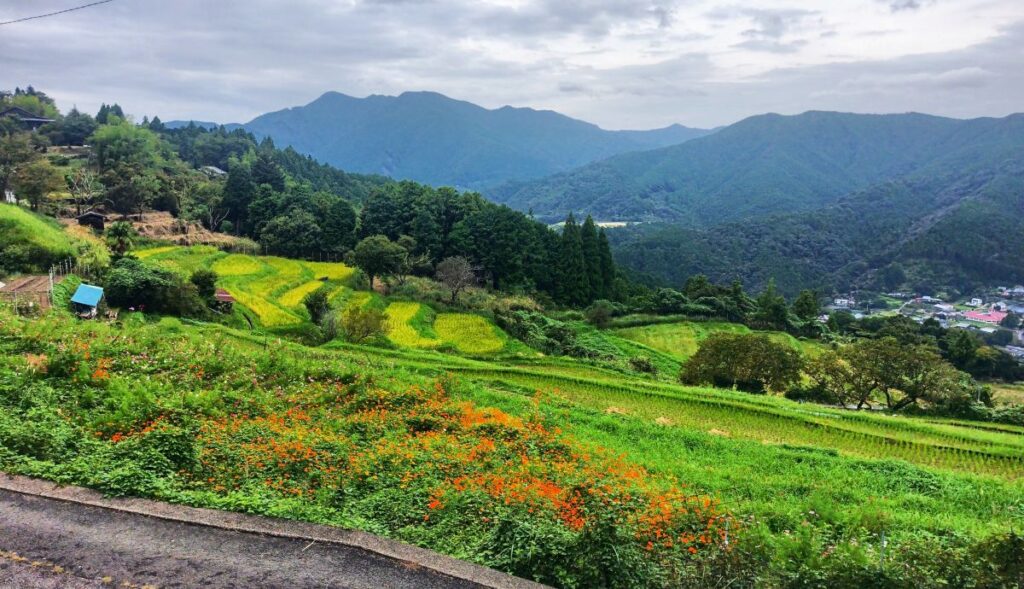
Discover a Landscape Where Mountains, Ocean, Climate, and Culture Have Shaped Each Other for Thousands of Years
When people imagine nature in Japan, they often think of famous mountains, cherry blossoms, or national parks.
Wakayama offers something different.
Here, nature is not simply a beautiful backdrop for sightseeing. It is the foundation of daily life, local cuisine, traditional industries, spiritual beliefs, and even the routes people have walked for more than a thousand years.
To understand Wakayama is to understand how people have lived with forests, rivers, mountains, and the sea—not separately, but as one connected landscape.
A Peninsula Shaped by Geography
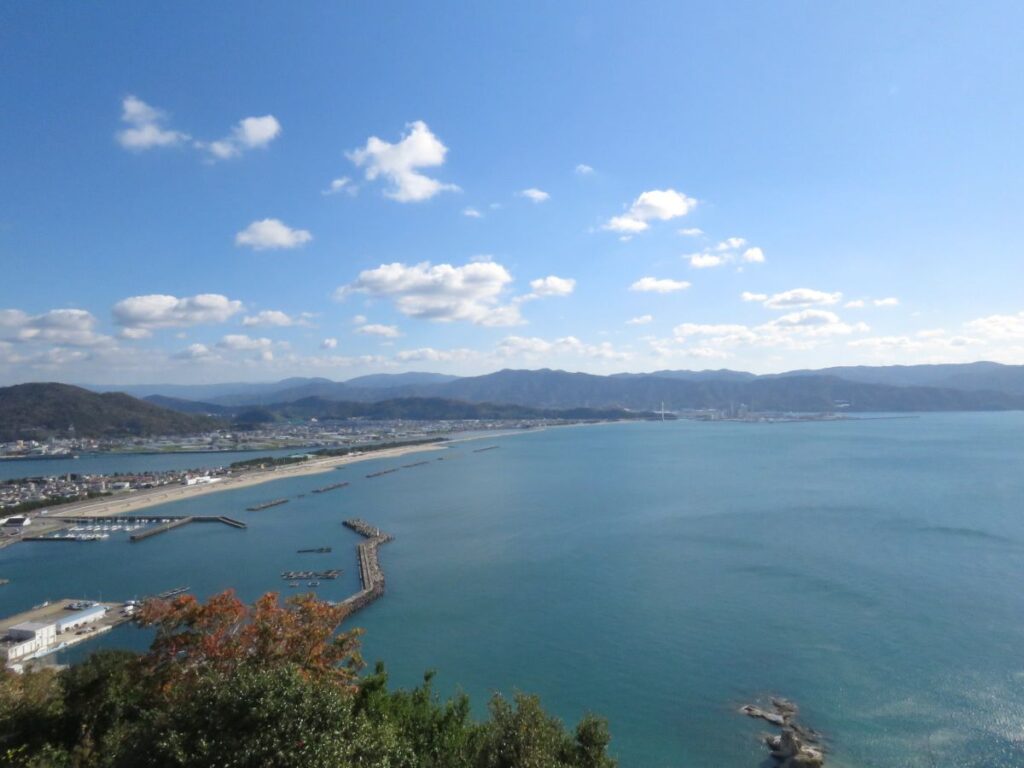
The Kii Peninsula stretches far into the Pacific Ocean, creating one of Japan’s most distinctive natural environments.
Warm ocean currents flowing north from the tropics meet steep mountain ranges that rise immediately behind the coastline. Moist air carried inland brings abundant rainfall, feeding countless rivers, waterfalls, and dense evergreen forests.
Because the mountains are so close to the sea, travelers can experience dramatic changes in scenery within a short drive. Coastal fishing villages, citrus orchards, cedar forests, mountain temples, and highland plateaus all exist surprisingly close together.
This remarkable diversity creates an unusual concentration of ecosystems in a relatively compact region.
Climate Creates Diversity
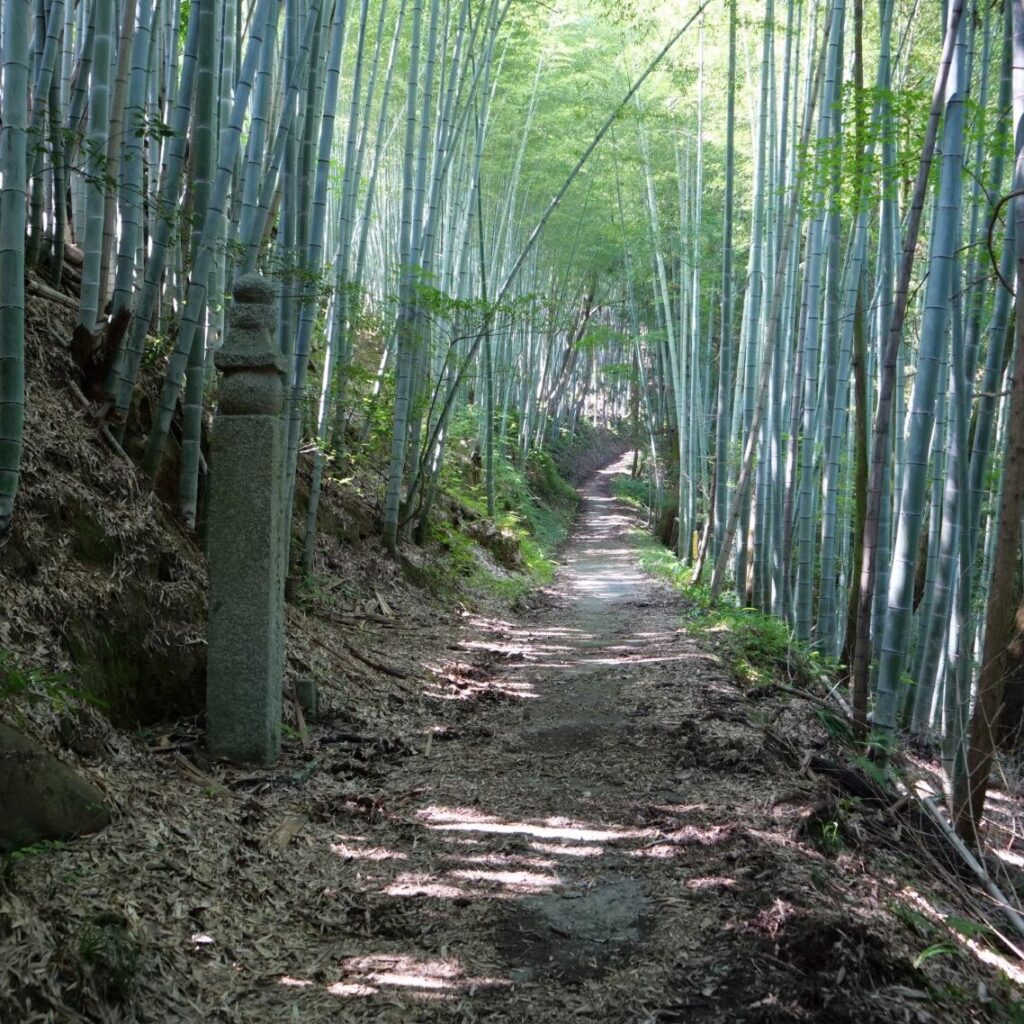
Wakayama’s north and south feel surprisingly different.
The northern part of the prefecture experiences four distinct seasons, with productive farmland, rivers, and broad plains supporting everyday life.
Travel south, however, and the climate becomes noticeably warmer and more humid. Subtropical plants begin to appear, coastal cliffs become more dramatic, and heavy rainfall nourishes ancient forests that remain lush throughout the year.
These climatic differences influence everything from flowering seasons to bird migration, from local agriculture to the types of forests that cover the mountains.
For nature lovers, this means every season—and every region—offers something new to discover.
Forests That Have Sustained Communities
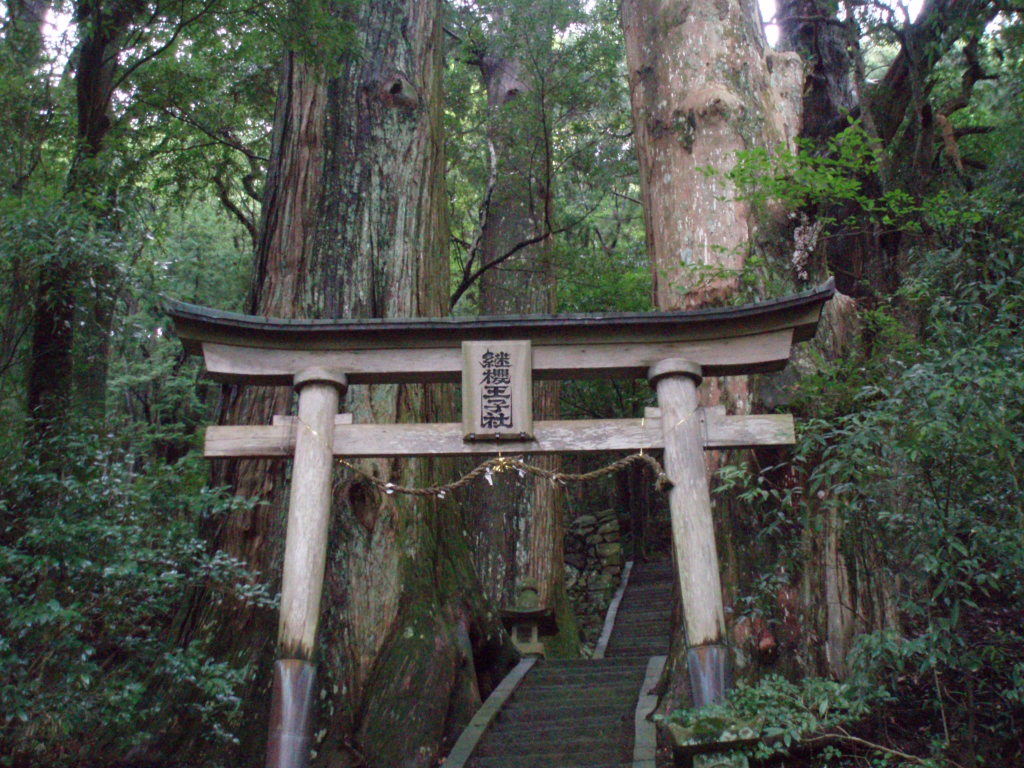
About 76% of Wakayama is covered by forests.
These woodlands have supplied timber for temples and shrines, charcoal for cooking, medicinal plants, mushrooms, and clean water for villages for centuries.
Rather than untouched wilderness, many forests are cultural landscapes shaped through generations of careful management.
Walking through these mountains means encountering places where nature and human history have developed side by side.
Rivers That Connect Mountains and Sea
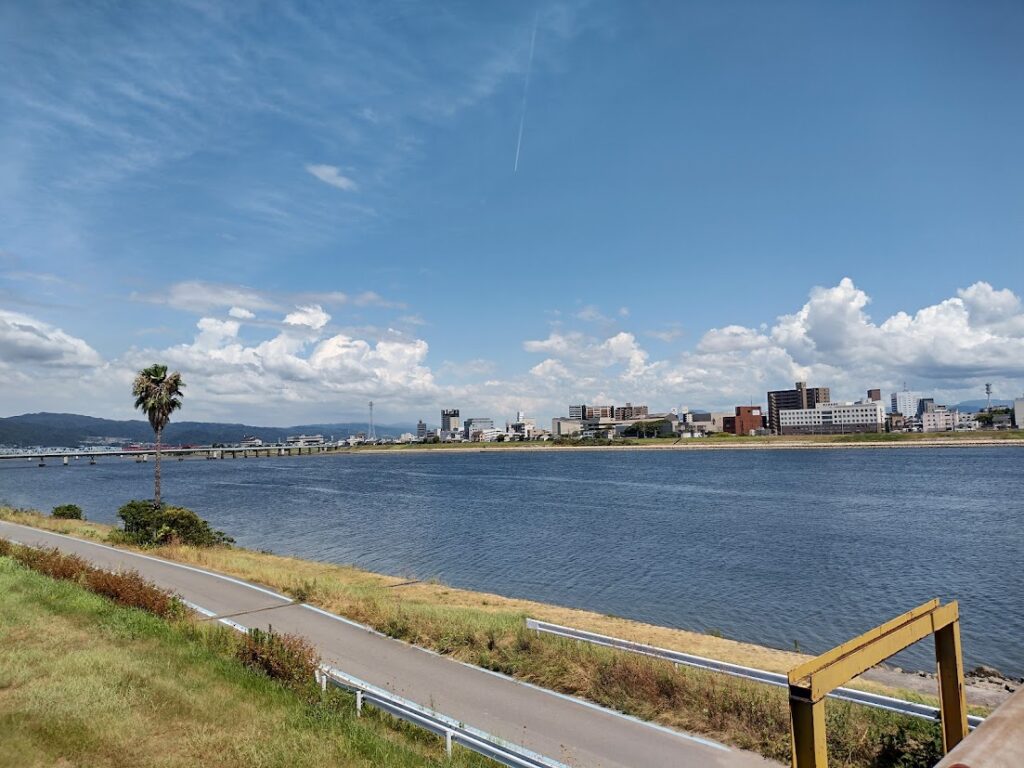
The peninsula’s many rivers begin deep in the mountains before flowing toward the Pacific Ocean.
Along their course they irrigate rice fields, support fruit orchards, provide habitats for wildlife, and have long served as transportation routes connecting inland communities with coastal ports.
Even today, rivers remain central to outdoor recreation, local agriculture, and the rhythm of rural life.
The Ocean as Part of Everyday Life
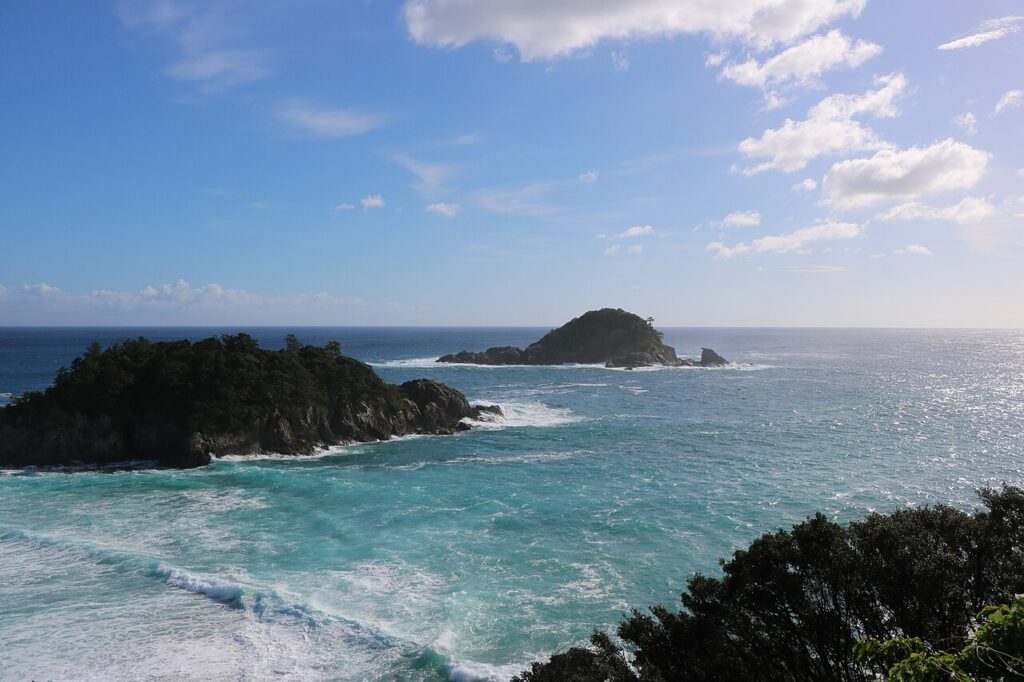
The Pacific Ocean has always been more than scenery.
Fishing ports, seaweed harvesting, traditional salt production, and coastal navigation have shaped local communities for centuries.
Warm ocean currents also support remarkable marine biodiversity, attracting seasonal fish while influencing local cuisine.
Fresh seafood, dried fish, fermented products, and sea vegetables all reflect a culture deeply connected to the ocean.
Standing on the coast, it becomes easy to understand why the sea is woven into Wakayama’s identity.
Nature Shapes Food
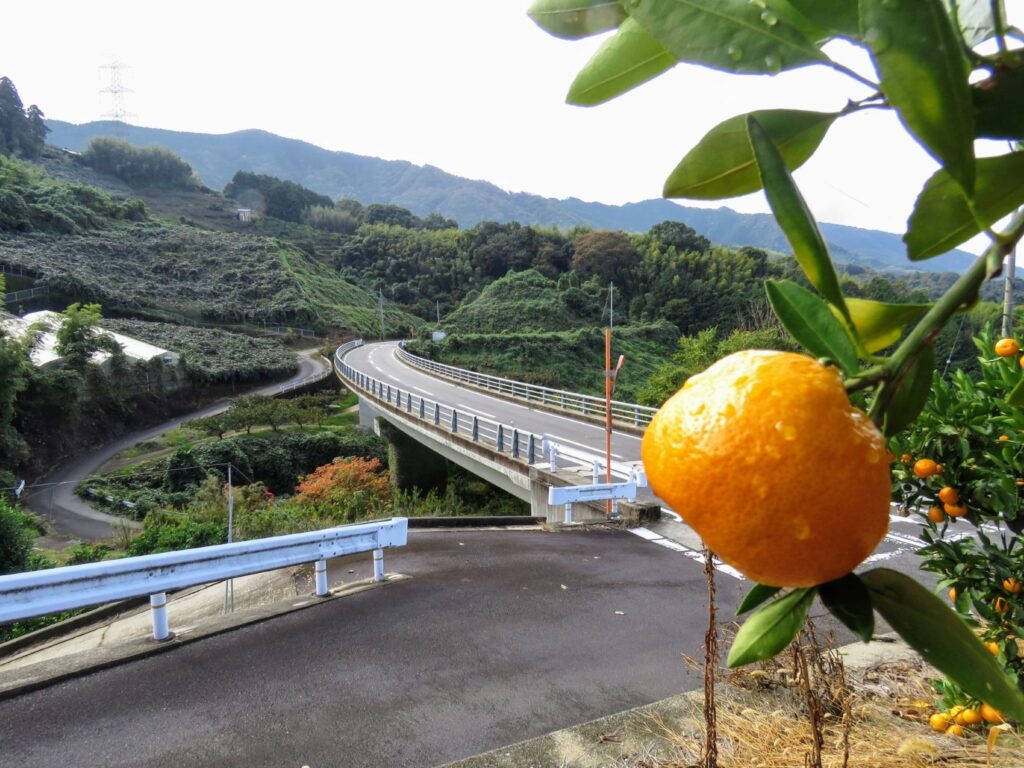
Many of Wakayama’s best-known foods exist because of its geography.
The abundant rainfall and fertile slopes support extensive citrus orchards and plum groves.
Mountain forests provide mushrooms and wild edible plants.
Rivers and coastal waters contribute freshwater and marine ingredients that have influenced local cooking for generations.
Traditional fermentation developed partly as a way to preserve seasonal harvests, giving rise to products such as shoyu soy sauce, miso, and regional forms of sushi that reflect the peninsula’s environment.
Food here tells the story of climate, landscape, and seasonal change.
Nature Shapes Traditional Industries

The relationship between nature and people extends beyond agriculture.
Forests supplied timber and hardwood for charcoal production.
Clay, stone, and water supported local crafts.
Lacquerware developed alongside forestry, while paper-making, woodworking, and other traditional industries depended on natural resources found throughout the peninsula.
Even today, many artisans continue practices that are closely tied to the surrounding landscape.
Sacred Landscapes
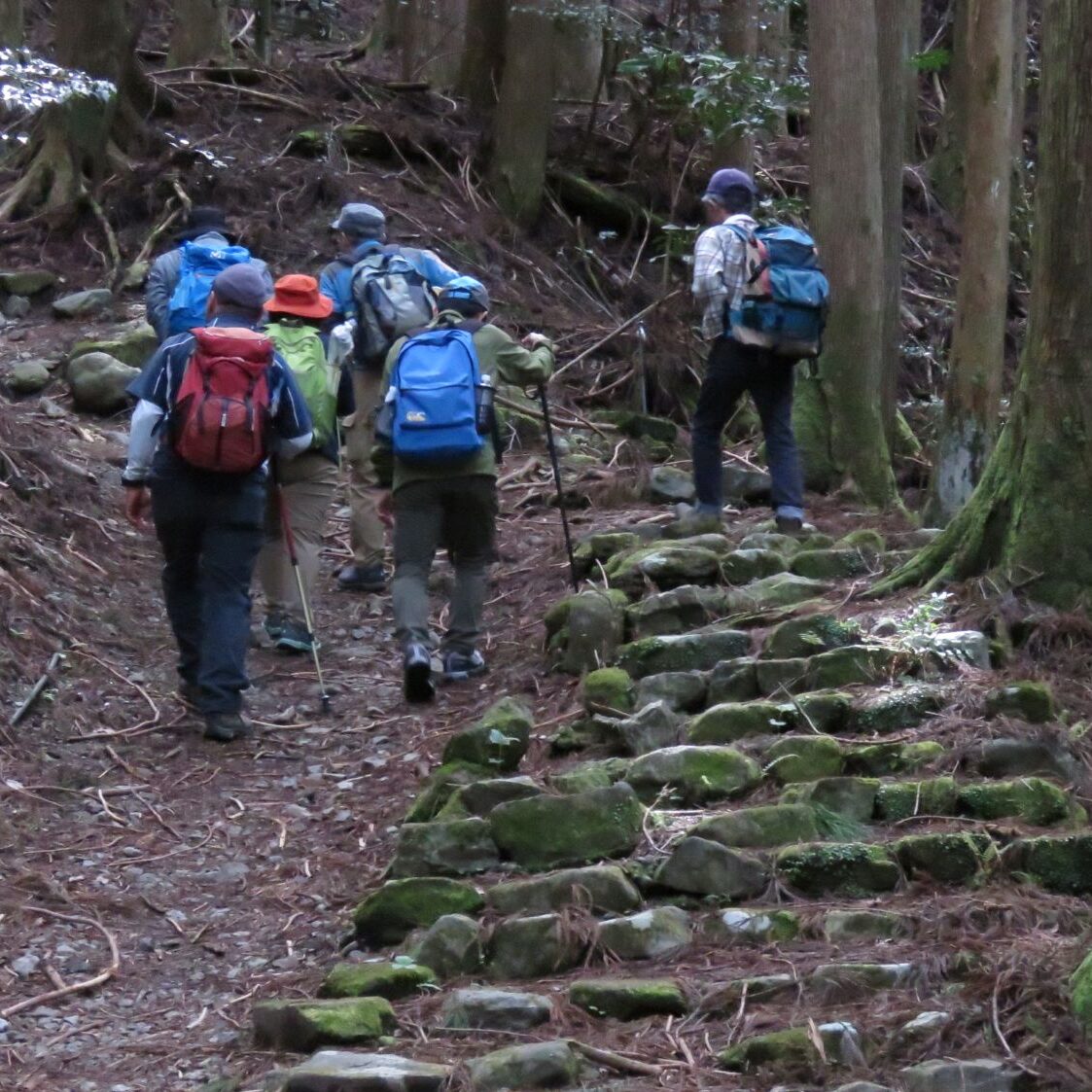
Perhaps nowhere is the connection between nature and culture more visible than in Wakayama’s sacred mountains.
Pilgrimage routes wind through forests not because the trees are obstacles, but because the natural world itself has long been considered spiritually significant.
Mountain peaks, waterfalls, giant trees, and unusual rock formations have inspired religious practice, poetry, and local folklore for centuries.
Rather than separating religion from nature, the Kii Peninsula preserves a tradition where both exist together.
A Paradise for Nature Lovers
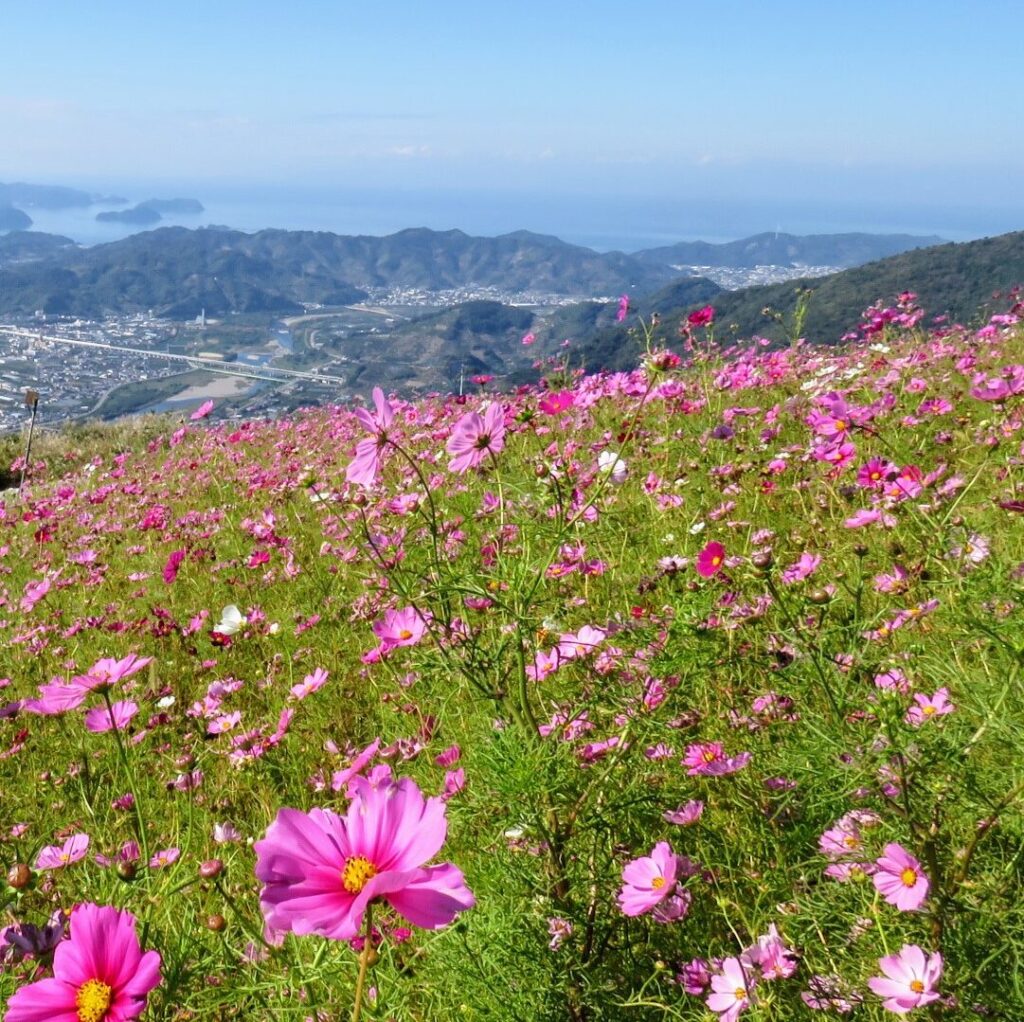
Because of its geographical diversity, Wakayama offers opportunities for many different styles of outdoor exploration.
You might enjoy:
- Forest walks and woodland ecology
- Coastal hiking with panoramic ocean views
- Birdwatching throughout the seasons
- Wildflower observation
- River landscapes and waterfalls
- Cycling through rural valleys
- Marine wildlife and coastal ecosystems
- Mountain hiking beyond the famous pilgrimage routes
Each experience reveals another layer of the peninsula’s natural character.
Nature Is the Beginning of Every Journey
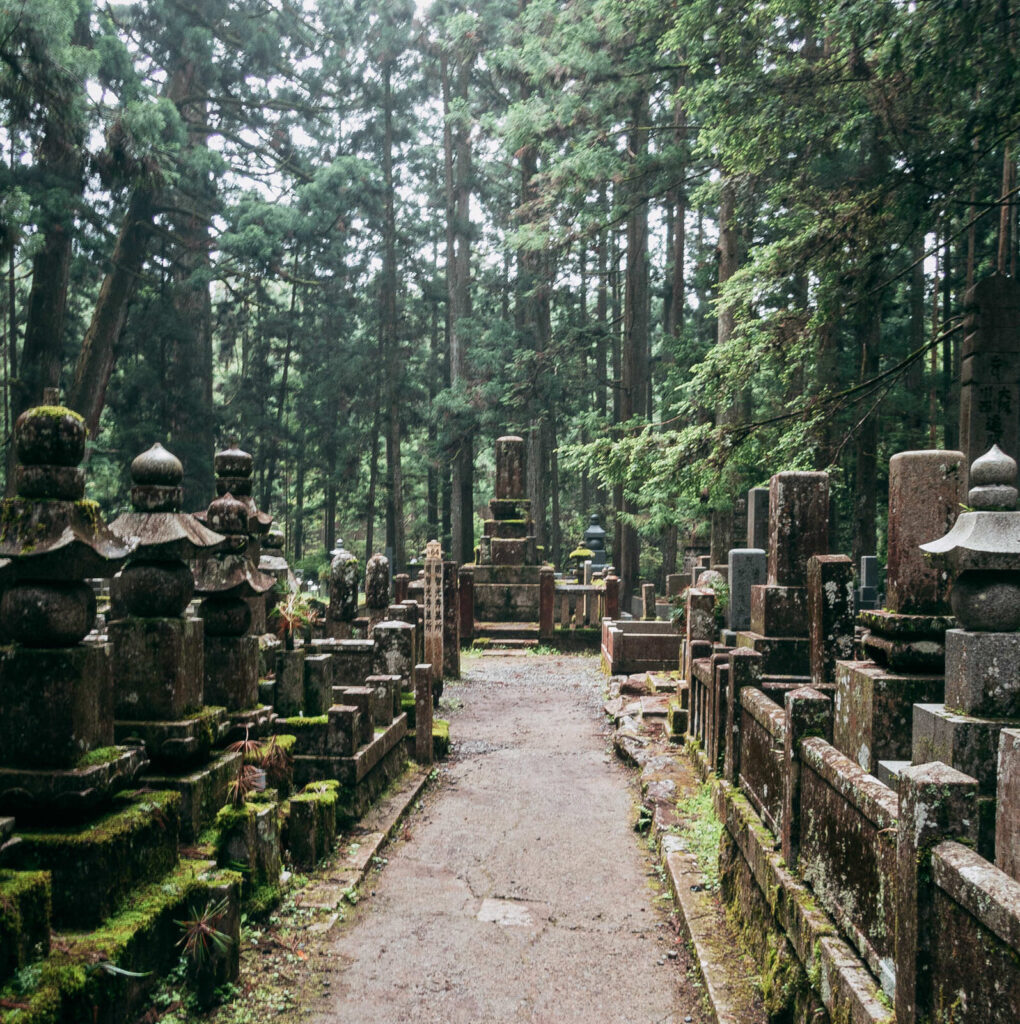
Visitors often arrive looking for famous places.
Many leave remembering something much quieter—a misty forest after rain, the scent of cedar trees, the sound of waves against rocky shores, or a meal whose ingredients all came from the surrounding landscape.
In Wakayama, nature is not simply something to look at.
It is something people have lived with for centuries.
That is what makes it different.
And that is what makes every journey here feel deeply connected to the place itself.
Explore Wakayama’s Natural Landscapes
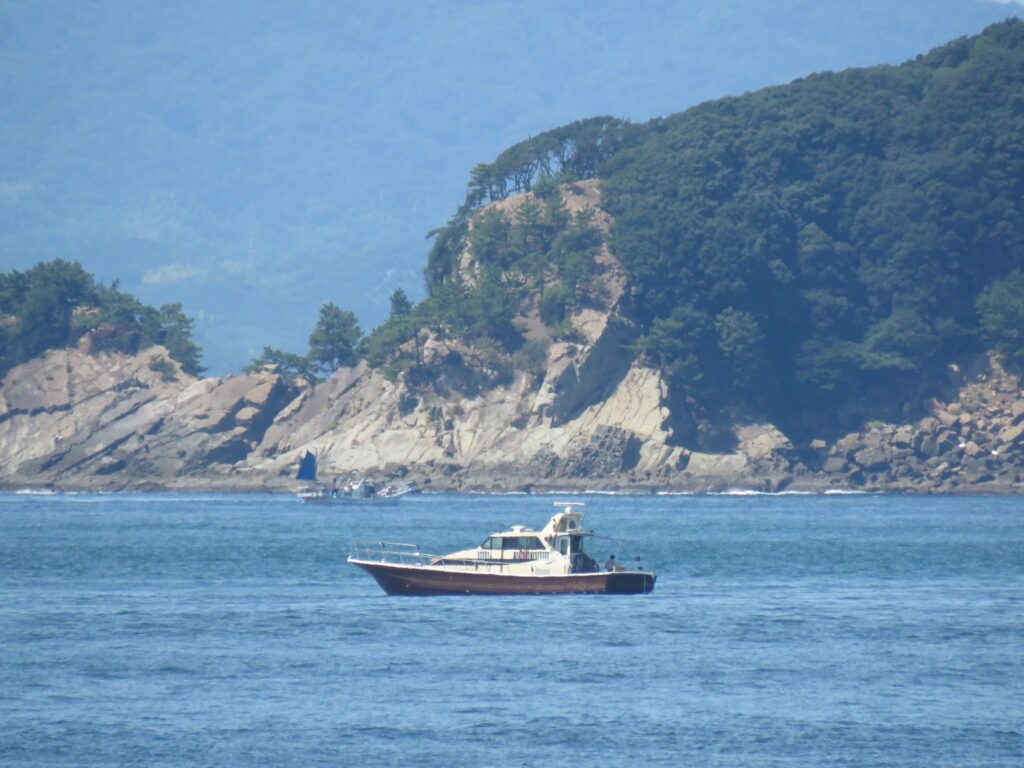
Whether you’re interested in hiking, birdwatching, seasonal flowers, coastal scenery, local food, or the relationship between people and nature, Wakayama offers opportunities to experience Japan beyond its famous destinations.
As a local private guide, I create customized journeys that combine nature with history, culture, food, and everyday life—helping visitors discover not only beautiful landscapes, but the stories that have grown from them.
Read More About Wakayama Nature
- Hidden Sacred Landscapes Near Osaka
- Discover Satoyama Life in Wakayama
- Riding the Kishigawa Line: Discovering Wakayama’s Three Ancient Shrines
No responses yet