
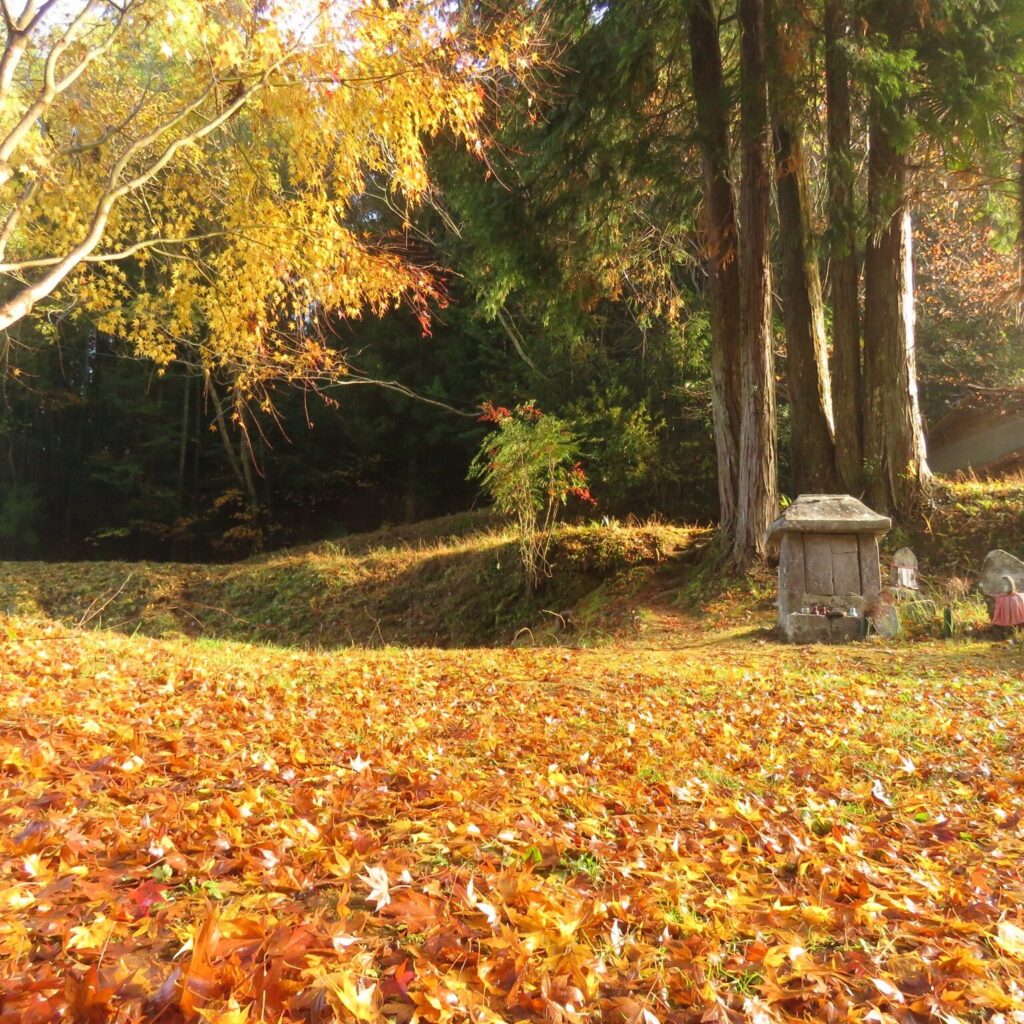
A Six-Day Autumn Itinerary from Koyasan to Kumano and the Sea
When autumn arrives in Japan, most international travelers think of Kyoto, Tokyo, or perhaps Nikko.
But there is another way to experience the season.
In Wakayama, autumn unfolds across a remarkably varied landscape: ancient cedar forests, mountain temples, golden ginkgo trees, open grasslands covered in silver pampas grass, fields of cosmos, fruit-growing valleys, pilgrimage trails, and quiet coastal towns.
Rather than rushing from one famous viewpoint to another, this six-day journey follows the changing rhythm of autumn.
You will walk through forests, taste seasonal fruit, visit sacred places, discover rural landscapes, and finish beside the sea in Wakayama City.
It is a journey designed for travelers who want to slow down and experience a region rather than simply visit its attractions.
Why Visit Wakayama in Autumn?
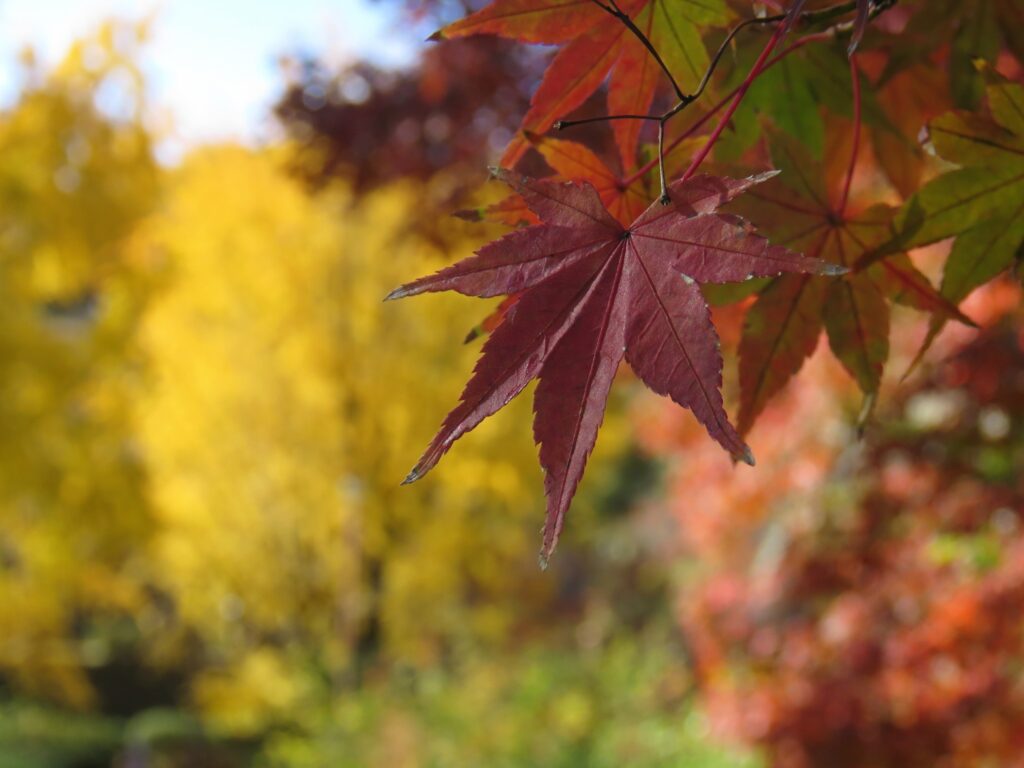
Autumn is one of the most rewarding seasons for exploring Wakayama.
The summer heat has eased, making walking and hiking much more comfortable. The mountains begin to change color, rural landscapes become rich with harvests, and the highlands turn silver with pampas grass.
At the same time, different parts of Wakayama reach their seasonal peak at different times.
You might encounter:
- Red and golden foliage around Koyasan
- Golden ginkgo trees at historic shrines
- Silver pampas grass on Oishi Plateau
- Pink cosmos at Washigamine
- Autumn fruit in the Kinokawa and Arida areas
- Forests and stone paths along the Kumano Kodo
- Autumn light over Wakaura and the coast
This makes Wakayama particularly suited to a multi-day journey.
Instead of seeing one famous autumn landscape, you can follow autumn as it moves through the peninsula.
Day 1 — Koyasan: Autumn in Japan’s Sacred Mountains
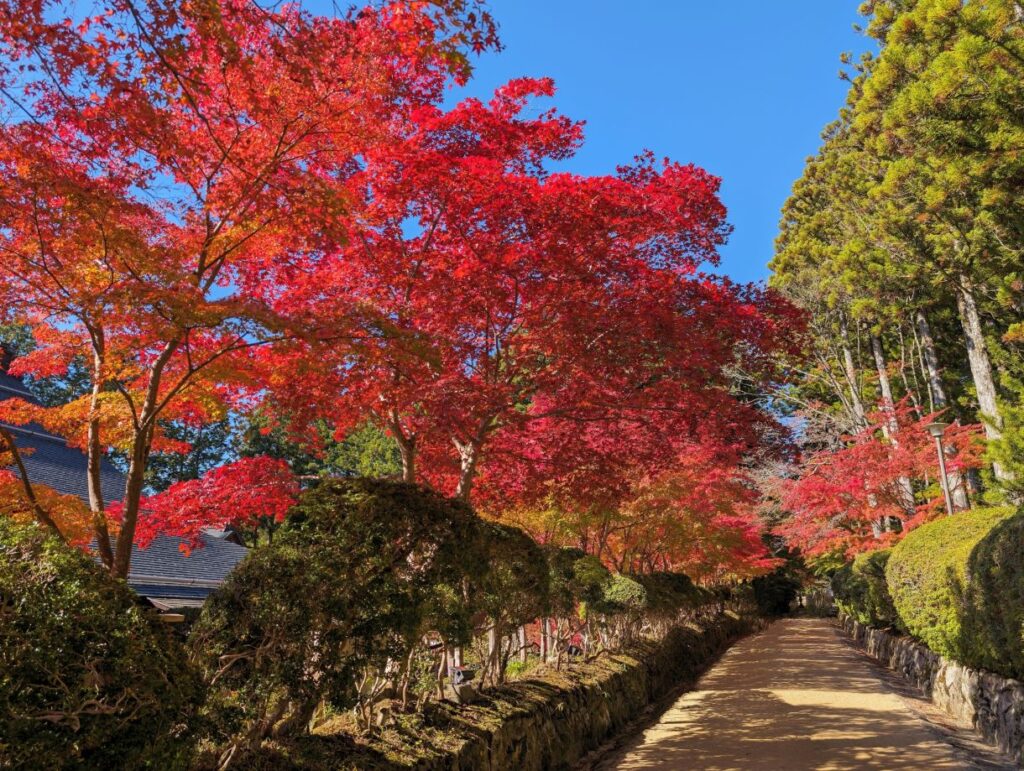
Your journey begins in the mountains at Koyasan, one of Japan’s most important Buddhist centers.
Autumn transforms the landscape around the temples and cedar forests.
The contrast is particularly beautiful: brilliant foliage appears among enormous evergreen trees, creating a landscape where different shades of green, red, orange, and gold coexist.
Spend the day exploring the sacred mountain at a relaxed pace.
Suggested highlights
- Kongobu-ji Temple
- Danjo Garan
- Okunoin
- Ancient cedar forests
- Autumn foliage around the temple district
- Buddhist vegetarian cuisine
Rather than trying to see every temple, leave time to simply walk.
The atmosphere of Koyasan is particularly rewarding in autumn because the cooler weather encourages longer walks between the major sites.
At Okunoin, the enormous cedar trees and moss-covered monuments create an atmosphere very different from the open landscapes you will encounter later in the journey.
Stay overnight in Koyasan
A temple lodging makes a natural beginning to the journey.
The experience is not simply about accommodation. It allows you to slow down and experience the rhythm of the mountain after the day visitors have left.
Day 2 — Golden Ginkgo Trees and the Rural Landscapes Below Koyasan
Leave the sacred mountain and gradually descend into the rural landscapes below.
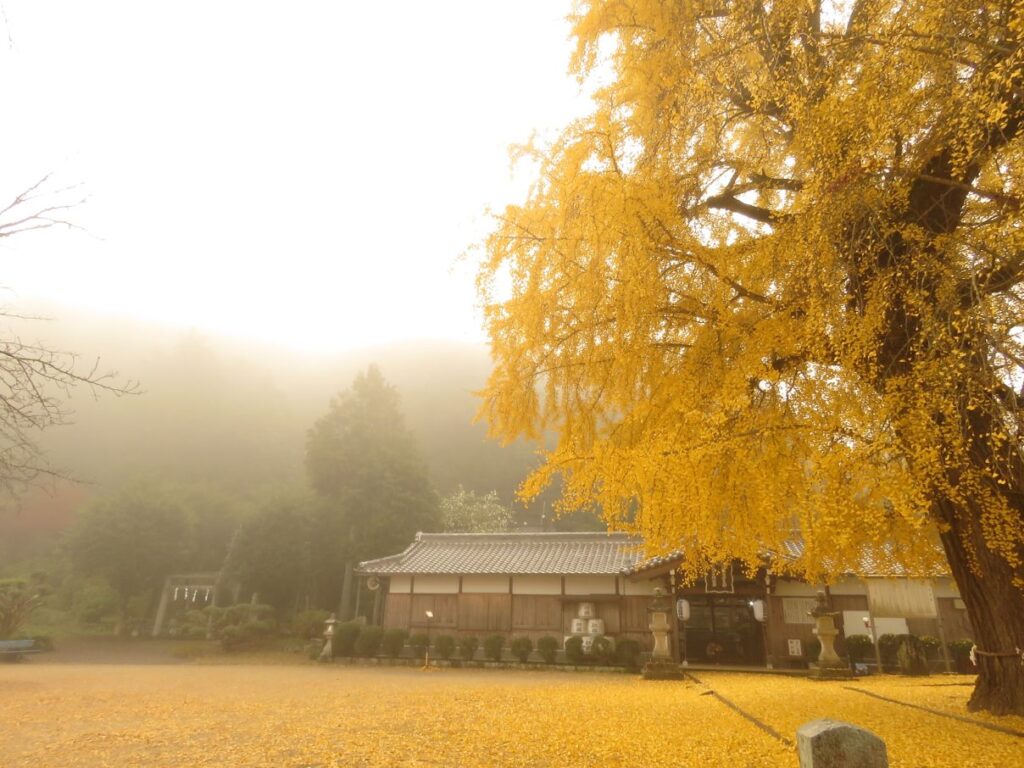
One of the highlights of this part of the journey is the contrast between the autumn colors of Koyasan and the golden ginkgo trees of the Koya foothills.
Niutsuhime Shrine and Niutsusakano Shrine
The area around the Koya foothills reveals a different side of Wakayama.
Here, pilgrimage, agriculture, villages, and sacred landscapes exist side by side.
A particularly memorable seasonal stop is Niushakubo Shrine / Niusakano Shrine and its famous ginkgo landscape, where the bright yellow foliage creates a striking contrast with the surrounding countryside.
The experience becomes even more interesting when the journey is combined with local agricultural landscapes.
Autumn Fruit Country

Autumn is also harvest season in Wakayama.
Depending on timing and location, travelers may encounter:
- Persimmons
- Grapes
- Pears
- Mandarins
- Apples and other locally grown fruit
The Kinokawa area in particular is closely associated with fruit cultivation, and the agricultural landscape itself becomes part of the experience.
Rather than simply buying fruit in a shop, this is an opportunity to understand how the landscape around Wakayama is shaped by agriculture.
Fruit is not just a food product here.
It is part of the seasonal rhythm of local life.
The combination of sacred mountains, historic pilgrimage routes, orchards, and rural villages makes this an ideal Slow Travel day.
Day 3 — Cosmos, Pampas Grass and the Open Landscapes of Central Wakayama
Today the landscape changes dramatically.
Leave the enclosed forests and valleys behind and head toward the open highlands of central Wakayama.
The first seasonal highlight is Washigamine Cosmos Park.
Washigamine Cosmos Park
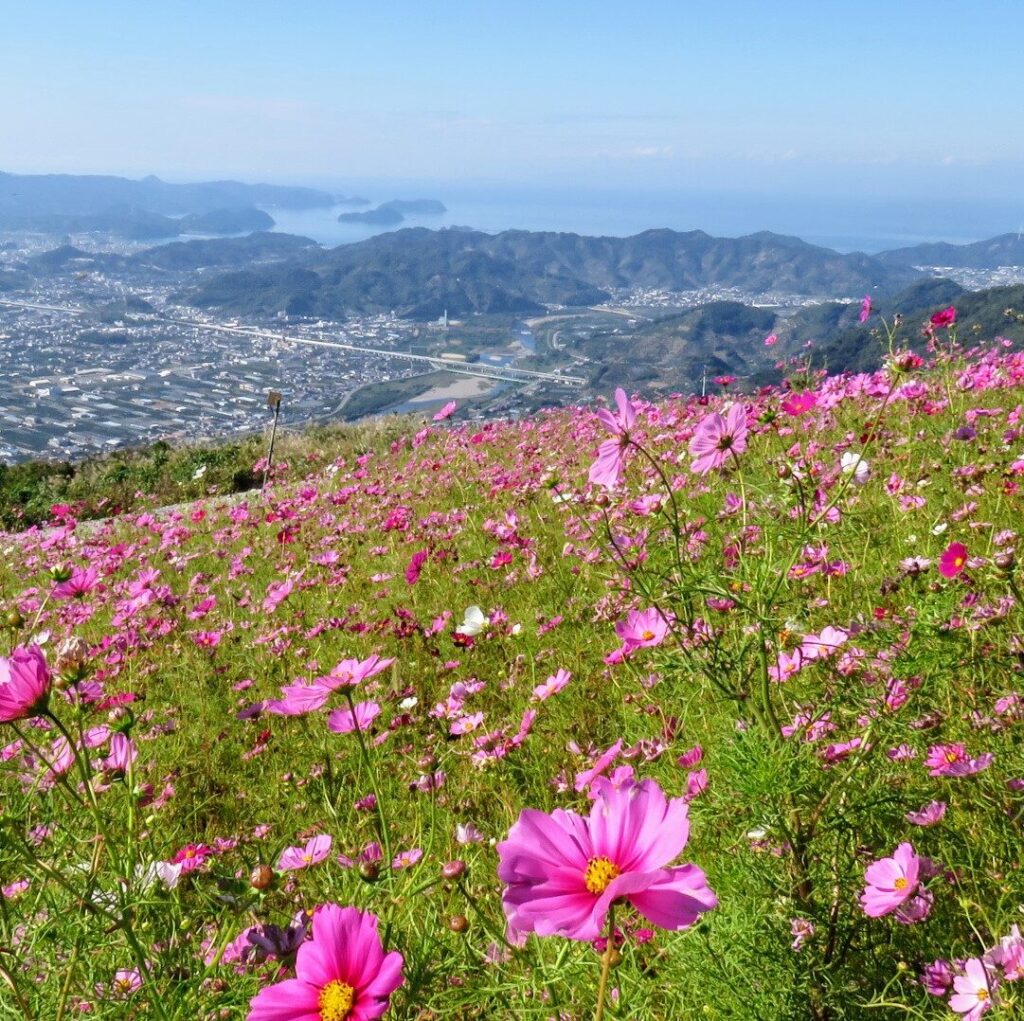
In autumn, the hillside is covered with cosmos flowers, creating a colorful contrast against the surrounding mountains and sky.
The open landscape offers a completely different visual experience from Koyasan.
Instead of looking through a forest, you can see across the countryside.
This is an ideal place for a leisurely walk, photography, and simply enjoying the seasonal atmosphere.
Oishi Plateau: Walking Through Silver Grass
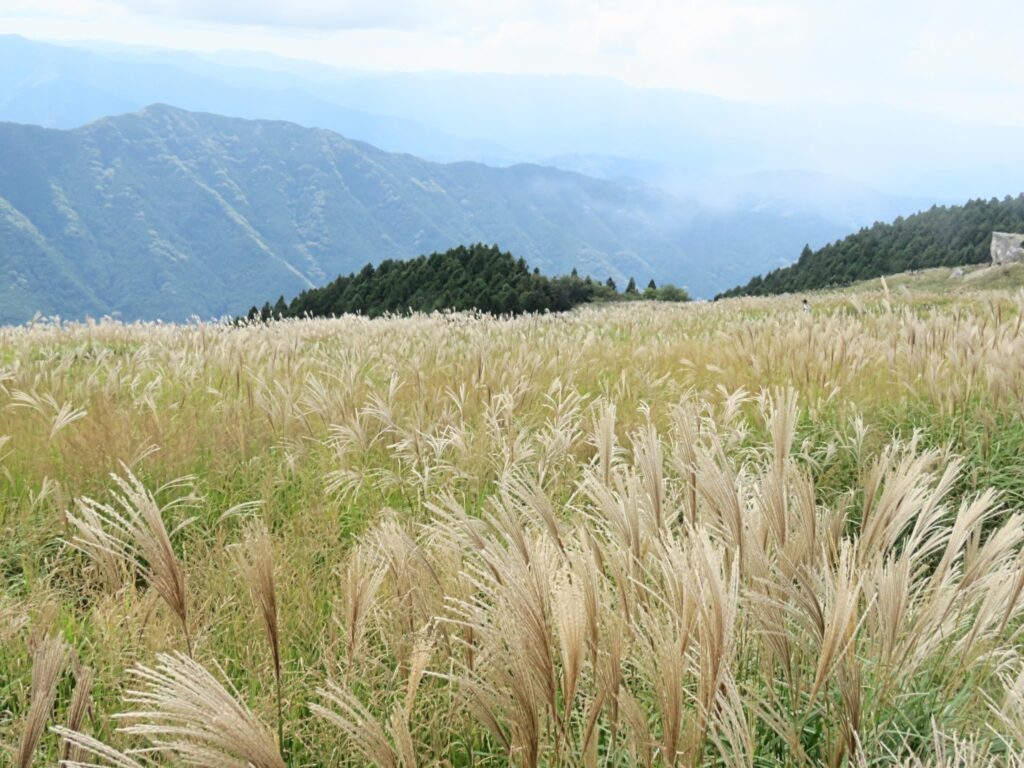
Continue toward Oishi Plateau, one of Wakayama’s most striking autumn landscapes.
In autumn, vast fields of Japanese pampas grass turn silver and move continuously in the wind.
The landscape changes according to the weather and time of day.
In the afternoon, the grass catches the sunlight.
Toward sunset, the landscape can become almost monochromatic, with the silver grass contrasting against the sky and distant mountains.
Early morning can bring another atmosphere, particularly when mist settles below the plateau.
This is one of the places where it is worth resisting the temptation to rush.
Walk slowly.
Watch the wind move through the grass.
Stay until the light changes.
The landscape is not something to simply photograph and leave.
It is something to experience over time.
Stay near a hot spring
After a day of walking, an onsen stay makes a natural transition.
Rather than treating the hot spring as another sightseeing destination, use it as a place to rest.
The rhythm becomes:
Walk → Eat → Bathe → Rest
This idea of walking and recovering is particularly appropriate in Wakayama, where pilgrimage, mountain culture, and hot spring traditions have long been connected.
Day 4 — Walking the Kumano Kodo in Autumn
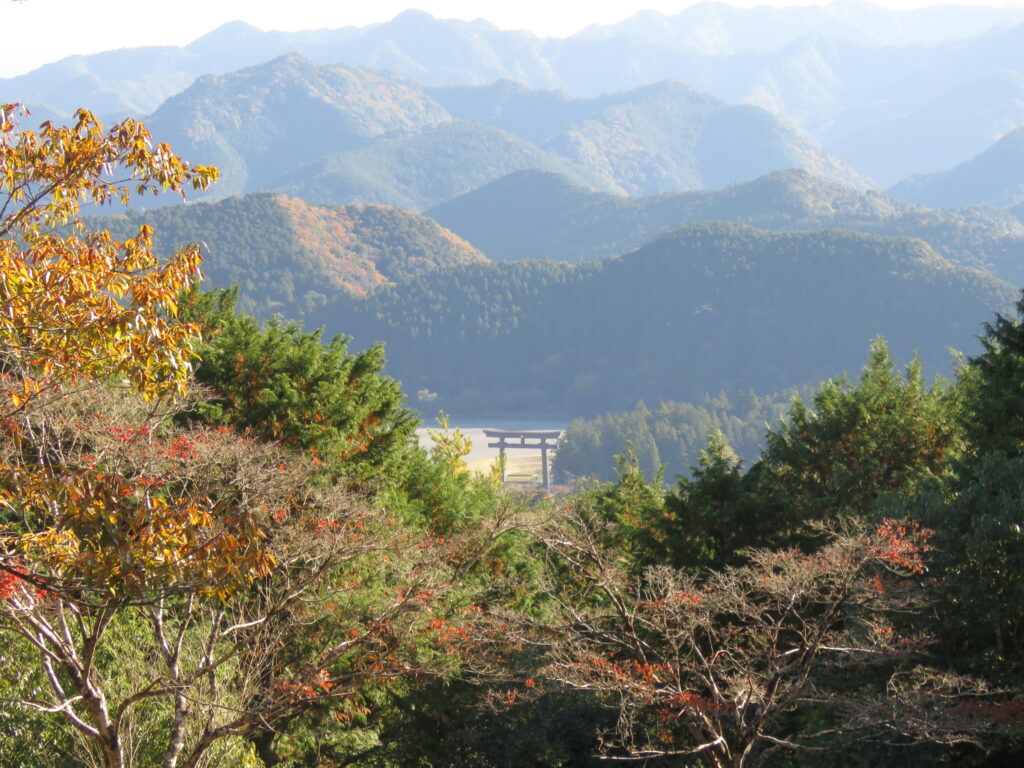
Autumn is one of the best times of year to walk the Kumano Kodo.
The temperatures are generally more comfortable than in summer, while the forests begin to take on the colors and atmosphere of the season.
But the most important reason to walk the Kumano Kodo in autumn is not simply the foliage.
It is the combination of:
- Forest
- Stone paths
- Sacred sites
- Small villages
- Streams
- Mountain landscapes
- Centuries of pilgrimage
The Kumano Kodo is not simply a hiking trail.
It is a landscape shaped by movement and belief.
Choose a Manageable Section
A multi-day autumn journey does not require walking a huge distance.
Instead, choose a section that allows enough time to walk slowly and understand the landscape.
A private guided walk can focus on:
- The history of the route
- Oji shrines
- Local settlements
- Forest ecology
- Pilgrimage traditions
- Seasonal plants and landscapes
The aim is not simply to reach the destination.
It is to understand what it meant to travel through this landscape in the past—and what it means to walk it today.
The autumn forest is particularly well suited to this kind of slower experience.
A day for walking, not sightseeing
After the previous days of changing scenery, this day deliberately becomes quieter.
Walk.
Eat a simple local lunch.
Pause at a shrine.
Listen to the forest.
Stay overnight in the Kumano region.
This change of pace is part of the journey.
Day 5 — Autumn Harvests and the Rural Side of Wakayama
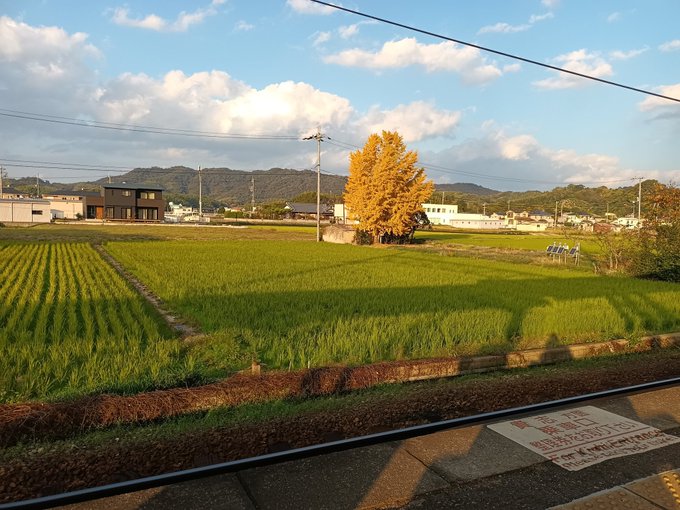
After the mountains and pilgrimage forests, spend a day exploring Wakayama’s agricultural landscapes.
Autumn is harvest season, making this an excellent time to discover the connection between food, farming, and landscape.
Depending on the timing of your visit, the journey can include:
- Fruit orchards
- Local farm stands
- Seasonal fruit tasting
- Rural villages
- Local lunch
- Traditional food products
- Small producers
The experience can be especially rewarding in the Kinokawa and surrounding fruit-growing areas.
Taste Wakayama’s Autumn

A fruit-tasting experience does not have to feel like a conventional food tour.
Instead, ask:
Why are so many different fruits grown here?
The answer leads into the geography of Wakayama:
- Mountain valleys
- River plains
- Mild climate
- Agricultural knowledge
- Generations of cultivation
The fruit itself becomes a way of reading the landscape.
This approach fits particularly well with the idea of Wakayama as a place where food, agriculture, and everyday life are closely connected.
An optional cultural layer
Depending on your interests, the day can also be combined with:
- Historic roads
- Traditional houses
- Local temples
- Craft traditions
- Regional food culture
This keeps the day from becoming simply a fruit-picking excursion.
Instead, it becomes a journey through the rural culture of Wakayama.
Day 6 — Autumn in Wakayama City: From Castle to Sea
The final day brings the journey back to Wakayama City.
After several days in mountains, forests, highlands, and rural landscapes, the final day explores a different kind of autumn landscape:
the cultural landscape of the city and the sea.
Morning — Wakayama Castle and Momijidani Garden
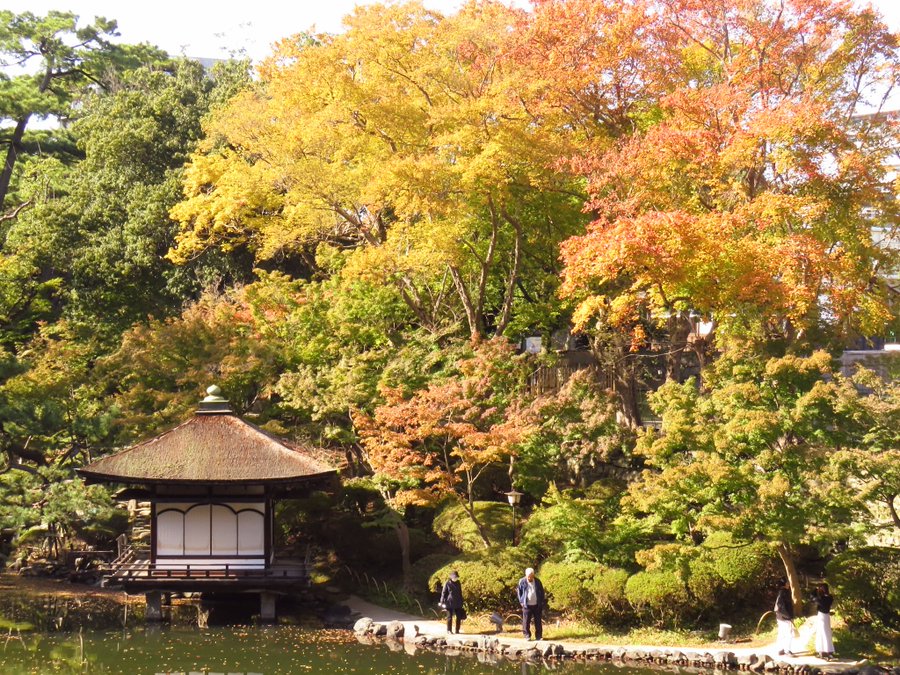
Begin at Wakayama Castle.
The castle was the center of the Kishu Tokugawa domain, and its surrounding landscape offers an opportunity to understand another layer of Wakayama’s history.
Inside the castle grounds is Momijidani Garden, whose name itself evokes autumn.
In autumn, the garden becomes a particularly atmospheric place to begin the day.
The combination of:
- Castle walls
- Water
- Japanese garden design
- Seasonal foliage
- Samurai history
creates a very different experience from the mountain landscapes visited earlier.
The garden also reveals another side of samurai culture.
Beyond military power, there was an appreciation of:
- Seasonal beauty
- Gardens
- Tea
- Landscape
- Contemplation
This is why Momijidani Garden works particularly well as part of a Slow Travel itinerary rather than simply as a castle sightseeing stop.
Afternoon — Wakaura: Where the City Meets the Sea
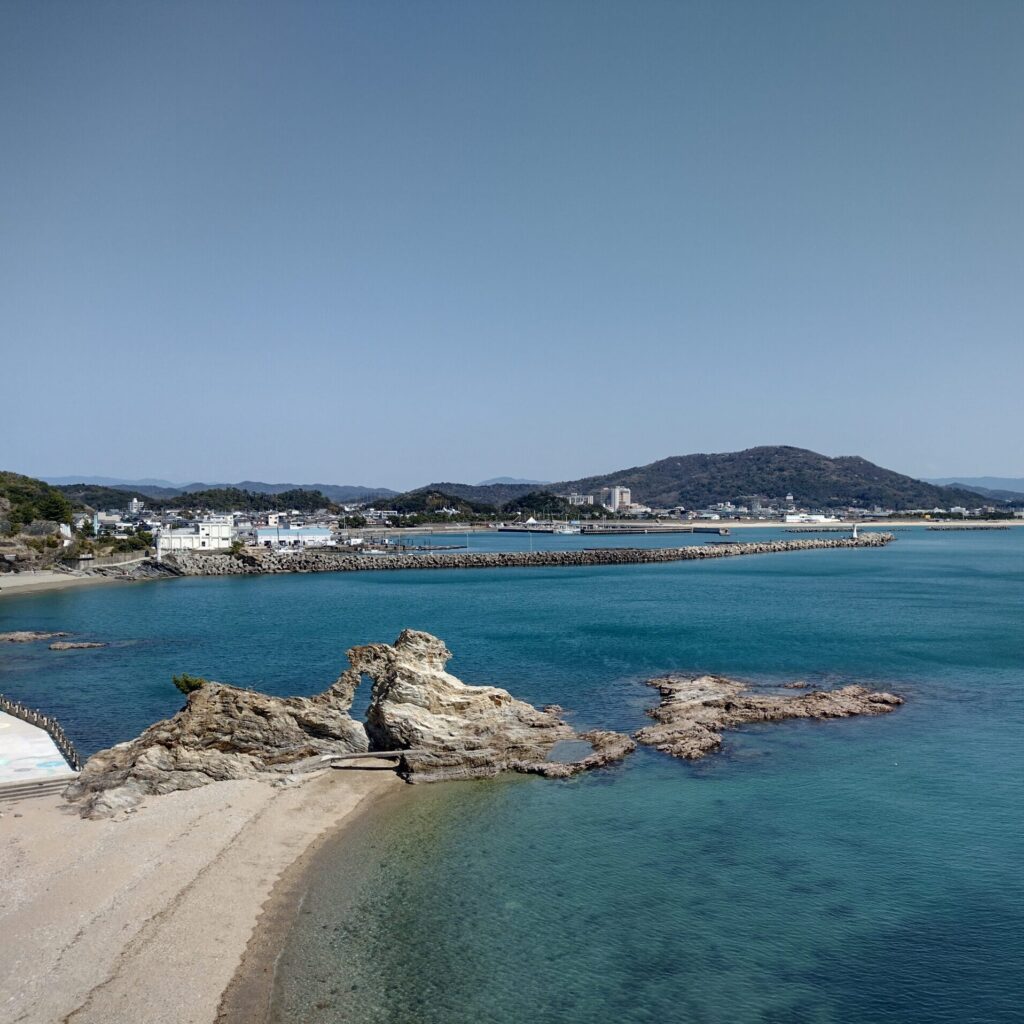
From the castle, continue toward Wakaura.
The change is gradual.
The stone walls and urban landscape of the castle town give way to:
- Coastal scenery
- Shrines
- Fishing communities
- Historic villas
- Poetic landscapes
- Everyday seaside life
Wakaura has a completely different atmosphere from central Wakayama.
It is a place to slow down.
Walk along the coast.
Visit a shrine.
Look across the water.
Stop for coffee or a local sweet.
Watch the light change over the bay.
Wakaura’s significance is not simply its scenery. It is a cultural landscape where poetry, pilgrimage, power, coastal life, and contemporary everyday life overlap.
A Different Kind of Final Day
The final day should not feel like another checklist of attractions.
Instead, it brings together many of the themes experienced during the previous five days.
Mountains
Koyasan and the Kumano forests
Sacred landscapes
Shrines and pilgrimage routes
Agriculture
Fruit-growing valleys and rural villages
Seasonal landscapes
Cosmos and pampas grass
History
Wakayama Castle and the Kishu Tokugawa domain
Sea
Wakaura and the coastal landscape
This is what makes the journey more than a collection of destinations.
You have gradually moved through different landscapes and different ways of living.
Six Days, One Autumn Journey
| Day | Landscape | Experience |
|---|---|---|
| 1 | Sacred mountains | Koyasan, temples & autumn foliage |
| 2 | Foothills & countryside | Ginkgo trees, shrines & autumn fruit |
| 3 | Open highlands | Cosmos, pampas grass & onsen |
| 4 | Pilgrimage forest | Kumano Kodo walking |
| 5 | Rural Wakayama | Fruit, agriculture & local food |
| 6 | Castle & coast | Wakayama Castle, Momijidani Garden & Wakaura |
The journey moves from mountains to valleys, forests to open fields, rural landscapes to the sea.
And perhaps that is the best way to experience autumn in Wakayama.
Not by asking:
“Where is the best place to see autumn leaves?”
But by asking:
“How does autumn change as I move through Wakayama?”
When Is the Best Time to Go?
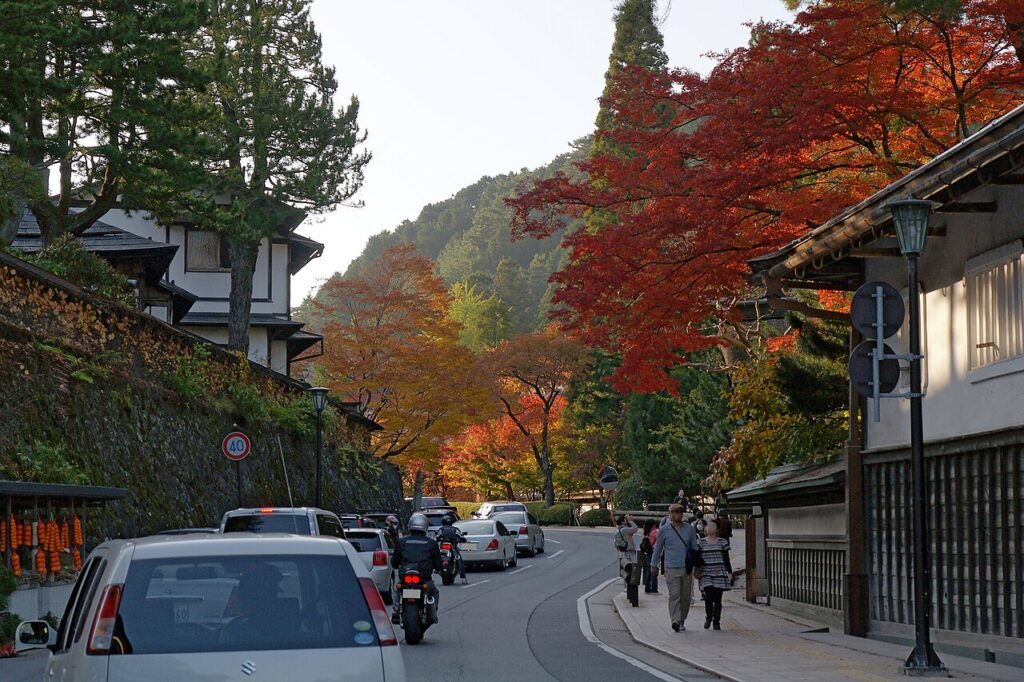
The exact timing varies from year to year and from one elevation to another.
That variation is actually one of the attractions.
Higher elevations such as Koyasan can enter autumn earlier, while lower elevations and coastal areas may retain a different seasonal atmosphere later into the season.
This makes a multi-day journey particularly interesting.
Rather than relying on one perfect day of peak foliage, you can follow the progression of the season across different elevations and landscapes.
For travelers who enjoy photography, walking, food, and cultural experiences, October and November can offer an exceptional combination of comfortable weather and seasonal variety.
More Than an Autumn Sightseeing Trip
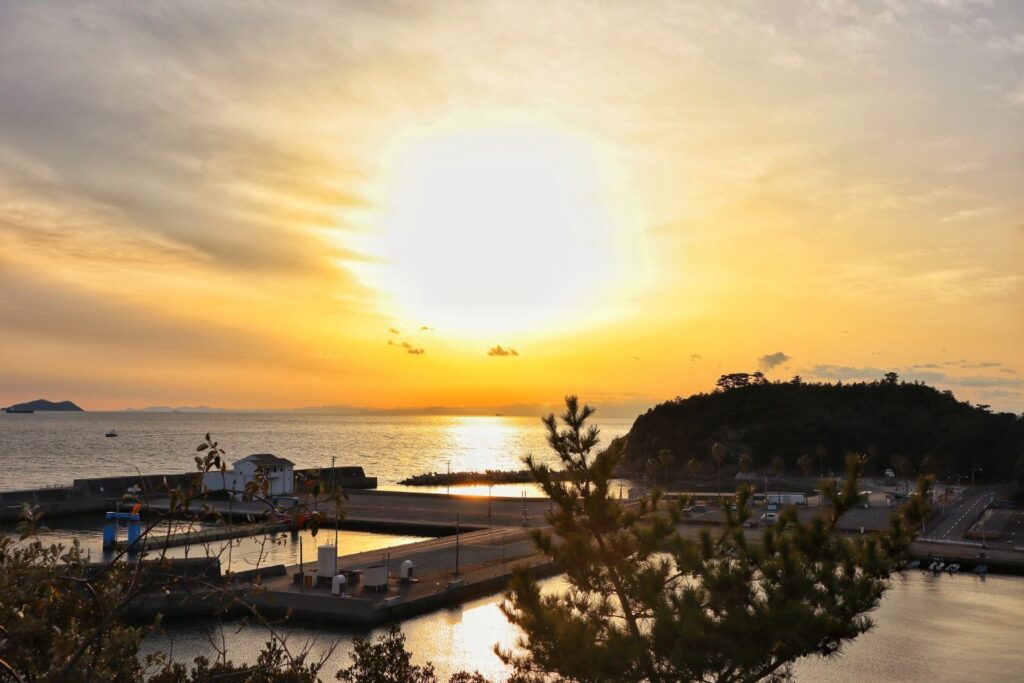
This itinerary is designed for travelers who want something slower than a conventional tour of Japan.
You do not need to change hotels every night.
You do not need to visit every famous site.
You do not need to spend every day hiking.
Instead, the journey combines:
Walking + Food + Culture + Nature + Rest
Some days are active.
Some are contemplative.
Some are about landscapes.
Others are about food or local life.
That balance is what makes a few days in Wakayama feel different from simply adding another destination to a Japan itinerary.
A Curated Autumn Journey in Wakayama
This six-day itinerary is an example of how a private journey through Wakayama can be shaped around the season.
The route can be adjusted according to:
- Your preferred walking distance
- Autumn foliage conditions
- Fruit season
- Photography interests
- Food preferences
- Accommodation style
- Cultural interests
You might spend longer in Koyasan, add another Kumano Kodo walk, spend more time among the fruit orchards, or stay longer by the sea.
The point is not to follow a fixed schedule.
It is to create a journey that allows you to experience Wakayama at the pace of autumn itself.
Curated Kii Peninsula Journey
For travelers looking to explore Wakayama beyond the usual Koyasan or Kumano day trip, a private Curated Kii Peninsula Journey can combine seasonal landscapes, walking, food, culture, and local experiences into a journey designed around your interests.
Come for the autumn colors. Stay for the rhythm of the place.
Related Posts
- 10 Days in Wakayama: A Slow Travel Experience Beyond the Golden Route
- 5-Day Food Journey Through Wakayama: From Mountains to Ocean
- 7-Day Kii Peninsula Journey: Koyasan, Kumano Kodo, and Hidden Wakayama
- From Sushi to Kaiseki: A Refined Evening in Wakayama City
- Hidden Sacred Landscapes Near Osaka
No responses yet