
Discover Japan’s Plum Culture Through Everyday Rural Life
When people think of Japanese plums, they often imagine umeboshi served with rice or bottles of fragrant umeshu.
But behind these familiar products lies a way of life that has shaped communities in Wakayama for centuries.
As Japan’s largest producer of ume, Wakayama is more than just a place where plums are grown. It is a region where farming, family traditions, local cuisine, and the changing seasons are deeply connected.
An ume farm stay allows you to experience that connection—not as a visitor looking in, but as someone welcomed into everyday rural life.
Why Wakayama Is Japan’s Ume Capital
The rolling hills around Minabe and Tanabe are home to the country’s most famous ume orchards.
The region’s warm climate, abundant sunshine, and well-drained slopes create ideal conditions for growing high-quality plums, including the renowned Nanko Ume.
For generations, local families have cared for these orchards while passing down techniques for cultivation, harvesting, and food preservation.
Visiting these farms offers a chance to understand not only how ume is grown, but why it remains such an important part of daily life in Wakayama.
Experience the Seasons
An ume farm changes dramatically throughout the year.
Late Winter
Honeybees play a vital role in the blooming of these plum trees as they fly from blossom to blossom in search of nectar, facilitating pollination in the process. Since the bees’ flight activity depends on factors such as weather, temperature, and wind, the natural conditions during the flowering season ultimately determine the pollination rate for that year.
Early Summer
Harvest season begins.
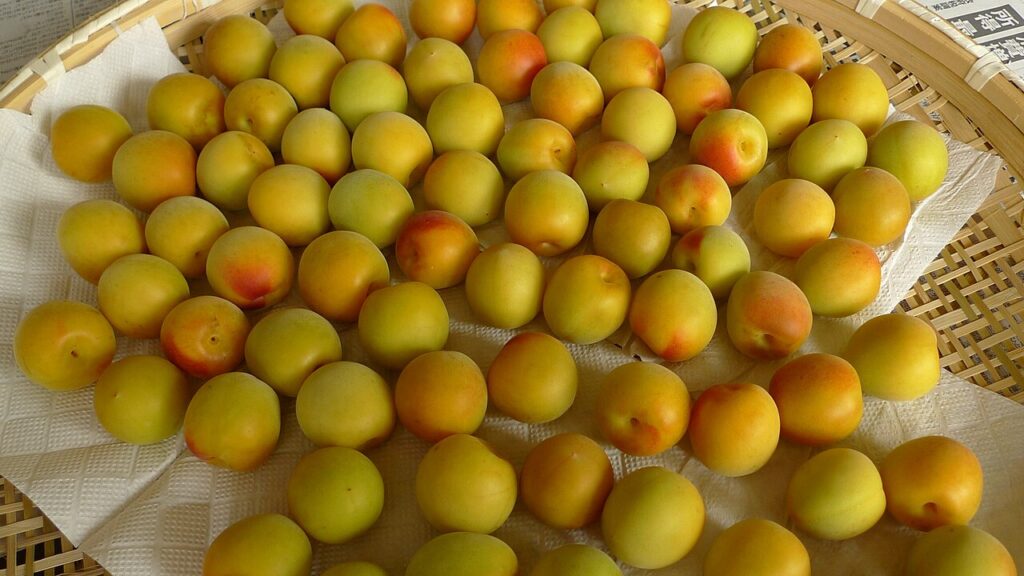
As June arrives and the early summer breeze begins to blow, the green fruit grows large, causing the branches to droop under the weight. The plums harvested during this period are shipped to markets while still green—destined for uses such as making umeshu (plum liqueur)—and are picked by hand, one by one, directly from the branches. This process involves strenuous labor, often requiring work at heights using ladders, yet each fruit is carefully hand-picked to ensure it remains undamaged.
Guests may help pick fresh ume while learning how farmers judge ripeness and carefully handle each fruit.
Summer
Freshly harvested ume are transformed into umeboshi, umeshu, ume syrup, and other traditional products. The ideal plums for making umeboshi (pickled plums) are fully ripe ones that have fallen from the branch; harvested at a stage that highlights the characteristics of the Nanko variety—thick, soft flesh and thin skin—about 60% of the plums grown are processed into umeboshi.
This is when the knowledge of preservation—developed over generations—comes to life.
Autumn and Winter
There are tasks that must be completed before winter arrives to prepare for next year’s harvest. Cultivating high-quality saplings for increased yields and pruning the plum trees—a process that directly influences the following year’s harvest—are challenging tasks requiring experience.
Soil preparation, ensuring the trees receive an adequate supply of necessary nutrients, is also a crucial task during this period.
Each visit offers a different perspective on rural life.
More Than Farming
An ume farm stay is about much more than harvesting fruit.
Depending on the host family and the season, you may enjoy experiences such as:
- Walking through the orchards
- Harvesting ume
- Learning how umeboshi are made
- Preparing homemade ume syrup or umeshu
- Cooking meals using seasonal local ingredients
- Sharing dinner with local families
- Learning about everyday life in rural Wakayama
These experiences reveal the relationship between food, landscape, and community.
Understanding Japanese Food Culture
Many visitors discover that ume is far more versatile than they expected.
You may encounter:
- Homemade umeboshi
- Sweet ume juice
- Umeshu
- Plum vinegar
- Seasonal dishes featuring ume
- Local recipes unique to Wakayama
Instead of tasting finished products in a shop, you learn the stories behind them directly from the people who make them.
Related post:
Umeshu Tasting Experience in Wakayama
Explore Beyond the Farm
An ume farm stay can also become the starting point for exploring southern Wakayama.
Nearby attractions include:
- Scenic rural landscapes
- Traditional fishing villages
- Local farmers’ markets
- Hot springs
- Historic temples and shrines
- Sections of the Kumano Kodo pilgrimage routes
Combining these experiences creates a deeper understanding of how agriculture, history, and spirituality have shaped the Kii Peninsula.
Article about Kumano Kodo:
Kumano Kodo Guide: Walking Through Japan’s Living Traditions
A Different Way to Experience Japan
Many travelers visit Japan to see famous landmarks.
An ume farm stay offers something quieter.
Instead of checking attractions off a list, you spend time with the people who continue traditions that have shaped this landscape for centuries.
You wake to the sounds of birds rather than traffic.
You eat food grown just outside the door.
You learn that even something as simple as a plum carries generations of knowledge.
That is the true beauty of rural Wakayama.
Enhance Your Farm Stay with a Local Cultural Guide
If you are planning to stay at a farm in Wakayama, I can help you make the experience even more meaningful.
Rather than simply translating conversations, I accompany guests during daytime activities to help bridge language and cultural differences between visitors and local hosts.
During your farm stay, I can assist with:
- Interpreting conversations with farming families
- Explaining the history of ume cultivation in Wakayama
- Introducing local food culture and seasonal traditions
- Providing cultural context that goes beyond the farming experience
- Helping you communicate naturally with your hosts
- Guiding you to nearby cultural sites, local restaurants, hot springs, or scenic walking routes after your farm activities
My goal is not to replace the authentic experience offered by your host family, but to deepen your understanding of the people, traditions, and landscapes that make rural Wakayama unique.
Whether you’re harvesting ume, sharing a home-cooked meal, or walking through quiet orchards, I’ll help you discover the stories that transform a simple visit into a memorable cultural experience.
Continue Exploring Wakayama
You may also enjoy:
- Why a Farm Stay in Wakayama Offers More Than Just Accommodation
- Taste of Time: Fermentation Journey in Wakayama
- Understanding Japan’s Satoyama
- Living in Wakayama: Slow Travel Beyond the Tourist Trail
- Why Are Kumano Kodo and the Camino de Santiago the Only Dual Pilgrimage Routes in the World?
No responses yet