
Discover Everyday Japan Beyond Tourist Attractions
When travelers visit Japan, they often imagine historic temples, famous castles, and beautiful gardens.
But another part of Japanese culture exists away from major tourist sites.
It can be found in shopping streets.
In Wakayama City, several traditional shopping districts still connect neighborhoods, local businesses, and everyday life. Although these areas are quieter than they once were, they continue to reveal a side of Japan that many visitors never experience.
Rather than attractions created for tourism, these streets remain places used by local residents.
For travelers interested in slow travel and everyday culture, they offer something increasingly rare.
Burakuricho: The Historic Heart of Wakayama
For generations, Burakuricho was the commercial center of Wakayama.
Located not far from Wakayama Castle, the district flourished alongside the castle town and became one of the city’s busiest areas.
Today, some sections are quiet, while others continue to host cafés, restaurants, and long-established businesses.
Walking through Burakuricho allows visitors to imagine how the city developed and how Japanese shopping culture changed over time.
Unlike modern malls, the district grew organically over many decades.
Access: Take a Wakayama Bus from JR Wakayama Station or Nankai Wakayamashi Station (approx. 10 minutes). Immediately upon getting off at the “Honcho 2-chome” or “Honcho 3-chome” bus stop.
Misono Shopping Street: A Local Neighborhood Atmosphere
Near JR Wakayama Station lies Misono Shopping Street.
The atmosphere here feels more intimate and residential.
Small eateries, local shops, and family-run businesses create a setting where daily life unfolds naturally.
Many residents stop by on their way home from work, making the area feel less like a tourist destination and more like a living neighborhood.
For visitors, this offers a chance to experience Japan beyond guidebooks.
Access: About a 2–3 minute walk from JR Wakayama Station (West Exit, MIO Underground Exit, etc.)
Higashi Wholesale Market: Discovering Local Food Culture
A short distance away is Wakayama’s Higashi Wholesale Market.
Markets like this rarely appear in international travel itineraries, yet they reveal much about local food culture.
Fresh seafood, vegetables, and ingredients from across Wakayama pass through the market each day.
Some small restaurants and food stalls around the market allow visitors to enjoy meals surrounded by people beginning their ordinary routines.
Rather than luxury dining, the experience offers authenticity.
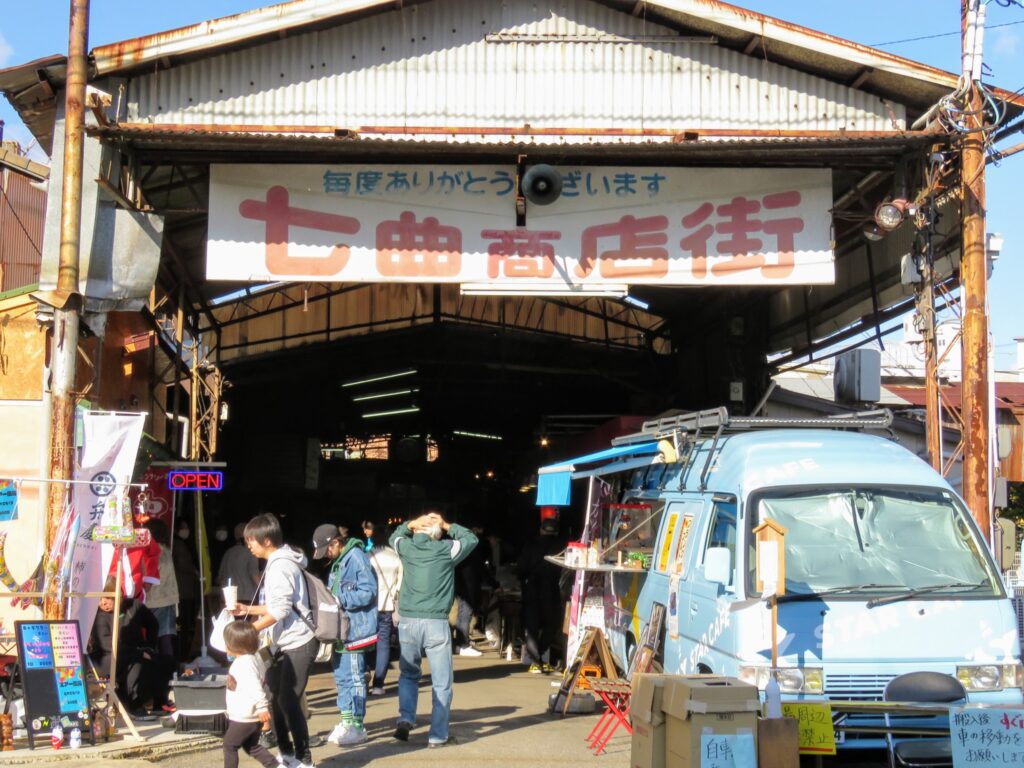
Nanamagari Market: Echoes of Old Downtown Wakayama
Nanamagari Market preserves the atmosphere of a traditional downtown neighborhood.
The narrow streets and long-established stores reflect a slower rhythm of life.
Some shops have served the community for decades.
Others have closed as Japan’s demographics changed.
Yet even these quiet scenes tell an important story about modern Japan.
For many travelers, these neighborhoods provide a deeper understanding of the country than famous landmarks alone.
More Than Shopping
These districts are not places to visit simply to buy things.
They are places to observe.
To walk slowly.
To enjoy conversations.
To notice how communities continue despite change.
The value of these streets does not lie in their size or popularity.
It lies in the fact that they still belong to the people who live there.
A Suggested Walking Route
A leisurely day in central Wakayama might include:
- Morning coffee near JR Wakayama Station.
- Exploring Misono Shopping Street.
- Visiting Wakayama Higashi Wholesale Market for lunch.
- Walking toward Burakuricho.
- Discovering small cafés and local businesses.
- Continuing to Nanamagari Shopping Street.
- Ending the day at Wakayama Castle.
Because sometimes the most memorable part of traveling is not seeing famous places.
It is experiencing ordinary life.
Do you want private and curated journey around the shopping street? Curated Kii Peninsula Journey can help you!
Related Posts
- Walking Through Meiko Shopping Street in Wakaura
- From Sushi to Kaiseki: A Refined Evening in Wakayama City
- What to Do in Wakayama City: A Samurai Culture Day Around Wakayama Castle
- Kansai Airport to Wakayama City Guide
No responses yet