
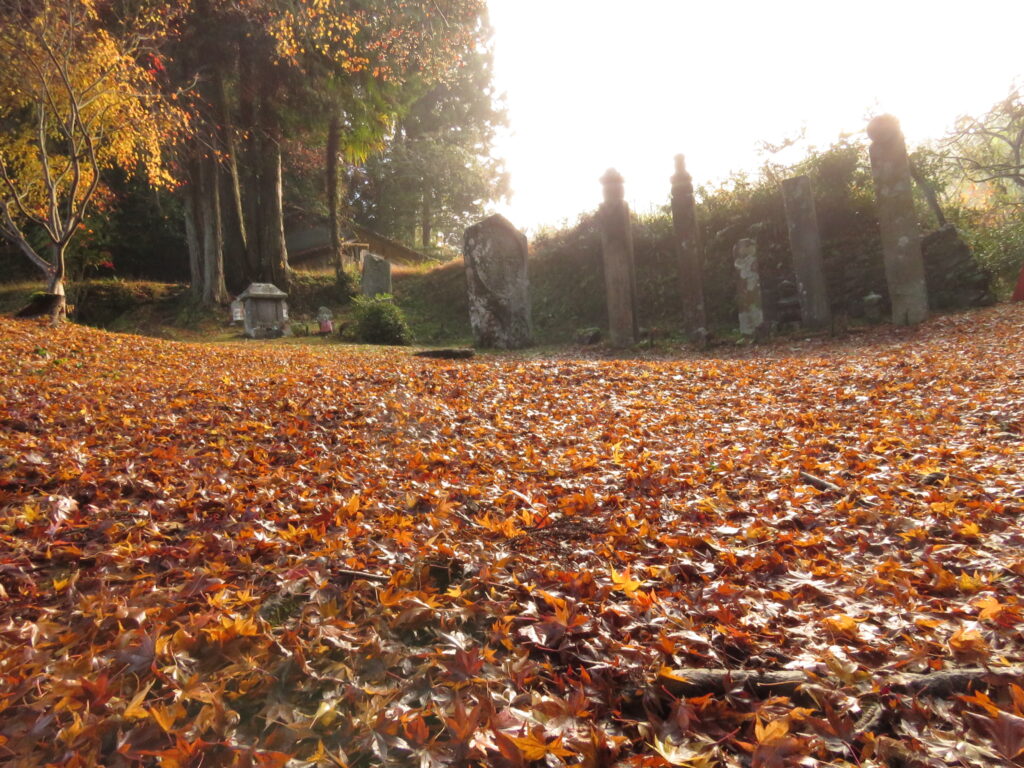
Most visitors arrive at Koyasan by train or cable car.
But for over a thousand years, pilgrims approached it differently—
on foot, step by step, from the valley below.
This World Heritage route reveals something essential:
Koyasan is not just a destination. It is a process of transition—from human life to spiritual understanding.
This route follows the historically and geographically natural order:
- Jison-in Temple
- Niukanshofu Shrine
- Choishi Michi Road
- Koyasan
- Niutsuhime Shrine
1. Jison-in Temple: Where the Journey Begins
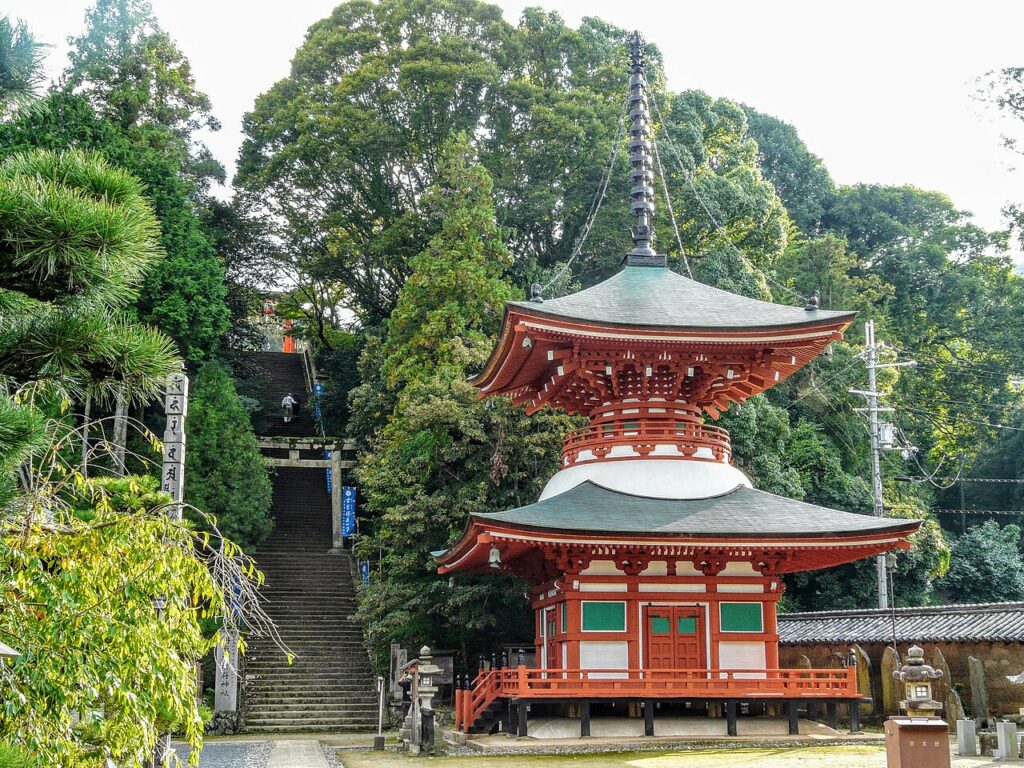
Located in Kudoyama, Jison-in is not just a temple—it is the true gateway to Koyasan.
- Associated with Kukai’s mother
- Known as a place where women could pray (when the mountain was restricted)
- The starting point of pilgrimage
👉 This is where the journey begins—not with philosophy,
but with human emotion, family, and devotion.
2. Niukanshofu Shrine: Crossing the Boundary
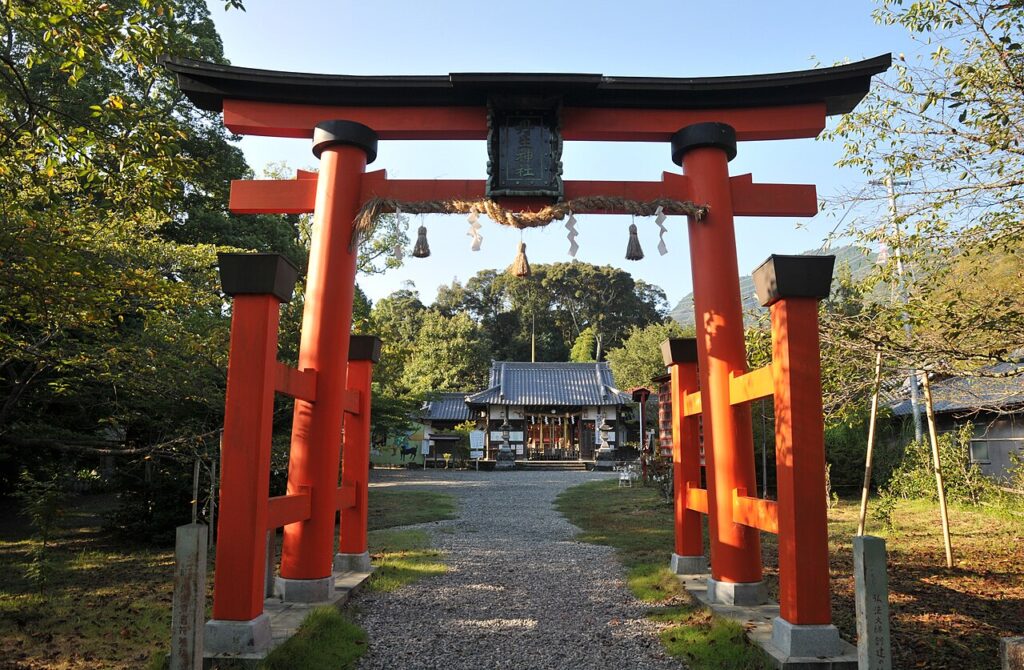
Just beside Jison-in stands Niukanshofu Shrine.
- Guardian shrine of the mountain
- Dedicated to the deity connected with Koyasan’s origin
- Marks the boundary between everyday and sacred space
👉 Passing here means entering a different realm.
This is the psychological and spiritual threshold of the pilgrimage.
3. Choishi Michi: The Ascent
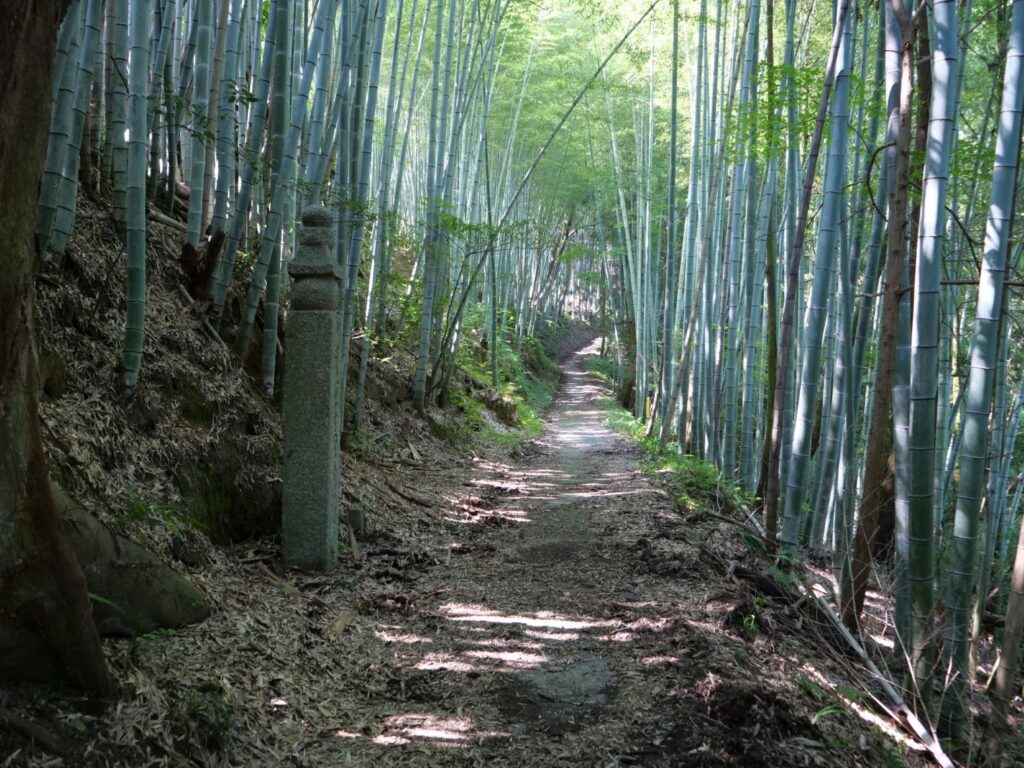
From here, the path begins.
The Choishi Michi is marked by stone pillars placed at regular intervals:
- Each marker represents distance—and progression
- The path structures the journey physically and mentally
- Movement itself becomes part of the experience
👉 This is not just travel—it is transformation through walking.
Even a short section today changes how you perceive Koyasan.
4. Koyasan: Arrival and Realization
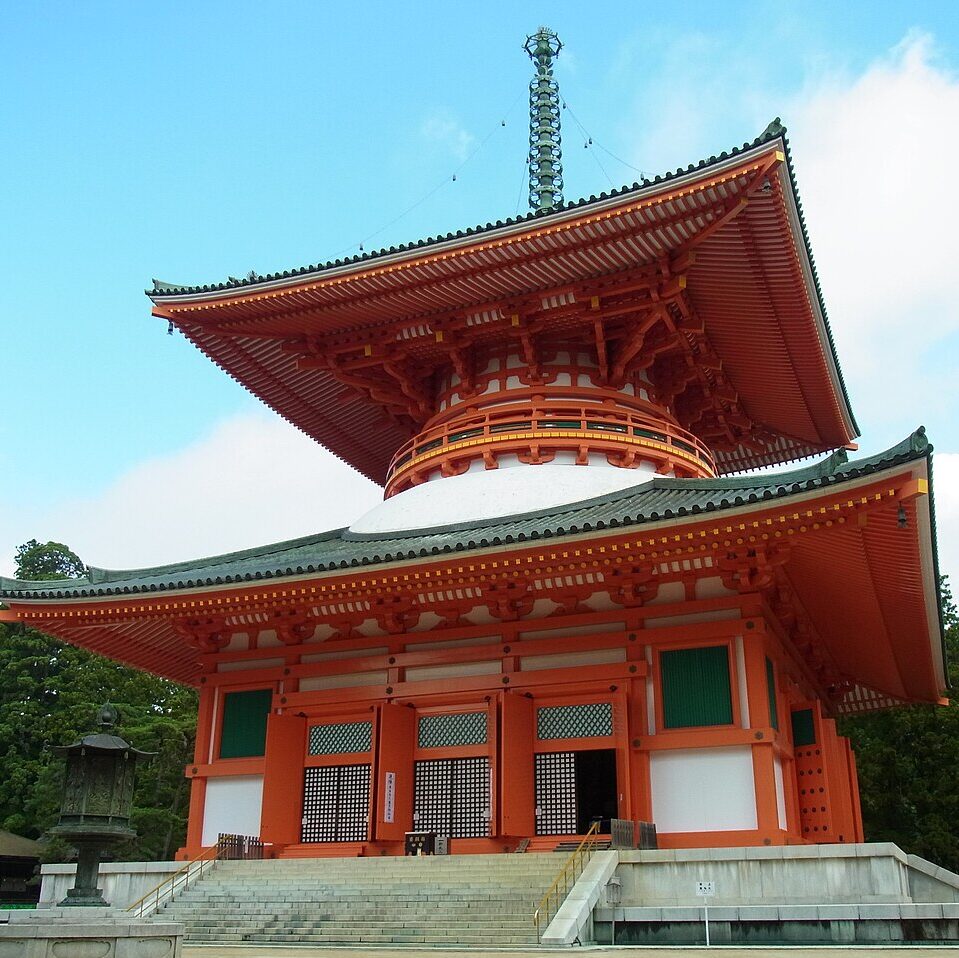
At the summit, the pilgrimage culminates.
- Danjo Garan → the mandala made physical
- Okunoin → eternal meditation
- Kongobuji Temple → spiritual authority
👉 What began as a personal journey becomes a complete spiritual system.
5. Niutsuhime Shrine: Understanding the Origin (Optional but Essential)
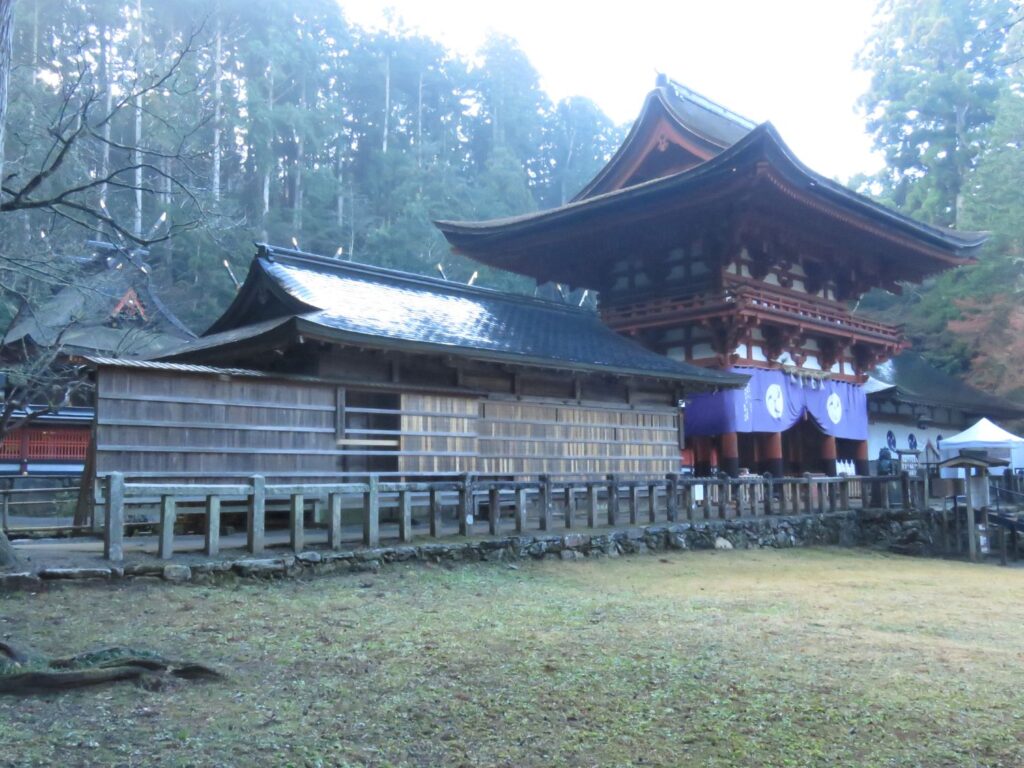
Geographically, Niutsuhime Shrine is not on the direct ascent route.
But conceptually, it explains everything.
- The deity here is said to have guided Kukai to Koyasan
- Represents the indigenous spiritual foundation of the area
- Connects Shinto belief with Buddhist development
👉 Visiting here after Koyasan reframes the experience:
You understand why this place exists at all. Situated at an elevation of 450 meters, the Amano Basin features a satoyama landscape—a traditional Japanese rural environment—that transforms with the changing seasons. It has been selected as one of the “100 Best Rural Landscapes in Japan.”
The Full Structure of the Pilgrimage
This route reveals a clear progression:
① Human World → Jison-in
② Sacred Boundary → Niukanshofu Shrine
③ Journey → Choishi Michi
④ Realization → Koyasan
⑤ Origin → Niutsuhime Shrine
👉 This is the complete narrative:
Life → Threshold → Transformation → Enlightenment → Meaning
Suggested Itineraries
Option 1: Full-Day Experience
- Morning: Kudoyama (Jison-in & Niukanshofu Shrine)
- Midday: Walk part of Choishi Michi
- Afternoon: Explore Koyasan
Option 2: Two-Day Immersive Journey
Day 1
- Niutsuhime Shrine
- Kudoyama (Jison-in, pilgrimage context)
Day 2
- Choishi Michi walk
- Koyasan deep exploration
Our Approach: More Than a Route
Most visitors see these sites separately.
We guide you through them as one continuous story:
- The relationship between Shinto and Buddhism
- The emotional and human side of pilgrimage
- The meaning embedded in landscape and movement
- The historical continuity of belief
👉 This transforms your visit from sightseeing into understanding.
Recommended Experience
👉 Koyasan World Heritage Pilgrimage Tour (Private)
- Duration: 1–2 days
- Includes: Kudoyama, Choishi Michi, Koyasan (+ optional Niutsuhime Shrine)
- Focus: Depth, interpretation, and narrative
Continue Exploring Wakayama
This journey connects naturally to:
- Kumano Kodo pilgrimage routes
- Yuasa (birthplace of shoyu soy sauce)
👉 Together, they reveal a shared theme:
The rhythm of life flowing through belief, landscape, and time
Plan Your Journey
👉 Start planning your custom pilgrimage experience
👉 Or contact us for a tailored itinerary combining Koyasan with Kumano or Yuasa.
Final Thought
You can reach Koyasan in a few hours.
But when you follow the full pilgrimage route,
you begin to understand:
👉 Koyasan is not just where you arrive—
it is everything that leads you there.
Learn More about This Area
- Beyond Koyasan: Cycling Through the Gateway Towns of Kudoyama and Koyaguchi
- The Full Journey to Koyasan: From Sacred Peak to Valley Towns
- The Hidden Side of Koyasan: Beyond Okunoin
- Koyasan Day Trip Itinerary (Without Staying Overnight)
- Women’s Koyasan: Understanding Nyonin Koya, the Nyonin-do, and the Nyonin-michi
- Walking Choishi-michi: Following the Pilgrims to Koyasan
No responses yet