
Where to Go When You Want Your Journey to Continue Beyond the Pilgrimage
Walking the Kumano Kodo can be the defining experience of a journey through Wakayama.
You walk through cedar forests, climb ancient mountain paths, pass small villages, and eventually arrive at the sacred shrines of Kumano.
But the journey does not have to end when you finish walking.
In fact, spending a few additional days in southern Wakayama can reveal a very different side of the Kii Peninsula.
The mountains give way to the Pacific Ocean.
Quiet rivers replace forest paths.
Fishing villages, farming communities, and remote mountain settlements reveal another side of life in the region.
For travelers who have already made the effort to come this far, these places offer something particularly valuable:
time.
Time to slow down.
Time to recover.
And time to experience the landscapes surrounding Kumano rather than simply passing through them.
Here are four places to consider after walking the Kumano Kodo.
1. Susami: From the Sacred Mountains to the Sea
After several days walking through the mountains, there is something wonderfully restorative about arriving at the coast.
Susami offers exactly this change of rhythm.
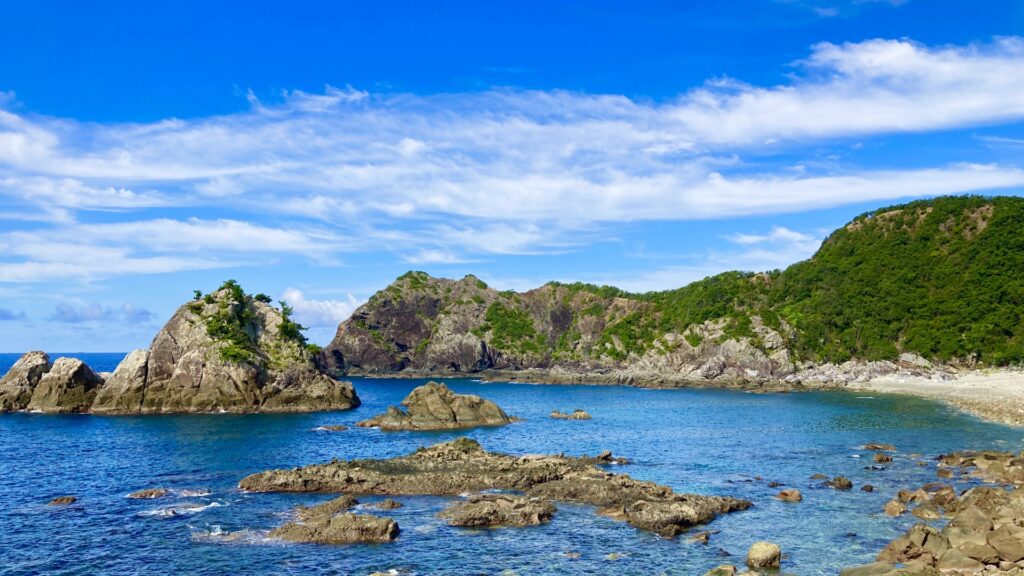
Located along the Pacific coast south of Tanabe, Susami is a small coastal community where mountains descend toward the sea.
Instead of following an ancient pilgrimage road, you can spend your time simply watching the ocean, walking along the coast, enjoying seafood, and experiencing the atmosphere of a traditional fishing community.
A Different Side of Kumano
The Kumano Kodo is often associated with forests and mountains.
But Kumano has always been connected to the sea as well.
The southern Kii Peninsula is a landscape where mountains rise almost directly from the Pacific. Communities developed around fishing, coastal transportation, forestry, and agriculture.
Susami allows you to experience this coastal side of Kumano.
After days of walking inland, the contrast can be striking.
Slow Down by the Ocean
Susami is particularly suitable for travelers who do not want another busy sightseeing schedule.
You might spend a morning walking along the coast, have a leisurely seafood lunch, and simply allow the afternoon to unfold.
This is not necessarily a place where you need to fill every hour.
It is a place where the landscape itself becomes part of the experience.
Best for: travelers looking for recovery, coastal scenery, hot spring, seafood, and a slower pace after hiking.
Relatetd post:
2. Kozagawa: Into the Quiet World of the River
If Susami represents the sea, Kozagawa represents the deep interior of the Kii Peninsula.
The Kozagawa River winds through a mountainous landscape of forests, villages, and enormous rock formations.
One of the most remarkable is Ichimai-iwa, a vast monolithic rock rising beside the river.
It is an excellent reminder that the landscape of southern Wakayama was shaped not only by human history, but by geological forces operating over immense periods of time. The region’s dramatic rock formations—including Ichimai-iwa and the coastal Hashigui Rocks—are part of what makes the Kii Peninsula such an interesting landscape to explore.
A Place to Experience Water and Stone
The Kumano Kodo introduces travelers to the forests of the Kii Peninsula.
Kozagawa introduces another dimension:
water and stone.
The river has shaped the valleys, supported settlements, and provided a natural connection through the mountains.
For travelers interested in photography, geology, nature, or rural Japan, this can be a particularly rewarding extension of a Kumano journey.
A Different Kind of Walking
You do not necessarily need another demanding hike here.
Instead, think about shorter walks, riverside exploration, scenic drives, local food, and time spent observing the landscape.
After the physical challenge of the Kumano Kodo, this difference matters.
The journey becomes less about reaching the next destination and more about being in the landscape.
Best for: nature lovers, photographers, geology enthusiasts, and travelers seeking quiet rural landscapes.
Related post:
A Photographer’s Journey Through Wakayama: Landscapes, Sacred Places, and Hidden Stories
3. Kushimoto: Where Kumano Meets the Pacific
Further south lies Kushimoto, the southernmost town on Honshu.
Here, the character of the journey changes dramatically.
The forested mountains of the Kumano Kodo open onto the vast Pacific Ocean.
One of the most famous landscapes is Hashigui-iwa, a series of enormous rocks extending into the sea.
At sunrise or sunset, the relationship between the rocks, ocean, and changing light can be extraordinary.
This is one of those places where it is worth resisting the temptation to simply take a photograph and leave.
Stay for a while.
Watch the waves.
Notice how the color of the rocks changes.
Let the weather become part of the experience.
Beyond the Famous View
Kushimoto is more than Hashigui-iwa.
The southern tip of the Kii Peninsula offers opportunities to explore coastal landscapes, marine environments, islands, fishing communities, and the history of Japan’s relationship with the wider Pacific.
For travelers who have spent days surrounded by forests, the scale of the ocean can feel almost liberating.
The landscape becomes open again.
From Pilgrimage to Exploration
There is also something symbolic about continuing south after reaching Kumano.
The pilgrimage takes you toward the sacred heart of the peninsula.
Kushimoto takes you toward its geographical edge.
It feels less like an extension of the pilgrimage and more like a continuation of the journey into another world.
Best for: coastal scenery, photography, geology, marine landscapes, and travelers who want a dramatic change of scenery.
Related post:
Beyond Kumano: Why Kushimoto Is One of Wakayama’s Most Underrated Destinations
4. Kitayama Village: Deeper into the Mountains
And then there is another possibility.
Instead of heading toward the sea, go deeper into the mountains.
北山村 is one of the most remote communities in Wakayama.
Surrounded by mountains and closely connected to the Kitayama River, the village offers a glimpse into a very different form of rural life.
Its history is closely associated with the river and the transportation of timber from the mountains.
The famous Kitayama River rafting tradition, in which timber was historically transported downstream, is an expression of the relationship between people, forests, and rivers that has shaped this region for generations.
The Mountain World Beyond Kumano
For someone who has just walked the Kumano Kodo, Kitayama can feel surprisingly appropriate.
The pilgrimage has already introduced you to:
- mountain forests
- remote villages
- sacred landscapes
- rivers and valleys
- the relationship between people and nature
Kitayama allows you to go one step further.
Here, the mountains are not simply scenery.
They are the foundation of local life.
A Journey for Curious Travelers
Kitayama is probably not the choice for someone looking for convenience or a long list of attractions.
That is precisely its appeal.
The reward is the journey itself—the winding roads, mountain scenery, river valleys, and encounters with a rural landscape that feels far removed from Japan’s major tourist destinations.
Best for: travelers interested in mountain culture, rivers, forestry, remote villages, and deeper exploration of the Kii Peninsula.
Related post:
Beyond the Onsen: A Slow Adventure Stay in Southern Wakayamas
Four Places, Four Different Ways to Continue
These four destinations offer very different experiences.
| Destination | Landscape | Experience |
|---|---|---|
| Susami | Pacific coast | Rest, seafood, fishing culture |
| Kozagawa | River & mountains | Nature, geology, rural landscapes |
| Kushimoto | Ocean & dramatic coastline | Photography, marine landscapes, exploration |
| Kitayama | Deep mountains & river | Mountain culture, forestry, remoteness |
And that is precisely why they work so well after the Kumano Kodo.
You don’t need to walk another pilgrimage route.
You don’t need another checklist of temples and shrines.
Instead, you can change the rhythm of your journey.
How to Add These Places to a Kumano Kodo Journey
There is no single correct way to combine these destinations with the Kumano Kodo.
That is part of their appeal.
Option 1: The Coastal Extension
Kumano Kodo → Susami → Kushimoto
A good choice if you want to move from:
mountains → coast → Pacific Ocean
This works particularly well for travelers who want several days of nature, photography, seafood, and coastal scenery.
Option 2: The Mountain Extension
Kumano Kodo → Kozagawa → Kitayama
This keeps the journey in the mountains.
Instead of moving toward larger coastal towns, you travel deeper into the rural landscapes of the Kii Peninsula.
Option 3: A Longer Southern Wakayama Journey
Kumano Kodo → Susami → Kozagawa → Kushimoto
This gives you a particularly interesting contrast:
sacred forest → river valley → fishing coast → Pacific Ocean
With more time, Kitayama can be added as a separate mountain extension.
Don’t Rush Away After the Pilgrimage
One of the easiest mistakes when visiting the Kumano Kodo is to think of the pilgrimage as an isolated experience.
You arrive.
You walk.
You reach the shrine.
Then you leave Wakayama.
But the Kumano Kodo exists within a much larger cultural landscape.
The forests are connected to rivers.
The rivers flow toward the ocean.
The mountains support villages and forestry.
The coast supports fishing communities.
And roads connect these places, just as they have for generations.
The Kumano Kodo itself is also not simply a preserved trail detached from modern life. Some sections remain intertwined with roads, villages, and everyday communities. Historical traces such as stone markers, Jizo statues, former teahouses, and settlement remains are embedded within the living landscape.
This is why spending a few extra days in southern Wakayama can change the way you understand the pilgrimage.
You begin to see the landscape around the road, rather than only the road itself.
From Pilgrimage to Slow Travel
Perhaps the greatest reason to stay longer is simple.
After several days of walking, you have already done something unusual.
You have slowed down.
You have traveled through a landscape at walking pace rather than highway speed.
You have noticed forests, villages, weather, streams, stone paths, and small details that would normally disappear behind a train or car window.
Why return immediately to a fast-paced itinerary?
Instead, let the journey continue at the same rhythm.
Spend a morning beside the sea in Susami.
Follow a river through Kozagawa.
Watch the Pacific from Kushimoto.
Or disappear deeper into the mountains of Kitayama.
The Kumano Kodo can be the beginning of a deeper journey through the Kii Peninsula—not simply the destination.
A Different Way to Experience Southern Wakayama
For many international travelers, the Kumano Kodo is what first brings them to this part of Japan.
But once you have walked it, you may discover that the most interesting question is no longer:
“What else can I see?”
It becomes:
“Where should I slow down?”
That question leads away from the famous route and toward the quieter corners of southern Wakayama.
And sometimes, that is where the journey becomes most memorable.
Planning a Longer Journey Around the Kumano Kodo
A few additional days can be designed around your interests rather than around a fixed sightseeing checklist.
You might combine:
- Kumano Kodo for pilgrimage and walking
- Susami for coastal life and relaxation
- Kozagawa for rivers, forests, and geology
- Kushimoto for the Pacific coast and dramatic landscapes
- Kitayama for mountain culture and remote rural life
This approach fits naturally with a slow, curated journey through the Kii Peninsula, where the pilgrimage is only one part of a longer experience of the region.
The Kumano Kodo teaches you to walk.
These places invite you to stay.
Plan your travel after Kumano Kodo with my Curated Kii Peninsula Journey.
Read More About Slow Stay in Wakayama
- 5 Days Around Koyasan: From Koyaguchi and Kudoyama to the Sacred Mountain
- A Slow Journey Through Central Wakayama: Sea, Citrus, History & Ume
- 10 Days in Wakayama: A Slow Travel Experience Beyond the Golden Route
- Fruits Farm Stay in Kinokawa City
No responses yet