
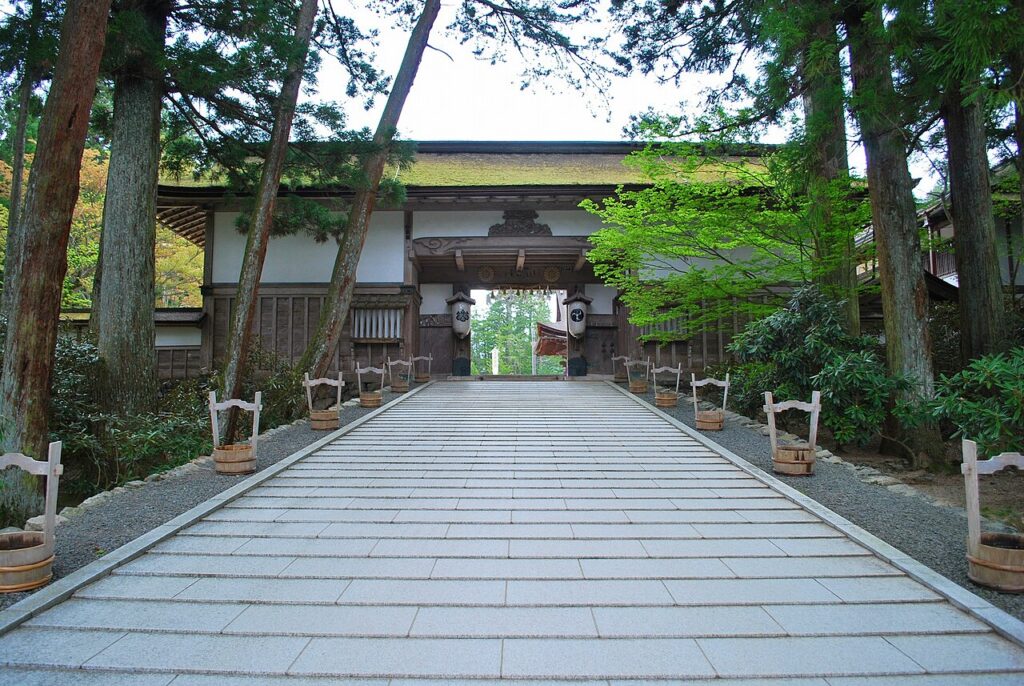
Introduction: Why Does Kongobuji Temple Display the Toyotomi Family Crest?
Look at the large lanterns hanging at the entrance of Kongobuji Temple in Koyasan, Wakayama Prefecture, and you will notice something unusual. They display two different family crests: one associated with Nyutsuhime Shrine, the traditional guardian of Koyasan, and the other with the Toyotomi family, led by Toyotomi Hideyoshi, one of the most powerful rulers in Japanese history.
Why does the head temple of Koyasan Shingon Buddhism display the crest of a warlord who once threatened to destroy the mountain’s religious community?
The answer lies in a remarkable chapter of Japanese history. In 1585, Hideyoshi launched a military campaign in Kishu, the historical name for the region that includes present-day Wakayama Prefecture. After attacking major Buddhist institutions elsewhere in the region, he turned his attention toward Koyasan. Yet the mountain was spared large-scale destruction through negotiations led by a Buddhist monk named Mokujiki Ogo.
The relationship between Hideyoshi and Koyasan subsequently changed. Hideyoshi supported the establishment of temples on the mountain, including Seiganji, built in memory of his mother. Another temple, Kozanji, was associated with Mokujiki Ogo. The two institutions were eventually consolidated in 1869 to form the present Kongobuji Temple.
The story does not end there. At Okunoin, Koyasan’s celebrated sacred cemetery, the Toyotomi family and Mokujiki Ogo are commemorated in separate places. Meanwhile, in nearby Wakayama City, the castle ordered by Hideyoshi in 1585 became the foundation of a new political center, and the name Wakayama came into use.
By following these connections, we can discover a different side of Koyasan: a place where military power, Buddhist faith, negotiation, and regional history intersect.
1. Two Temples, One Kongobuji: The Legacy of Hideyoshi and Mokujiki Ogo
The first clue to this history is found at Kongobuji’s main entrance.
According to the temple’s official English guide, the lantern on the right displays the three-comma crest associated with Nyutsuhime Shrine, whose deities have traditionally been regarded as guardians of Koyasan. The lantern on the left bears the paulownia crest of the Toyotomi family.
The presence of these two symbols reflects different aspects of the mountain’s history: its relationship with the local sacred landscape and its relationship with the political power that ruled Japan in the late sixteenth century.
But the connection with Hideyoshi goes beyond a family crest.
Seiganji: Hideyoshi’s Temple for His Mother
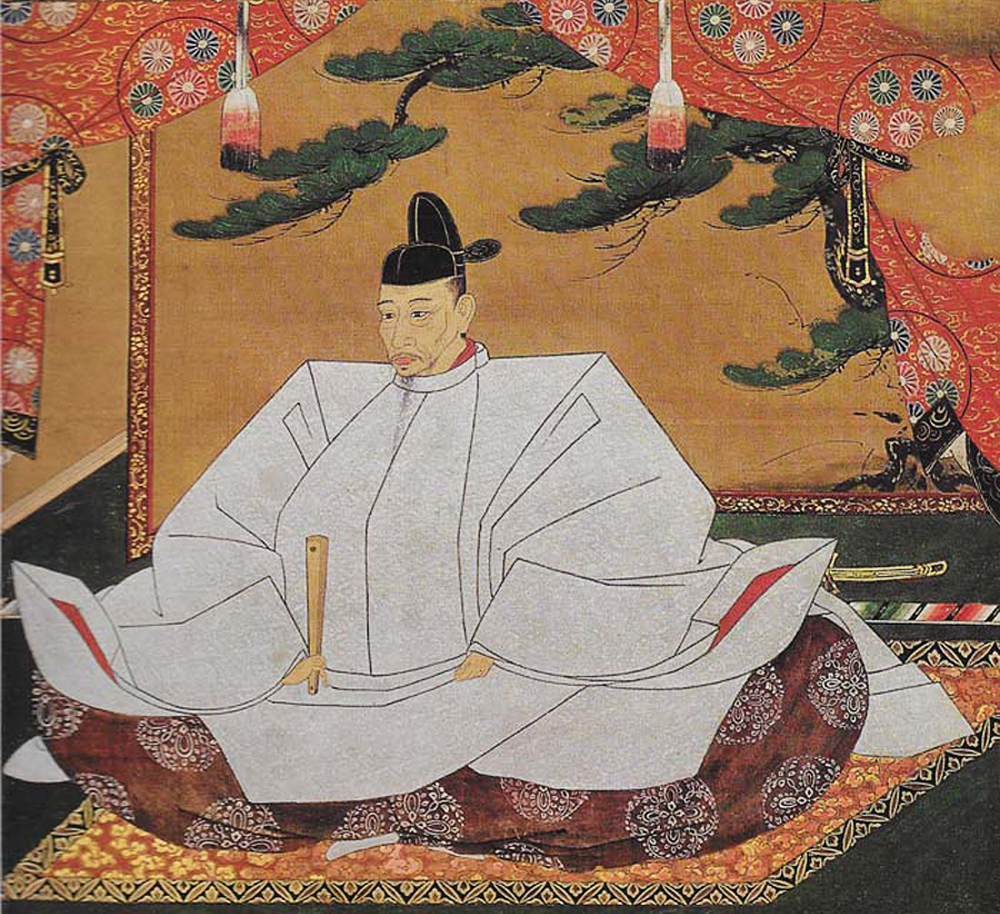
In 1593, Toyotomi Hideyoshi established Seiganji at the site of the present Kongobuji, in memory of his mother.
Hideyoshi had risen from relatively humble origins to become the dominant military and political figure in Japan. His career was marked by military campaigns, political consolidation, and the establishment of new relationships with religious institutions.
His decision to establish Seiganji on Koyasan was significant. The mountain was already an important center of Buddhist learning and practice, and a temple there offered a place to commemorate his mother within a highly respected religious environment.
Seiganji was not, however, the same institution as the present Kongobuji in its current form.
The main temple building that visitors see today reflects later rebuilding, and the name Kongobuji was adopted only after the consolidation of two temples in the nineteenth century.
Kozanji: The Temple Associated with Mokujiki Ogo
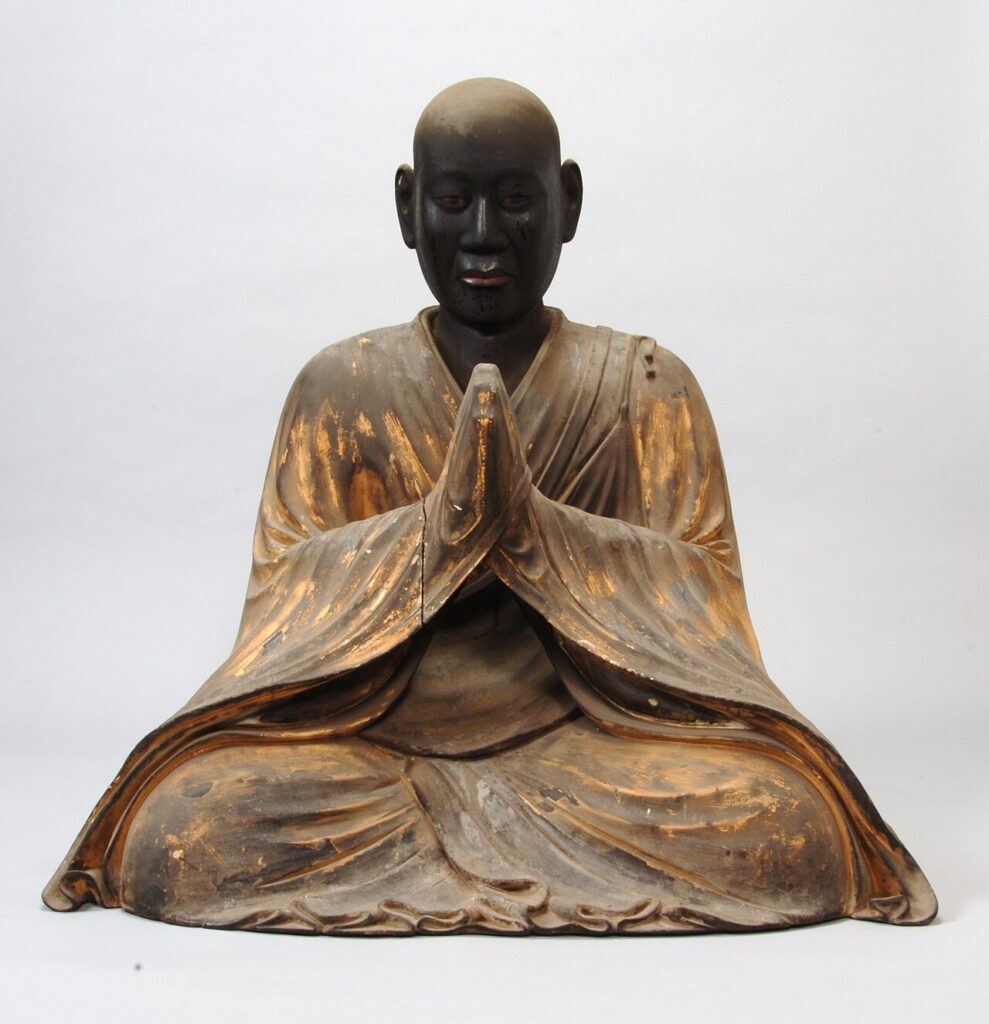
A second temple, Kozanji, was established in 1590 and was associated with Mokujiki Ogo, the monk who had helped negotiate with Hideyoshi during the crisis of 1585.
The two temples therefore represented different relationships within the history of Koyasan.
Seiganji was associated with Hideyoshi’s family and his wish to commemorate his mother. Kozanji was associated with Ogo, whose negotiations had helped preserve the mountain’s religious community.
In 1869, following the political and institutional changes of the Meiji Restoration, Seiganji and Kozanji were consolidated and renamed Kongobuji.
This is the origin of the institution known today as Kongobuji Temple, the head temple of Koyasan Shingon Buddhism.
The historical connection is particularly striking: two temples associated with different figures in the same dramatic period eventually became one institution.
The paulownia crest at the entrance is therefore more than a decorative emblem. It points toward a relationship that began during a time of conflict and continued through subsequent centuries.
Historical source: Kongobuji Temple’s official guide and the official chronology of Koyasan Shingon Buddhism.
2. Hideyoshi’s Campaign in Kishu: When Koyasan Faced Destruction
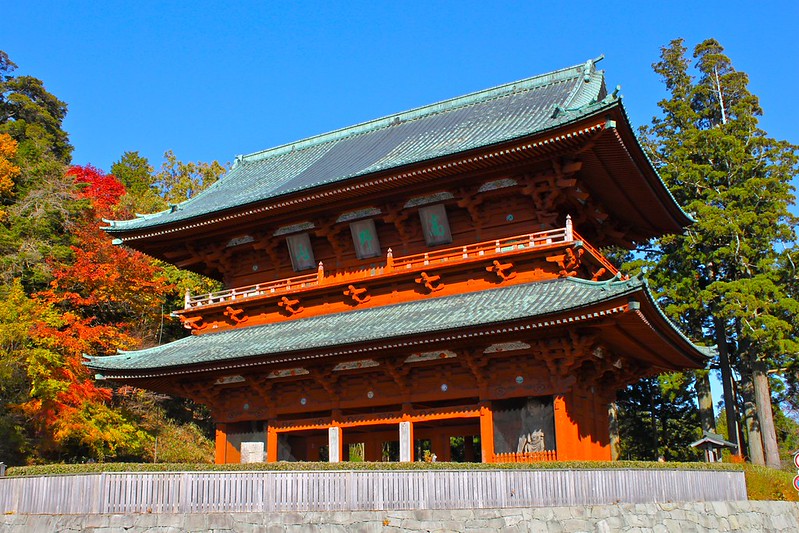
To understand why Hideyoshi’s crest appears at Kongobuji, we need to return to 1585.
At the time, Japan was undergoing a period of military and political unification. Powerful regional lords and religious institutions controlled land, resources, and networks of followers. Some Buddhist institutions also possessed considerable political influence and military capabilities.
Hideyoshi sought to consolidate his authority over these competing powers.
Kishu, with its independent religious institutions and strategic location, was an important part of this process.
The Destruction of Negoroji and Kokawadera
During the 1585 Kishu campaign, Hideyoshi’s forces attacked major Buddhist institutions, including Negoroji and Kokawadera.
Negoroji, in particular, had a reputation for its armed Buddhist followers. The destruction of such institutions was part of a wider effort to bring religious and regional powers under the authority of the emerging central government.
Koyasan was another major Buddhist center, with a long history of religious authority, extensive temple communities, and significant landholdings.
The mountain was therefore caught in a dangerous political situation.
Hideyoshi issued demands to Koyasan, including conditions for submission. The threat of military action was real, and the destruction inflicted elsewhere in Kishu demonstrated what could happen if negotiations failed.
For the monks of Koyasan, the question was not simply whether to resist or surrender. They had to consider how to preserve their religious institutions, buildings, and community under a new political order.
Why Was Koyasan Different?
Koyasan had a special place in Japanese Buddhist history because of its association with Kobo Daishi, also known as Kukai, who established the mountain as a center for Shingon Buddhist practice in the ninth century.
Its importance extended beyond the buildings themselves. It was a place of pilgrimage, religious training, ritual, and transmission of Buddhist teachings.
The possible destruction of Koyasan would therefore have threatened a major religious institution and an important center of Japanese cultural heritage.
Yet the mountain’s religious significance did not make it immune to the ambitions of a powerful ruler.
What happened next depended in large part on one monk’s ability to negotiate.
Historical source: Japan’s Agency for Cultural Affairs, Cultural Heritage Online, which describes Hideyoshi’s demands to Koyasan in 1585 and the role of Mokujiki Ogo in arranging an agreement.
3. Mokujiki Ogo: The Monk Who Negotiated with Hideyoshi
The monk at the center of this story was Mokujiki Ogo, also known as Ogo Shonin.
Rather than relying on armed resistance, Ogo engaged with Hideyoshi and helped negotiate an agreement that allowed Koyasan to avoid large-scale destruction.
His achievement was significant, but the outcome should not be understood as a simple victory in which Hideyoshi abandoned his political ambitions.
The agreement also involved changes to Koyasan’s landholdings and its relationship with the new political authority.
Negotiation in a Time of Military Power
The historical records describe Hideyoshi’s demands and the agreement reached through Ogo’s intervention.
A document preserved in Japan’s cultural heritage records describes conditions issued to Koyasan in 1585. It also records the return of 3,000 koku of land in parts of Yamato and Kii and a separate donation of 10,000 koku, including support connected with rebuilding a major temple hall in memory of Hideyoshi’s mother.
A koku was a traditional unit of volume for rice that was also used to estimate the economic productivity of land.
These figures help illustrate the scale of the political and economic arrangements surrounding the settlement.
Koyasan was able to continue as a major religious center, but its survival was connected with accommodation to the new political order.
Ogo’s role was not to defeat Hideyoshi militarily. It was to secure an outcome in which the mountain’s religious community could continue to exist.
From Potential Enemy to Religious Patron
After the crisis, Hideyoshi’s relationship with Koyasan developed in a different direction.
The establishment of Kozanji and Seiganji during the following years demonstrates that the relationship between the mountain and the Toyotomi regime was no longer defined solely by the threat of military action.
Hideyoshi’s support for religious institutions could serve several purposes: commemorating family members, demonstrating political authority, and establishing relationships with influential religious communities.
It is important not to assume that his patronage meant he had abandoned the goal of political control.
Instead, the history shows how military power, religious patronage, and negotiation could operate together.
For Koyasan, the result was the preservation of a religious institution that continued to develop long after Hideyoshi’s death.
Mokujiki Ogo’s story is a reminder that the survival of a cultural institution sometimes depends not only on its spiritual importance, but also on the ability of its leaders to negotiate with the political powers of their time.
4. Hideyoshi Becomes a Patron of Koyasan
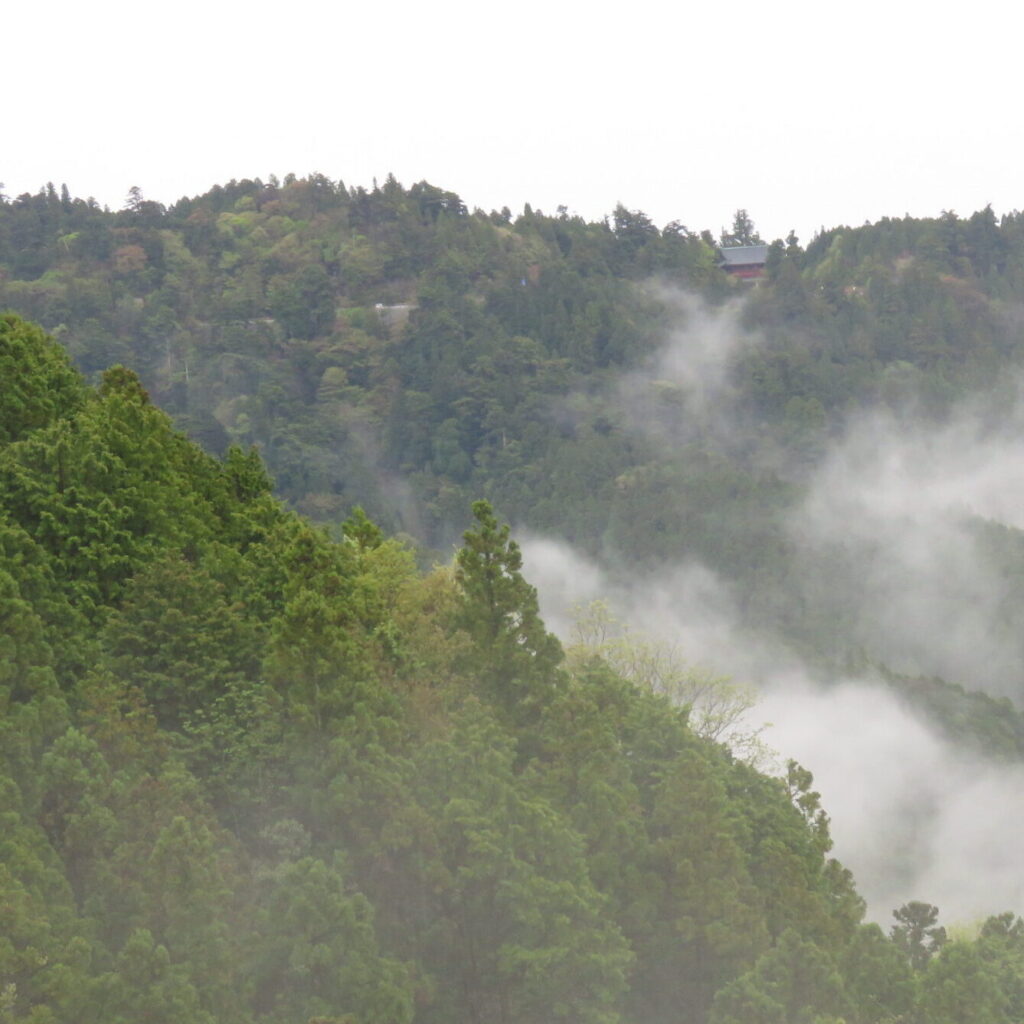
The establishment of Seiganji in 1593 is one of the clearest physical reminders of the changing relationship between Hideyoshi and Koyasan.
The temple was built to commemorate Hideyoshi’s mother, often identified as Omandokoro, and its location connected the Toyotomi family with one of Japan’s most respected Buddhist centers.
Why Establish a Temple on Koyasan?
In premodern Japan, religious patronage was an important part of political and family life.
Powerful individuals and families supported temples for a variety of reasons, including memorial services, prayers for their families, the expression of religious devotion, and the reinforcement of social relationships.
For Hideyoshi, establishing Seiganji allowed him to commemorate his mother within a sacred landscape associated with Kukai and the Shingon Buddhist tradition.
This act also placed the Toyotomi family within the wider history of Koyasan.
The significance of the temple therefore extended beyond its immediate purpose as a memorial institution. It became part of the relationship between the Toyotomi family and the mountain.
Why the Two Temples Matter Today
Seiganji and Kozanji remained separate institutions for centuries before their consolidation in 1869.
The present Kongobuji emerged from this historical process, bringing together the temple associated with Hideyoshi and the temple associated with Ogo.
This is a particularly revealing feature of Japanese religious history.
Modern visitors often encounter a temple as if it had existed in its present form for centuries. In reality, the names, buildings, and institutional structures of historic temples can change substantially over time.
Kongobuji is a good example.
Its current identity preserves the memory of a period when a military ruler and a Buddhist monk played very different roles in the history of the same sacred mountain.
When you stand at its entrance and see the Toyotomi crest, you are looking at a reminder of this layered history.
5. Okunoin: The Toyotomi Family and Mokujiki Ogo Remembered
The connection between Hideyoshi, Ogo, and Koyasan can also be explored at Okunoin, one of the mountain’s most important sacred places.
Okunoin is famous for its long forest approach, ancient trees, memorials, and the mausoleum associated with Kobo Daishi.
For many visitors, the walk through Okunoin is one of the most memorable experiences of a trip to Koyasan.
Yet its significance extends beyond the story of Kukai.
The cemetery contains memorials associated with powerful families, Buddhist figures, warriors, and people from many periods of Japanese history.
Among them are the Toyotomi family cemetery and the memorial structure associated with Mokujiki Ogo.
The Toyotomi Family Cemetery
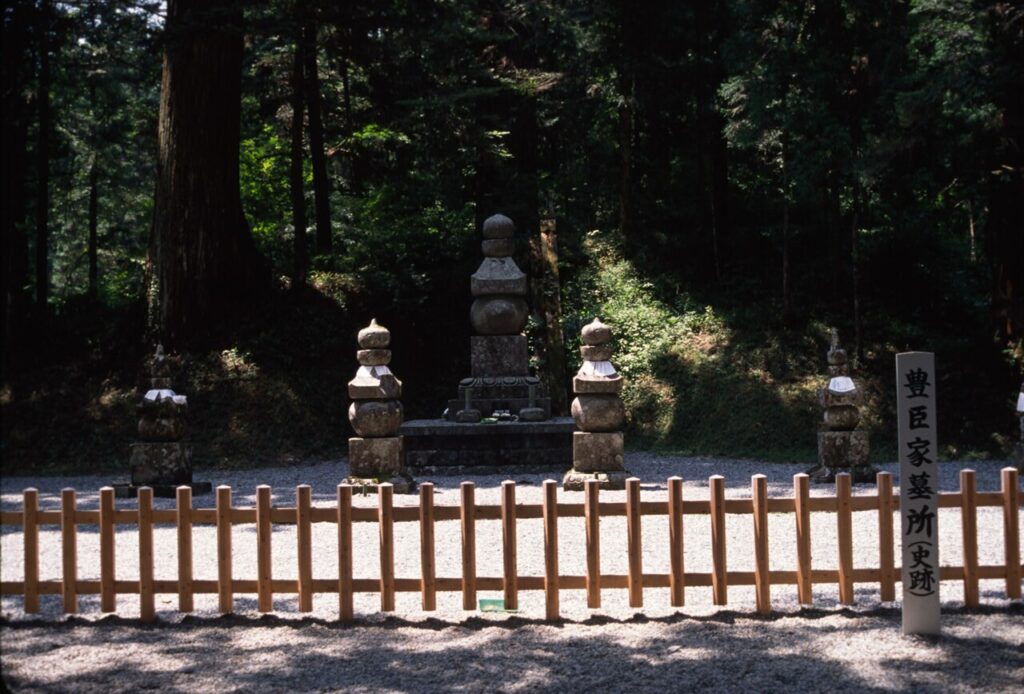
The Toyotomi family cemetery at Okunoin provides a tangible link between the family of Hideyoshi and the religious landscape of Koyasan.
Its presence illustrates how influential families established memorials at major Buddhist centers, maintaining religious and commemorative relationships that extended beyond their lifetimes.
The cemetery also offers a different perspective on Hideyoshi’s legacy.
In accounts of Japanese history, he is often remembered through military campaigns, political unification, castles, and monumental building projects.
At Okunoin, the emphasis shifts toward remembrance and the Buddhist traditions surrounding death.
The same family associated with military power is represented within a landscape devoted to religious practice and memorial observance.
Mokujiki Ogo’s Memorial
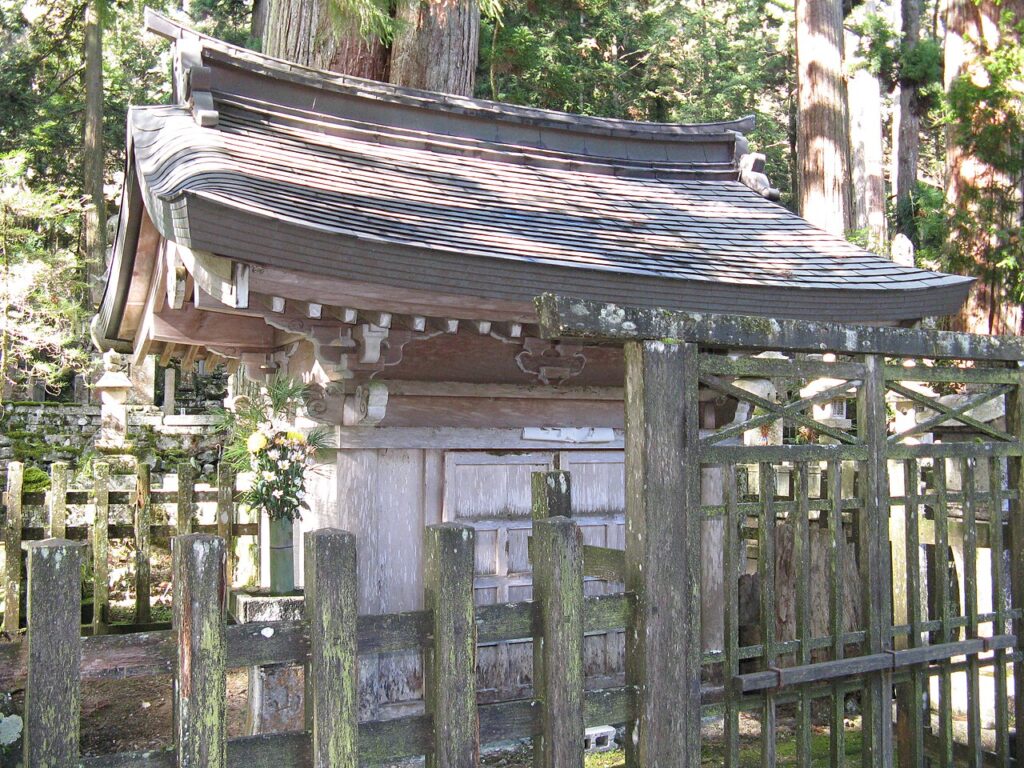
The memorial structure associated with Mokujiki Ogo can also be found at Okunoin.
Its presence connects the visitor directly with the monk whose negotiations helped preserve Koyasan during the crisis of 1585.
The contrast between the two memorial sites is particularly meaningful.
The Toyotomi family represents the political power that threatened Koyasan but later supported religious institutions on the mountain. Ogo represents the religious leadership that sought to preserve the community through negotiation.
Both are remembered within the same sacred landscape.
This does not mean that the two memorials have identical religious meanings. Rather, their presence at Okunoin allows visitors to encounter different parts of a shared history.
How to Experience Okunoin Through This Story
If you visit Okunoin, consider looking beyond the most famous elements of the pilgrimage route.
The ancient trees, stone memorials, and quiet atmosphere are important in their own right. But they also form part of a historical landscape in which political families, religious leaders, and ordinary believers have left their marks.
Finding the Toyotomi family cemetery and Ogo’s memorial can add another dimension to the visit.
The walk becomes more than a journey through a beautiful forest. It becomes an opportunity to reflect on how the history of Koyasan was shaped by people with very different forms of power.
6. From Koyasan to Wakayama Castle: Hideyoshi’s Legacy in the Region
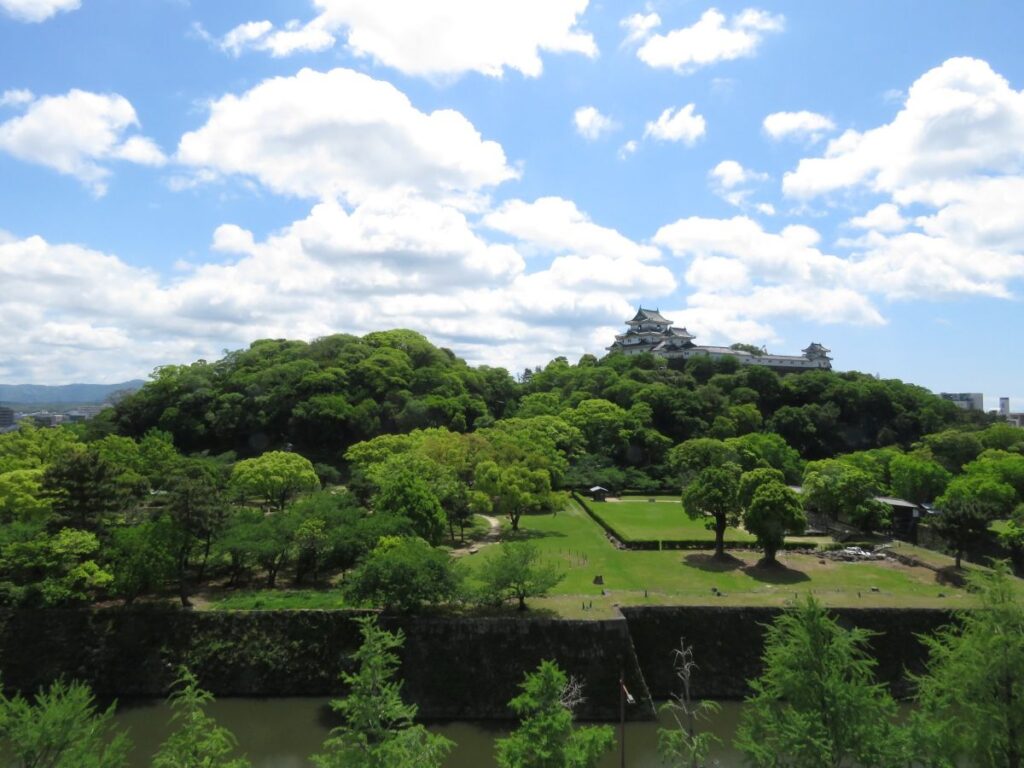
The story of Hideyoshi and Koyasan also connects with another major historical site in Wakayama Prefecture: Wakayama Castle.
Today, Wakayama Castle is one of the city’s most recognizable landmarks. Its location on a hill overlooking the city makes it a natural starting point for exploring Wakayama’s political and urban history.
But its origins are closely connected with the same military campaign that brought Koyasan into Hideyoshi’s sphere of authority.
Who Built Wakayama Castle?
In 1585, after bringing Kishu under his control, Hideyoshi ordered the construction of a castle on what was then known as Mount Okayama.
The work was undertaken by his younger brother, Toyotomi Hidenaga, with Todo Takatora involved in the construction.
This distinction matters: Hideyoshi ordered the castle’s construction, but Hidenaga was responsible for carrying out the project.
The castle became a center of political and military administration in the region.
Its history subsequently changed again. During the Edo period, it became the seat of the Kishu Tokugawa family, one of the three major branch families of the Tokugawa shogunate.
Thus, the castle’s history extends beyond the Toyotomi family, reflecting the succession of political powers that governed the region.
Where Did the Name Wakayama Come From?
The name Wakayama is also associated with Hideyoshi’s campaign in Kishu.
According to a letter, Hideyoshi named Wakayama Castle after Waka-no-ura, a scenic coastal area celebrated in Japanese poetry.
Another traditional explanation connects the name Wakayama with Waka-no-ura and Mount Okayama, where the castle was built.
The precise origin of the name is not definitively established, so these explanations should be understood as historical traditions rather than an entirely settled etymology.
Nevertheless, the association is important.
Waka-no-ura had long been celebrated for its natural beauty and literary heritage. By drawing on this established place-name, the new castle and its surrounding settlement acquired a name connected with the region’s cultural landscape.
The name Wakayama is therefore linked not only to the castle’s military origins but also to the cultural history of the coast.
A Wider View of Hideyoshi’s Influence
The relationship between Koyasan and Wakayama Castle reveals two sides of Hideyoshi’s influence on the region.
At Koyasan, his military ambitions brought the religious community under political pressure, followed by negotiation and patronage.
In Wakayama, his campaign established a new political center through the construction of a castle.
Both developments took place in 1585 and its aftermath, during a period when the region was being reorganized under Toyotomi authority.
For travelers, visiting both sites offers a way to understand how political change affected different parts of the same region.
Koyasan represents a major religious institution that negotiated to preserve its existence. Wakayama Castle represents the development of a new center of political power.
Together, they reveal how the history of Wakayama was shaped by the interaction of religion, military authority, and regional identity.
Sources: Wakayama Castle’s official history and Wakayama Prefecture’s official tourism website.
7. Visiting Kongobuji, Okunoin, and Wakayama Castle Today
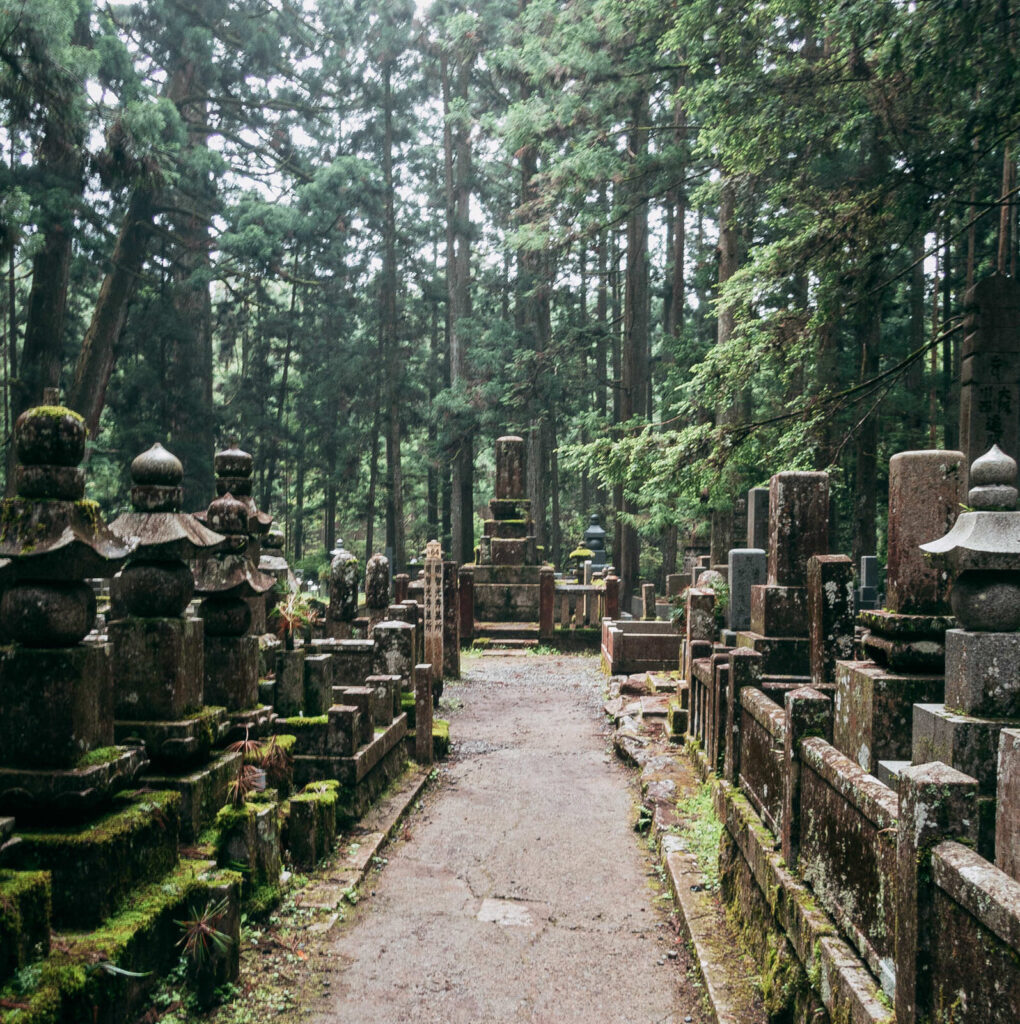
The history of Hideyoshi and Koyasan can be explored through several places that offer different perspectives on the same period.
Kongobuji Temple: Where the Story Begins
At Kongobuji, start with the two crests displayed at the main entrance.
The Toyotomi paulownia crest provides an immediate connection with Hideyoshi, while the history of Seiganji and Kozanji explains how the present temple emerged from two earlier institutions.
Inside the temple, the traditional rooms, sliding-door paintings, and gardens reveal other aspects of Koyasan’s religious and cultural heritage.
Allow time to appreciate these features rather than treating the temple as a quick photographic stop.
Okunoin: Where the Story Becomes Personal
Okunoin offers a different experience.
Here, the story of Hideyoshi and Ogo is encountered through memorials within a sacred forest landscape.
The Toyotomi family cemetery and Ogo’s memorial are especially relevant for visitors interested in understanding how the events of the late sixteenth century are remembered on Koyasan.
The walk also provides an opportunity to experience the mountain’s atmosphere and religious traditions beyond the main temple precinct.
Wakayama Castle: Understanding the Political Landscape
Wakayama Castle adds the regional dimension.
Its history helps explain how Hideyoshi’s military campaign transformed Kishu and established a new center of political authority.
Combining the castle with Koyasan makes it possible to understand the same historical period from two different perspectives: the preservation of a major Buddhist center and the establishment of a new political stronghold.
These places are not simply separate attractions to check off a list. They are connected parts of Wakayama’s history.
A Suggested Approach
If you have sufficient time, consider visiting Kongobuji and Okunoin during your stay on Koyasan, then exploring Wakayama Castle separately in Wakayama City.
The two areas are geographically distinct, and their travel times depend on your starting point and transport arrangements. Trying to fit everything into a single rushed day may leave little opportunity to appreciate the sites.
A slower approach allows you to connect the historical details with the places themselves.
You can see the Toyotomi crest at Kongobuji, walk among the memorials at Okunoin, and later stand at Wakayama Castle to consider how the same ruler reshaped the region’s political landscape.
This is one of the rewarding aspects of exploring Wakayama: different places can reveal different parts of a much larger story.
Frequently Asked Questions
Why does Kongobuji Temple display the Toyotomi family crest?
The paulownia crest reflects Kongobuji’s historical connection with Toyotomi Hideyoshi. Hideyoshi established Seiganji in 1593 to commemorate his mother. Seiganji was later consolidated with Kozanji, associated with Mokujiki Ogo, to form Kongobuji in 1869.
Who was Mokujiki Ogo?
Mokujiki Ogo was a Buddhist monk who helped negotiate with Toyotomi Hideyoshi in 1585, when Koyasan faced the threat of military attack. His intervention contributed to an agreement that allowed the mountain’s religious community to survive without large-scale destruction.
Did Toyotomi Hideyoshi destroy Koyasan?
No large-scale destruction of Koyasan followed the 1585 crisis. Hideyoshi issued demands to the mountain, but negotiations led by Mokujiki Ogo helped secure an agreement. The settlement also involved changes to Koyasan’s landholdings and its relationship with political authority.
What is the connection between Seiganji, Kozanji, and Kongobuji?
Seiganji was established by Hideyoshi in 1593 in memory of his mother. Kozanji was established in 1590 and was associated with Mokujiki Ogo. The two temples were consolidated in 1869 and renamed Kongobuji.
Can I find Hideyoshi’s tomb at Okunoin?
Okunoin contains the Toyotomi family cemetery, as well as a separate memorial structure associated with Mokujiki Ogo. These are important historical sites, but the Toyotomi family cemetery should not automatically be described as Hideyoshi’s individual burial place.
Why is Wakayama Castle connected with Hideyoshi?
Hideyoshi ordered the construction of Wakayama Castle in 1585 after his campaign in Kishu. His younger brother, Toyotomi Hidenaga, carried out the project. The castle became an important political center in the region.
Did Hideyoshi name Wakayama?
Local historical accounts associate the name Wakayama with Hideyoshi’s establishment of Wakayama Castle. One explanation connects the name with Waka-no-ura, a celebrated coastal landscape, and Mount Okayama, where the castle was built. The exact origin of the place-name is not definitively established.
Conclusion: A Temple That Preserves the Memory of Conflict and Reconciliation
The history of Kongobuji Temple offers a different way to understand Toyotomi Hideyoshi.
He was a ruler who used military force to consolidate political authority, and his campaign in Kishu threatened major Buddhist institutions, including Koyasan. Yet his relationship with the mountain subsequently included religious patronage, most notably through the establishment of Seiganji in memory of his mother.
Mokujiki Ogo played a crucial role in this transformation. His negotiations helped preserve Koyasan, while Kozanji became another part of the mountain’s evolving religious landscape. Centuries later, the consolidation of Kozanji and Seiganji created the institution known today as Kongobuji.
The story continues at Okunoin, where the Toyotomi family cemetery and Ogo’s memorial stand within the same sacred landscape. It also extends to Wakayama Castle, whose construction marked a major change in the political geography of the region.
These places reveal different aspects of the same history: conflict, negotiation, religious patronage, remembrance, and political change.
For visitors to Wakayama, the value of exploring these connections lies in seeing beyond individual monuments. A family crest, a temple’s name, a memorial in a forest, or the site of a castle can each open a window onto the wider history of the region.
Koyasan is not only a place to appreciate Japanese Buddhist architecture and spiritual traditions. It is also a place where the complex relationship between religion and political power remains visible in the landscape.
By taking the time to connect Kongobuji with Okunoin and Wakayama Castle, visitors can discover a deeper story of Wakayama—one that cannot be understood through any single landmark alone.
Related Posts
- Kongobuji Temple, Koyasan: Exploring the Head Temple of Shingon Buddhism
- Japan’s UNESCO World Heritage Sites: Sacred Mountains, Ancient Pilgrimage Routes & Living Traditions
- Walking the Sacred Roads of Wakayama: A 10-Day Pilgrimage Journey
- Women’s Koyasan: Understanding Nyonin Koya, the Nyonin-do, and the Nyonin-michi
- What Makes Okunoin Different from Ordinary Cemeteries?
- Self-Guided vs Guided Koyasan: Which Experience Is Right for You?
No responses yet