
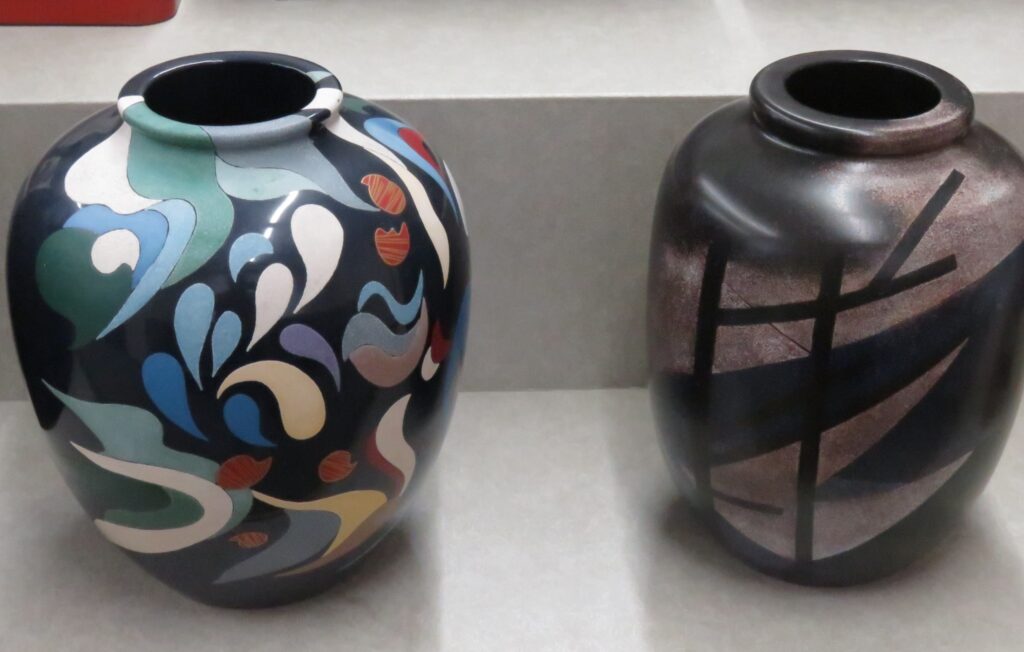
How Kuroe Lacquerware Expands into Interior, Objects, and Design
A Material, Not Just a Craft
In Kuroe, Kainan City in Wakayama, lacquerware has long been associated with tableware.
But today, a quiet shift is taking place.
Urushi is no longer limited to bowls and trays.
It is increasingly used as a material for design—applied to objects, interiors, and brand products.
For designers, architects, and lifestyle brands, this changes everything.
What Makes Urushi Unique as a Material
Urushi is not simply a coating.
It has properties that are difficult to replicate with industrial materials:
- Depth created through layered application
- Natural gloss that softens over time
- Organic texture that responds to touch
- Durability combined with repairability
These characteristics allow urushi to function as both:
👉 a protective layer
👉 a design element
Expanding Applications: From Objects to Interiors

Today, Kuroe lacquerware techniques are being applied beyond traditional forms.
Examples include:
- Interior panels and architectural elements
- Clocks and wall objects
- Writing instruments and desk accessories
- Lifestyle goods and branded items
For businesses, this opens a new possibility:
👉 integrating urushi into brand identity and spatial design
Innovation in Material: Urushi on Glass
At Nurikoubou Fuji, urushi is applied to glass surfaces.
This creates a new visual language:
- Transparency combined with depth
- Light interacting with lacquer layers
- A balance between fragility and strength
For interior designers and product developers, this is particularly compelling.
👉 It allows lacquer to enter modern and minimal spaces
From Local Craft to Global Design
Kuroe is also entering international design platforms.
Yamaga Shikki-ten, for example, has collaborated at Milan Design Week 2025 with a Michelin Guide-listed kaiseki restaurant in Milan’s Tortona district.
This signals a broader shift:
- Urushi is no longer limited to Japanese cultural contexts
- It is being evaluated as a global design material
- It is entering conversations in architecture, branding, and product design
Why This Matters for Designers and Brands
For B2B clients, urushi offers something rare:
- A natural material with strong narrative value
- A finish that evolves over time
- The ability to create unique, small-batch products
- A connection to Japanese craftsmanship without being traditional-bound
This makes it particularly relevant for:
- Boutique hotels
- Interior design projects
- High-end retail and lifestyle brands
- Limited-edition product development
Custom Development and Collaboration
Kuroe’s production system allows for flexible collaboration.
Possible projects include:
- Custom-designed objects
- Material application to existing products
- Brand-specific finishes and colors
- Small-lot production for niche markets
👉 This is not mass production
👉 It is collaborative manufacturing
Experience the Material
Urushi cannot be fully understood through images alone.
Its depth, texture, and interaction with light must be experienced directly.
In Wakayama, it is possible to:
- Visit workshops in Kuroe
- Explore material samples
- Discuss custom development with artisans
Many clients combine this with visits to Yuasa, creating a broader sourcing journey rooted in Japanese culture.
Start Your Design Collaboration
If you are interested in using urushi in your product, interior, or brand, we offer:
- Direct introductions to Kuroe workshops
- Support for custom development projects
- Interpretation and negotiation assistance
- On-site visits and sourcing trips
👉 Discuss Your Project
👉 Request a Material Consultation
No responses yet