
From Sacred Mountains to Coastal Villages Shaped by Light and Season
When photographers plan a journey through Kansai, attention often goes to famous urban destinations.
But beyond the cities lies a region where light, weather, and time still shape the landscape in visible ways.
Wakayama offers an extraordinary range of photographic environments within a single region:
- Sacred cedar forests wrapped in mist
- Pilgrimage trails that change with the seasons
- Quiet fishing villages facing the sea
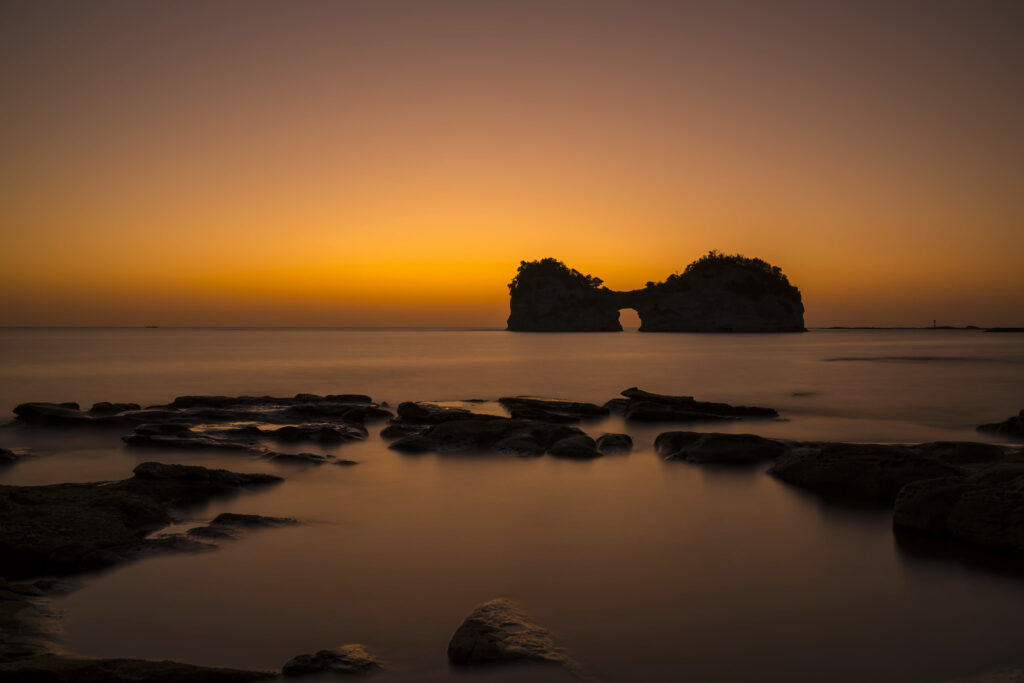
- Coastal cliffs glowing at sunset
- Rural roads where everyday life unfolds slowly
Rather than focusing on one iconic scene, Wakayama rewards photographers who are interested in atmosphere, seasonal transitions, and places where culture still feels connected to the landscape itself.
The Coastline of Light
Wakaura and Kada
Near the center of Wakayama City, the coastline changes character throughout the day.
In Wakaura, soft morning haze often drifts across the water, while evening light reflects between pine trees, shrines, and quiet inlets. For centuries, poets were drawn to this area not because of dramatic scale, but because of subtle atmosphere and changing light.
Nearby, Kada offers a different rhythm:
- Fishing boats returning at sunrise
- Harbors fading into evening mist
- Remains of a gun battery in the forest
- Narrow streets shaped by coastal life
Best Seasons
- Winter: Clear air and dramatic sunsets
- Spring: Soft haze and calm seas
- Summer: Strong coastal contrast and festivals
- Autumn: Golden evening light over the harbor
These areas are especially appealing for:
- Documentary photography
- Coastal landscapes
- Slow travel photography
- Atmospheric street scenes
Hidden Fishing Villages
Saikazaki
Often called the “Mediterranean of Japan,” Saikazki is not defined by famous landmarks.
Its appeal comes from layers of ordinary life:
- Nets drying beside boats
- Cats sleeping in narrow alleys
- Stairways overlooking the sea
- Light bouncing between tightly packed houses
Photographers interested in texture, repetition, and lived environments will find endless material here.
Best Time to Shoot
- Early morning for harbor activity
- Late afternoon for warm reflected light
- Rainy days for muted tones and atmosphere
Unlike highly commercial tourist destinations, the visual rhythm here still belongs to the local community.
Sacred Mountains and Mist
Koyasan
High in the mountains of Wakayama, Koyasan offers one of Kansai’s most atmospheric photography environments.
The appeal here is not speed or spectacle.
It is silence.
Massive cedar trees, stone lanterns, temple roofs disappearing into fog, and snow settling quietly across pathways create scenes that feel almost suspended outside time.
Best Seasons
- Winter: Snow-covered cedar forests and temple roofs
- Autumn: Deep red maple leaves against dark wood architecture
- Early Summer: Misty mornings and saturated greens
Ideal For
- Spiritual atmosphere
- Low-light photography
- Forest compositions
- Seasonal storytelling
Photographers who revisit the same locations at different times of year often discover entirely different emotional landscapes.
Walking Through Time
Kumano Kodo
The Kumano Kodo are among Japan’s most famous pilgrimage trails, but for photographers, their power comes from more than historical importance.
These roads feel layered with time.
Moss-covered stone paths, weathered trail markers, remote villages, and shifting forest light create an environment where movement itself becomes part of the image.
Different sections offer different visual moods:
Nakahechi Route
- Cedar forests
- Mist after rainfall
- Traditional villages
Kohechi Route
- Mountain ridges and remote landscapes
- Strong seasonal contrasts
- Winter isolation
Ogumotori & Kogumotori
- Dramatic elevation changes
- Dense forest atmosphere
- Cloud-filled valleys after rain
Best Seasons
- Spring: Fresh greens and soft rain
- Summer: Deep forest atmosphere
- Autumn: Rich color contrasts
- Winter: Bare trees and quiet mountain light
Coastal Cliffs and Geological Landscapes
Shirasaki Marine Park and Hashiguiiwa Rocks
Southern Wakayama also offers dramatic coastal geology rarely associated with Kansai.
At Shirasaki Marine Park, white limestone cliffs contrast sharply with the blue sea, especially under strong summer light.
Further south, Hashiguiiwa Rocks is famous for:
- Sunrise photography
- Reflections during low tide
- Milky Way and night photography
- Long-exposure coastal compositions
Best Seasons
- Summer: Clear blue contrast
- Winter: Crisp night skies
- Typhoon season aftermath: Dynamic cloud formations
These locations attract not only landscape photographers, but also astrophotographers and filmmakers.
Cherry Blossoms, Autumn Leaves, and Seasonal Roads
One of Wakayama’s greatest strengths is seasonal variation.
Because the region stretches from coastline to high mountains, photographers can encounter very different conditions within a relatively short distance.
Spring
- Cherry blossoms near temples and rivers
- Fresh mountain greens
- Soft sea haze
Summer
- Deep forest humidity
- Festival scenes
- Powerful coastal light
Autumn
- Red maple leaves in mountain temples
- Golden rice fields
- Clear evening skies
Winter
- Snow in Koyasan
- Sharp coastal air
- Quiet pilgrimage roads
This seasonal diversity makes Wakayama especially attractive for repeat visits and long-term photographic exploration.
Photography Beyond Famous Landmarks
What makes Wakayama compelling for photographers is not only its scenery.
It is the relationship between:
- Light and weather
- Landscape and memory
- Spirituality and daily life
- Stillness and movement
This is not a region built around a single iconic image.
Instead, it rewards photographers who are willing to slow down, revisit places, and observe how the landscape changes over time.
Explore Wakayama Through Photography
Custom photography-focused experiences in Wakayama can include:
- Coastal sunrise and sunset locations
- Hidden fishing villages
- Kumano Kodo hiking sections
- Koyasan seasonal visits
- Local cultural landscapes
- Flexible slow-travel itineraries for photographers and creatives
👉 Private guided photography journeys and long-stay research trips are available throughout Wakayama and the Kii Peninsula.
No responses yet