
Authentic Encounters Often Exist Beyond the Tourist Infrastructure
When planning a trip to Japan, many travelers naturally search for experiences labeled:
- English-friendly
- Foreigner-friendly
- International visitors welcome
These labels are helpful.
They make travel easier and reduce uncertainty.
But they can also create an unintended assumption:
If an experience is not offered in English, perhaps it is not worth doing.
In reality, the opposite is often true.
Many Local Traditions Were Never Created for Tourism
Across Japan, countless cultural activities continue quietly within local communities.
A wagashi artisan teaches neighborhood residents.
An iai instructor trains long-term students.
A traditional papermaker preserves techniques inherited from previous generations.
A fisherman shares knowledge that comes from everyday work on the sea.
These experiences were not originally designed for international tourism.
They exist because local people continue practicing them.
And that continuity is precisely what gives them meaning.
Tourism and Everyday Life Are Not Always the Same
Popular tourist experiences are often carefully adapted for visitors.
They may offer:
- English explanations
- Online booking systems
- Fixed schedules
- Standardized programs
There is nothing wrong with this.
In fact, these experiences help many people enjoy Japan comfortably.
But some of the most memorable encounters happen outside that framework.
Sometimes you find yourself sitting in a small workshop where nobody speaks English.
Sometimes your instructor communicates through gestures, demonstrations, and smiles.
Sometimes you realize that you are not participating in a performance created for tourists—you are witnessing something that local people themselves value.
Language Is Only One Form of Communication
Travel is often imagined as a conversation.
But understanding does not always begin with words.
Watching a craftsman work.
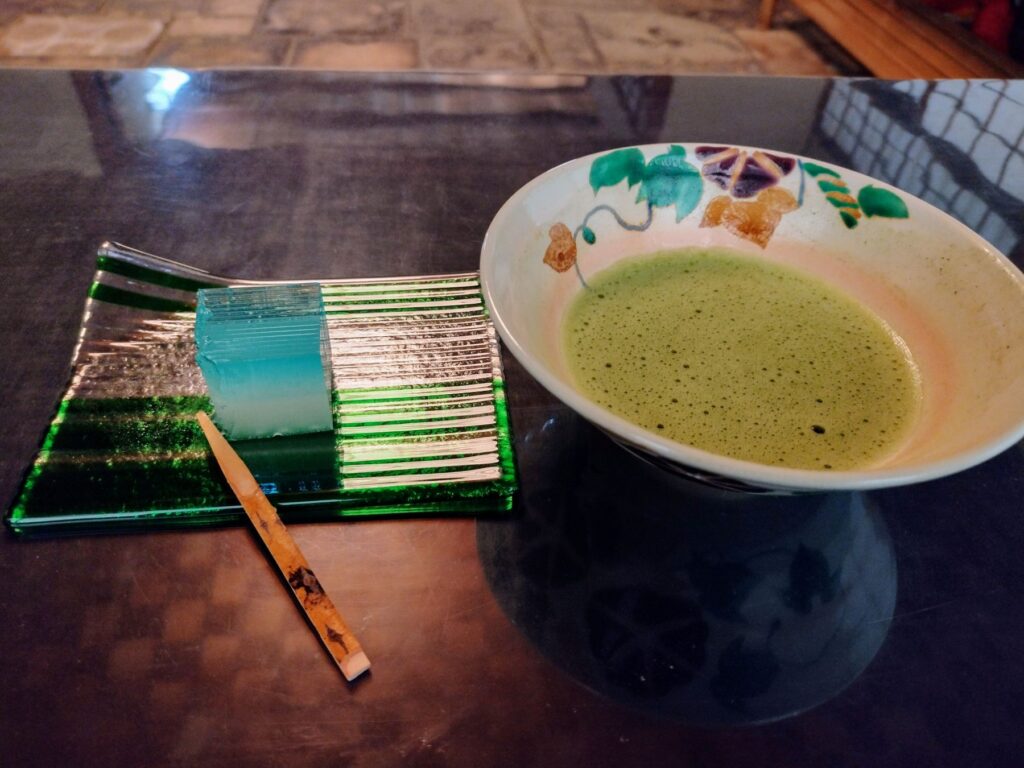
Sharing tea after a lesson.
Laughing together over a mistake.
Learning through observation.
These moments can communicate far more than perfect language skills.
Human connection often exists before vocabulary.
Why English Support Is Sometimes Limited
Many visitors assume that local people avoid international guests.
In reality, the reasons are often much simpler.
Some artisans are busy running small family businesses.
Some instructors have dedicated their lives to mastering their craft rather than studying foreign languages.
Others simply never expected travelers from overseas to become interested in what they do.
Their lack of English ability does not reflect a lack of hospitality.
More often, it reflects the fact that they are focused on preserving what matters most to them.
This Is Where Guides Become Bridges
A guide does not replace local experts.
Instead, a guide helps connect two worlds.
The instructor remains the specialist.
The guide helps with:
- Interpretation
- Cultural context
- Questions and conversation
- Creating a comfortable atmosphere
- Connecting the experience to the surrounding region
This partnership allows travelers to access experiences that might otherwise feel impossible.
Sometimes the Best Experiences Are Hidden
Not every memorable experience appears on the first page of Google.
Not every meaningful encounter has thousands of reviews.
Some are found in quiet fishing villages.
Some are hidden inside old workshops.
Some take place in ordinary neighborhoods where daily life continues much as it always has.
And perhaps that is exactly why they remain special.
Beyond Convenience
Convenience is valuable.
But meaningful travel is not always about convenience.
Sometimes it is about curiosity.
Sometimes it is about stepping slightly outside your comfort zone.
And sometimes, the experiences that require a little more trust become the memories that stay with you the longest.
Discover Japan Through the People Who Keep Traditions Alive
The Kii Peninsula is filled with experiences that are not designed around mass tourism.
Marine activities, traditional crafts, food culture, martial arts, seasonal customs, and everyday life continue here because local people continue to value them.
With the help of local experts and guides working together, these traditions become accessible—not as performances, but as genuine encounters.
And perhaps that is one of the most rewarding ways to experience Japan.
Plan your experience in Wakayama with Curated Kii Peninsula Journey
Related Post:
- Beyond the Language Barrier: Experiencing Local Japan Through Experts
- Omakase in Wakaura: A Curated Journey Through Local Taste and Landscape
No responses yet