
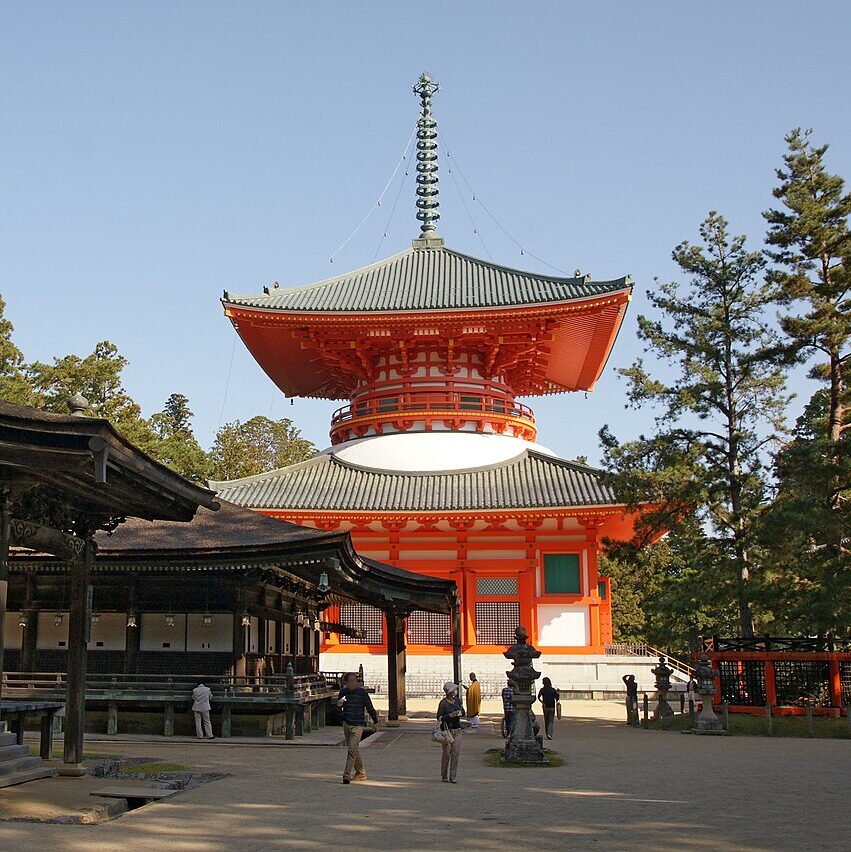
Koyasan is one of Japan’s most accessible spiritual destinations—yet also one of the most misunderstood.
You can explore it on your own. Many people do.
But whether you should depends on what you want to get out of the experience.
This guide breaks down the real difference between self-guided and guided visits to Koyasan—not just in logistics, but in depth, meaning, and overall value.
Quick Answer
- Self-guided → Best for flexible, low-cost sightseeing
- Guided → Best for understanding, storytelling, and deeper cultural experience
If you only want to see Koyasan, go self-guided.
If you want to understand it, a guide makes a significant difference.
What You Experience on a Self-Guided Visit
The Standard Route
Most independent travelers follow a similar path:
- Walk through Okunoin
- Visit Kongobuji Temple
- Explore Danjo Garan
- Stay in a temple lodging (shukubo)
What Works Well
- Easy to navigate (clear signs, maps available)
- Peaceful atmosphere
- Freedom to move at your own pace
- Lower cost
What You Might Miss
Without context:
- The meaning of the mandala layout at Danjo Garan is invisible
- Okunoin feels like a cemetery, not a spiritual journey
- Small details (Jizo statues, relic fragments) go unnoticed
- Sites feel disconnected rather than part of a larger system
👉 You experience places, but not necessarily the story connecting them.
What Changes With a Guided Experience
1. You Understand the Structure of Koyasan
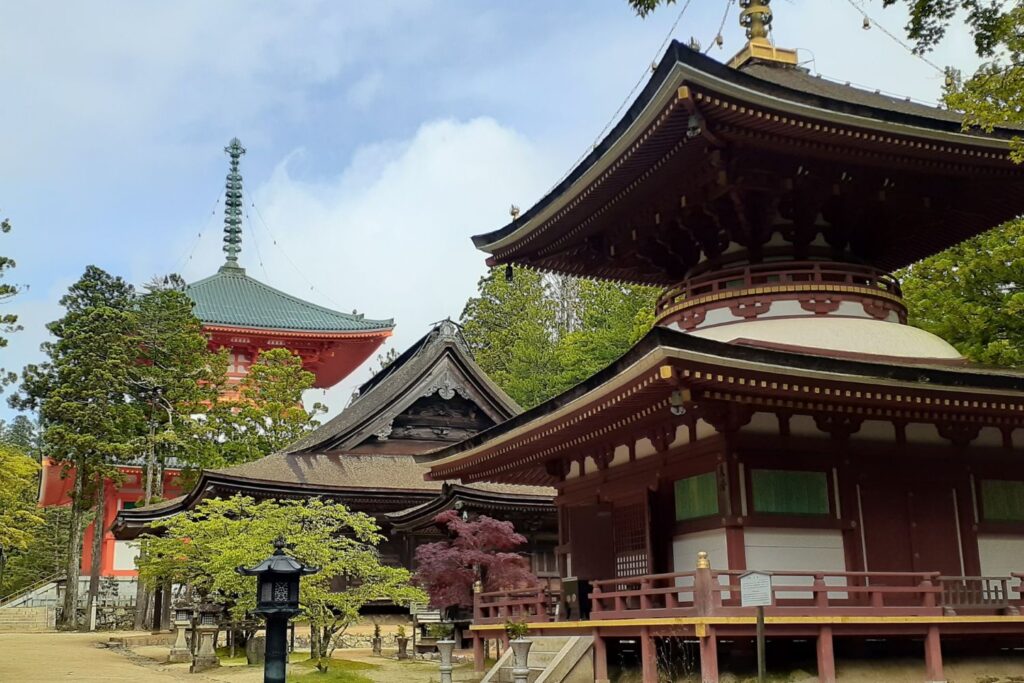
Koyasan is the center of Shingon Buddhism.
At Danjo Garan:
- Buildings are arranged as a three-dimensional mandala
- The Konpon Daito represents the cosmic center
- Architecture expresses philosophy
👉 A guide helps you “read” the space instead of just walking through it.
2. Okunoin Becomes a Narrative
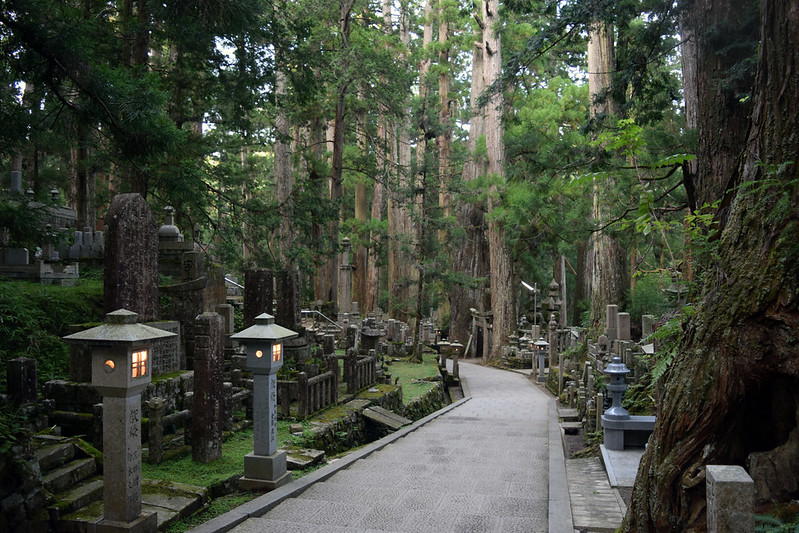
At Okunoin:
- Kukai is believed to remain in eternal meditation
- The path represents a transition into a sacred realm
- Every element has symbolic meaning
👉 With a guide, this becomes a coherent story about life, death, and belief.
3. You Access Hidden Layers
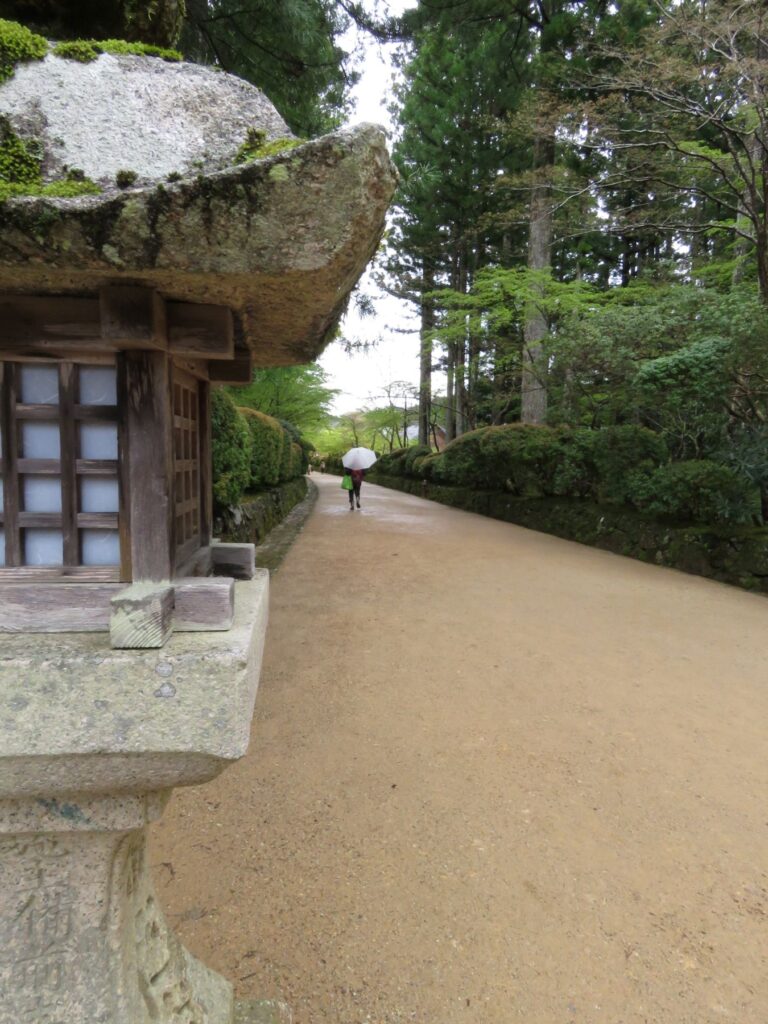
Guides bring attention to:
- Overlooked statues and memorials
- Subtle historical traces
- Stories not written on signs
👉 These small discoveries often become the most memorable moments.
4. You Connect Koyasan to a Larger Context
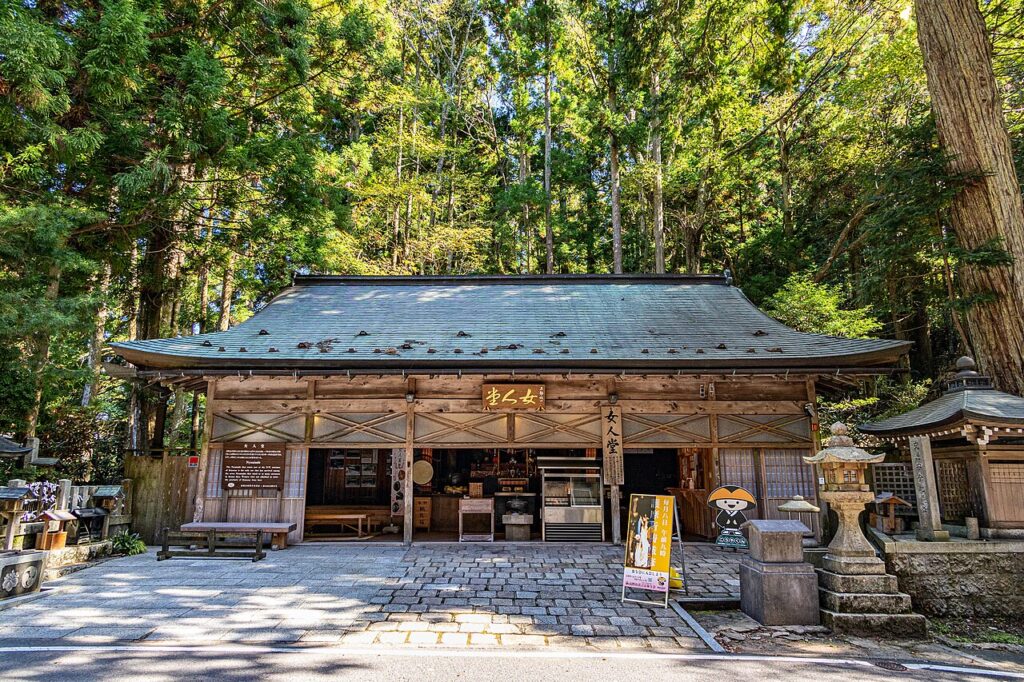
Pilgrimage Routes
- Choishi Michi
- Nyonin Michi
These routes reveal:
- The physical reality of pilgrimage
- Historical restrictions and social structure
- The relationship between landscape and belief
👉 A guided experience turns walking into historical immersion.
Side-by-Side Comparison
| Aspect | Self-Guided | Guided |
|---|---|---|
| Cost | Lower | Higher |
| Flexibility | High | Moderate |
| Navigation | Easy | Easy |
| Understanding | Limited | Deep |
| Storytelling | Fragmented | Connected |
| Hidden details | Mostly missed | Highlighted |
| Overall experience | Scenic | Meaningful |
When Self-Guided Is the Right Choice
- You prefer independent travel
- You’re on a budget
- You enjoy interpreting places on your own
- You have limited time
👉 You will still have a beautiful and worthwhile visit.
When a Guided Experience Is Worth It
- You want to understand Shingon philosophy
- You’re interested in history beyond surface level
- You value storytelling and interpretation
- You want a cohesive experience rather than separate stops
👉 This is where Koyasan truly stands out compared to other destinations in Japan.
My Perspective: How I Design a Koyasan Experience
Most tours focus on efficiency:
- Visit the highlights
- Provide basic explanations
- Move on
My approach is different.
👉 I focus on interpretation, not just information
This means:
- Explaining the symbolic structure of spaces
- Connecting sites into a single narrative
- Highlighting overlooked details
- Integrating optional walking elements (like pilgrimage routes)
Recommended Option
- Duration: 6–8 hours
- Focus: Meaning, symbolism, and historical continuity
- Format: Fully customized, private guiding
Extend Your Experience Beyond Koyasan
Koyasan becomes even more meaningful when connected to the wider region.
Consider combining with:
- Kumano Kodo pilgrimage routes
- Yuasa (birthplace of soy sauce) cultural experience
- Rural Wakayama life and craft traditions
👉 This creates a deeper understanding of continuity and rhythm of life across the region.
Ready to Choose Your Experience?
👉 Explore your options or request a custom itinerary
Final Thought
Self-guided or guided—both are valid.
But they are not the same experience.
- One shows you Koyasan
- The other helps you understand it
And in a place built on hidden meaning,
that difference matters more than almost anywhere else in Japan.
No responses yet