
From Curiosity to Application
A sushi restaurant owner from the United States visited Wakayama with a clear objective:
to better understand shoyu soy sauce beyond what is available through import channels.
Rather than sourcing products immediately, his goal was to explore how traditional fermentation could influence his menu, deepen his understanding of flavor, and potentially reshape how he selects ingredients.
Yuasa, widely recognized as the birthplace of shoyu soy sauce, became the focus of his visit.
Gaining Access Beyond a Standard Visit
During his stay, he visited two shoyu breweries with different approaches to production.
At one historic brewery, he was given access inside the kura (storehouse)—a space not normally open to visitors.
There, the fermentation process was explained directly by a producer in charge of the brewery.
Inside the kura, the experience was not only visual, but physical:
- Air filled with active fermentation, rich with natural yeasts
- The scent and atmosphere shaped by time, wood, and microorganisms
- Direct contact with large wooden barrels made from Japanese cypress
By stepping into this environment, he was able to experience fermentation not as an abstract concept, but as something tangible and alive.
At another brewery, he explored how traditional methods are maintained while adapting to contemporary expectations such as consistency and product variation.
Understanding Context Beyond Production
The visit extended beyond the breweries themselves.
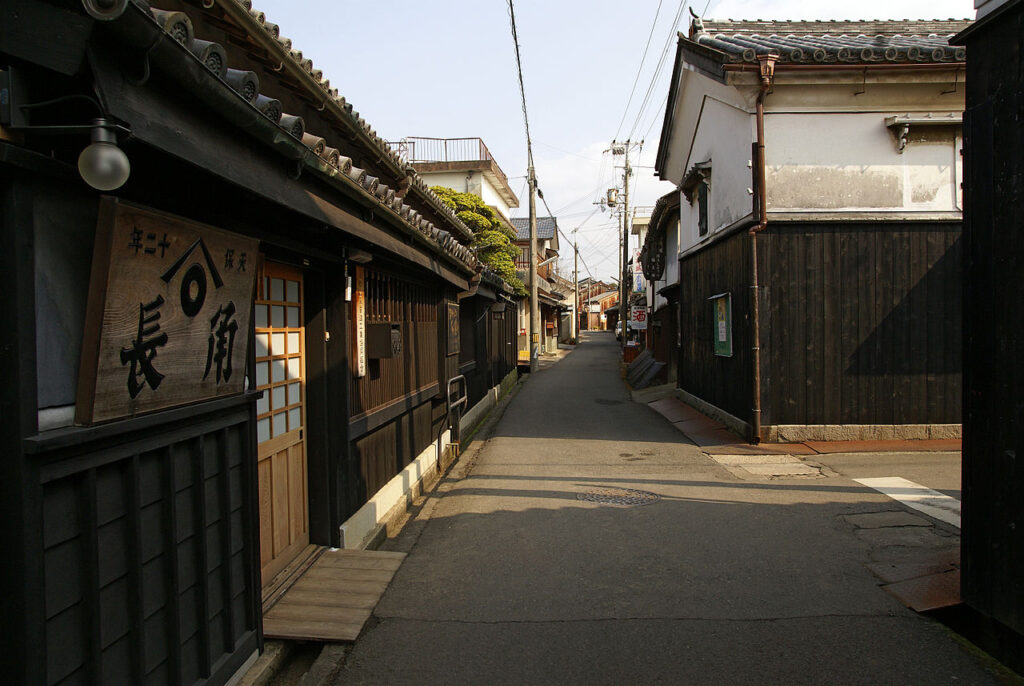
Walking through Yuasa, he was introduced to the structure of the town—how soy sauce production developed alongside trade, daily life, and regional culture.
He also experienced local cuisine using Yuasa shoyu, allowing him to understand how these products function within everyday cooking, not only in professional kitchens.
Stops at small local shops provided additional insight into how products circulate within the community, from production to consumption.
This broader context helped connect production, place, and usage into a single narrative.
Key Insights for Culinary Professionals
1. Fermentation Is Not Standardized
Even within the same region, soy sauce varies significantly depending on ingredients, environment, and process.
What is often perceived as a single category is, in reality, a spectrum of flavors.
For chefs, this opens the possibility of using soy sauce not just as seasoning, but as a distinct flavor component.
2. Fermentation Is Experienced, Not Just Understood
Entering the kura revealed something that cannot be communicated through specifications or samples alone.
The presence of microorganisms in the air, the condition of the barrels, and the sensory environment all contribute to the final product.
This kind of understanding reshapes how one evaluates quality and authenticity.
3. Context Creates Meaning
By seeing how shoyu is embedded in the town—its history, food culture, and daily life—the product becomes more than an ingredient.
It becomes something that can be communicated to customers as part of a broader story.
4. Direct Access Changes Decision-Making
Most soy sauce available internationally is filtered through layers of standardization and distribution.
Direct access to producers allowed the chef to:
- Encounter variations not typically exported
- Ask detailed, process-oriented questions
- Understand the philosophy behind production choices
This shifted his approach from selecting products to understanding processes.
From Visit to Application
Following the visit, the chef began reconsidering how soy sauce could be used in his restaurant:
- Pairing different soy sauces with specific types of fish
- Using small-batch products as finishing elements
- Communicating fermentation stories to customers
Rather than making immediate purchasing decisions, the visit expanded his framework for long-term menu development.
Why Yuasa Matters
Yuasa offers a rare combination of:
- Historical significance in shoyu soy sauce production
- Small-scale breweries still using traditional methods
- Direct, meaningful access to producers and their environment
For culinary professionals, it provides something increasingly difficult to access:
a living fermentation culture that can be experienced firsthand.
Designing a Visit for Professionals
This visit was carefully designed based on the guest’s professional interests.
It combined:
- Private access to production spaces
- Direct dialogue with producers
- Cultural and historical context of the town
- Real-world application through food and local experience
If you are a chef, buyer, or food professional interested in fermentation, sourcing, or product development, a similar visit can be arranged based on your specific goals.
→ Learn more about our approach:
→ Contact us to plan your visit
No responses yet