
The Problem with the Translation “Soy Sauce”
Most people translate shoyu simply as “soy sauce.”
It is convenient. It is understandable. And it is incomplete.
The term “soy sauce” describes ingredients. It tells us that soybeans are involved. It tells us that it is liquid. But it says nothing about the centuries of fermentation knowledge, the economic systems, the regional power structures, or the culinary transformation embedded in that dark amber liquid.
We do not translate sushi as “vinegared rice with fish.”
We do not translate miso as “fermented soybean paste.”
We do not translate sake as “rice alcohol.”
These words remain in Japanese because translation would flatten them. It would remove the cultural and historical depth they carry.
Shoyu deserves the same respect.
In this article, I will use the word shoyu deliberately — not as a stylistic choice, but because it represents something far more complex than what “soy sauce” can capture.
Shoyu is not merely a seasoning.
It is a technological breakthrough.
It is a trade commodity.
It is an economic infrastructure.
And its story cannot be told without understanding why the small port town of Yuasa became its birthplace.
What Shoyu Actually Is
From Miso to Liquid Gold
Shoyu did not appear suddenly as a finished invention.
Its origins are closely connected to fermented soybean pastes, particularly Kinzanji miso, which was introduced through Buddhist networks from China 13th century.
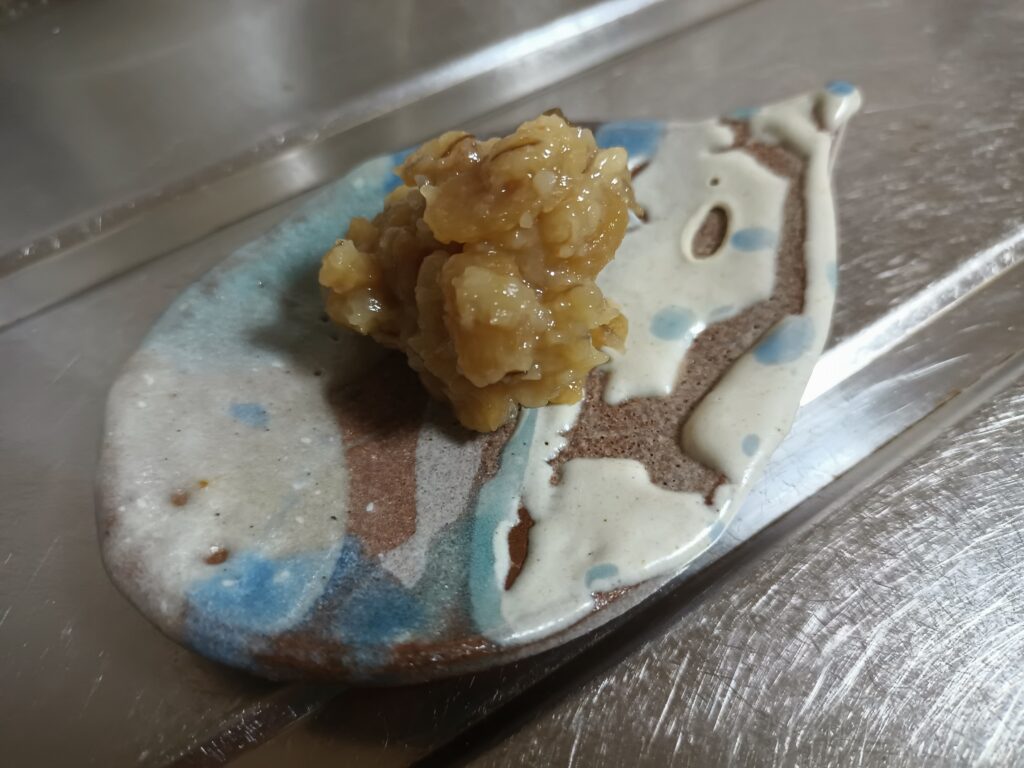
At first, the people of Yuasa discarded the water that came out of this miso because they thought it would cause mold, but when they tried tasting it, they found it to be quite tasty.
So they decided to use the broth from the beginning and thought that they could create a “new soy sauce,” or seasoning, and that’s how shoyu began. This was not accidental. It required observation, experimentation, and the willingness to treat fermentation as controllable rather than mystical.
What emerged was shoyu: a balanced fermentation of soybeans, wheat, salt, water, and koji mold, matured over months or years.
Fermentation as Controlled Risk
Fermentation in medieval Japan was not a romantic craft. It was risk management.
To ferment is to walk the line between transformation and spoilage. Temperature, humidity, salt concentration, microbial balance — all had to be carefully controlled without modern scientific tools.
Shoyu represents accumulated empirical knowledge. It is a product of generations who learned how to harness microorganisms long before microbiology existed as a discipline.
That alone makes it more than “sauce.”
Why Liquid Form Changed Everything
The transformation from paste to liquid altered Japanese cuisine permanently.
Liquid seasoning travels differently. It penetrates ingredients. It disperses evenly. It can be diluted, blended, brushed, or poured. It can be transported in barrels across sea routes.
Miso remained regionally rooted because of its density and storage limitations.
Shoyu, in contrast, became mobile.
Mobility changed history.
Why Yuasa Became the Birthplace of Shoyu
The emergence of shoyu in Yuasa was not random. It was the result of geography, trade, and intellectual exchange.
Geography: A Port Town Advantage
Yuasa was a coastal settlement with maritime connections to the Kinai region, including Osaka — the commercial heart of early modern Japan.
Port towns are information hubs. Goods arrive. Techniques travel. People exchange knowledge. Yuasa was positioned within these flows.
Fermentation requires both raw materials and distribution channels. Yuasa had access to:
Sea salt
Transport networks
Expanding urban markets
Without maritime connectivity, shoyu might have remained a local curiosity.
Instead, it scaled.
Local Conditions for Innovation
Climate matters. Humidity matters. Water quality matters.
Yuasa’s environment proved suitable for stable fermentation. Combined with entrepreneurial merchant families willing to invest in production and distribution, the town developed a specialization that would eventually define its identity.
By the Muromachi and Edo periods, Yuasa was no longer simply producing seasoning.
It was producing shoyu as a branded commodity.
Shoyu as an Invisible Infrastructure
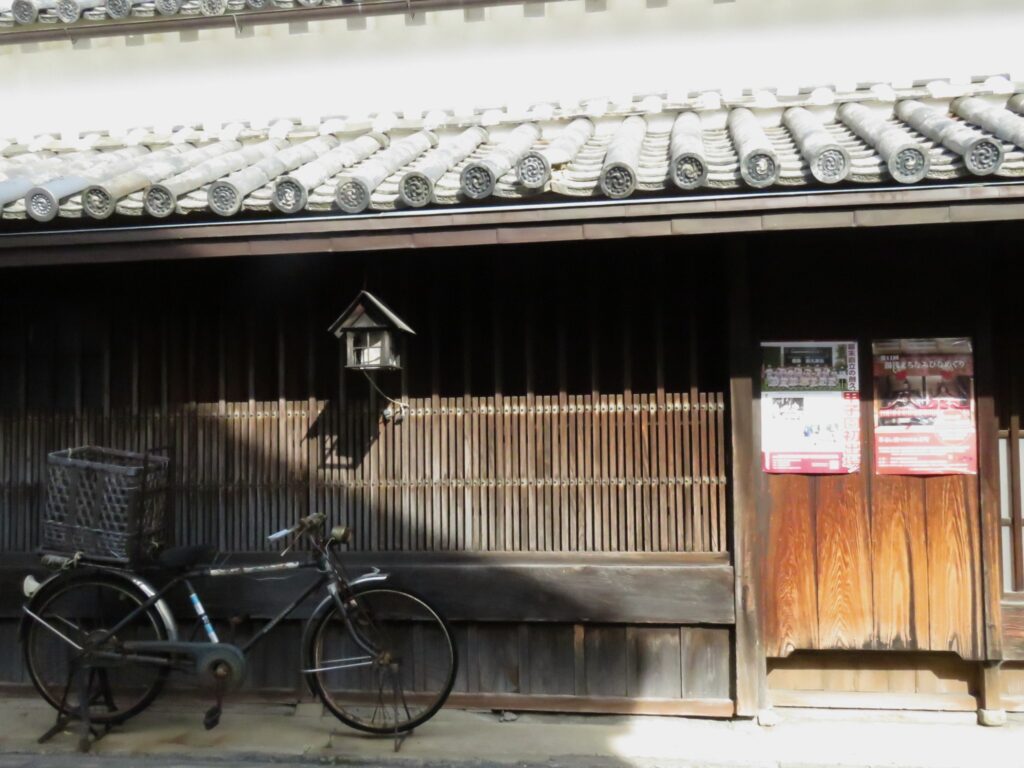
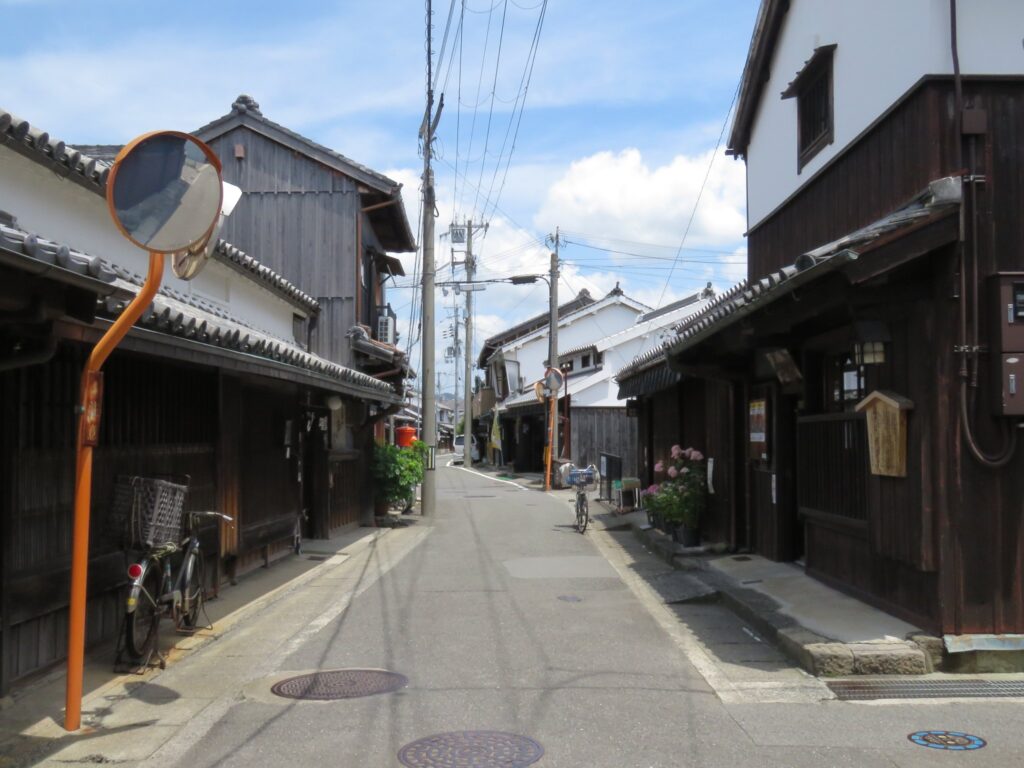
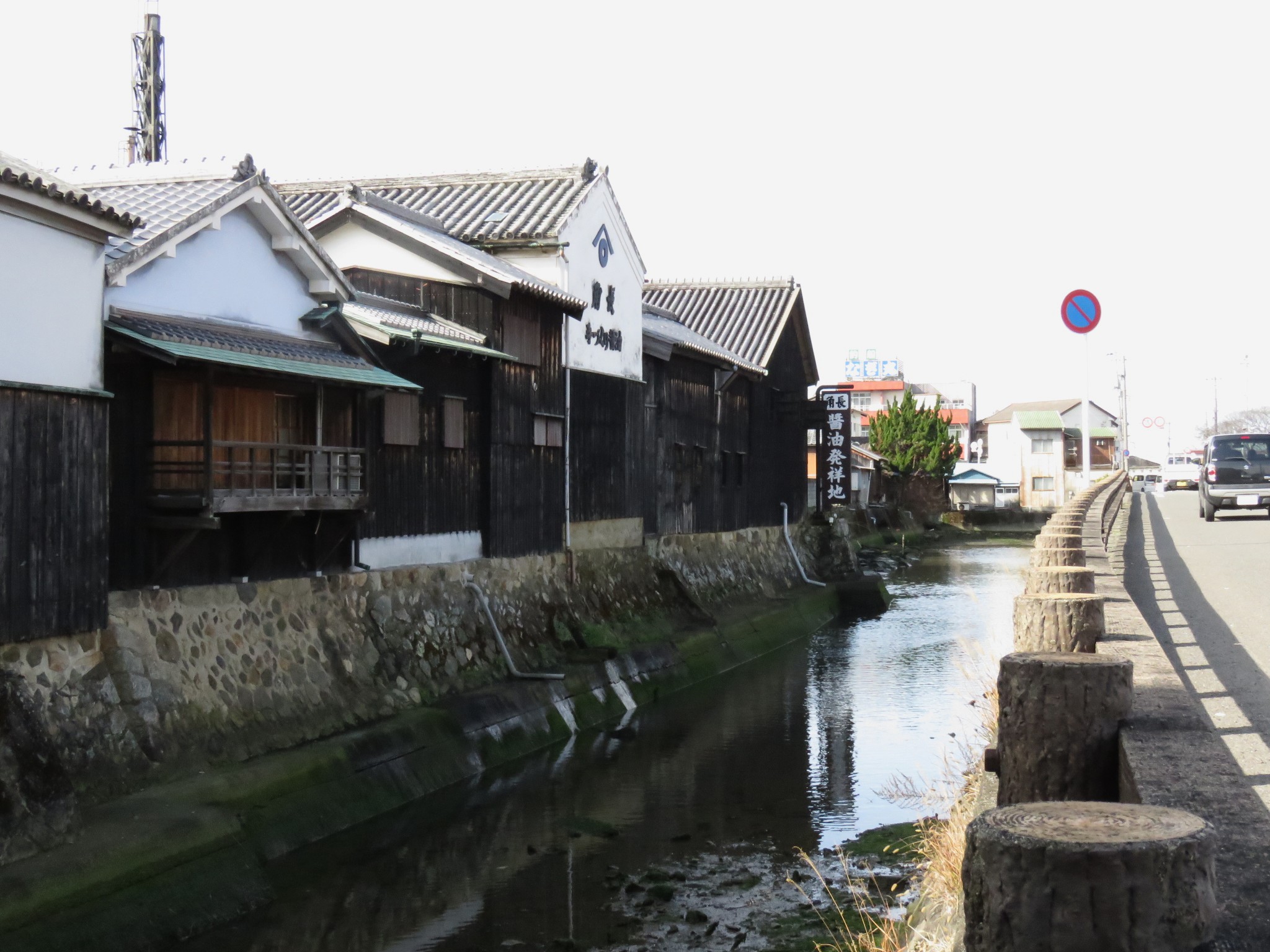
If you stand with me in the old streets of Yuasa, you will see wooden facades, lattice windows, and narrow lanes shaped by centuries of trade.
It feels quiet now.
But several hundred years ago, this town more filled with the smell of fermentation — wheat roasting, soybeans steaming, barrels breathing.
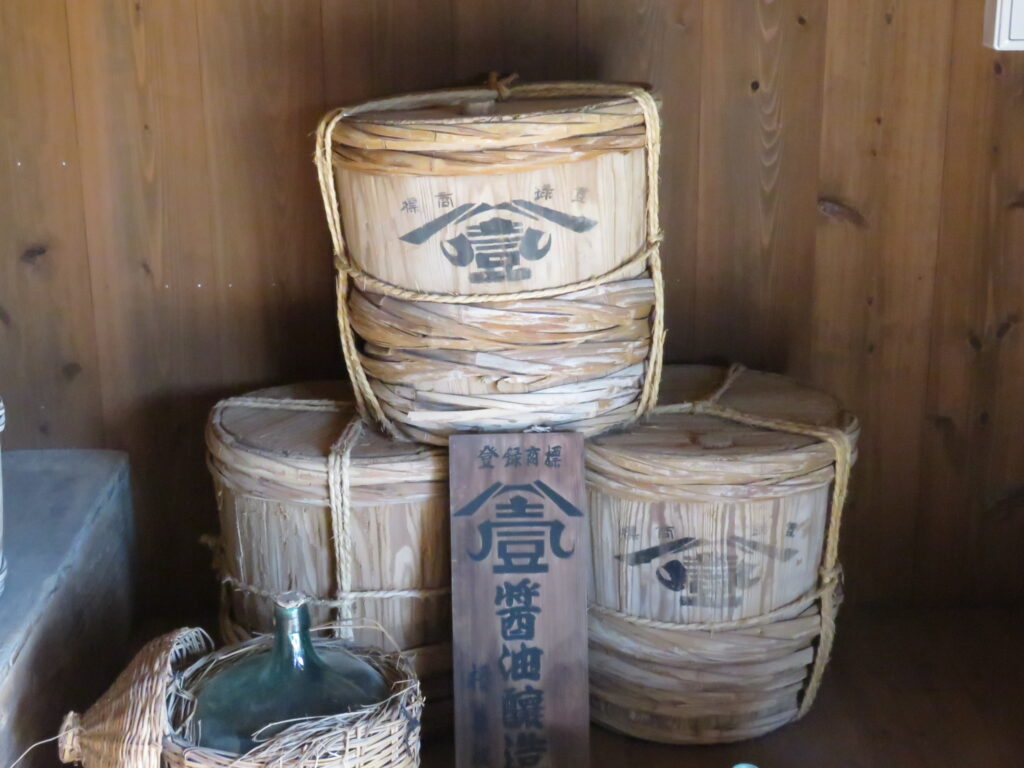
Imagine craftsmen lifting heavy wooden lids. Imagine merchants calculating shipment schedules based on tide and season. Imagine the risk: a single failed batch could mean financial ruin.
Shoyu was not a kitchen detail. It was capital.
What changed Yuasa was not just that it produced a good seasoning. It was that shoyu could travel.
Barrels of shoyu left this port by ship, moving toward Osaka — the commercial engine of early modern Japan. From there, distribution networks expanded toward Edo, today’s Tokyo.
Once shoyu could be transported in volume, something extraordinary happened.
Taste became standardized.
Before widespread distribution, flavor was regional. With shoyu moving across domains, a shared foundation of taste began to form. The balance of salt, aroma, and umami created a culinary backbone that connected distant regions.
This is why I call shoyu an infrastructure.
Railways connect cities.
Internet cables connect information.
Shoyu connected taste.
Walking Through Layers Most Visitors Miss

When visitors come to Yuasa today, they often admire the preserved townscape. They visit a brewery. They taste a small spoonful of dark liquid and nod in appreciation.
But what had to exist for this spoonful to be possible?
Look at the width of the main streets. It allowed carts to pass.
Look at the storage buildings. They were designed for volume.
Look at the proximity to the port. Distribution was the priority.
Without context, these are charming historical details.
With context, they reveal a commercial ecosystem.
Shoyu demanded:
- Agricultural supply chains
- Stable salt access
- Skilled fermentation knowledge
- Barrel production
- Maritime insurance against loss
In other words, it required coordination.
When you walk these streets without that lens, you see nostalgia.
When you walk them understanding shoyu’s role, you see early capitalism.
That shift in perception changes everything.
How Shoyu Reshaped Japanese Cuisine
Now let’s step beyond Yuasa for a moment.
Imagine Edo in the 18th century — crowded, ambitious, hungry.
Street vendors sell grilled eel brushed with a glossy glaze. Sushi evolves from fermented preservation to fresh nigiri dipped lightly in dark seasoning. Simmered dishes deepen in color and complexity.
That dark sheen is not an aesthetic accident.
It is shoyu.
Because shoyu could be transported and stored, it became widely accessible. And because it was liquid, it integrated easily into cooking techniques.
Brushing.
Marinating.
Simmering.
Dipping.
The culinary grammar of Japan shifted.
If miso was depth, shoyu was articulation.
It sharpened edges. It clarified sweetness. It defined contrast.
And so when we say “Japanese cuisine,” we are often describing a flavor structure built on shoyu — whether we realize it or not.
Why Shoyu Still Matters
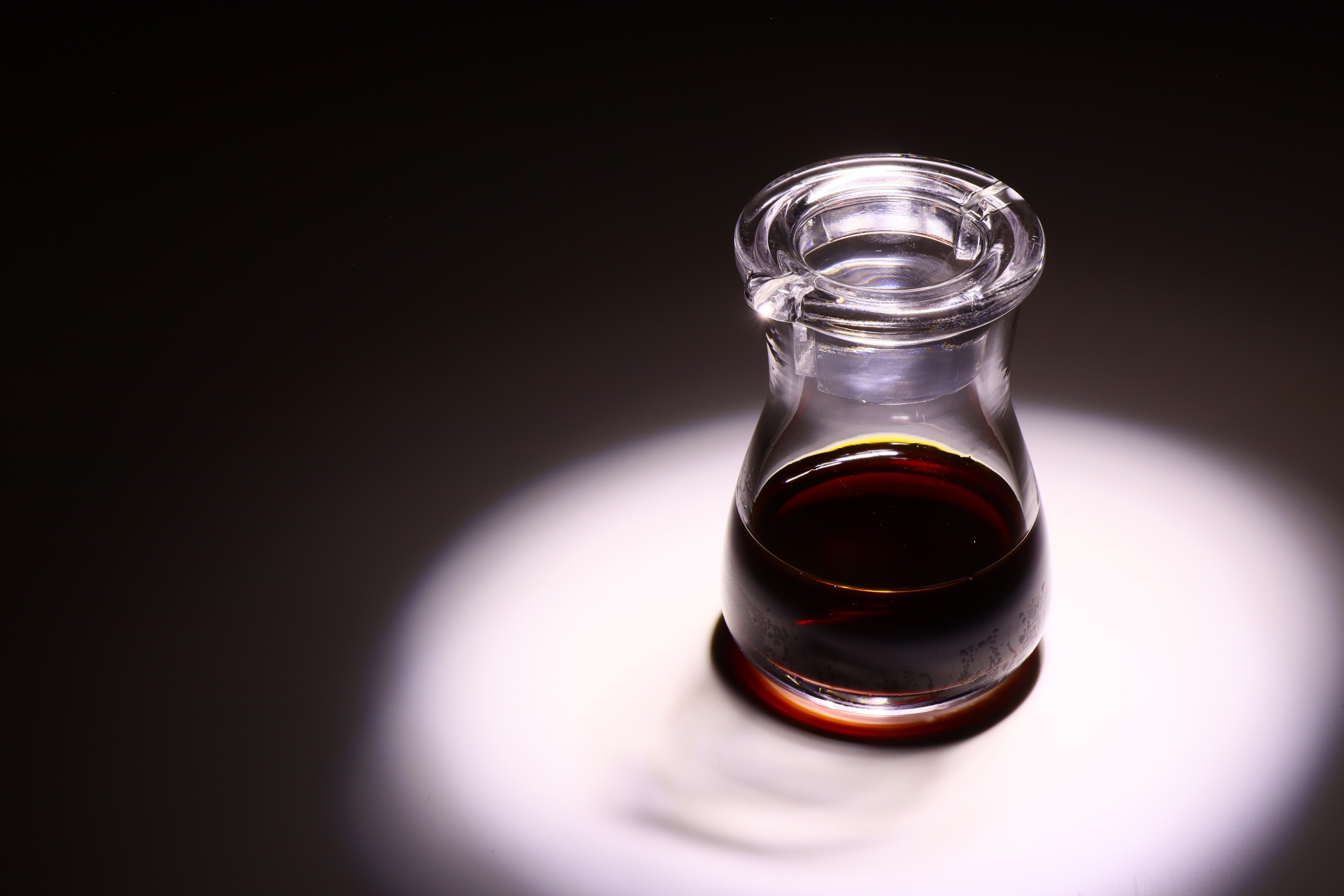
Today, “umami” is a global word.
Chefs in Europe speak of it. Food scientists analyze it. Restaurants market it.
Yet few people ask where that everyday, accessible umami became practical in daily cooking.
Shoyu made umami portable.
It allowed flavor to be measured, controlled, and distributed. It transformed a biological process into a culinary tool.
And that transformation began here, in Yuasa.
Not in a capital city.
Not in a political center.
But in a coastal town willing to experiment with what others might have discarded.
Experiencing Shoyu Beyond the Bottle
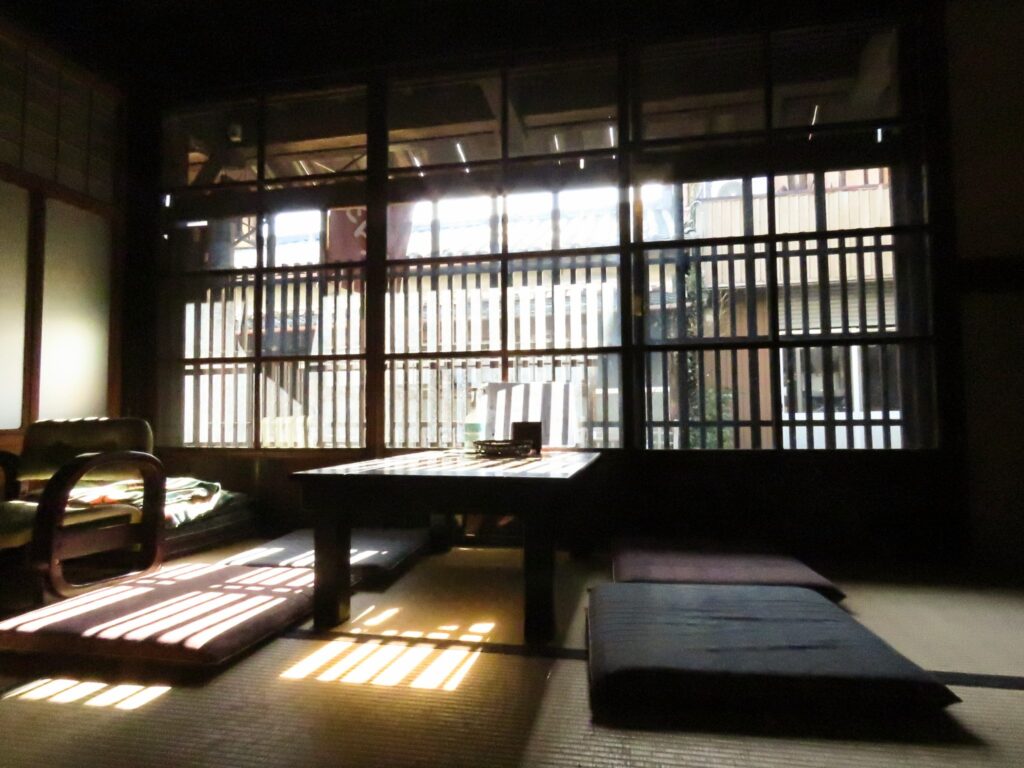
When I guide visitors through Yuasa, I do not begin with tasting.
I begin with geography.
We stand near the old port and imagine ships leaving at dawn. We talk about risk, storage, humidity, and ambition. Only after understanding those layers do we step into a brewery.
Then the aroma changes meaning.
It is no longer just pleasant.
It becomes historical.
If you would like to experience shoyu not merely as a condiment but as a cultural technology that reshaped Japanese society, walking through Yuasa with historical context reveals layers invisible to the casual visitor.
Because shoyu is not simply “soy sauce.”
It is movement.
It is coordination.
It is shared taste across a nation.
And Yuasa is where that story became liquid.
If you would like to explore how shoyu shaped Japanese society, a guided walk through Yuasa reveals layers invisible to the casual visitor.
No responses yet